

Kirjahaku
Etsi kirjoja tekijän nimen, kirjan nimen tai ISBN:n perusteella.
1000 tulosta hakusanalla Gerry Murphy

Why Bible Study Doesn't Work: The epic failure of evangelicalism's favorite discipleship method - and how YOUR CHURCH can do something about it
Gerry Lewis
Life Matters Publications
2016
nidottu
When did Bible Study become the broccoli of the Christian life? Eat more broccoli It's good for you Study the Bible more... attend more "Bible studies " It's good for you Shouldn't studying the Bible be more than simply something that is good for us? Shouldn't studying the Bible together with other followers of Jesus actually strengthen us for a healthy lifestyle of following Jesus on the journey of the Christ-life? Did we miss a turn somewhere? Let me ask you a question. If more (or better) Bible studies is really the answer, how in the world do we have so many people who: - Have gone to Sunday School for decades - Have attended, helped in, and taught Vacation Bible School - Have participated in multiple 13-week or 40-day video-based Bible study courses - And are Biblically illiterate and don't have any idea how to think or live Biblically? It seems that we have a disconnect somewhere. I'd like to offer, in this brief book, a way of rethinking Bible study. A way that refocuses studying the Bible with the intent of making disciples. A way that emphasizes not just the "what" of Bible study, but also the "how" and the "why" of studying the Bible.
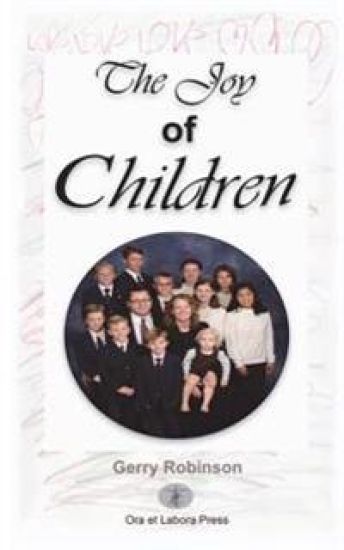


See that kid, huffing out the miles in clearly worn out shoes, but not slowed down by them? Believe it or not, that was me I'm a successful runner now, but back then I was much like you, a passionate young runner, pushing myself against all odds and going further then I ever could have imagined. My journey had laughs and tears and lots of hard work. I invite you to come along on this journey, and we'll run together.
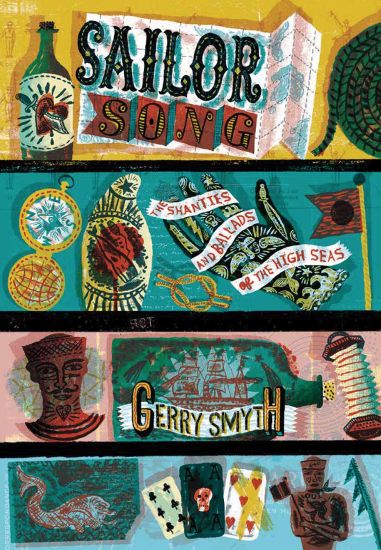
Passed down in the oral tradition and sung traditionally as working songs, sea shanties tell the human stories of life at sea: hard graft, battling the elements, the loss of ships or pining for a lady on shore. Its pages decorated with hand-drawn or wood-cut illustrations from celebrated artist Jonny Hannah, Sailor Song addresses the current modern revival of sea shanties, and seeks to celebrate and to explore the historical, musical and social history of the traditional sea song through 40 beautiful, mournful, haunting and uplifting shanties. Acclaimed shanty devotee Gerry Smyth presents the background to each one alongside musical notation. The lyrics are elaborated with explanations of terminology, context including historical facts and accounts of life at sea, and the characters, both fictional and non-fictional, that appear in the songs from the great age of sail to the last days of square-rig. Where appropriate, a direct digital link is made to a shanty recording in the British Library Sound Archive.
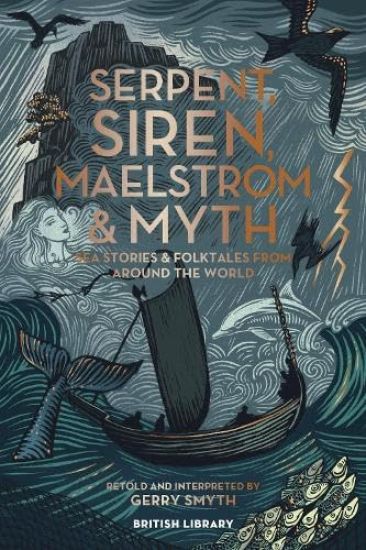
The sea is beautiful and alluring, but it is also dangerous and deadly. Above all, it is unknowable and untameable. Storytelling offered our ancestors a means to understand and interact with the natural world, and in time these stories coalesced into the mythological systems of the world. And the ocean features in every mythological system in history. To reflect and explore this, Gerry Smyth has gathered together myths and folktales from cultures around the world – Native American, Caribbean, Polynesian, Persian, Indian, Scandinavian and European. Just as these stories have been passed down through generations, he brings his own narrative interpretation with additional discussion on their meaning. Stories are divided into seven sections: Origin Stories; Gods and Humans; Voyages; Lost Places, Imagined Spaces; Weather and Nature; Down to the Sea in Ships; Fabulous Beasts; and embellished with illustrations from the wide-ranging collections of the Library.
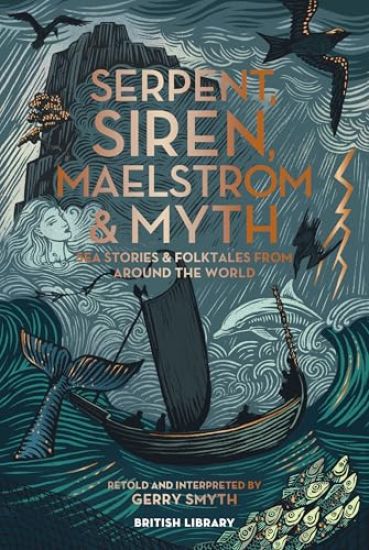
The sea is beautiful and alluring, but it is also dangerous and deadly. Above all, it is unknowable and untameable. Storytelling offered our ancestors a means to understand and interact with the natural world, and in time these stories coalesced into the mythological systems of the world. And the ocean features in every mythological system in history. To reflect and explore this, Gerry Smyth has gathered together myths and folktales from cultures around the world Native American, Caribbean, Polynesian, Persian, Indian, Scandinavian and European. Just as these stories have been passed down through generations, he brings his own narrative interpretation with additional discussion on their meaning. Stories are divided into seven sections: Origin Stories; Gods and Humans; Voyages; Lost Places, Imagined Spaces; Weather and Nature; Down to the Sea in Ships; Fabulous Beasts; and embellished with illustrations from the wide-ranging collections of the Library.
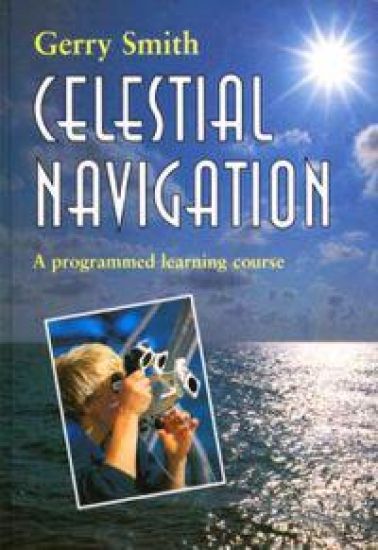
Using the successful programmed learning format that proved so effective in his coastal navigation coursebook, Gerry Smith teaches the reader the basic skills needed to take sun sights and shows him how to use tables to find a position. The reader is able to evaluate performance immediately and will benefit from the pattern adopted throughout: learn, test, assess, relearn, progress. This book will be greatly appreciated by all those who have been traumatized by the usual complex books on celestial navigation.

People have been enchanted by elephants for centuries. For Gerry Creighton, this fascination began at an early age; his father was a keeper at Dublin Zoo and instilled in him a love and respect for animals. Gerry followed his father and joined the zoo at 15, where he would spend the next 36 years observing, studying and caring for elephants. Raised by the Zoo tells the story of Gerry’s life in service to the many animals at Dublin Zoo – a place that holds fond memories for every family across Ireland. Filled with a lively cast of the zoo’s inhabitants – including Lucy the Chimp and Upali the Elephant – it captures a pivotal period in Dublin Zoo’s history and underscores the importance of environmental conservation efforts around the world.

This book argues that modern Irish history encompasses a deep-seated fear of betrayal, and that this fear has been especially prevalent since the revolutionary period at the outset of the twentieth century. The author goes on to argue that the novel is the literary form most apt for the exploration of betrayal in its social, political and psychological dimensions. The significance of this thesis comes into focus in terms of a number of recent developments – most notably, the economic downturn (and the political and civic betrayals implicated therein) and revelations of the Catholic Church’s failure in its pastoral mission. As many observers note, such developments have brought the language of betrayal to the forefront of contemporary Irish life. This book offers a powerful analysis of modern Irish history as regarded from the perspective of some its most incisive minds, including James Joyce, Liam O’Flaherty, Elizabeth Bowen, Francis Stuart, Eugene McCabe and Anne Enright.

The best-selling guide that helped countless players improve their game is now updated, expanded, and better than ever! With Pool Player’s Edge you will sharpen your strategy and shot-making skills while mastering tactics and techniques in the four most popular forms of the game: 9-ball, 8-ball, straight pool, and one-pocket. In this new edition, billiards experts and tour pros Gerry “The Ghost” Kanov and Shari “The Shark” Stauch share their secrets on every aspect of the game. In Pool Player’s Edge you will learn these skills: - Perfect your aim and master your shots - Control the cue ball - Set the tone for the game with a power break - Handle the most common and troublesome shots - Map the table and set up shots - Strategize your game - Remain focused and unnerved in competitive play Step-by-step professional instruction and over 200 full-color detailed diagrams will show you how to take your game to the next level. Whether you’re a league player or a seasoned professional, if you’re serious about pool and looking for a competitive edge, Pool Player’s Edge is your best shot.

Gerry Brooks is an elementary school principal turned YouTube celebrity, and the creator of YouTube videos such as "First Week of School Stress" (over 1.6 million views and counting). He tells jokes with the kind of mocking--yet folksy and good-natured--humor that gets a laugh from teachers and administrators (yet can be safely shared in school). Served up with a dash of humor and a healthy dose of wisdom, Go See the Principal expands on the author's viral video fame and offers comic relief and inspiration to educators. Ranging from practical topics like social media use in the classroom to parent-teacher conferences to more humorous sections such as "Ways to Spot a Teacher in Public" and "Gift Ideas for Your Teacher's Birthday," Go See the Principal is both the comic relief and practical advice all educators need. Brooks also shares suggestions, ideas, and declarations commonly heard in and around the classroom--as well as illustrations, both from students and inspired by them.

Recent developments in Irish literature are largely ignored in existing critical texts on Irish culture. This is the first study to make a detailed examination of the new novelists and themes emerging in the genre, as well as covering the foundations of contemporary Irish fiction. Gerry Smyth provides a broad overview of the forms and theories that comprise the traditional Irish novel and explores the ways in which modern writers challenge established notions of Irish fiction. Focusing on the work of leading contemporary Irish writers – including Roddy Doyle, Glenn Patterson, Emma Donoghue and Patrick McCabe – Smyth employs innovative techniques in his analysis, such as the relevance of post-colonial theory to Irish literature, and the links between literature and wider cultural and political developments. Also included is a previously unpublished interview with Roddy Doyle.

This book investigates the role of literary criticism in the process of Irish decolonisation since the late eighteenth century, with special emphasis on the 1950s. Drawing on the work of both Irish and international commentators – including Edward Said, David Lloyd, Gayatri Chakravorty Spivak and Luke Gibbons – Gerry Smyth seeks to reconfigure the established relations between literature and criticism. Smyth then sets his analysis against a modular theory of decolonisation based on a reading of Irish history from the perspective of contemporary postcolonial and post-structural theory. Engaging with debates in a number of current fields, Decolonisation and Criticism challenges many assumptions and practices of Irish literary history.
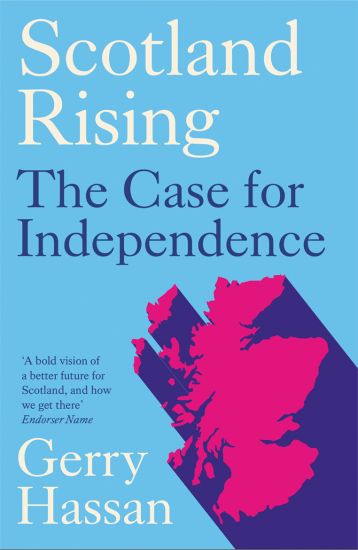
The Scottish independence debate has consequences for Scotland, British politics, the future of the UK - and internationally. In Scotland Rising, Gerry Hassan addresses the key questions in this debate with a deep dive into its history, beyond the usual references to Thatcherism, Toryism and Westminster, by analysing the relative decline of the UK, the nature of the British state, its capitalist economy and politics that underpin it. At the same time, a distinctive, autonomous Scotland has emerged beyond Nichola Sturgeon’s SNP and independence that has demanded more self-government. Scotland Rising highlights the importance of culture, stories and collective voices in reshaping how people see Scotland, both in during the first referendum in 2014 and again today. This debate is of relevance to everyone in the UK, including England, Wales and Northern Ireland. Can politics and democracy liberate people from the wreckage of Westminster? And if the Scots can, could it inspire others? Scotland Rising is a must-read for anyone with an interest in the future of Scotland and the UK.
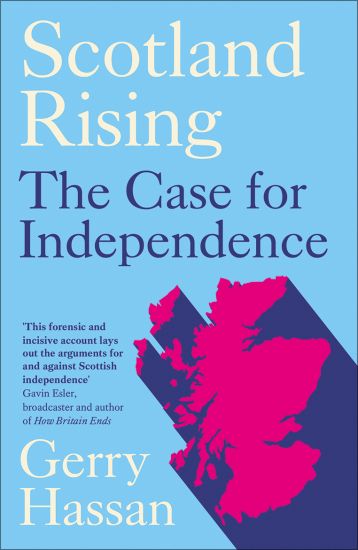
The Scottish independence debate has consequences for Scotland, British politics, the future of the UK - and internationally. In Scotland Rising, Gerry Hassan addresses the key questions in this debate with a deep dive into its history, beyond the usual references to Thatcherism, Toryism and Westminster, by analysing the relative decline of the UK, the nature of the British state, its capitalist economy and politics that underpin it. At the same time, a distinctive, autonomous Scotland has emerged beyond Nichola Sturgeon’s SNP and independence that has demanded more self-government. Scotland Rising highlights the importance of culture, stories and collective voices in reshaping how people see Scotland, both in during the first referendum in 2014 and again today. This debate is of relevance to everyone in the UK, including England, Wales and Northern Ireland. Can politics and democracy liberate people from the wreckage of Westminster? And if the Scots can, could it inspire others? Scotland Rising is a must-read for anyone with an interest in the future of Scotland and the UK.
From events at Nuremberg and Tokyo after World War II, to the recent trials of Slobodan Miloševic and Saddam Hussein, war crimes trials are an increasingly pervasive feature of the aftermath of conflict. In his new book, Law, War and Crime, Gerry Simpson explores the meaning and effect of such trials, and places them in their broader political and cultural contexts. The book traces the development of the war crimes field from its origins in the outlawing of piracy to its contemporary manifestation in the establishment of the International Criminal Court in The Hague. Simpson argues that the field of war crimes is constituted by a number of tensions between, for example, politics and law, local justice and cosmopolitan reckoning, collective guilt and individual responsibility, and between the instinct that war, at worst, is an error and the conviction that war is a crime. Written in the wake of an extraordinary period in the life of the law, the book asks a number of critical questions. What does it mean to talk about war in the language of the criminal law? What are the consequences of seeking to criminalise the conduct of one's enemies? How did this relatively new phenomenon of putting on trial perpetrators of mass atrocity and defeated enemies come into existence? This book seeks to answer these important questions whilst shedding new light on the complex relationship between law, war and crime.
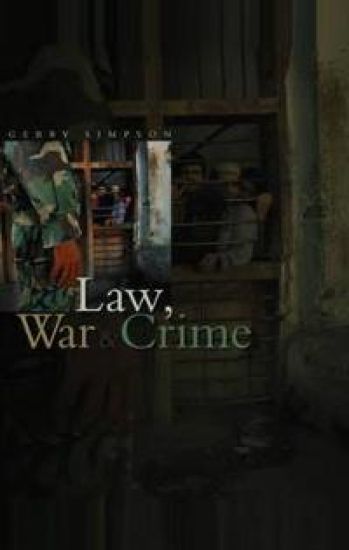
From events at Nuremberg and Tokyo after World War II, to the recent trials of Slobodan Miloševic and Saddam Hussein, war crimes trials are an increasingly pervasive feature of the aftermath of conflict. In his new book, Law, War and Crime, Gerry Simpson explores the meaning and effect of such trials, and places them in their broader political and cultural contexts. The book traces the development of the war crimes field from its origins in the outlawing of piracy to its contemporary manifestation in the establishment of the International Criminal Court in The Hague. Simpson argues that the field of war crimes is constituted by a number of tensions between, for example, politics and law, local justice and cosmopolitan reckoning, collective guilt and individual responsibility, and between the instinct that war, at worst, is an error and the conviction that war is a crime. Written in the wake of an extraordinary period in the life of the law, the book asks a number of critical questions. What does it mean to talk about war in the language of the criminal law? What are the consequences of seeking to criminalise the conduct of one's enemies? How did this relatively new phenomenon of putting on trial perpetrators of mass atrocity and defeated enemies come into existence? This book seeks to answer these important questions whilst shedding new light on the complex relationship between law, war and crime.

The Strange Death of Labour Scotland
Gerry Hassan; Eric Shaw
Edinburgh University Press
2012
sidottu
The Scottish Labour Party is in an unprecedented position. Having been the leading party in Scotland for fifty years it lost an election and office to the SNP in 2007. This book addresses, examines and analyses the last thirty years of Scottish Labour, from the arrival of Thatcherism in 1979 to the aftermath of the party's defeat in the 2007 Scottish Parliament elections. It asks fundamental questions about the nature of Scottish Labour, its dominance of Scottish politics, the wider politics of Scotland, and whether the decline is irreversible. Covering both contemporary events and recent history, it draws on extensive research including archival sources and interviews with some of the key participants in Scottish Labour.