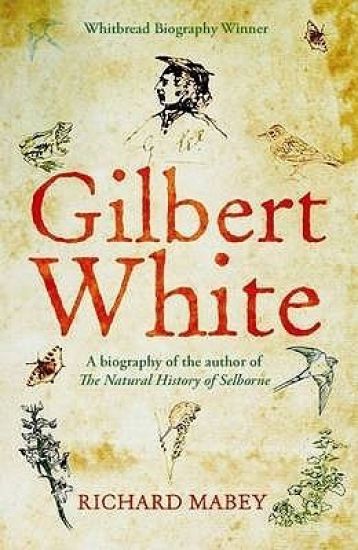
When the pioneering naturalist Gilbert White (1720-93) wrote The Natural History of Selborne (1789), he created one of the greatest and most influential natural history works of all time, his detailed observations about birds and animals providing the cornerstones of modern ecology. In this award-winning biography, Richard Mabey tells the wonderful story of the clergyman - England's first ecologist - whose inspirational naturalist's handbook has become an English classic.
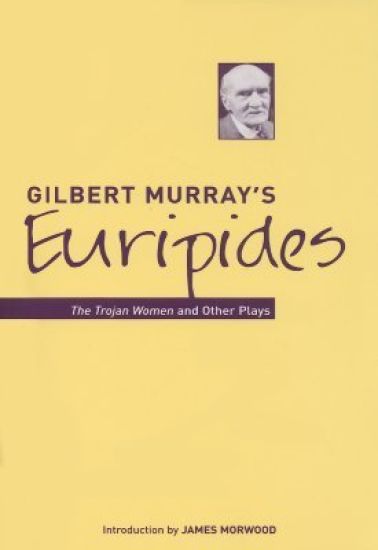
In the story of the reception of Greek tragedy throughout the English-speaking world, Murray is a figure of immense importance. He unlocked the gates of commercial theatre to its performance - and its performance in verse - on both sides of the Atlantic, bringing to the project his enormous personal prestige, especially after his election to the Regius Chair of Greek at Oxford (1908).His Oxford Classical Text of all the complete plays of Euripides lent scholarly weight to his theatrical enterprise; for, passionate though he was about communicating Greek culture to the widest possible public (by the 1920s over a quarter of a million copies of the translations had been sold), he could never be written off as a mere popularizer. Most significant of all, he laid down in the early years of the twentieth century the terms on which scholar and public alike have viewed Greek drama throughout its course and into the twenty-first. It was Murray who insisted, from the pulpit of the popular stage, on the political nature of Greek tragedy (first connecting Troades with the fate of Melos); on its historical resonances (Troades chiming with his own distaste for British conduct of the Boer War); on its social urgency (his support for women's suffrage informing his Medea); on the religious and anthropological assumptions that permeate it (his introduction to Bacchae acknowledging his debt to Jane Harrison); and on the remarkable psychological truth in its delineation of character (emphasized in his notes on Electra). And on all this he insisted as a man with a keen instinct for the theatre, who was deferred to alike by actors (Sibyl Thorndike), by directors (Granville Barker) and by fellow playwrights (George Bernard Shaw). His was the voice which had something wonderful to communicate and which could not be ignored.
In this prize-winning biography, Richard Mabey brilliantly recreated the life of the pioneering naturalist and wonderfully evoked White's Hampshire landscape.
Revd. Gilbert White published his revolutionary Natural History of Selborne in 1789, an entirely new insight into the natural world. John Knapp was the first to follow White's successful format, publishing his Journal of a Naturalist anonymously in 1829. Knapp's work was an instant success and ran into four editions in Britain. It was twice pirated in America. Knapp's Journal, based on his observations in Alveston in southern Gloucestershire, his childhood home in Buckinghamshire and a brief sojourn in Monmouthshire, reignited early 19th-century popular enthusiasm for nature. His death in 1845 however prevented publication of a greatly enlarged fifth edition of his work. For this biography, Knapp's remarkable life has not only been researched in depth and described for the first time, but by using Knapp's original hand-written notes, the author has been able to re-create the previously unpublished fifth edition of the Journal and present it here in full.
The Great Savoy Operas. This is a DELUXE BOOK AND DVD COLLECTION with 4 COMPLETE OPERAS ON 4 DVDS The partnership of W S Gilbert and Arthur Sullivan produced a collection of the most best loved and still oft performed comic operas in the history of theatre.
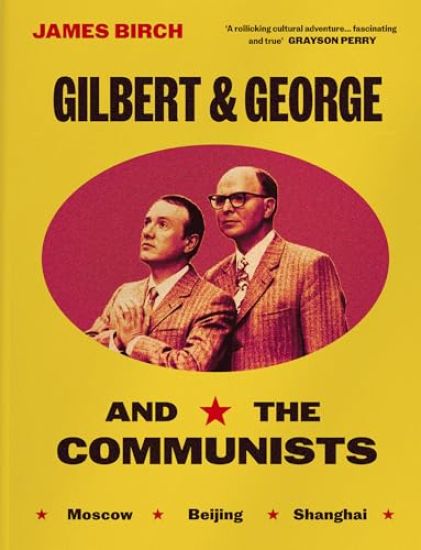
The much-anticipated sequel to Bacon in Moscow, Gilbert & George and the Communists charts daring art dealer James Birch's next implausible transcultural mission: introducing British art's most subversive duo to not only the creaking remnants of Soviet Russia, but to the steely frontier of a Maoist China well on its way to becoming a global superpower.Gilbert & George and the Communists is more than just a picaresque and deeply funny riot through art history: it is a first-hand account of how, just as one global giant died, another was born.
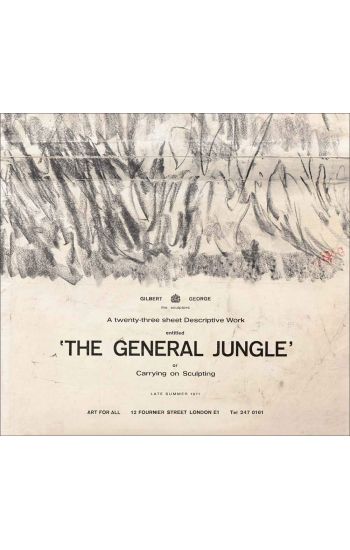
Since 1967, renowned artists Gilbert & George (born 1943 and 1942) have made themselves into their art, sacrificing their individual identities to devote themselves to a more democratic art practice, which they call “Art for All.” This catalog presents their formative early work, The General Jungle or Carrying on Sculpting (1971). Comprised of 23 monumental, multi-panel charcoal-on-paper sculptures depicting the artists wandering streets and parks in London and inscribed with philosophical slogans, The General Jungle or Carrying on Sculpting was first exhibited at the Sonnabend Gallery in New York in 1971. Published in conjunction with Lévy Gorvy’s exhibition of the work, this fully illustrated catalog features a newly commissioned essay by Michael Bracewell based on a recent interview with the artists, an original poem by Kostas Anagnopoulos, newspaper reviews from the Sonnabend exhibition and a facsimile of the postal sculpture A Day in the Life of George & Gilbert, the Sculptors (1971).
Sir Horatio Gilbert George Parker, 1st Baronet; Canadian novelist and British politician, more commonly called Gilbert Parker. Best remembered for his work The Lane that Had No Turning (1900), a collection of short stories, considered by some as being in the tradition of such Gothic classics as Stoker's Dracula and James's The Turn of the Screw
Sir Horatio Gilbert George Parker, 1st Baronet; Canadian novelist and British politician, more commonly called Gilbert Parker. Best remembered for his work The Lane that Had No Turning (1900), a collection of short stories, considered by some as being in the tradition of such Gothic classics as Stoker's Dracula and James's The Turn of the Screw
Gilbert et Gilberte, par Eugene Sue...Date de l'edition originale: 1855Ce livre est la reproduction fidele d'une oeuvre publiee avant 1920 et fait partie d'une collection de livres reimprimes a la demande editee par Hachette Livre, dans le cadre d'un partenariat avec la Bibliotheque nationale de France, offrant l'opportunite d'acceder a des ouvrages anciens et souvent rares issus des fonds patrimoniaux de la BnF.Les oeuvres faisant partie de cette collection ont ete numerisees par la BnF et sont presentes sur Gallica, sa bibliotheque numerique.En entreprenant de redonner vie a ces ouvrages au travers d'une collection de livres reimprimes a la demande, nous leur donnons la possibilite de rencontrer un public elargi et participons a la transmission de connaissances et de savoirs parfois difficilement accessibles.Nous avons cherche a concilier la reproduction fidele d'un livre ancien a partir de sa version numerisee avec le souci d'un confort de lecture optimal. Nous esperons que les ouvrages de cette nouvelle collection vous apporteront entiere satisfaction.Pour plus d'informations, rendez-vous sur www.hachettebnf.fr