

Kirjahaku
Etsi kirjoja tekijän nimen, kirjan nimen tai ISBN:n perusteella.
1000 tulosta hakusanalla Gordon McNeil Rushforth

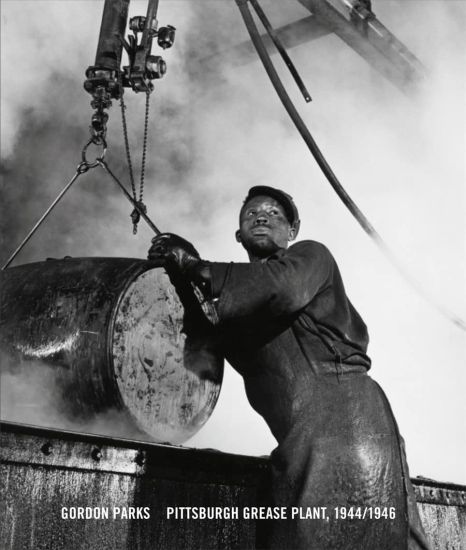
Gordon Parks: Pittsburgh Grease Plant, 1944-1946
STEIDL PUBLISHERS
2022
sidottu
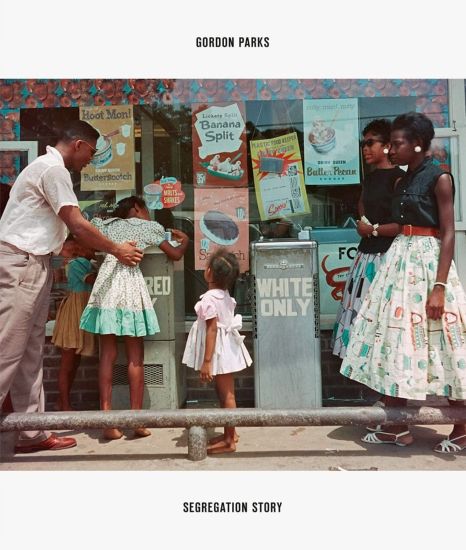
An expanded edition of Parks' classic account of race relations in America, with previously unpublished images and texts This expanded edition of Gordon Parks: Segregation Story includes around 30 previously unpublished photographs, as well as enhanced reproductions created from Parks' original color transparencies; newly discovered descriptions Parks wrote for the photographs; a manuscript of film-developing instructions and captions Parks authored with Samuel F. Yette; previously published texts by the late art historian Maurice Berger and the esteemed journalist and civil rights activist Charlayne Hunter-Gault; and a new essay by artist Dawoud Bey.After the photographs were first presented in a 1956 issue of Life magazine, the bulk of Parks' assignment was thought to be lost. In 2011, five years after Parks' death, the Gordon Parks Foundation found more than 200 color transparencies belonging to the series. In 2014 the series was first published as a book, and since then new photographs have been uncovered.In the summer of 1956, Life magazine sent Gordon Parks to Alabama to document the daily realities of African Americans living under Jim Crow laws in the rural South. The resulting color photographs are among Parks' most powerful images, and, in the decades since, have become emblematic representations of race relations in America. Pursued at grave danger to the photographer himself, the project was an important chapter in Parks' career-long endeavor to use the camera as a weapon for social change.Gordon Parks (1912-2006) was born into poverty and segregation in Fort Scott, Kansas, in 1912. An itinerant laborer, he worked as a brothel pianist and railcar porter, among other jobs, before buying a camera at a pawnshop, training himself and becoming a photographer. He evolved into a modern-day Renaissance man, finding success as a film director, writer and composer. The first African American director to helm a major motion picture, he helped launch the blaxploitation genre with his film Shaft (1971). Parks died in 2006.
Gordon Parks: Stokely Carmichael and Black Power
STEIDL PUBLISHERS
2022
sidottu
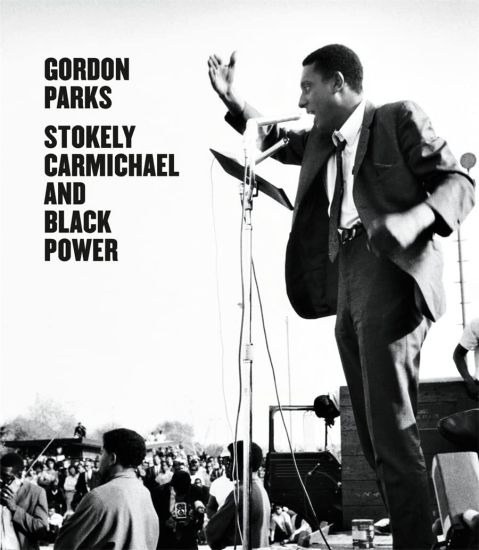
A nuanced profile, in image and text, of the great Black Power leader at the exhilarating moment of the movement's ascendancyGordon Parks' 1967 Life magazine essay "Whip of Black Power" is a nuanced profile of the young, controversial civil rights leader Stokely Carmichael. As chairman of the Student Nonviolent Coordinating Committee, Carmichael gained national attention and inspired media backlash when he issued the call for Black Power in Greenwood, Mississippi, in June 1966. Parks shadowed him from the fall of 1966 to the spring of 1967, as Carmichael gave speeches, headed meetings and promoted the growing Black Power movement. Parks' photos and writing addressed Carmichael's intelligence and humor, presenting the whole man behind the headline-making speeches and revealing his own advocacy of Black Power and its message of self-determination and love.Stokely Carmichael and Black Power delves into Parks' groundbreaking presentation of Carmichael, with analysis of his images and accompanying text about the charismatic leader. Lisa Volpe explores Parks' complex understanding of the movement and its leader, and Cedric Johnson frames Black Power within the heightened political moment of the late 1960s. Carmichael's own voice is represented through a reprint of his important 1966 essay "What We Want."Gordon Parks (1912-2006) was a photographer, filmmaker, musician and author whose 50-year career focused on American culture, social justice, the civil rights movement and the Black American experience. Born into poverty and segregation in Fort Scott, Kansas, Parks was awarded the Julius Rosenwald Fellowship in 1942, which led to a position with the Farm Security Administration. In 1969 he became the first Black American to write and direct a major feature film, The Learning Tree, and his next directorial endeavor, Shaft (1971), helped define a film genre.
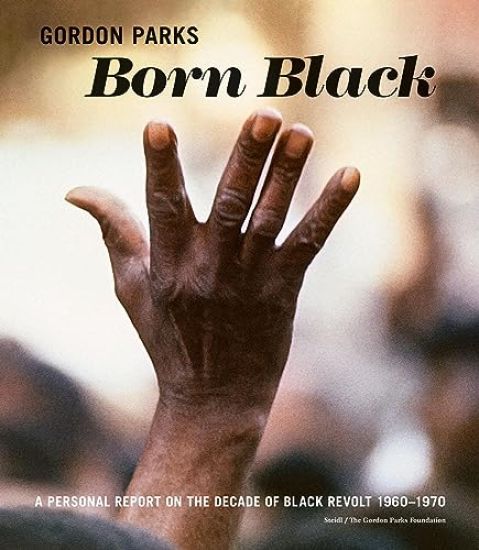
Gordon Parks: Born Black
STEIDL PUBLISHERS
2024
sidottu
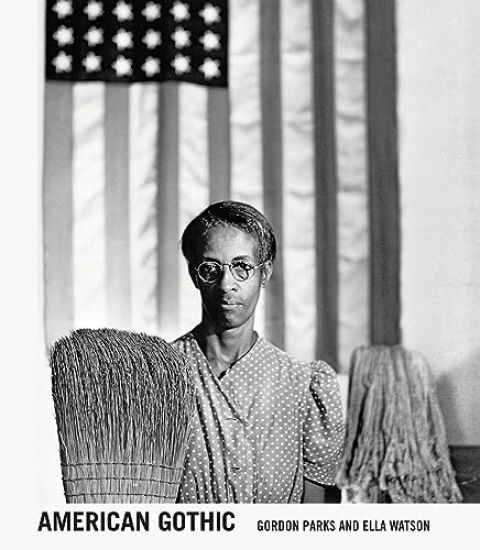
Gordon Parks: American Gothic
STEIDL PUBLISHERS
2024
sidottu
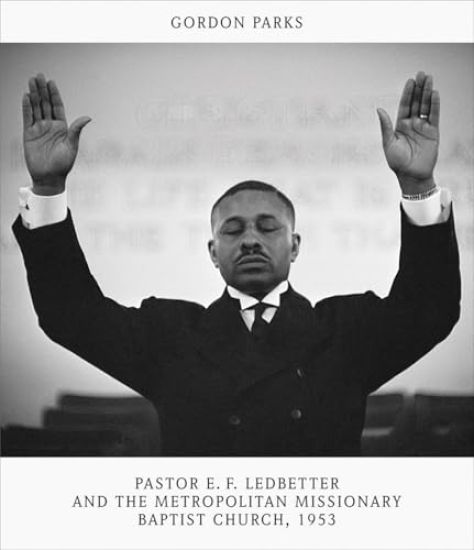
Gordon Parks: Pastor E. F. Ledbetter and The Metropolitan Missionary Baptist Church, 1953
STEIDL PUBLISHERS
2025
sidottu
The first feature article that Parks both wrote and photographed is reassembled through previously unseen images, contact sheets, ephemeral material and Parks' original manuscript In 1953, Gordon Parks returned to Chicago on an assignment for Life magazine to photograph the Metropolitan Missionary Baptist Church and the Reverend Ernest F. Ledbetter Sr. for a series on American religious life. This would be the first assignment for which he was both writer as well as photographer. Parks approached the Near West Side church with a decisive eye toward composing compelling images that conveyed simultaneously the universal humanity and local specificity of the religious community. Life never published his photographs or essay, yet as this book demonstrates, Parks' visual and textual representation of Black religious life powerfully documents the dynamism of a community shaped by the Great Migration and Chicago's industrial landscape. This publication features more than 65 previously unpublished photographs and contact sheets, complemented by Parks' unseen manuscript and ephemeral material from the private collection of the Ledbetter family. A range of scholarly essays provides further insight and contextual analysis in art history, cultural geography, Black religious studies and creative writing.Gordon Parks (1912-2006) was an acclaimed American photographer and film director prominent in US documentary photojournalism, particularly in issues of civil rights and poverty. His many photographic series include his iconic photos of poor Americans during the 1940s (taken for the Farm Security Administration Program) and his photographic essays for Life magazine. He directed films including Shaft and the semiautobiographical The Learning Tree. This book was published in association with The Gordon Parks Foundation; Howard University.
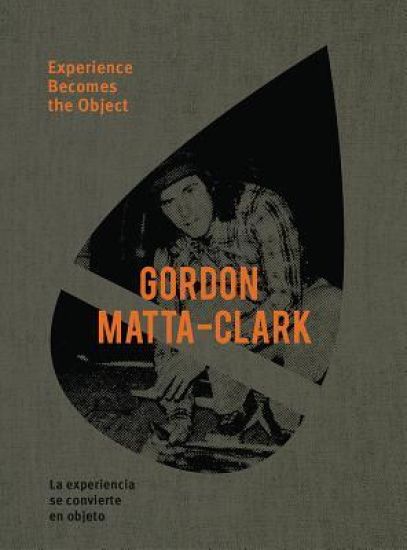
Gordon Matta-Clark (1943-78) died at only 35 of pancreatic cancer and has since become a cult figure of late 20th-century art. Trained in architecture at Cornell, he went on to question the field's conventions in vivid projects--performance and recycling pieces, space and texture works and word games--some of which excised holes into existing buildings or assembled deeds to New York City alleys and curbs. The artist used a variety of media to document his work, including film, video and photography. His work and words, while sophisticated enough to make him an "artist's artist," and colossal and outgoing enough to draw public attention and affection, were always also grounded in social or political convictions. In the early 1970s, Matta-Clark developed the idea of "anarchitecture," which encompassed his interest in voids, gaps and left-over spaces. Gordon Matta-Clark: Experience Becomes the Object collects five essays and ten individual interviews with various friends and family members of Matta-Clark's. Together, they outline a biographical profile and offer an analysis of the historical period in which the artist developed his short but successful career. New, never-before-published material and photographs as well as an exclusive link to the documentary Crosswords: Matta-Clark's Friends by Matias Cardone are also included.
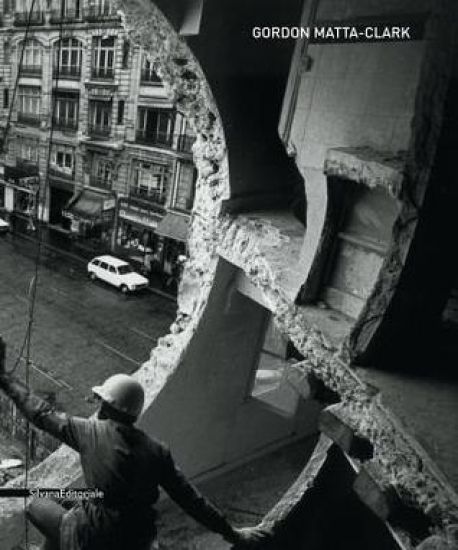
Covers the brief but groundbreaking career of the self-proclaimed 'anarchitect' Gordon Matta-Clark (1943-1978), one of the most influential American artists of the 1970s. The immense ambition and scale of Gordon Matta-Clark's projects, and their fearless reimagining of the urban landscape, challenged city-dwellers to reconsider the very notion of built structure and the fragility of seemingly unassailable edifices. Matta-Clark's first interventions took place in abandoned, derelict structures, upon which he performed his famous 'building cuts' and 'intersects'. First published in 2008 (for a show at SMS Contemporanea in Siena), and organised thematically and chronologically, this substantial volume looks at these and other bodies of work, such as the Food restaurant, the performances, the 'estates' and the artist's pursuit of alternative economical housing. The catalogue also includes a filmography and critical essays, plus an interview done by Judith Russi Kirshner in 1978. Text in English and Italian.

Gordon At Khartoum; Being A Personal Narrative Of Events, In Continuation Of "A Secret History Of The English Occupation Of Egypt"
Wilfrid Scawen Blunt
Alpha Edition
2020
pokkari

The Narrative of Gordon Sellar Who Emigrated to Canada in 1825
Gordon Sellar
ALPHA EDITION
2021
pokkari

Gordon Craig: Soldier of Fortune follows the journey of a young man who is thrust into a world of risk, intrigue, and moral complexity after a chance encounter with a mysterious stranger. As Craig becomes involved in a high-stakes plan to impersonate an estranged heir, he faces challenges that force him to question his values. The promise of wealth draws him into a dangerous deception, but the moral implications of his choices weigh heavily on him. As he navigates a world of impersonation and shifting allegiances, Craig must confront his own sense of right and wrong, ultimately shaping his character through personal growth and the consequences of his decisions. The narrative delves into the tension between ambition and integrity, examining how one's choices in a morally ambiguous world can alter the course of their life. As Craig grapples with his involvement in the deception and the pressure to succeed, he begins to understand the true cost of his actions and the complexities of personal morality in the pursuit of wealth and adventure.


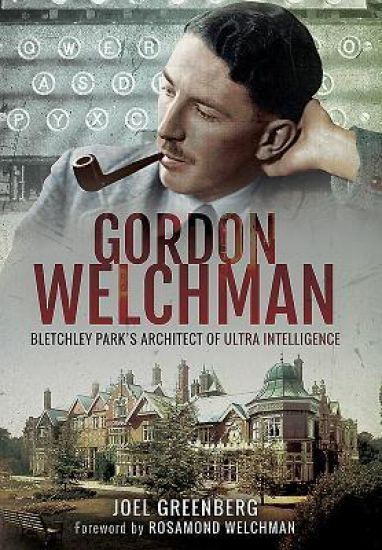
'A magnificent biography which finally provides recognition to one of Bletchley's and Britain's lost heroes.' Michael Smith. The Official Secrets Act and the passing of time have prevented the Bletchley Park story from being told by many of its key participants. Here at last is a book which allows some of them to speak for the first time. Gordon Welchman was one of the Park's most important figures. Like Turing, his pioneering work was fundamental to the success of Bletchley Park and helped pave the way for the birth of the digital age. Yet, his story is largely unknown to many. His book, The Hut Six Story, was the first to reveal not only how they broke the codes, but how it was done on an industrial scale. Its publication created such a stir in GCHQ and the NSA that Welchman was forbidden to discuss the book or his wartime work with the media. In order to finally set the record straight, Bletchley Park historian Joel Greenberg has drawn on Welchman's personal papers and correspondence with wartime colleagues which lay undisturbed in his son's loft for many years.Packed with fascinating new insights, this is essential reading for anyone interested in the clandestine activities at Bletchley Park.
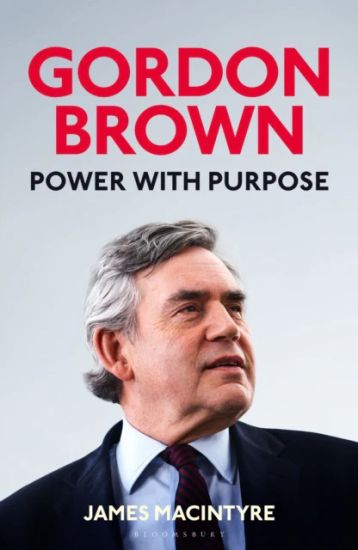
'A serious and consequential analysis of a serious and consequential politician' Alastair Campbell 'Fascinating and well written' Matthew Parris 'Tells us more than we have ever known about this highly significant figure' Shelagh Fogarty A compelling new biography of former prime minister Gordon Brown, a dominant figure in the Labour Party for five decades. More than fifteen years since he left Downing Street, Brown continues to wield significant influence among the current generation. Polls regularly suggest he is the most popular living former prime minister. Yet his short time in Number 10 ended in bitterness and election defeat. In James Macintyre’s fascinating new biography, he provides a definitive portrait of a true political giant. Based on unique access to Brown’s personal archive and interviews with his family, friends, colleagues and political rivals - including Tony Blair, David Cameron and Alastair Campbell, among many others - Macintyre reveals the private man behind the public figure. We gain unprecedented insight into his family life, his faith and what it is that still motivates him. From his political birth as a teenaged student at Edinburgh University to his ongoing efforts to improve children’s education around the world, Brown’s passionate engagement in politics remains undimmed. Macintyre takes the reader to the heart of the action, providing fresh perspectives on key events in Brown’s career, whether it’s the battle for the Labour leadership in 1994, the invasion of Iraq, the challenges of coping with the global financial crash in 2008 or the Scottish independence and Brexit referendums. Gordon Brown: Power with Purpose not only outlines Brown’s formidable legacy but shows how, even as he reaches the age of seventy-five, there is still a powerful purpose in all he does that can inspire anyone who wants to create meaningful change.