Kirjojen hintavertailu. Mukana 11 717 486 kirjaa ja 12 kauppaa.

Kirjahaku

Etsi kirjoja tekijän nimen, kirjan nimen tai ISBN:n perusteella.

1000 tulosta hakusanalla Ian Merkel

Ian Stanley (golfer)

Ian Stanley (golfer)

VDM Publishing House
2010
nidottu
Observera att förlaget som ger ut denna produkt baserar innehållet i sina produkter på fria källor som Wikipedia. Boken är med stor sannolikhet endast ett utdrag ur dessa informationskällor, alltså inte en vanlig bok i den bemärkelsen.
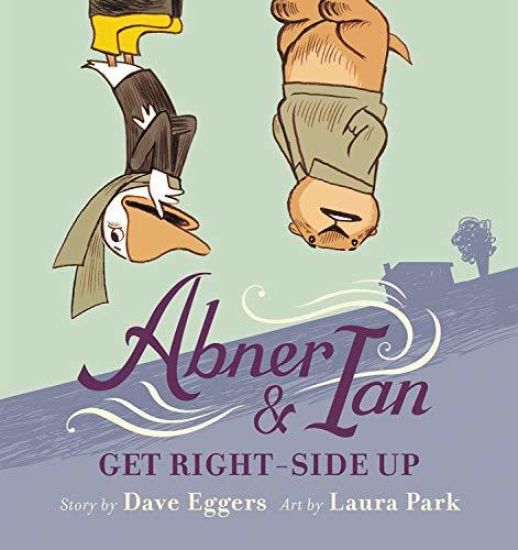
Abner & Ian Get Right-Side Up

Abner & Ian Get Right-Side Up

Dave Eggers

Little, Brown Young Readers
2019
sidottu
Abner and Ian are stuck sideways on the pages of their debut picture book. They can't start the story like this! Ian is trying to be brave, despite his dizziness and fear of heights. But don't worry, because Abner has a plan: Readers will shake and turn the book until they get right side up! Sounds easy, right? Think again, because the real solution may be the opposite of what you'd expect.With the odd couple wit of Elephant & Piggie, the interactive appeal of Press Here, and a timeless charm all their own, Abner & Ian offer readers of all ages 80 pages of fast-paced fun.
Reconsidering Ian McHarg

Reconsidering Ian McHarg

Ignacio Bunster-Ossa

Routledge
2019
sidottu
In 1969 Ian McHarg laid out a new approach to land-use planning. His seminal work, Design by Nature, blazed the trail for sustainable urban development. The road was paved with good intentions. But where exactly did it lead? And where do we go from here?Reconsidering Ian McHarg offers a fresh assessment of McHarg‘s lessons and legacy. It applauds his call for environmental stewardship while acknowledging its unintended results. For McHarg‘s idyllic developments at the edge of nature turned greenfield sites into suburban communities. They added to sprawl and made America more dependent on cars. And they may even have delayed the kind of urban redevelopment needed to make today‘s cities more sustainable.
The Ian Fleming Miscellany

The Ian Fleming Miscellany

Andrew Cook

The History Press Ltd
2015
sidottu
The name Ian Fleming is synonymous with British espionage, both with his work as a naval intelligence officer in the Second World War as well as with his creation of the most famous fictional spy in literary history: James Bond. This book centres on Ian Fleming the man, his contradictions and his public and private personality. It examines the person behind the myth and how in particular he managed (unsuccessfully at first) to create a film franchise that has lasted over fifty years. It considers Fleming’s reputation as a writer, the ‘formula method’ he perfected and that formula’s reliance on the recycling of real individuals and events, as well as the occasional reliance on plagiarism. It uniquely accesses a number of recently opened government files that shed light on previously unknown wartime operations, such as the Air Ministry’s top secret ‘Operation Grand Slam’, which was used in Goldfinger.
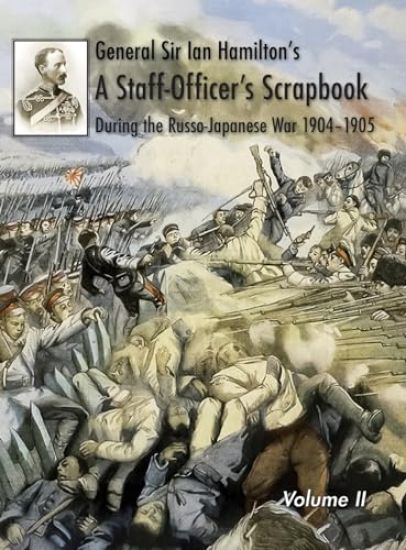
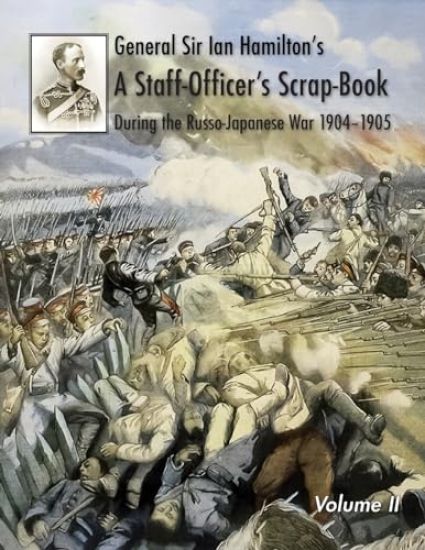
General Sir Ian Hamilton's Staff Officer's Scrap-Book during the Russo-Japanese War 1904-1905: Volume II
Russia's humiliating defeat in the Russo-Japanese War of 1904-1905 had profound effects. Domestically, it accelerated revolutionary discontent in Russia and enhanced Japan's national image as a modern state. Internationally, it shattered long-standing beliefs in European military dominance; it also marked a significant step on the road to the First World War. For these reasons and others, the war has attracted considerable attention from historians.As Hamilton was the military attach of the British Indian Army serving with the Japanese army in Manchuria during the Russo-Japanese War, he was well placed to publish in 1907 this impressive eye witness account to a military confrontation between a well-known European army and a less-familiar Asian army. Good maps (many in colour), a full index and 600+ pages make this facsimile two-volume set a fine reference for the modern scholar, of a war that is still the classic example of a conflict waged for purely imperialistic motives, a rivalry for the control of Korea and Manchuria and indeed for the mastery of the Far East and China.
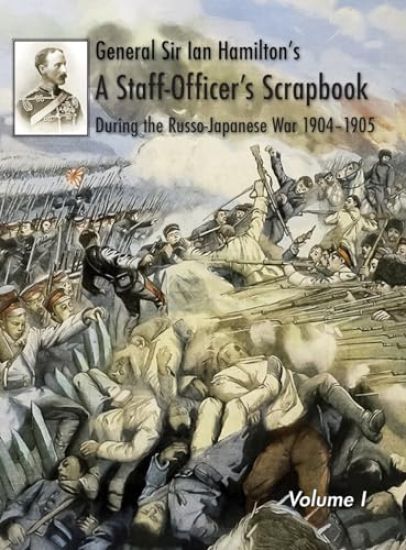
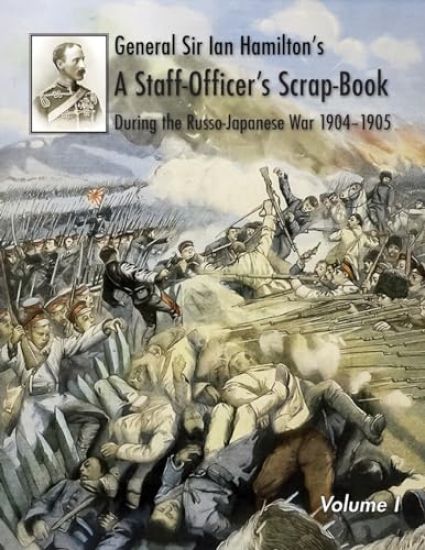
General Sir Ian Hamilton's Staff Officer's Scrap-Book during the Russo-Japanese War 1904-1905: Volume I
Russia's humiliating defeat in the Russo-Japanese War of 1904-1905 had profound effects. Domestically, it accelerated revolutionary discontent in Russia and enhanced Japan's national image as a modern state. Internationally, it shattered long-standing beliefs in European military dominance; it also marked a significant step on the road to the First World War. For these reasons and others, the war has attracted considerable attention from historians.As Hamilton was the military attach of the British Indian Army serving with the Japanese army in Manchuria during the Russo-Japanese War, he was well placed to publish in 1907 this impressive eye witness account to a military confrontation between a well-known European army and a less-familiar Asian army. Good maps (many in colour), a full index and 600+ pages make this facsimile two-volume set a fine reference for the modern scholar, of a war that is still the classic example of a conflict waged for purely imperialistic motives, a rivalry for the control of Korea and Manchuria and indeed for the mastery of the Far East and China.
General Sir Ian Hamilton's Staff Officer's Scrap-Book during the Russo-Japanese War 1904-1905: Volume II
Russia's humiliating defeat in the Russo-Japanese War of 1904-1905 had profound effects. Domestically, it accelerated revolutionary discontent in Russia and enhanced Japan's national image as a modern state. Internationally, it shattered long-standing beliefs in European military dominance; it also marked a significant step on the road to the First World War. For these reasons and others, the war has attracted considerable attention from historians.As Hamilton was the military attach of the British Indian Army serving with the Japanese army in Manchuria during the Russo-Japanese War, he was well placed to publish in 1907 this impressive eye witness account to a military confrontation between a well-known European army and a less-familiar Asian army. Good maps (many in colour), a full index and 600+ pages make this facsimile two-volume set a fine reference for the modern scholar, of a war that is still the classic example of a conflict waged for purely imperialistic motives, a rivalry for the control of Korea and Manchuria and indeed for the mastery of the Far East and China.
General Sir Ian Hamilton's Staff Officer's Scrap-Book during the Russo-Japanese War 1904-1905
Russia's humiliating defeat in the Russo-Japanese War of 1904-1905 had profound effects. Domestically, it accelerated revolutionary discontent in Russia and enhanced Japan's national image as a modern state. Internationally, it shattered long-standing beliefs in European military dominance; it also marked a significant step on the road to the First World War. For these reasons and others, the war has attracted considerable attention from historians.As Hamilton was the military attach of the British Indian Army serving with the Japanese army in Manchuria during the Russo-Japanese War, he was well placed to publish in 1907 this impressive eye witness account to a military confrontation between a well-known European army and a less-familiar Asian army. Good maps (many in colour), a full index and 600+ pages make this facsimile two-volume set a fine reference for the modern scholar, of a war that is still the classic example of a conflict waged for purely imperialistic motives, a rivalry for the control of Korea and Manchuria and indeed for the mastery of the Far East and China.
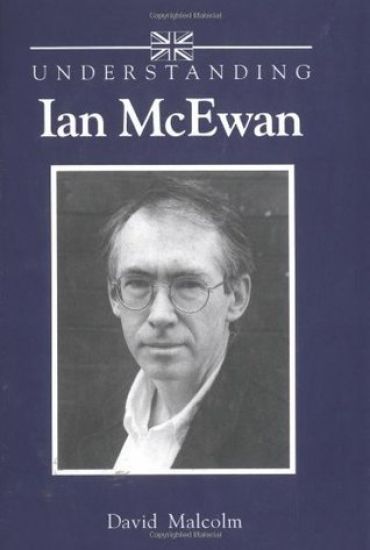
Understanding Ian McEwan

Understanding Ian McEwan

David Malcolm

University of South Carolina Press
2002
sidottu
This is a discussion of the work of one of Britain's most highly regarded novelists and the winner of the 1998 Booker Prize. David Malcolm places Ian McEwan's work in the context of British literature's particular dynamism in the last decades of the 20th century. He also examines McEwan's relationship to feminism, concern with rationalism and science, use of moral perspective, and proclivity toward fragmentation. Malcolm offers close readings of McEwan's early short stories, which he recognizes as traditional and conservative in technique despite their shocking subject matter, and all of McEwan's novels. Employing the third novel, ""The Child in Time"", as the fulcrum for his discussion, Malcolm explores the themes of incest, espionage, moral self-flagellation, sexual fixation, political dysfunction, and personal antipathy evident in the other fiction. He illuminates the continuities obscured by the conventional approach to McEwan's fiction and raises the question whether McEwan is a novelist of brilliant fragments or of overall coherence.