Kirjojen hintavertailu. Mukana 11 342 296 kirjaa ja 12 kauppaa.

Kirjahaku

Etsi kirjoja tekijän nimen, kirjan nimen tai ISBN:n perusteella.

1000 tulosta hakusanalla James Stratton

James Shirley and Early Modern Theatre
James Shirley was the last great dramatist of the English Renaissance, shining out among other luminaries such as John Ford, Ben Jonson, or Richard Brome. This collection considers Shirley within the culture of his time, and highlights his contribution to seventeenth-century English literature as poet and playwright. Individual essays explore Shirley’s musical theatre and spoken verse, performance conditions, female agency and politics, and the presentation of his work in manuscript and print. Collectively, the essays assemble a larger picture of Caroline drama, showing it to be more than simply a nostalgic endgame, its poets daintily sipping hemlock on the eve of the Civil Wars. Shirley’s literary versatility and long life, spanning the last days of Queen Elizabeth I to the ascension of Charles II, make him an ideal writer through whom to examine the distinctive qualities of Caroline theatre.
James Mill's Utilitarian Logic and Politics
James Mill’s (1773–1836) role in the development of utilitarian thought in the nineteenth century has been overshadowed both by John Stuart Mill (1806–1873) and by Jeremy Bentham (1748–1832). Of the three, the elder Mill is considered to be the least original and with the least important, if any, contributions to utilitarian theory. True as this statement may be, even those who have tried to challenge some of its aspects take the common portrayal of Mill – "the rationalist, the maker of syllogisms, the geometrician" – as given. This book does not. Studying James Mill’s background has surprising results with reference to influences outside the Benthamite tradition as well as unexpected implications for his contributions to debates of his time. The book focuses on his political ideas, the ways in which he communicated them and the ways in which he formed them in an attempt to reveal a portrait of Mill unencumbered from the legacy of Thomas Babington Macaulay’s (1800–1859) brilliant essay "Utilitarian Logic and Politics".
James Joyce and Education

James Joyce and Education

Len Platt

Routledge
2021
sidottu
James Joyce and Education is the first full-length study of education across the Joyce oeuvre. A new account of how the politics and aesthetics of the Joyce text is informed by historical contexts, it is the latest contribution to the growing contemporary debate about education, late modernism and literary innovation.This highly original account reads Dubliners, A Portrait of the Artist as a Young Man, Ulysses and Finnegans Wake in new and challenging ways. It produces the Joyce text as a complex and comic devotion to the representation of schooled education — an exemplification of the elitism that state schooling was historically designed to reproduce and a devastating undoing of the epistemologies it was designed to sustain. Chapters explore a range of themes, including Joyce and radical education, the impact of Nietzsche’s writing on Joyce and women and education.The book will appeal to researchers, scholars and postgraduate students in the fields of literature in education, pedagogy, Joyce scholarship and modernism.
James VI and Noble Power in Scotland 1578-1603
James VI and Noble Power in Scotland explores how Scotland was governed in the late sixteenth century by examining the dynamic between King James and his nobles from the end of his formal minority in 1578 until his accession to the English throne in 1603. The collection assesses James’ relationship with his nobility, detailing how he interacted with them, and how they fought, co-operated with and understood each other. It includes case studies from across Scotland from the Highlands to the Borders and burghs, and on major individual events such as the famous Gowrie conspiracy. Themes such as the nature of government in Scotland and religion as a shaper of policy and faction are addressed, as well as broader perspectives on the British and European nobility, bloodfeuds, and state-building in the early modern period. The ten chapters together challenge well-established notions that James aimed to be a modern, centralising monarch seeking to curb the traditional structures of power, and that the period represented a period of crisis for the traditional and unrestrained culture of feuding nobility. It is demonstrated that King James was a competent and successful manager of his kingdom who demanded a new level of obedience as a ‘universal king’. This volume offers students of Stuart Britain a fresh and valuable perspective on James and his reign.
James Orr, Poet and Irish Radical

James Orr, Poet and Irish Radical

Carol Baraniuk

Routledge
2019
nidottu
James Orr was the foremost of the Ulster Weaver poets and has been favourably compared to his near contemporary Robert Burns. Baraniuk looks at Orr's life and work, examining the changing social, political and theological context of his writing and reassessing his contribution to radical literature and culture during the Romantic era.
James Monroe, John Marshall and ‘The Excellence of Our Institutions’, 1817–1825
When James Monroe became president in 1817, the United States urgently needed a national transportation system to connect new states and territories in the west with older states facing the Atlantic Ocean. In 1824, the Supreme Court declared that Congress had the power to regulate traffic on all navigable rivers and lakes in the United States. Congress began clearing obstructions from rivers, and these projects enabled steamboats to transform cross-country travel in the United States. This book explains how building a nationwide economic market was essential to secure the loyalty of geographically remote regions to the new republic. Aschenbrenner defends the activist role of President James Monroe (1817-1825) and Chief Justice John Marshall (1801-1835). Under their leadership, the federal government made national prosperity its 'Job One'. The market revolution transformed the daily lives of households and businesses in the United States and proved to Americans that they shared a common social and economic destiny. As Monroe declared at the conclusion of his Presidency: 'We find abundant cause to felicitate ourselves in the excellence of our institutions'.
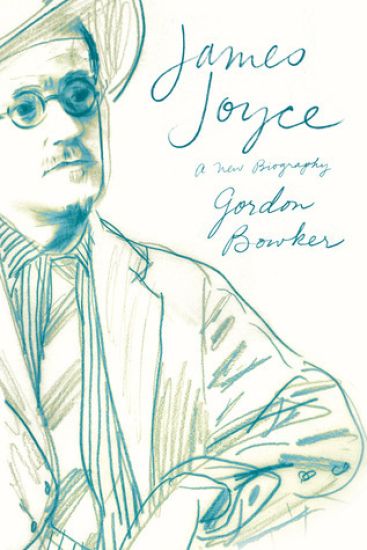
James Joyce

James Joyce

Gordon Bowker

Farrar, Straus and Giroux
2013
nidottu
A revealing biography of one of the twentieth century's towering literary figures James Joyce is one of the greatest writers of the twentieth century, foundational in the history of literary modernism. Yet Joyce's genius was not immediately recognized, nor was his success easily won. At twenty-two the author chose a life of exile; he battled poverty and financial dependency for much of his adult life; his out-of-wedlock relationship with Nora Barnacle was scandalous for the time; and the attitudes he held toward Ireland, England, sexuality, politics, Catholicism, popular culture--to name a few--were complex, contradictory, and controversial. In James Joyce, Gordon Bowker, draws on material recently come to light and reconsiders the two signal works produced about Joyce's life--Herbert Gorman's authorized biography of 1939 and Richard Ellmann's magisterial tome of 1959. By intimately binding together the life and work of this singular Irish novelist, Bowker gives us a masterful, fresh, eminently readable contribution to our understanding both of Joyce's personality and of the monumental opus he created. Bowker goes further than his predecessors in exploring Joyce's inner depths--his ambivalent relationships to England, to his native Ireland, and to Judaism--and uncovers revealing evidence. He draws convincing correspondences between the iconic fictional characters Joyce created and their real-life models and inspirations. And he paints a nuanced portrait of a man of enormous complexity, the clearest picture yet of an extraordinary writer who continues to influence and fascinate more than a century after his birth.
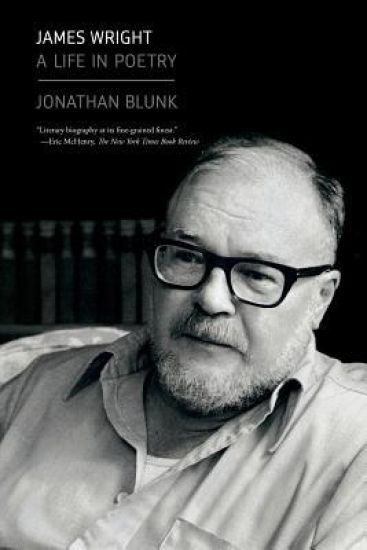
James Wright: A Life in Poetry

James Wright: A Life in Poetry

Jonathan Blunk

Farrar, Straus and Giroux
2019
nidottu
The authorized and sweeping biography of one of America's most complex, influential, and enduring poets In the extraordinary generation of American poets who came of age in the middle of the twentieth century, James Wright (1927-1980) was frequently placed at the top of the list. With a fierce, single-minded devotion to his work, Wright escaped the steel town of his Depression-era childhood in the Ohio valley to become a revered professor of English literature and a Pulitzer Prize winner. But his hometown remained at the heart of his work, and he courted a rough, enduring muse from his vivid memories of the Midwest. A full-throated lyricism and classical poise became his tools, honesty and unwavering compassion his trademark. Using meticulous research, hundreds of interviews, and Wright's public readings, Jonathan Blunk's authorized biography explores the poet's life and work with exceptional candor, making full use of Wright's extensive unpublished work--letters, poems, translations, and personal journals. Focusing on the tensions that forced Wright's poetic breakthroughs and the relationships that plunged him to emotional depths, Blunk provides a spirited portrait, and a fascinating depiction of this turbulent period in American letters. A gifted translator and mesmerizing reader, Wright appears throughout in all his complex and eloquent urgency. Discerning yet expansive, James Wright will change the way the poet's work is understood and inspire a new appreciation for his enduring achievement.
Collected Novels and Plays of James Merrill

Collected Novels and Plays of James Merrill

James Merrill

Alfred A. Knopf
2005
pokkari
Following the widely celebrated Collected Poems, this second volume in the series of James Merrill's works brings us Merrill as novelist and playwright. Just as in his poems we come upon prose pieces, dramatic dialogue, and even a short play in verse, in his novels and plays we find the rhythms of his poetry reflected and given new form. Merrill's first novel, The Seraglio, is a daring roman clef derived in large part from his early life as the cosmopolitan son of Charles Merrill, one of America's most famous twentieth-century financiers. Written in a highly refined prose that owes something to Henry James, the book is a compelling portrait of the luxury and treachery swirling around the Southampton beach house of an irrepressible family patriarch, with his many mistresses and ex-mistresses in attendance, told from the point of view of his lively but troubled son. At the other end of the narrative spectrum we find The (Diblos) Notebook, an experimental novel in which a young American's adventures on a Greek island are deconstructed and assembled into a tentative fiction before our eyes. Merrill's plays, including the one-act comedy of manners The Bait and the Chekhovian The Immortal Husband--a reinvention of the myth of Tithonus, who was granted eternal life but not eternal youth--are also fresh turns on his characteristic themes: home and travel, reality and artifice, simplicity and complication. And, for the first time in print, here is Merrill's short play The Birthday, a fledgling effort written in 1947 and a fascinating window onto the concern with spiritual communication and the otherwordly that would later blossom into his great epic, The Changing Light at Sandover.
James (Pulitzer Prize Winner)

James (Pulitzer Prize Winner)

Percival Everett

Doubleday Books
2024
sidottu
PULITZER PRIZE WINNER - #1 NEW YORK TIMES BESTSELLER - NATIONAL BOOK AWARD WINNER - A brilliant, action-packed reimagining of Adventures of Huckleberry Finn, both harrowing and darkly humorous, told from the enslaved Jim's point of view NATIONAL BOOK CRITICS CIRCLE AWARD FINALIST - ONE OF THE NEW YORK TIMES BOOK REVIEW'S 10 BEST BOOKS OF THE YEAR - SHORTLISTED FOR THE BOOKER PRIZE - KIRKUS PRIZE WINNER - A LOS ANGELES TIMES BEST FICTION BOOK OF THE LAST 30 YEARS In development as a feature film to be produced by Steven Spielberg - A Best Book of the Year: The New York Times Book Review, LA Times, The New Yorker, The Atlantic, The Economist, TIME, and more. "Genius"--The Atlantic - "A masterpiece that will help redefine one of the classics of American literature, while also being a major achievement on its own."--Chicago Tribune - "A provocative, enlightening literary work of art."--The Boston Globe - "Everett's most thrilling novel, but also his most soulful."--The New York Times When Jim overhears that he is about to be sold to a man in New Orleans, separated from his wife and daughter forever, he runs away until he can formulate a plan. Meanwhile, Huck has faked his own death to escape his violent father. As all readers of American literature know, thus begins the dangerous and transcendent journey by raft down the Mississippi River toward the elusive and unreliable promise of the Free States and beyond. Brimming with the electrifying humor and lacerating observations that have made Everett a literary icon, this brilliant and tender novel radically illuminates Jim's agency, intelligence, and compassion as never before. James is destined to be a major publishing event and a cornerstone of twenty-first century American literature.
James (MR EXP)
A brilliant, action-packed reimagining of The Adventures of Huckleberry Finn, both harrowing and ferociously funny, told from the enslaved Jim's point of view.From the "literary icon" (Oprah Daily), Pulitzer Prize Finalist, and one of the most decorated writers of our lifetimeWhen the enslaved Jim overhears that he is about to be sold to a man in New Orleans, separated from his wife and daughter forever, he decides to hide on nearby Jackson Island until he can formulate a plan. Meanwhile, Huck Finn has faked his own death to escape his violent father, recently returned to town. As all readers of American literature know, thus begins the dangerous and transcendent journey by raft down the Mississippi River toward the elusive and too-often-unreliable promise of the Free States and beyond.While many narrative set pieces of The Adventures of Huckleberry Finn remain in place (floods and storms, stumbling across both unexpected death and unexpected treasure in the myriad stopping points along the river's banks, encountering the scam artists posing as the Duke and Dauphin), Jim's agency, intelligence and compassion are shown in a radically new light. Brimming with the electrifying humor and lacerating observations that have made Everett a "literary icon" (Oprah Daily), and one of the most decorated writers of our lifetime, James is destined to be a major publishing event and a cornerstone of twenty-first century American literature.
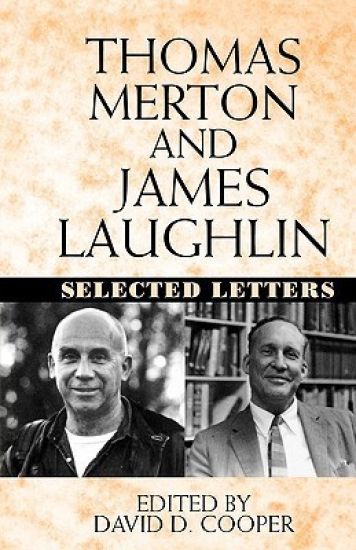
Thomas Merton and James Laughlin

Thomas Merton and James Laughlin

James Laughlin; Thomas Merton

WW NORTON CO
1997
nidottu
Thomas Merton may have seemed an unlikely candidate for a best-selling author. Cloistered in a remote Kentucky monastery, Merton struggled as a young man to reconcile the contemplative life he sought as a monk and his very public passion for writing. Publisher James Laughlin saw Merton's talent and played the muse, encouraging him with the poems, essays, and diaries of other writers and publishing nearly everything Merton sent in return. Ironically, the very society Merton rejected upon entering the monastery embraced his work, bringing him publishing success only dreamed of by more eager authors. Soon Merton discovered he had a podium, a voice, and a responsibility that weighed as heavily on him as his previous quest for silence. Laughlin's encouragement remained constant throughout, as political ally, publishing adviser, and supporting friend. Nearly thirty years of rich correspondence documents this strong literary and personal relationship and traces the remarkable development of Merton's vision: from an early focus on matters internal and religious, to a tremendous world view encompassing issues of race, politics, war, and the spiritual decay of modern society.
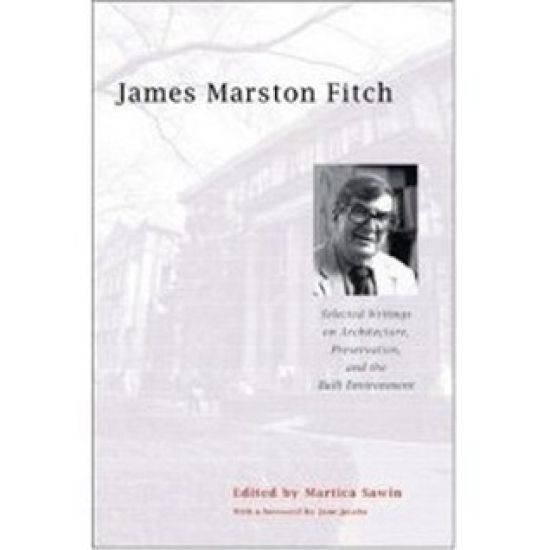
James Marston Fitch

James Marston Fitch

Jane Jacobs

WW Norton Co
2007
nidottu
In this anthology of his writings, spanning over sixty years of his professional career, Fitch's incisive ideas and observations on a range of subjects are brought to light in a single, readable volume. Whether a lament of the loss of functionalism in the wake of modernism, a celebration of the architectural perfection embodied in the University of Virginia campus, or an appeal to architects to heed factors of climate and environment in their designs, Fitch's essays are both provocative and pragmatic and always deeply rooted in the human element. In the face of contemporary concerns such as suburban sprawl, energy expenditure, and environmental degradation, Fitch's writings resonate today more than ever.
James Joyce's Ulysses: A Study

James Joyce's Ulysses: A Study

Stuart Gilbert

VINTAGE
1955
pokkari
With the passing of each year, Ulysses receives wider recognition and greater acclaim as a modern literary classic. To comprehend Joyce's masterpiece fully, to gain insight into its significance and structure, the serious reader will find this analytical and systematic guide invaluable. In this exegesis, written under Joyce's supervision, Stuart Gilbert presents a work that is at once scholarly, authoritative and stimulating. "Of the many efforts made to interpret Joyce's magnum opus, the best by far is that by Stuart Gilbert."-- Chicago Sunday Tribune"Most serious Joyce readers owe to Stuart Gilbert their first introduction to the richness and complexity of Ulysses. His monumental pioneer analysis remains an essential Baedeker."-- Saturday Review
James' Introduction to English Law

James' Introduction to English Law

Peter Shears; Graham Stephenson

LexisNexis UK
1996
nidottu
This edition is now under the authorship of Peter Shears and Graham Stephenson, who have added a contemporary outlook to its traditional virtues. It includes the latest legislation such as the Criminal Justice and Public Order Act 1994 and its effect on civil liberties, the Sale and Supply of Goods Act 1994 and the Trade Union Reform and Employment Rights Act 1993. There is also an expanded treatment of the Law Commission, updated details concerning the court system, significant changes to the material on the legal profession and a reflection of the increasing importance of European Law; as well as further statute and much new case law.
The Essential James Hillman

The Essential James Hillman

James Hillman

Routledge
1990
nidottu
First published in 1990. James Hillman is one of the leading figures in archetypal psychology and one of the most creative minds in psychology. This anthology of his writings presents carefully selected, choice passages from many of his seminal essays and work on archetypal psychology. Fundamental themes in Hillman's thought form the chapters of the book: poetic basis of mind, psychological polytheism, dreams, love, therapy. The book is intended for the reader who wants an overview or introduction to his highly original approach, an approach that draws on mythology, renaissance philosophy, alchemy and critical readings of Jung and Freud.
James I

James I

Christopher Durston

Routledge
1993
nidottu
James I has traditionally been portrayed as a foolish and unpleasant man. However, the last two decades have seen a rehabilitation of James I by historians, who have begun to appreciate that in some areas, in particular foreign policy and religion, he pursued sensible policies and achieved a considerable degree of success. Christopher Durston deals with the personality and political ability of the monarch, the court, finance, parliament, foreign policy and religion, including his record in Scotland and the legacies of Elizabeth I. The arguments of the revisionist historians concerning James's relations with his parliaments are examined in detail, as well as the recent `postrevisionist' backlash.
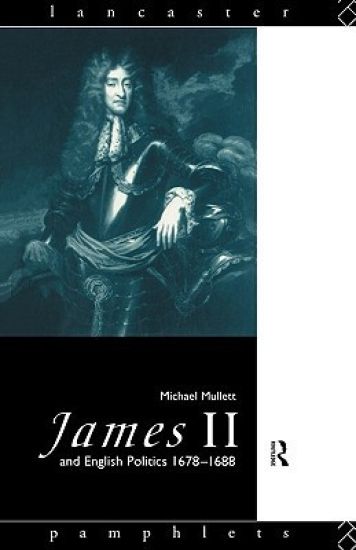
James II and English Politics 1678-1688
Michael Mullett reconsiders, in the light of recent r attlee's* and of altering perceptions of the English past, the events of the crucial years 1678-1688; from the Restoration era through the exclusion crisis, and subsequent reign of James to the `Glorious Revolution' of 1688. He focuses on the central role of James, Duke of York, and from 1685-1688, King of England, but locates the growing difficulties of his reign within the wider context of political and religious trends.