Kirjojen hintavertailu. Mukana 12 595 353 kirjaa ja 12 kauppaa.

Kirjahaku

Etsi kirjoja tekijän nimen, kirjan nimen tai ISBN:n perusteella.

1000 tulosta hakusanalla John F. Perry M. D.

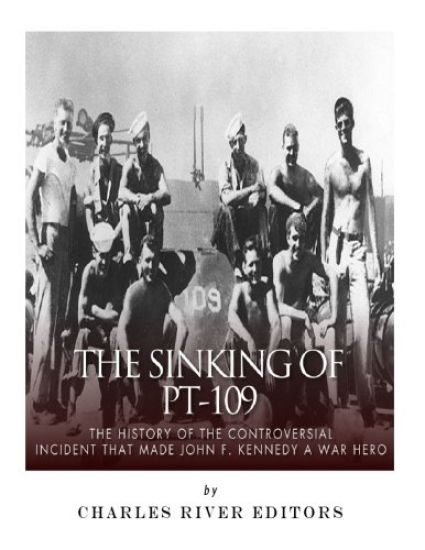
The Sinking of PT-109: The History of the Controversial Incident That Made John F. Kennedy a War Hero
*Includes pictures *Includes quotes from Kennedy and the crew about PT-109 *Includes footnotes and a bibliography for further reading *Includes a table of contents "There's nothing in the book about a situation like this. A lot of you have families and some of you have children. What do you want to do? I have nothing to lose." - John F. Kennedy after the collision with a Japanese destroyer On the night of August 1, 1943 and in the early morning hours of the next day, one of America's many patrol torpedo boats in the Pacific, PT-109 and her crew of 12 men, was performing its usual role in the Pacific Islands: a night patrol of the Blackett Strait in search of enemy convoys transporting large numbers of Japanese troops to southern Guadalcanal and other strategic locations. However, on this dark, moonless night, PT-109, with its engines idling to avoid creating wake, was severed in two by a collision with a Japanese destroyer, the Amagiri. With only seconds to respond after sighting the destroyer, the crew was unable to get the boat out of the Japanese destroyer's path, and it's unclear whether the Japanese destroyer even knew the other boat was there. While the destroyer suffered minimal damage, two crew members on PT-109 were instantly killed, and the other 10 who initially survived would have to struggle for their lives. In many ways, what happened following the collision is remembered better than the actual sinking, in part because the survivors' tale was so harrowing, and their survival was marked by their own bravery. Though the role and effectiveness of PT Boats continues to be a topic of debate, the crew's survival is a story of undisputed valor and providence. Of course, the story's association with a future president never hurts, and like so much of John F. Kennedy's life, the PT-109 incident is controversial. Kennedy survived the attack and famously saved nearly a dozen of his crew, one of whom he saved by swimming for several miles while clenching the crew member's lifejacket with his teeth. A member of the swim team at Harvard, Kennedy also did the bulk of the swimming when looking for food after the survivors reached a deserted island. For this, Kennedy ultimately received the Navy and Marine Corps Medal, but in the process, he suffered a back injury that would trouble him for the rest of his life. After recovering, Kennedy re-enlisted in the Navy and served on PT-59 until he was honorably discharged in 1945, just before Japan's surrender and the end of the War. Kennedy received numerous military awards, among them a Purple Heart and a World War II Victory Metal, and though he was not yet president and perhaps only held that ambition in the back of his mind, Kennedy had already seen more combat than most presidents. Naturally, his future political career would benefit from his service, but given that he was in charge of the crew at the time of PT-109's sinking, critics and detractors have pointed to it and try to pin the blame on him. The Sinking of PT-109 chronicles the famous and controversial incident that made Kennedy a hero during World War II. Along with pictures of important people, places, and events, you will learn about PT-109 like never before, in no time at all.
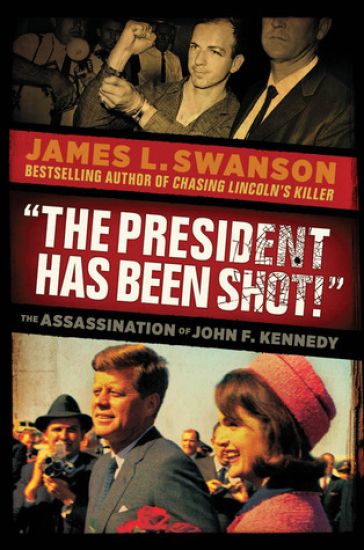
The President Has Been Shot!: The Assassination of John F. Kennedy
A YALSA-ALA Excellence in Young Adult Nonfiction Award FinalistA breathtaking and dramatic account of the JFK assassination by the New York Times bestselling author of Chasing Lincoln's Killer.In his new young-adult book on the Kennedy assassination, James Swanson will transport readers back to one of the most shocking, sad, and terrifying events in American history. As he did in his bestselling Scholastic YA book, Chasing Lincoln's Killer, Swanson deploys his signature "you are there" style -- a riveting, ticking-clock pace, with an unprecedented eye for dramatic details and impeccable historical accuracy -- to tell the story of the JFK assassination as it has never been told before.The book is illustrated with archival photos, diagrams, source notes, bibliography, places to visit, and index.
The President Has Been Shot!: The Assassination of John F. Kennedy
This YALSA-ALA Excellence in Young Adult Nonfiction Award Finalist is a breathtaking and dramatic account of JFK's assassination by NY Times bestselling author of CHASING LINCOLN'S KILLER.In his award-winning young-adult book on the Kennedy assassination, James Swanson will transport readers back to one of the most shocking, sad, and terrifying events in American history. As he did in his bestselling Scholastic YA book, CHASING LINCOLN'S KILLER, Swanson deploys his signature "you are there" style -- a riveting, ticking-clock pace, with an unprecedented eye for dramatic details and impeccable historical accuracy. Here is the story of the JFK assassination as it has never been told before.
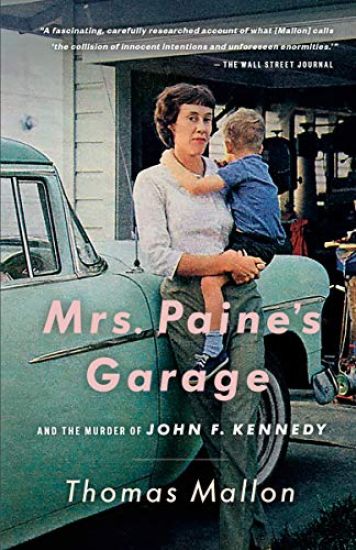
Mrs. Paine's Garage: And the Murder of John F. Kennedy
Nearly forty years have passed since Ruth Hyde Paine, a Quaker housewife in suburban Dallas, offered shelter and assistance to a young man named Lee Harvey Oswald and his Russian wife, Marina. For nine months in 1963, Mrs. Paine was so deeply involved in the Oswalds' lives that she eventually became one of the Warren Commission's most important witnesses. Mrs. Paine's Garage is the tragic story of a well-intentioned woman who found Oswald the job that put him six floors above Dealey Plaza--into which, on November 22, he fired a rifle he'd kept hidden inside Mrs. Paine's house. But this is also a tale of survival and resiliency: the story of a devout, open-hearted woman who weathered a whirlwind of investigation, suspicion, and betrayal, and who refused to allow her enmeshment in the calamity of that November to crush her own life. Thomas Mallon gives us a disturbing account of generosity and secrets, of suppressed memories and tragic might-have-beens, of coincidences more eerie than conspiracy theory. His book is unlike any other work that has been published on the murder of President Kennedy.
Airlift to America: How Barack Obama, Sr., John F. Kennedy, Tom Mboya, and 800 East African Students Changed Their World and Ours
This is the long-hidden saga of how a handful of Americans and East Africans fought the British colonial government, the U.S. State Department, and segregation to transport to, or support at, U.S. and Canadian universities, between 1959 and 1963, nearly 800 young East African men and women who would go on to change their world and ours. The students supported included Barack Obama Sr., future father of a U.S. president, Wangari Maathai, future Nobel Peace Prize laureate, as well as the nation-builders of post-colonial East Africa -- cabinet ministers, ambassadors, university chancellors, clinic and school founders. The airlift was conceived by the unusual partnership of the charismatic, later-assassinated Kenyan Tom Mboya and William X. Scheinman, a young American entrepreneur, with supporting roles played by Jackie Robinson, Harry Belafonte, Sidney Poitier, and Martin Luther King, Jr. The airlift even had an impact on the 1960 presidential race, as Vice-President Richard Nixon tried to muscle the State Department into funding the project to prevent Senator Jack Kennedy from using his family foundation to do so and reaping the political benefit. The book is based on the files of the airlift's sponsor, the African American Students Foundation, untouched for almost fifty years.
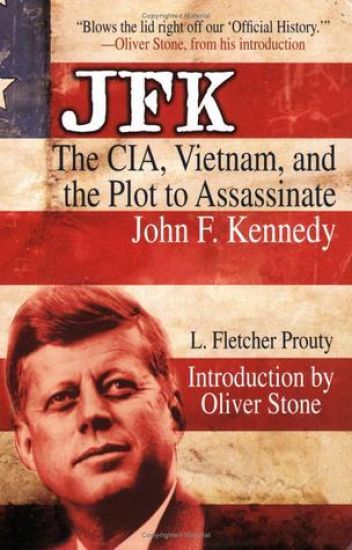
JFK: The Cia, Vietnam, and the Plot to Assassinate John F. Kennedy
With an Introduction by Oliver Stone, the director of the hit movie JFK and a Foreword by Jesse Ventura, author of the New York Times Bestseller, They Killed our President, here is an insider's view of JFK, the CIA, Vietnam and the plot that led to the assassination of President John F. Kennedy. Colonel L. Fletcher Prouty, the former CIA operative known as "X," offers a history-shaking perspective on the assassination of president John F. Kennedy. His theories were the basis for Oliver Stone's controversial movie JFK. Prouty believed that Kennedy's death was a coup d' tat, and he backs this belief up with his knowledge of the security arrangements at Dallas and other tidbits that only a CIA insider would know (for example, that every member of Kennedy's cabinet was abroad at the time of Kennedy's assassination). His discussion of the elite power base he believes controlled the U.S. government will scare and enlighten anyone who wants to know who was really behind the assassination of John F. Kennedy. This is must reading for anyone who believes that Lee Harvey Oswald did not act along and that a complicated plot led to the murder of President Kennedy.
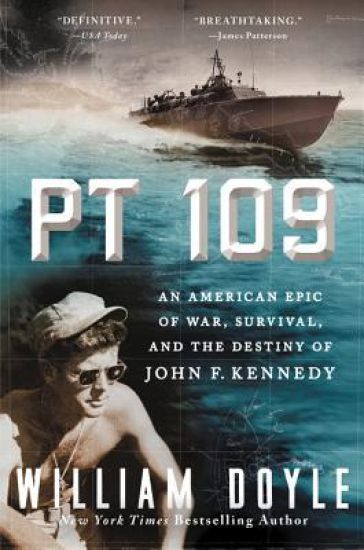
PT 109: An American Epic of War, Survival, and the Destiny of John F. Kennedy
The extraordinary World War II story of shipwreck and survival that paved John F. Kennedy's path to power - hailed as a "breathtaking account" by James Patterson, "masterfully written" by historian Douglas Brinkley, and "the finest book" ever written on the subject by Lt. Commander William Liebenow, the man who rescued JFK and the PT 109 crew in August 1943.In the early morning darkness of August 2, 1943, during a chaotic nighttime skirmish amid the Solomon Islands, the Japanese destroyer Amagiri barreled through thick fog and struck the U.S. Navy's motor torpedo boat PT 109, splitting the craft nearly in half and killing two American sailors instantly. The sea erupted in flames as the 109's skipper, John F. Kennedy, and the ten surviving crewmen under his command desperately clung to the sinking wreckage; 1,200 feet of ink-black, shark-infested water loomed beneath. "All hands lost," came the reports back to the Americans' base: no rescue was coming for the men of PT 109. Their desperate ordeal was just beginning--so too was one of the most remarkable tales of World War II, one whose astonishing afterlife would culminate two decades later in the White House.Drawing on original interviews with the last living links to the events, previously untapped Japanese wartime archives, and a wealth of archival documents from the Kennedy Library, including a lost first-hand account by JFK himself, bestselling author William Doyle has crafted a thrilling and definitive account of the sinking of PT 109 and its shipwrecked crew's heroics. Equally fascinating is the story's second act, in which Doyle explores in new detail how this extraordinary episode shaped Kennedy's character and fate, proving instrumental to achieving his presidential ambitions: "Without PT 109, there never would have been a President John F. Kennedy," declared JFK aide David Powers.Featuring castaways on a deserted island, a spy network of Solomon Island natives, an Australian coast watcher hidden on the side of a volcano, an S.O.S. note carved into a coconut, and a daring rescue attempt led by Kennedy's fellow American PT boats, PT 109 is an unforgettable American epic of war and destiny.
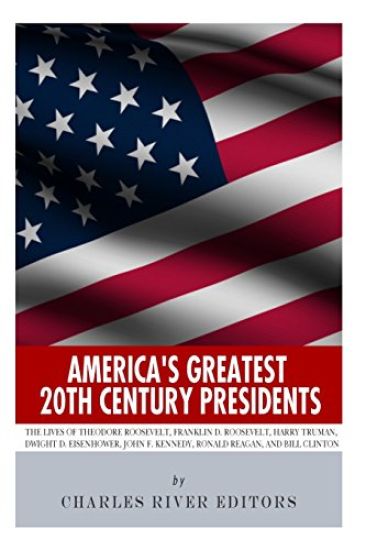
America's Greatest 20th Century Presidents: The Lives of Theodore Roosevelt, Franklin D. Roosevelt, Harry Truman, Dwight D. Eisenhower, John F. Kenned
*Includes dozens of pictures of the presidents and important people, places, and events in their lives. *Includes an original introduction for each president. *Includes bibliographies for further reading. If the 19th century was about America overcoming its own divisions to takes its place at the forefront of global affairs, the 20th century was about fulfilling those visions and goals. To get there, the nation needed the leadership of presidents of different stripes and ideologies to guide the United States toward its destiny. When McKinley was assassinated in 1901, young Theodore Roosevelt was thrust into the presidency, one that would earn him a place on Mount Rushmore, Roosevelt's "Square Deal" domestic policies favored average citizens while busting trusts and monopolies. Roosevelt also promoted conservation as an environmental stance, while his "speak softly and carry a big stick" foreign policy is still an oft used phrase today. Roosevelt even earned a Nobel Prize during his presidency. By the time Roosevelt died in 1919, he was an American icon. Franklin Delano Roosevelt might be America's greatest 20th century president, but there's no question that he was the most unique. A well-connected relative of Theodore Roosevelt, FDR was groomed for greatness until he was struck down by polio. Nevertheless, he persevered, rising through New York politics to reach the White House just as the country faced its greatest challenge since the Civil War. When President Franklin Roosevelt died in April 1945, Vice President Truman had to usher America through victory in Europe in his first month and decide to drop atomic bombs on Hiroshima and Nagasaki a few months later, but the end of World War II produced only the first of many consequential decisions Truman would face during his nearly 8 years in office. As president, Truman would lay the groundwork for the next 50 years of American foreign policy, as the architect of Cold War containment, the man who signed off on the Marshall Plan, and the commander-in-chief during much of the Korean War. During the middle of the 20th century, the United States completed its transformation into one of the world's superpowers, and few were as instrumental in this development as Dwight D. Eisenhower (1890-1969), renowned for being the nation's principal commanding general during World War II and the president who served during the early, tumultuous Cold War years. Despite being one of America's oldest presidents, Eisenhower redefined the public relations nature of the office, in addition to positioning America during the Cold War standoff with the Soviet Union. In many ways, John Fitzgerald Kennedy and his young family were the perfect embodiment of the '60s. In 1961, Kennedy made it seem like anything was possible, and Americans were eager to believe him. The Kennedy years were fondly and famously labeled "Camelot," by Jackie herself, suggesting an almost mythical quality about the young President and his family. In the famous movie Back to the Future, Marty McFly travels back to 1955, and, in an attempt to convince his friend Doc Brown that he is from 1985, tells the 1955 version of Doc Brown that Ronald Reagan is president. Doc looks at him incredulously and laughs, chortling, "Ronald Reagan? The actor?" In a story that could have come straight out of Hollywood, the golden actor rose through California politics to become California governor and eventually the 40th President. Widely hailed as the greatest politician of his era, Bill Clinton proved to be his own worst enemy, creating unnecessary scandals through his womanizing. Long considered the Democratic Party's greatest spokesman and surrogate, Clinton's presidency was defined by centrist "triangulation". And though he is still publicly popular and considered a great president, Clinton became just the second president to be impeached.