Kirjojen hintavertailu. Mukana 12 052 271 kirjaa ja 12 kauppaa.

Kirjahaku

Etsi kirjoja tekijän nimen, kirjan nimen tai ISBN:n perusteella.

1000 tulosta hakusanalla John Stuart

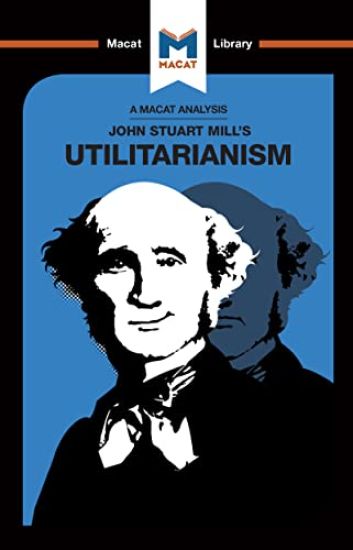
An Analysis of John Stuart Mills's Utilitarianism

An Analysis of John Stuart Mills's Utilitarianism

Tom Patrick; Sander Werkhoven

Macat International Limited
2017
nidottu
John Stuart Mill’s 1861 Utilitarianism remains one of the most widely known and influential works of moral philosophy ever written. It is also a model of critical thinking – one in which Mill’s reasoning and interpretation skills are used to create a well-structured, watertight, persuasive argument for his position on core questions in ethics. The central question, for Mill, was to decide upon a valid definition of right and wrong, and reason out his moral theory from there. Laying down valid, defensible definitions is a crucial aspect of good interpretative thinking, and Mill gets his in as early as possible. Actions are good, he suggests, if they increase happiness, and bad if they reduce happiness. But, vitally, it is not our own happiness that matters, but the total happiness of all those affected by a given action. From this interpretation of moral good, Mill is able to systematically reason out a coherent framework for calculating and judging overall happiness, while considering different kinds and qualities of happiness.Like any good example of reasoning, Mill’s argument consistently takes account of possible objections, building them into the structure of the book in order to acknowledge and counter them as he goes.
An Analysis of John Stuart Mill's On Liberty

An Analysis of John Stuart Mill's On Liberty

Ashleigh Campi; Lindsay Scorgie-Porter

Macat International Limited
2017
sidottu
In his wonderfully clear and cogent essay On Liberty, Mill contends that individuals should be as free as possible from interference by government. Proposing that individual fulfilment is the surest route to collective happiness, he argues passionately against the "tyranny of the majority," and sets out to create an alternative view of a practical politics that sets proper limits on the powers of government and society. The result, Mill argues, will be not only greater freedom, but also improved social progress. He reached these conclusions by re-interpreting a large body of existing political and philosophical thought – introducing insights drawn from several different schools of thought, and thereby creating an unparalleled defense of classic liberal principals. Much of the clarity of thought that Mill has become celebrated for is the product of his ability to explain meaning, define terms, and highlight problems and issues of definition – making him an exemplar of high quality interpretive thinking.
An Analysis of John Stuart Mills's Utilitarianism

An Analysis of John Stuart Mills's Utilitarianism

Tom Patrick; Sander Werkhoven

Macat International Limited
2017
sidottu
John Stuart Mill’s 1861 Utilitarianism remains one of the most widely known and influential works of moral philosophy ever written. It is also a model of critical thinking – one in which Mill’s reasoning and interpretation skills are used to create a well-structured, watertight, persuasive argument for his position on core questions in ethics. The central question, for Mill, was to decide upon a valid definition of right and wrong, and reason out his moral theory from there. Laying down valid, defensible definitions is a crucial aspect of good interpretative thinking, and Mill gets his in as early as possible. Actions are good, he suggests, if they increase happiness, and bad if they reduce happiness. But, vitally, it is not our own happiness that matters, but the total happiness of all those affected by a given action. From this interpretation of moral good, Mill is able to systematically reason out a coherent framework for calculating and judging overall happiness, while considering different kinds and qualities of happiness.Like any good example of reasoning, Mill’s argument consistently takes account of possible objections, building them into the structure of the book in order to acknowledge and counter them as he goes.
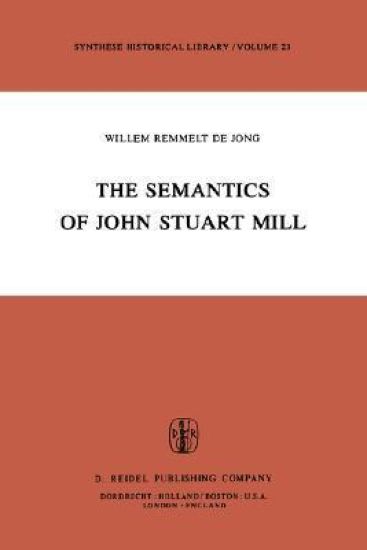
The Semantics of John Stuart Mill

The Semantics of John Stuart Mill

Kluwer Academic Publishers
1982
sidottu
The original, Dutch version of this book served in 1979 as a doctoral disserta­ tion in philosophy at the Free University in Amsterdam. In this preface to the - slightly revised - English translation, I wish once again to express my gratitude to my supervisors, Prof. J. van der Hoeven of the Free University and Prof. G. Nuchelmans of the University of Leiden, for their excellent and stimulating support. Professor van der Hoeven was associated with this project from the outset. It was a privilege to benefit from his incisive commentaries, especially in those instances where the objective was to break through to more fundamental insights. I shall not lightly forget his friendly and heartening encouragement. I am equally grateful for my discussions with Professor Nuchelmans. I almost always tried to follow his advice, since it was based upon awesome expertness and erudition. I am happy to have found in the person of Herbert Donald Morton, Th.M., M.A., an able and enthusiastic translator. Drs. Gerben Groenewoud made the translations of a number of the Latin citations. I acknowledge permission from Routledge and Kegan Paul and the University of Toronto Press to quote from The Collected Works of John Stuart Mill. And I thank the Netherlands Organization for the Advancement of Pure Research (Z.W.O.) for fmancing this translation.
The Semantics of John Stuart Mill
The original, Dutch version of this book served in 1979 as a doctoral disserta­ tion in philosophy at the Free University in Amsterdam. In this preface to the - slightly revised - English translation, I wish once again to express my gratitude to my supervisors, Prof. J. van der Hoeven of the Free University and Prof. G. Nuchelmans of the University of Leiden, for their excellent and stimulating support. Professor van der Hoeven was associated with this project from the outset. It was a privilege to benefit from his incisive commentaries, especially in those instances where the objective was to break through to more fundamental insights. I shall not lightly forget his friendly and heartening encouragement. I am equally grateful for my discussions with Professor Nuchelmans. I almost always tried to follow his advice, since it was based upon awesome expertness and erudition. I am happy to have found in the person of Herbert Donald Morton, Th.M., M.A., an able and enthusiastic translator. Drs. Gerben Groenewoud made the translations of a number of the Latin citations. I acknowledge permission from Routledge and Kegan Paul and the University of Toronto Press to quote from The Collected Works of John Stuart Mill. And I thank the Netherlands Organization for the Advancement of Pure Research (Z.W.O.) for fmancing this translation.
Freiheit Und Ordnung Bei John Stuart Mill Und Friedrich August Von Hayek
John Stuart Mill (1806-1873) und Friedrich August von Hayek (1899-1992) haben die jeweils bedeutsamsten Schriften zur Verteidigung der Freiheit im 19. und 20. Jahrhundert geschrieben. Das Buch will die Aktualitat ihres Denkens begreifbar machen. Zugleich schliesst es eine Lucke innerhalb der wissenschaftlichen Literatur, in der bisher ein systematischer Vergleich beider Theorien fehlt. Die Arbeit zeigt, dass Hayeks Theorie in permanenter Auseinandersetzung mit Person und Werk Mills entstanden ist. Aus den Aporien Mills erfolgt bei Hayek der Umschlag ins Gegenteil: der Ausschluss jedes Denkens in ethischen Kategorien und die Konstruktion einer a-ethischen, zugleich ethiklosen und ethikablehnenden Theorie. Doch auch sie ist zum Scheitern verurteilt."