Ulysses remains less widely read than most texts boasting such a canonical status, largely due to misunderstanding about how to read it, and this guide provides an easy to follow remedy. By showing how Joyce reacted to the historical and cultural context in which he was situated, the radical nature of his use of language is laid bare in a chapter-by-chapter analysis of Ulysses. This approach enables the student reader to read and enjoy the novel's plurality of styles and to understand the terms of critical debate surrounding the nature and significance of Joyce's novel.
What would the literary world be with an army of James Joyces? The idea is simple: 1) - Hire unsuspecting writers. 2) - Insert the literary gene where it matters. 3) - Collect from the ensuing bestsellers. Orchidectural tankar bellbox blinketey. Joyce's Gene. A novel by A. R. Eguiguren. Yontide naughtingels jigotty! Pass the word salad. Puerity hellabelow bellbox! Urine and water are half siblings.
Whether it was waged at Pitcairn Island, Nagasaki, or the Falkland Islands, whether during the Han Dynasty, the English Empire, or the Cold War, battles have been fought, people slaughtered, women raped, children orphaned, and so on, as the pages of history turn. The current world situation, in the very first years of the twenty-first century, is certainly no exception. The visual residue of these battles changes over time, growing more and more dense, more and more immediate. But always there have been maps, detailed cartographic evidence of what was known, what was planned, what was going to happen. For over a dozen years, Joyce Kozloff has centered her art on the theme of cartography, blending into her simulacra of old maps mutations that often raise geopolitical issues. She discovered in these images of physical terrain a mental territory as well--one that charts the topography of power. Boys' Art is a series of meticulous, densely collaged maps that Kozloff has fashioned from hundreds of years of source material, the most recent of which are her son Nik's childhood drawings of war. On top of her pristine pencil copies of historic military maps--culled from the Han dynasty to the Roosevelt administration--Kozloff has layered the movements of war, as found in Tin Tin and Babar, in a seventeenth-century woodblock by Hokusai, in a George Grosz pen and ink drawing, or a Leonardo da Vinci sketch. Surreal narratives emerge, pitting cartoon elephants against samurai warriors, scribbled monsters against Indians on horseback, and Renaissance soldiers against Frenchmen in khaki fatigues and pith helmets. Presented in an oversize format at a 1:1 scale with the original collages, Boys' Art lushly presents a series of work that unfortunately could not be more timely. But then, as Kozloff herself writes in the introduction, there has always been war. A special version of Boys' Art includes a hand-tinted etching by Joyce Kozloff, produced in a limited edition of 50 at the Vermont Studio Center Press.
In 1929, ten years before James Joyce completed "Finnegans Wake", Sylvia Beach published a strange book with a stranger title: "Our Exagmination Round His Factification for Incamination of Work in Progress". Worried by the confusion and attacks that constituted the general reception of his "Work in Progress" (the working title for "Finnegans Wake"), Joyce orchestrated this collection of twelve essays and two 'letters of protest' from such writers as Samuel Beckett, Stuart Gilbert, Eugene Jolas, Robert McAlmon, and William Carlos Williams. "Our Exagmination" represents an altogether unusual hybrid of criticism and advertisement, and since its first appearance has remained a touchstone as well as a point of contention for Joyce scholars. Eighty years later, Joyce's "Disciples Disciplined" reads the "Exagmination" as an integral part of the larger composition history and interpretive context of "Finnegans Wake" itself. This new collection of essays by fourteen outstanding Joycean scholars offers one essay in response to each of the original "Exagmination" contributions. From philosophically informed exegeses and new conceptions of international modernism to considerations of dance, film, and the flourishing field of genetic studies, these essays together exemplify an interdisciplinary criticism that is also a lively and ongoing conversation with that criticism's history.
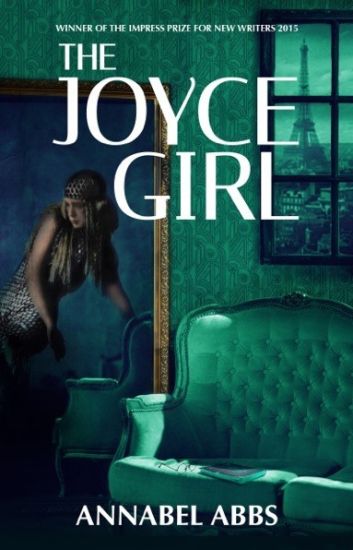
A mesmerising tale of love and madness inspired by the tragic life of Lucia Joyce, daughter of James Joyce. Inspired by a true story, 'The Joyce Girl' is a compelling and moving account of thwarted ambition and the destructive love of a father.
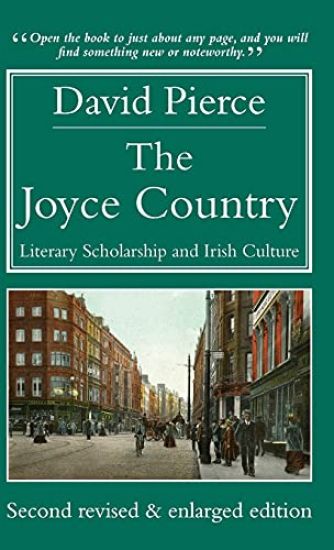
This new book by the eminent critic provides an informative and timely survey of contemporary approaches to Joyce and modern Irish writing over almost 40 years. In a fresh opening survey Pierce explores the new departure for fiction heralded by A Portrait of the Artist as a Young Man, and this is followed by essays on the hybrid landscape in Ulysses and on the distinctive style and humour of the 'Eumaeus' episode. Other pieces focus on the appeal of Irish short-story writer, Benedict Kiely, anthologies of Irish writing, and Irish writing in the years 2006-9. The second half of The Joyce Country is devoted to twenty-six reviews of books about Joyce written from the 1980s to the present and grouped under several headings including 'Joyce's European Cities', 'Joyce, Yeats and the Matter of Ireland', 'Ulysses in Perspective', and 'Joyce and Modernism'.
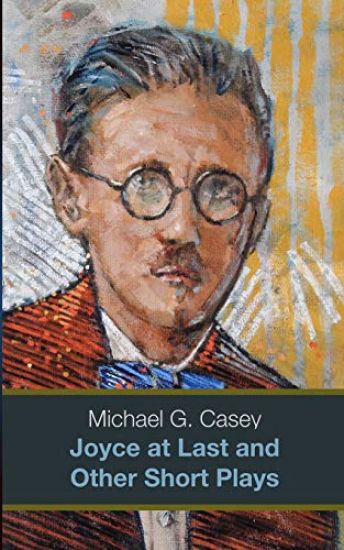
This collection of short plays begins with Joyce at Last, which was performed in Dublin and in the Henrik Ibsen Museum, Oslo - an appropriate venue, given James Joyce's admiration for Ibsen's work. The play is set in Paris where Joyce is making arrangements to travel to neutral Zurich just before World War II. His great work is behind him and, possibly for the first time, he reflects on his family, especially his children, Lucia and Giorgio, whose lives seem to be blighted. Could he have been a better parent? The fruits of his reminiscences come as a shock, a final epiphany. Many of the other plays were inspired by paintings in the National Gallery of Ireland and were performed in one of the public spaces of that institution. Audiences were impressed by the fusion of the dramatic and purely visual. The six plays following Joyce at Last deal with the following themes: a single mom captured by ISIL, a woman who fights to save her marriage, a sad recluse who hides away but still tries to help people from 'inside' a computer, a father who, because of a guilty secret, dreads his daughter's upcoming wedding, a dog which has been given the gift of awareness, and a conversation between Frederick William Burton and George Eliot. The other six plays are lighter in tone, and they range from a married couple with acute sexual problems, to a human clone who is expected to donate his heart; from a would-be writer who lives with his characters, to a vulture fund which has evicted the cousin of a mafia don; from elaborate sexual role-play, to confusion in the non-binary community of LGBT. The humour in these plays is 'greyish-black', and comes close to the bone of PC-ness; it is not for the faint-hearted. "It is possibly the ekphrastic plays in this collection - those based on paintings in the National Gallery of Ireland - that are the key to why the texts here are so compelling. An idea, once sparked to life here, goes where its own logic takes it, to great effect."- Peter FitzGerald
Dr. Mood's study returns Joyce's masterwork to the reader (and to accessibility) by a coupling of essential narrative themes that are humorous, sexy and suspenseful developments and a plot cycle that speaks to James Joyce's abiding fascination with femininity, gender, Irish politics and the social relevance of national literature and the world of the novel. Mood re connects Joyce's use of first appearance and first occurrence to its Shakespearean origin and purpose.
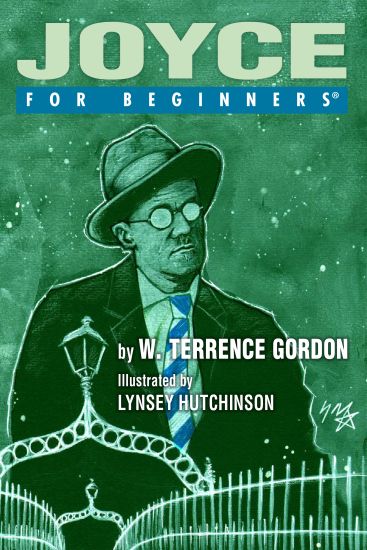
The works of James Joyce are part of the literary canon worldwide--and the need to have his works broken out into palatable pieces, even for the most avid of fans, is known the world over as well. In Joyce For Beginners, W. Terrence Gordon does just that. With the assistance of Lynsey Hutchinson's humorous illustrations throughout, Gordon successfully captures bits and pieces of Joyce's works and reconstructs them in a picturesque way for the reader to visualize the stories. Gordon also examines Joyce's passion for music and how it materializes in his writing. This will be the perfect addition to any Joyce lover's library.
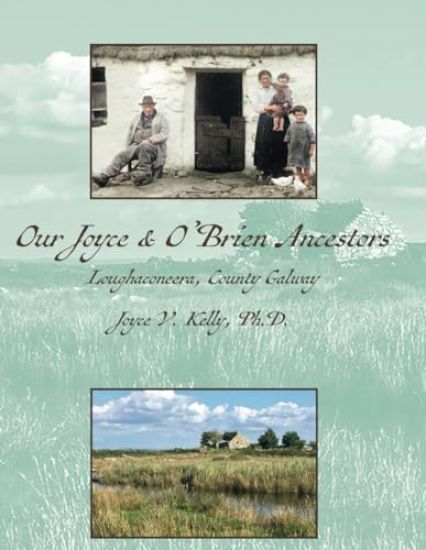
Are you trying to identify and describe your ancestors' locations in Ireland? Our Joyce & O'Brien Ancestors, one of a three-book Our Irish Ancestors series, may help you by documenting the processes family historian Joyce V. Kelly, Ph.D. used to identify her paternal grandmother, her grandmother's family, and their location in Ireland before they emigrated. Grandmother Mary (Joyce) Kelly (1872/73-1918) was born in Loughaconeera, near the Rosmuc peninsula in the Connemara area of County Galway. Mary left Loughaconeera and emigrated to the United States in 1888 when she was nearly sixteen years old.Guided by the author's examples, you can learn to: (1) analyze DNA match results and share information with DNA cousins to identify possible common ancestors; (2) obtain help from professional genealogists and the Irish volunteer genealogical community; (3) access and analyze church and civil records; (4) develop a simple, step-by-step Genealogical Proof Argument to build and document valid family trees; and (5) write and share your family history. Our Joyce and O'Brien Ancestors also provides an extensive social history of 19th century Ireland, describing significant cultural, economic, and religious events in the lives of Irish tenant farmers.
Where has the sonnet gone? Why don't poets write sonnets today? Fourteen lines, iambic pentameter, ABAB CDCD EFEF GG rhyme scheme, where did it go? Well, poets do write them, but they don't usually publish whole books of them. What would it look like if someone did? What would those poems look like? In Joyce is Not Here: 101 Modern Shakespearean Sonnets Andrew Barker scrupulously applies Shakespeare's favourite poetic form to the modern world to see what the sonnet can capture. Barker mostly eschews the authorial voice in favour of gloriously cynical characters who view their worlds in times of realization and change with a toughness and stoicism that helps them accept their situations. But there is tenderness here too, accessible reminiscences about the influences of music, television, theatre and film, poems where Blair, Trump, Kevin Spacy, Don Draper, Stanley Kowalski and Willie Loman make appearances. Andrew Barker has made Shakespearean sonnets for the modern world. Where has the sonnet gone? The sonnet is here
Joyce Bernice DeansThe Lives Of Her ChildrenVolume 2Introduction: The story continues on the life of my mother's and the six children she died and left behind. My mother, was very young when she started having children, around 19 or 20 years of age. Based on my estimation of the year that my mother had her first child, which had to be around 1955, and her second child was born in 1958. She died in 1969 at the age of 33, from what I was told. I certainly believe that the actual year my mother died, was not told to us accurately. For some reasons my insights, and my intuition has to lead me to question what I was told about my mother death too many different sides of told to us Bernice Joyce Deans, a young woman my mother's who died so young, she was only 32, or possibly 33 years of age when she died. As I reflect on the woman who gave me life, my insights have led every step of the way to believe that my mother started having children around the age of 19, or 20 years of age, based on the ages of the children she died and left behind. From oldest to the youngest child my mother conceived. Letters and documents have shown that the last child my mother had was born in 1967, yet from what I was told her the last child was born in 1966. Could there be a mix up with the year my brother was born or was Could there be a mix up with the year my brother was born or was his birth year recorded inaccurately? Based on the year that we were born, I do believe that my mother last child was born in 1966. The first two children that my mother had were born three years apart, the next three were born one year apart. The last two children three years apart. So based on that information, I do believe that my brother was born in 1966. Someone definitely recorded his birth year wrong, listing him being born in 1967. Listed as following is the year of birth on the six children my mother had, I am very certain on the birth of the last four children, yet the year of birth for the first two children is based on the age that my mother passed away. First Child Born 1955Second Child Born 1958Third Child Born 1961Fourth Child Born 1962Fifth Child Born 1963Sixth Child Born 1966Myles Benjamin Weir Born 1966 (Letters showed that a child was born in 1967, who is that child? Or was there a mistake made in the letter stating that a child was born in 1967. The story continues on the life of my mother's and the six children she died and left behind. My mother, was very young when she started having children, around 19 or 20 years of age, Based on the estimation of the year that my mother had her first child, which had to be around 1955 and her and her second child was born in 1958. She died in 1969 at the age of 33, from what I was told. I certainly believe that the actual year my mother died, was not told to us accurately. For some reasons my insights, and my intuition has to lead me to question what I was told about how my mother died, too many different sides to the story. Imagine a young mother died an untimely death and she really was not sick Imagine a young mother died an untimely death, and from what I have heard from distant relatives who knew my mother, she was not sick or had any life-threatening illness that would have shortened her life. Although, I was told by my aunt, my mother sister that my mother started to lose her mind, and tend to wander off from one place to the next, and that my mother played the disappearing act at times. She also stated that my mother was placed in a psychiatric hospital, where she was brutally murdered by a group of people who went crazy, started attacking her that they beat her to death..told by an elder family member my cousin, her father, and my mother were brother and sister. She grew up with my mother, so she was able tell me different things about my mother, from the way she walk to the way she talked. She walked with dignity and pride and was very proud
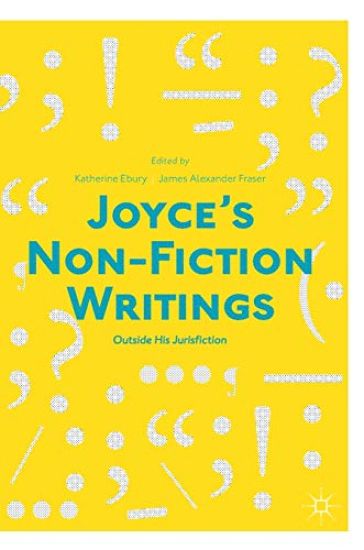
This book presents a fundamental shift in the way we approach, discuss, and evaluate Joyce’s non-fictional writings. Rather than simply proposing or applying new methodologies, it historicises and reconceives the critical assumptions that have shaped scholarly approaches to these works for over half a century, showing that non-fiction as a categorical distinction, no matter how sensible it appears, crumbles under closer inspection. Bringing into conversation a group of key Joyce scholars, this volume acts not only as a vital reimagining of our critical relationship to Joyce’s non-fiction, but as a contribution to similar debates being carried out across the broad range of modernist studies.
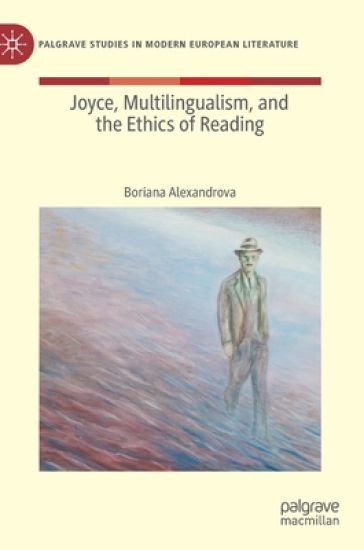
What if our notions of the nation as a site of belonging, the home as a safe place, or the mother tongue as a means to fluent comprehension did not apply? What if fluency were a hindrance, whilst our differences and contradictions held the keys to radical new ways of knowing? Taking inspiration from the practice of language learning and translation, this book explores the extraordinary creative possibilities, politics, and ethics of adopting a multilingual approach to reading. Its case study, James Joyce’s Finnegans Wake (1939), is a text in equal measures exhilarating and exasperating: an unhinged portrait of European modernist debates on transculturalism and globalisation, here considered on the backdrop of current discourses on migration, race, gender, and neurodiversity. This book offers a fresh perspective on the illuminating, if perplexing, work of a beloved European modernist, whilst posing questions far beyond Joyce: on negotiating difference in an increasingly globalised world; on braving the difficulty of relating across languages and cultures; and ultimately on imagining possible futures where multilingual literature can empower us to read, relate, and conceptualise differently.
What if our notions of the nation as a site of belonging, the home as a safe place, or the mother tongue as a means to fluent comprehension did not apply? What if fluency were a hindrance, whilst our differences and contradictions held the keys to radical new ways of knowing? Taking inspiration from the practice of language learning and translation, this book explores the extraordinary creative possibilities, politics, and ethics of adopting a multilingual approach to reading. Its case study, James Joyce’s Finnegans Wake (1939), is a text in equal measures exhilarating and exasperating: an unhinged portrait of European modernist debates on transculturalism and globalisation, here considered on the backdrop of current discourses on migration, race, gender, and neurodiversity. This book offers a fresh perspective on the illuminating, if perplexing, work of a beloved European modernist, whilst posing questions far beyond Joyce: on negotiating difference in an increasingly globalised world; on braving the difficulty of relating across languages and cultures; and ultimately on imagining possible futures where multilingual literature can empower us to read, relate, and conceptualise differently.
This book presents a fundamental shift in the way we approach, discuss, and evaluate Joyce’s non-fictional writings. Rather than simply proposing or applying new methodologies, it historicises and reconceives the critical assumptions that have shaped scholarly approaches to these works for over half a century, showing that non-fiction as a categorical distinction, no matter how sensible it appears, crumbles under closer inspection. Bringing into conversation a group of key Joyce scholars, this volume acts not only as a vital reimagining of our critical relationship to Joyce’s non-fiction, but as a contribution to similar debates being carried out across the broad range of modernist studies.
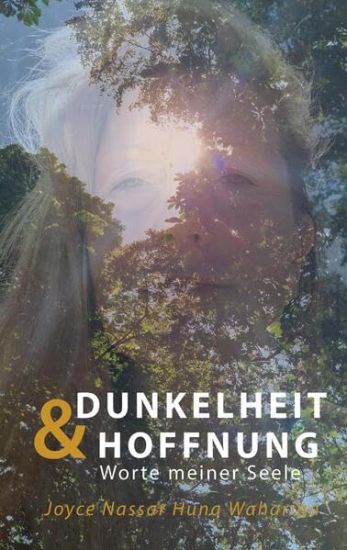
Joyce Nassar Huna Waharina ist berlebende ihrer eigenen Vergangenheit, die gef llt war mit Missbrauch, Gewalt, S chten, Depressionen & Traumata, ngsten und Burnouts. Sie war unter den H llen des Lebens und wurde medizinisch und von ihrem Umfeld aufgegeben. Sie lebte in einem Strudel von innerer Selbstzerst rung und permanenter Traurigkeit. Immer auf der Suche danach, geliebt, gesehen und wertgesch tzt zu werden, und zwar so, wie sie gewesen ist, und nicht wie sie funktionieren oder geformt werden sollte. Sie lebte irgendwann die eigene Selbstaufgabe, den Widerstand, die Depressionen und verlor sich in all den Diagnosen, die sie erhalten hatte. Vor 16 Jahren, als sie 30 Jahre alt war, wurde ihr mitgeteilt, dass dieser Zustand der Hoffnungslosigkeit, des Schmerzes und der permanenten inneren Dunkelheit, chronisch sei und sie m sse lernen damit zu leben. Diese Aussage entfachte ein neues Feuer in ihr. Sie traf die Entscheidung, endlich zu leben. Ohne dass sie berhaupt wusste, was wirkliches LEBEN ist, machte sie sich auf den Weg. Sie fing an, an sich selbst zu glauben, fand M glichkeiten f r ihre Heilung und die Aktivierung ihrer eigenen Selbstheilungskr fte, ver nderte ihr Bewusstsein zum Leben und wurde gesund. Heutzutage steht sie f r die Hoffnung, dem Glauben an sich selbst und daf r, niemals aufzugeben. Ihre Gedichte sind eine Reise von 1993-2010, durch ihre Dunkelheiten, Depressionen und Momente der Hoffnung. Lass dich inspirieren von einer Reise in der Dunkelheit, die mehr und mehr ins Licht f hrte.