Dom Combe presents the reader a sharply focused profile of a dedicated and extraordinary woman of the 20th century, Henry James'sister-in-law, independent in spirit and passionately devoted for more than 60 years to the cause of Gregorian Chant and its liturgical implementation. Drawing on her voluminous correspondence, he traces the main events of her life following her conversion in 1904 to the Catholic Church. From these letters emerges the clear image of a fiercely strong-willed and gracious woman who pursued her ideals with relentless zeal.
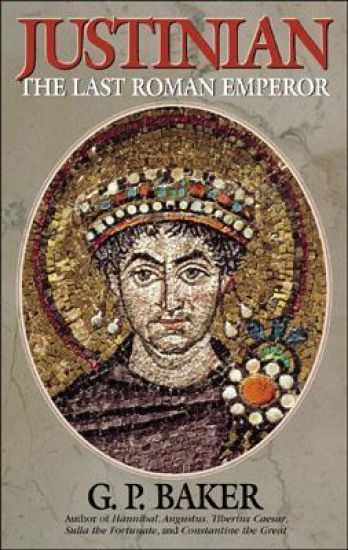
Justinian (482-565 A.D.), who ruled the Roman Empire from his capital in Constantinople, was, along with his wife Empress Theodora, one of the most scandalous monarchs in history. During his reign, Justinian oversaw the construction of the Hagia Sophia, one of the wonders of the ancient world, and he strove to maintain Rome's territories. Yet despite the heights reached under his rule, the time was one of revolts, intrigues, and brutality to his subjects. Baker's biography takes a redemptive view of Justinian and his wife, both of whom were vilified by the chronicler Procopius, he for his despotism and she for her endless sexual escapades. Baker points out that Justinian also codified Roman law and brought other modern solutions to the problems that had plagued his empire for years. Baker also describes the battles of Justinian's famous general Belisarius, who waged successful wars against the Vandals, Goths, and Persians on behalf of his emperor.
Justina Ford was the first African American female physician to practice medicine in Colorado. Facing and overcoming the obstacles of race and gender bias, she spent half of a century, between 1902 and 1952, caring for people of all races, backgrounds, and circumstances.True to her humanitarian spirit, Dr. Ford consistently put the needs of others before her own as she went about her work, delivering over 7,000 babies while caring for her patients.
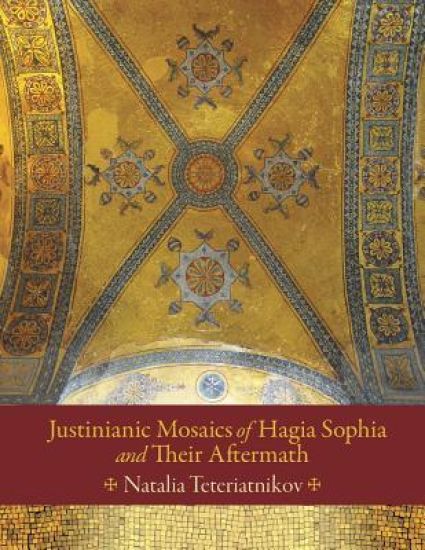
The architectural jewel of Constantinople is the church of Hagia Sophia (Holy Wisdom), constructed 532-537 CE. Although the edifice built by Justinian remains almost intact, only some of its original mosaics survive. In the first comprehensive study, Natalia Teteriatnikov describes the original mosaic program of the church and its restorations after the earthquake of 558.Drawing from decades of her personal research and scholarship on St. Sophia, the author analyzes the material and decorative components of the Justinianic mosaics that survive. She considers the architectural and theological aesthetics, as well as the social conditions that led to the production of a distinctive, aniconic mosaic program. Lavishly illustrated, the book includes a catalog of the nineteenth-century watercolors created by Gaspare Fossati--the only surviving evidence for reconstructing mosaics that are no longer extant.
This is a French translation of the "Institutes" of Emperor Justinian, a foundational text in Roman law. Presented with the original Latin text alongside the French translation, this edition offers a unique opportunity for scholars and students to engage with the primary source material while benefiting from the clarity of modern French. The "Institutes" provide a comprehensive overview of Roman legal principles, covering topics such as persons, things, actions, and procedure. Justinian's codification of Roman law has had a lasting impact on legal systems around the world, making this translation a valuable resource for anyone interested in the history and development of law. This edition, translated by Hyacinthe Blondeau, makes Justinian's important work accessible to a French-speaking audience, ensuring its continued relevance for generations to come. This work has been selected by scholars as being culturally important, and is part of the knowledge base of civilization as we know it. This work was reproduced from the original artifact, and remains as true to the original work as possible. Therefore, you will see the original copyright references, library stamps (as most of these works have been housed in our most important libraries around the world), and other notations in the work. This work is in the public domain in the United States of America, and possibly other nations. Within the United States, you may freely copy and distribute this work, as no entity (individual or corporate) has a copyright on the body of the work. As a reproduction of a historical artifact, this work may contain missing or blurred pages, poor pictures, errant marks, etc. Scholars believe, and we concur, that this work is important enough to be preserved, reproduced, and made generally available to the public. We appreciate your support of the preservation process, and thank you for being an important part of keeping this knowledge alive and relevant.
"Les Novelles De L'empereur Justinien, Volume 8" presents a French translation of the Novels (Novellae Constitutiones), a collection of new constitutions promulgated by Emperor Justinian I during his reign over the Byzantine Empire. This volume offers a detailed look into the legal reforms and administrative changes enacted in the 6th century. A crucial primary source for understanding Roman law and its evolution in the Byzantine era, this work provides insight into the social, political, and economic structures of the time. Translated and presented for accessibility, this edition remains an invaluable resource for legal historians, classicists, and anyone interested in the legacy of Roman law. This work has been selected by scholars as being culturally important, and is part of the knowledge base of civilization as we know it. This work was reproduced from the original artifact, and remains as true to the original work as possible. Therefore, you will see the original copyright references, library stamps (as most of these works have been housed in our most important libraries around the world), and other notations in the work. This work is in the public domain in the United States of America, and possibly other nations. Within the United States, you may freely copy and distribute this work, as no entity (individual or corporate) has a copyright on the body of the work. As a reproduction of a historical artifact, this work may contain missing or blurred pages, poor pictures, errant marks, etc. Scholars believe, and we concur, that this work is important enough to be preserved, reproduced, and made generally available to the public. We appreciate your support of the preservation process, and thank you for being an important part of keeping this knowledge alive and relevant.