Kirjojen hintavertailu. Mukana 12 017 831 kirjaa ja 12 kauppaa.

Kirjahaku

Etsi kirjoja tekijän nimen, kirjan nimen tai ISBN:n perusteella.

1000 tulosta hakusanalla Kin Hubbard

Strangers and Kin

Strangers and Kin

Barbara Melosh

Harvard University Press
2006
nidottu
Strangers and Kin is the history of adoption, a quintessentially American institution in its buoyant optimism, generous spirit, and confidence in social engineering. An adoptive mother herself, Barbara Melosh tells the story of how married couples without children sought to care for and nurture other people's children as their own. It says much about the American experience of family across the twentieth century and our shifting notions of kinship and assimilation. Above all, it speaks of real people striving to make families out of strangers.In the early twentieth century, childless adults confronted orphanages reluctant to entrust their wards to the kindness of strangers. By the 1930s, however, the recently formed profession of social work claimed a new expertise--the science and art of child placement--and adoption became codified in law. It flourished in the United States, reflecting our ethnic diversity, pluralist ideals, and pragmatic approach to family. Then, in the 1960s, as the sexual revolution reshaped marriage, motherhood, and women's work, adoption became a less attractive option and the number of adoptive families precipitously declined. Taking this history into the early twenty-first century, Melosh offers unflinching insight to the contemporary debates that swirl around adoption: the challenges to adoption secrecy; the ethics and geopolitics of international adoption; and the conflicts over transracial adoption. This gripping history is told through poignant stories of individuals, garnered from case records long inaccessible to others, and captures the profound losses and joys that make adoption a lifelong process.
More than Kin and Less than Kind

More than Kin and Less than Kind

Douglas W. Mock

The Belknap Press
2006
nidottu
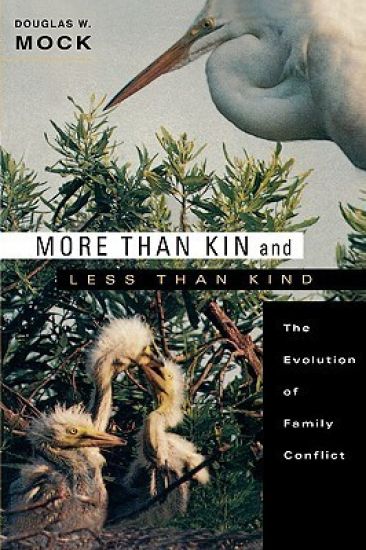
Sibling rivalry and intergenerational conflict are not limited to human beings. Among seals and piglets, storks and burying beetles, in bird nests and beehives, from apples to humans, family conflicts can be deadly serious, determining who will survive and who will perish. When offspring compete for scarce resources, sibling rivalry kicks in automatically. Parents sometime play favorites or even kill their young. In More than Kin and Less than Kind, Douglas Mock tells us what scientists have discovered about this disturbing side of family dynamics in the natural world.Natural selection operates primarily for the benefit of individuals (and their genes). Thus a family member may profit directly, by producing its own offspring, or indirectly, by helping close kin to reproduce. Much of the biology of family behavior rests on a simple mathematical relationship called Hamilton’s rule, which links the benefits and costs of seemingly altruistic or selfish behavior to the degree of relatedness between individuals.Blending natural history and theoretical biology, Mock shows how Hamilton’s rule illuminates the study of family strife by throwing a spotlight on the two powerful forces—cooperation and competition—that shape all interaction in the family arena. In More than Kin and Less than Kind, he offers a rare perspective on the family as testing ground for the evolutionary limits of selfishness. When budgets are tight, close kin are often deadly rivals.
Land Is Kin

Land Is Kin

Dana Lloyd; Judge Abby Abinanti

UNIVERSITY PRESS OF KANSAS
2023
sidottu
Responding to Vine Deloria, Jr.’s call for all people to “become involved” in the struggle to protect Indigenous sacred sites, Dana Lloyd’s Land Is Kin proposes a rethinking of sacred sites, and a rethinking of even land itself. Deloria suggested using the principle of religious freedom, but this principle has failed Indigenous peoples for decades. Lloyd argues that religious freedom fails Indigenous claimants because settler law creates a tension between two competing rights—one party’s religious freedom and another party’s property rights. In this contest, the right of property will always win.Through an analysis of the 1988 US Supreme Court case Lyng v. Northwest Indian Cemetery Protective Association, which she interprets as a case about sovereignty and the meaning of land, Lloyd proposes a multilayered understanding of land and the different roles it can simultaneously play. Rejecting the binary logic of sacred religion versus secular property, Lloyd uses the legal dispute over the High Country—an area of the Six Rivers National Forest in Northern California sacred to the Yurok, Karuk, and Tolowa Indigenous nations—to show that there are at least five different, but not equally valid, ways to understand land in the Lyng case: home, property, sacred site, wilderness, and kin. To protect the High Country, the Yurok filed a religious freedom lawsuit but then proceeded to describe the land as their home in court. They lobbied for protecting the High Country through a wilderness designation even as they continued to argue that they had been managing it for centuries. They have purchased large parcels of ancestral land and also declare the land their kin, a relationship that ostensibly excludes the possibility of ownership.Land Is Kin demonstrates the complexity of land in contemporary religious, political, and legal discourse. By drawing on Indigenous perspectives on the land as kin, Lloyd points toward a framework that shifts sovereignty away from binary oppositions—between property and sacred site, between the federal government and Native nations—towards seeing the land itself as sovereign.
Land Is Kin

Land Is Kin

Dana Lloyd

UNIVERSITY PRESS OF KANSAS
2026
nidottu
Honorable Mention: Best First book in the History of Religions Responding to Vine Deloria, Jr.’s call for all people to “become involved” in the struggle to protect Indigenous sacred sites, Dana Lloyd’s Land Is Kin proposes a rethinking of sacred sites, and a rethinking of even land itself. Deloria suggested using the principle of religious freedom, but this principle has failed Indigenous peoples for decades. Lloyd argues that religious freedom fails Indigenous claimants because settler law creates a tension between two competing rights—one party’s religious freedom and another party’s property rights. In this contest, the right of property will always win. Through an analysis of the 1988 US Supreme Court case Lyng v. Northwest Indian Cemetery Protective Association, which she interprets as a case about sovereignty and the meaning of land, Lloyd proposes a multilayered understanding of land and the different roles it can simultaneously play. Rejecting the binary logic of sacred religion versus secular property, Lloyd uses the legal dispute over the High Country—an area of the Six Rivers National Forest in Northern California sacred to the Yurok, Karuk, and Tolowa Indigenous nations—to show that there are at least five different, but not equally valid, ways to understand land in the Lyng case: home, property, sacred site, wilderness, and kin. To protect the High Country, the Yurok filed a religious freedom lawsuit but then proceeded to describe the land as their home in court. They lobbied for protecting the High Country through a wilderness designation even as they continued to argue that they had been managing it for centuries. They have purchased large parcels of ancestral land and also declare the land their kin, a relationship that ostensibly excludes the possibility of ownership. Land Is Kin demonstrates the complexity of land in contemporary religious, political, and legal discourse. By drawing on Indigenous perspectives on the land as kin, Lloyd points toward a framework that shifts sovereignty away from binary oppositions—between property and sacred site, between the federal government and Native nations—towards seeing the land itself as sovereign.
Kith and Kin

Kith and Kin

Jane A. Adams

Severn House
2018
sidottu
When two bodies are washed up in the Kentish marshes, Detective Chief Inspector Henry Johnstone is propelled into a disturbing investigation.December, 1928. When two bodies are found washed up in the Kentish marshes, it doesn't take long for DCI Henry Johnstone and DS Mickey Hitchens to identify at least one of them. Billy Crane was a known associate of Josiah Bailey, one of the East End's most notorious gangsters. But what were the victims doing in this remote and desolate spot? Is it a set-up? A revenge attack? Or could this be the start of a vicious turf war?If so, who would be brave enough to challenge Josiah Bailey, whose tentacles have a disturbingly long reach? With witnesses too frightened to talk, the two London detectives must dig deep into the past if they are to make headway in the investigation and stop the escalating violence.
No More Kin

No More Kin

Anne R. Roschelle

SAGE Publications Inc
1997
sidottu
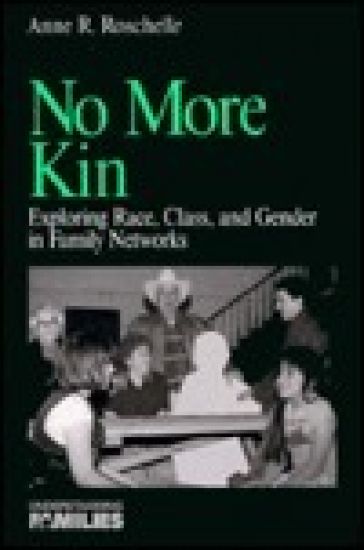
Black and Latino families are in fact highly family-oriented and want to be involved in exchange networks but, because they are economically disenfranchised, they are prevented from participation. The vitriolic debate on welfare reform currently sweeping the nation assumes that if institutional mechanisms of social support are eliminated, impoverished families will simply rely on an extensive web of kinship networks for their survival. The political discourse surrounding poverty and welfare reform has an increasingly racial undertone. Implementation of social policy that presupposes the availability of family safety nets in minority communities could have disastrous consequences for many without extended kin networks. Many scholars and political analysts assume that thriving kin and non-kin social support networks continue to characterize minority family life. Policy recommendations based on these underlying assumptions may lead to the implementation of harmful social policy. No More Kin examines extended kinship networks among African American, Chicano, Puerto-Rican, and non-Hispanic white families in contemporary America and seeks to provide an integrated theoretical framework for examining how the simultaneity of gender, race, and class oppression affects minority family organization. Breaking new ground in a variety of fields, No More Kin is sure to become a valuable resource for students and professionals in family studies, gender studies, and race/ethnic studies.
No More Kin

No More Kin

Anne R. Roschelle

SAGE Publications Inc
1997
nidottu
Black and Latino families are in fact highly family-oriented and want to be involved in exchange networks but, because they are economically disenfranchised, they are prevented from participation. The vitriolic debate on welfare reform currently sweeping the nation assumes that if institutional mechanisms of social support are eliminated, impoverished families will simply rely on an extensive web of kinship networks for their survival. The political discourse surrounding poverty and welfare reform has an increasingly racial undertone. Implementation of social policy that presupposes the availability of family safety nets in minority communities could have disastrous consequences for many without extended kin networks. Many scholars and political analysts assume that thriving kin and non-kin social support networks continue to characterize minority family life. Policy recommendations based on these underlying assumptions may lead to the implementation of harmful social policy. No More Kin examines extended kinship networks among African American, Chicano, Puerto-Rican, and non-Hispanic white families in contemporary America and seeks to provide an integrated theoretical framework for examining how the simultaneity of gender, race, and class oppression affects minority family organization. Breaking new ground in a variety of fields, No More Kin is sure to become a valuable resource for students and professionals in family studies, gender studies, and race/ethnic studies.
Tomorrow's Kin: Book 1 of the Yesterday's Kin Trilogy
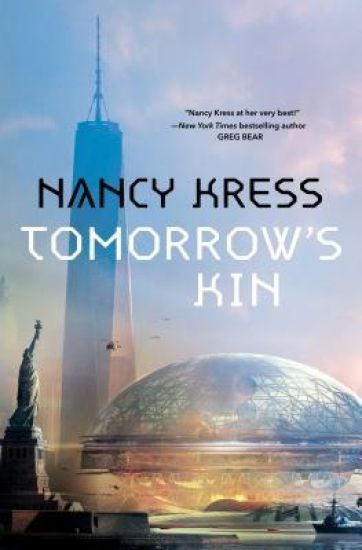
Tomorrow's Kin is the first volume in and all new hard science fiction trilogy by Nancy Kress based on the Nebula Award-winning Yesterday's Kin.Locus 2017 Recommended Reading List The aliens have arrived... they've landed their Embassy ship on a platform in New York Harbor, and will only speak with the United Nations. They say that their world is so different from Earth, in terms of gravity and atmosphere, that they cannot leave their ship. The population of Earth has erupted in fear and speculation. One day Dr. Marianne Jenner, an obscure scientist working with the human genome, receives an invitation that she cannot refuse. The Secret Service arrives at her college to escort her to New York, for she has been invited, along with the Secretary General of the UN and a few other ambassadors, to visit the alien Embassy. The truth is about to be revealed. Earth's most elite scientists have ten months to prevent a disaster--and not everyone is willing to wait.
Meeting My Treaty Kin

Meeting My Treaty Kin

Heather Menzies

University of British Columbia Press
2023
pokkari
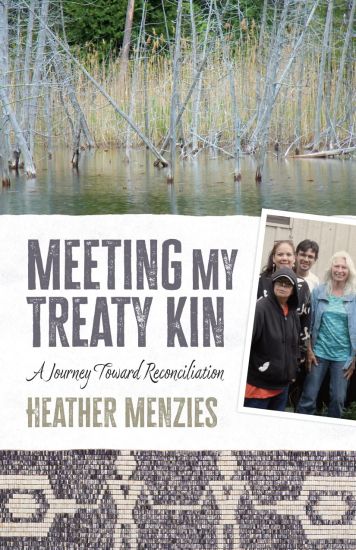
Can Indigenous and non-Indigenous people live in a treaty relationship despite over 200 years of social, cultural, and political alienation? This is the challenge of reconciliation – and its beautiful promise.Twenty-five years after the Ipperwash crisis, writer and social activist Heather Menzies showed up in Nishnaabe territory in Southwestern Ontario, near where her forebears settled, hoping to meet her would-be treaty kin. She was invited to help document the broken-treaty story behind the crisis, as remembered by Nishnaabe Elders and other community members involved in reclaiming their homeland at Stoney Point. But she soon realized that even the most sincere intentions can be steeped in a colonial mindset that hinders understanding, reconciliation, and healing.In this thoughtful, sensitive, nuanced account, Heather Menzies shares her own decolonizing journey. Her story shows how a settler, through respectful listening, can learn what being in a treaty relationship might mean, and what changes – personal and institutional – are needed to embrace genuine reconciliation.
The Solidarity of Kin

The Solidarity of Kin

Kenneth M. Morrison

State University of New York Press
2002
pokkari
Using the example of the Eastern Algonkians, this book argues that Native Americans did not convert to Christianity, but rather made sense of Christianity in their own traditional ways and for their own social purposes.Arguing that Native Americans' religious life and history have been misinterpreted, author Kenneth M. Morrison reconstructs the Eastern Algonkians' world views and demonstrates the indigenous modes of rationality that shaped not only their encounter with the French but also their self-directed process of religious change. In reassessing controversial anthropological, historical, and ethnohistorical scholarship, Morrison develops interpretive strategies that are more responsive to the religious world views of the Eastern Algonkian peoples. He concludes that the Eastern Algonkians did not convert to Catholicism, but rather applied traditional knowledge and values to achieve a pragmatic and critical sense of Christianity and to preserve and extend kinship solidarity into the future. The result was a remarkable intersection of Eastern Algonkian and missionary cosmologies.
Cadres and Kin

Cadres and Kin

Gregory A. Ruf

Stanford University Press
1998
sidottu
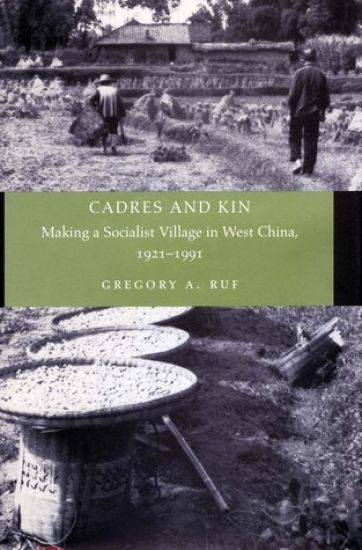
Building on ethnographic research in a rural village in Sichuan, China's most populous province, this book examines changing relationships between social organization, politics, and economy during the twentieth century. Offering a wealth of empirical data on township and village life during the pre-Communist 1930's and 1940's, the decades of collectivism, and the present era of post-Mao reforms, the author explores the historical development of a local state regime he characterizes as managerial corporatism. Genealogies of power suggest that agnatic solidarity among selective patrilineal kin, as well as other modes of association based on marriage, ritual kinship, and personal friendship, were critical factors in the local political arena. The particularly close relationships that developed among a core group of local cadres and their kin during the Maoist years shaped the ways in which party-state policies were interpreted, implemented, and experienced by fellow villagers. These ties were also critical in orchestrating village industrialization and corporate community building in the 1980's and 1990's. The processes of community and elite formation entailed the mobilization of some alliances of interest, emotion, and exchange while at the same time suppressing others. The author examines strategies and patterns of interfamily cooperation and conflict during the tumultuous decades—the 1920's-1940's— of civil unrest, inflation, and burgeoning taxation. He shows how historical relationships between local families and officials were instrumental in shaping the reorganization of rural life under Communism. The social organization of polity and economy in Qiaolou village during the reform era bore many hallmarks of both corporate and corporatist practices. Loosened state controls enabled village cadres to create new roles for themselves as economic patrons, drawing on economic, social, political, and symbolic resources to cultivate solidarity and labor discipline within the village corporation they managed.
Cadres and Kin

Cadres and Kin

Ruf Gregory A.

Stanford University Press
2000
pokkari
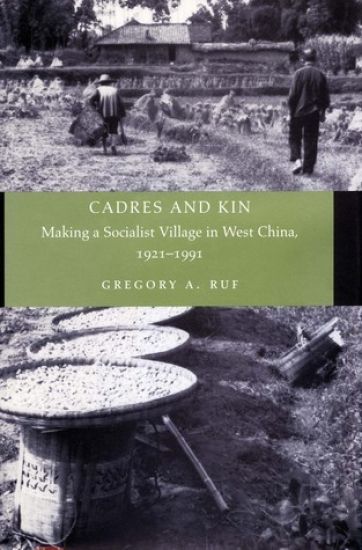
Building on ethnographic research in a rural village in Sichuan, China's most populous province, this book examines changing relationships between social organization, politics, and economy during the twentieth century. Offering a wealth of empirical data on township and village life during the pre-Communist 1930’s and 1940’s, the decades of collectivism, and the present era of post-Mao reforms, the author explores the historical development of a local state regime he characterizes as managerial corporatism. Genealogies of power suggest that agnatic solidarity among selective patrilineal kin, as well as other modes of association based on marriage, ritual kinship, and personal friendship, were critical factors in the local political arena. The particularly close relationships that developed among a core group of local cadres and their kin during the Maoist years shaped the ways in which party-state policies were interpreted, implemented, and experienced by fellow villagers. These ties were also critical in orchestrating village industrialization and corporate community building in the 1980’s and 1990’s. The processes of community and elite formation entailed the mobilization of some alliances of interest, emotion, and exchange while at the same time suppressing others. The author examines strategies and patterns of interfamily cooperation and conflict during the tumultuous decades—the 1920’s-1940’s— of civil unrest, inflation, and burgeoning taxation. He shows how historical relationships between local families and officials were instrumental in shaping the reorganization of rural life under Communism. The social organization of polity and economy in Qiaolou village during the reform era bore many hallmarks of both corporate and corporatist practices. Loosened state controls enabled village cadres to create new roles for themselves as economic patrons, drawing on economic, social, political, and symbolic resources to cultivate solidarity and labor discipline within the village corporation they managed.
Our Caribbean Kin

Our Caribbean Kin

Alaí Reyes-Santos

Rutgers University Press
2015
nidottu
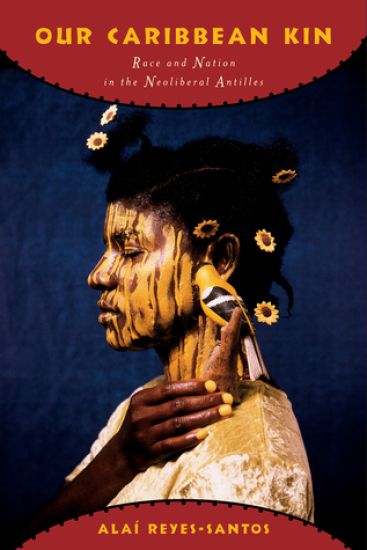
Beset by the forces of European colonialism, US imperialism, and neoliberalism, the people of the Antilles have had good reasons to band together politically and economically, yet not all Dominicans, Haitians, and Puerto Ricans have heeded the calls for collective action. So what has determined whether Antillean solidarity movements fail or succeed? In this comprehensive new study, Alaí Reyes-Santos argues that the crucial factor has been the extent to which Dominicans, Haitians, and Puerto Ricans imagine each other as kin. Our Caribbean Kin considers three key moments in the region’s history: the nineteenth century, when the antillanismo movement sought to throw off the yoke of colonial occupation; the 1930s, at the height of the region’s struggles with US imperialism; and the past thirty years, as neoliberal economic and social policies have encroached upon the islands. At each moment, the book demonstrates, specific tropes of brotherhood, marriage, and lineage have been mobilized to construct political kinship among Antilleans, while racist and xenophobic discourses have made it difficult for them to imagine themselves as part of one big family. Recognizing the wide array of contexts in which Antilleans learn to affirm or deny kinship, Reyes-Santos draws from a vast archive of media, including everything from canonical novels to political tracts, historical newspapers to online forums, sociological texts to local jokes. Along the way, she uncovers the conflicts, secrets, and internal hierarchies that characterize kin relations among Antilleans, but she also discovers how they have used notions of kinship to create cohesion across differences.
Our Caribbean Kin

Our Caribbean Kin

Alaí Reyes-Santos

Rutgers University Press
2015
sidottu
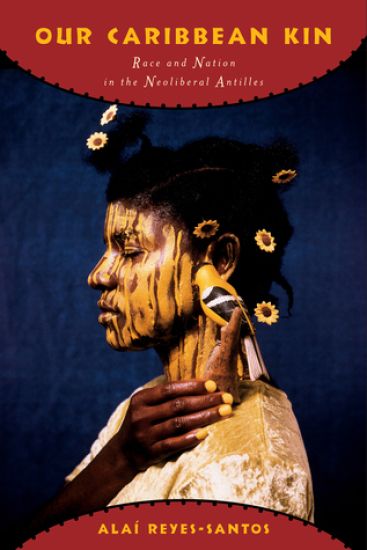
Beset by the forces of European colonialism, US imperialism, and neoliberalism, the people of the Antilles have had good reasons to band together politically and economically, yet not all Dominicans, Haitians, and Puerto Ricans have heeded the calls for collective action. So what has determined whether Antillean solidarity movements fail or succeed? In this comprehensive new study, Alaí Reyes-Santos argues that the crucial factor has been the extent to which Dominicans, Haitians, and Puerto Ricans imagine each other as kin. Our Caribbean Kin considers three key moments in the region’s history: the nineteenth century, when the antillanismo movement sought to throw off the yoke of colonial occupation; the 1930s, at the height of the region’s struggles with US imperialism; and the past thirty years, as neoliberal economic and social policies have encroached upon the islands. At each moment, the book demonstrates, specific tropes of brotherhood, marriage, and lineage have been mobilized to construct political kinship among Antilleans, while racist and xenophobic discourses have made it difficult for them to imagine themselves as part of one big family. Recognizing the wide array of contexts in which Antilleans learn to affirm or deny kinship, Reyes-Santos draws from a vast archive of media, including everything from canonical novels to political tracts, historical newspapers to online forums, sociological texts to local jokes. Along the way, she uncovers the conflicts, secrets, and internal hierarchies that characterize kin relations among Antilleans, but she also discovers how they have used notions of kinship to create cohesion across differences.
Next of Kin

Next of Kin

Richard T. Rodríguez

Duke University Press
2009
sidottu
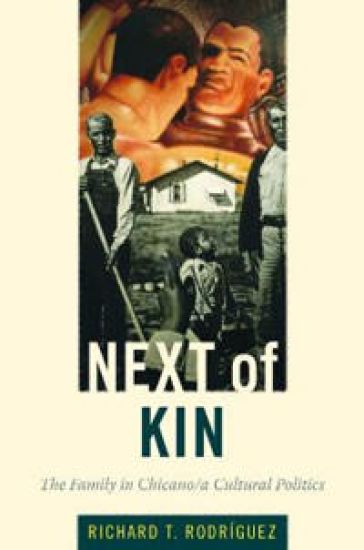
As both an idea and an institution, the family has been at the heart of Chicano/a cultural politics since the Mexican American civil rights movement emerged in the late 1960s. In Next of Kin, Richard T. Rodríguez explores the competing notions of la familia found in movement-inspired literature, film, video, music, painting, and other forms of cultural expression created by Chicano men. Drawing on cultural studies and feminist and queer theory, he examines representations of the family that reflect and support a patriarchal, heteronormative nationalism as well as those that reconfigure kinship to encompass alternative forms of belonging. Describing how la familia came to be adopted as an organizing strategy for communitarian politics, Rodríguez looks at foundational texts including Rodolfo Gonzales's well-known poem "I Am Joaquín," the Chicano Liberation Youth Conference's manifesto El Plan Espiritual de Aztlán, and José Armas's La Familia de La Raza. Rodríguez analyzes representations of the family in the films I Am Joaquín, Yo Soy Chicano, and Chicana; the Los Angeles public affairs television series ¡Ahora!; the experimental videos of the artist-activist Harry Gamboa Jr.; and the work of hip-hop artists such as Kid Frost and Chicano Brotherhood. He reflects on homophobia in Chicano nationalist thought, and examines how Chicano gay men have responded to it in works including Al Lujan's video S&M in the Hood, the paintings of Eugene Rodríguez, and a poem by the late activist Rodrigo Reyes. Next of Kin is both a wide-ranging assessment of la familia's symbolic power and a hopeful call for a more inclusive cultural politics.
Next of Kin

Next of Kin

Richard T. Rodríguez

Duke University Press
2009
pokkari
As both an idea and an institution, the family has been at the heart of Chicano/a cultural politics since the Mexican American civil rights movement emerged in the late 1960s. In Next of Kin, Richard T. Rodríguez explores the competing notions of la familia found in movement-inspired literature, film, video, music, painting, and other forms of cultural expression created by Chicano men. Drawing on cultural studies and feminist and queer theory, he examines representations of the family that reflect and support a patriarchal, heteronormative nationalism as well as those that reconfigure kinship to encompass alternative forms of belonging. Describing how la familia came to be adopted as an organizing strategy for communitarian politics, Rodríguez looks at foundational texts including Rodolfo Gonzales's well-known poem "I Am Joaquín," the Chicano Liberation Youth Conference's manifesto El Plan Espiritual de Aztlán, and José Armas's La Familia de La Raza. Rodríguez analyzes representations of the family in the films I Am Joaquín, Yo Soy Chicano, and Chicana; the Los Angeles public affairs television series ¡Ahora!; the experimental videos of the artist-activist Harry Gamboa Jr.; and the work of hip-hop artists such as Kid Frost and Chicano Brotherhood. He reflects on homophobia in Chicano nationalist thought, and examines how Chicano gay men have responded to it in works including Al Lujan's video S&M in the Hood, the paintings of Eugene Rodríguez, and a poem by the late activist Rodrigo Reyes. Next of Kin is both a wide-ranging assessment of la familia's symbolic power and a hopeful call for a more inclusive cultural politics.