Kirjojen hintavertailu. Mukana 12 016 292 kirjaa ja 12 kauppaa.

Kirjahaku

Etsi kirjoja tekijän nimen, kirjan nimen tai ISBN:n perusteella.

1000 tulosta hakusanalla LU FRASER

The Annals of Lü Buwei

The Annals of Lü Buwei

Stanford University Press
2001
sidottu
This is the first complete English translation of Lüshi chunqiu, compiled in 239 b. c. under the patronage of Lü Buwei, prime minister to the ruler of the state of Qin, who was to become the first emperor of a newly unified China fifteen years later. Lü retained a group of scholars whose aim was to encompass the world's knowledge in one great encyclopedia; so delighted was Lü with the finished work that he is said to have offered a fabulous prize of gold to anyone who could add or subtract even a single word. An exceptionally rich and comprehensive compendium, The Annals of Lü Buwei recounts in engaging, straightforward, and readable prose the great variety of beliefs and customs of its time. The work is one of the great monuments of Chinese thinking, a work of originality and cohesion, inspired by a vision of a universal empire ruled by principles that ensured harmony between man and nature, protective of human and animal life, devoted to learning and culture, practicing benevolence and kindness, and motivated by reason and morality. In addition to revealing an advanced state of technical knowledge, the Annals set forth a philosophy of government suitable to the centralized control that the Qin state would subsequently establish. It also took into account every philosophical trend of the day, sometimes adapting themes, sometimes combining ideas that had not previously been associated, sometimes rejecting and refuting positions that were in conflict with its basic vision. Because Lü aimed at comprehensiveness, his work preserved a number of systems of thought that are otherwise unknown or scarcely known. The Annals thus provides an essential tool for anyone seeking to reconstruct the philosophical controversies of the third century b. c. At the same time, Lü's compendium proclaims his independent, highly original philosophical positions. Today, with most of the works of classical Chinese philosophy long lost, The Annals of Lü Buwei remains indispensable as a summa of the Chinese intellectual world of its time.
The Lyrical Lu Xun

The Lyrical Lu Xun

Jon Kowallis; Lu Hseun

University of Hawai'i Press
1996
sidottu
The influence of Lu Xun (1881-1936) in China's cultural, literary, and artistic life over the last sixty years has been inestimable. A poet from a backwater town, Lu Xun was propelled by the times into the various careers of educator, writer, publicist, professor, and polemicist. He was, however, first and foremost a classical scholar, writing some of his best works in classical form. The Lyrical Lu Xun is the most complete treatment of his classical-style poetry in any foreign language, containing translations and extensive discussions of sixty-four poems in the highly stylized forms of jueju (quatrains) and lushi (full-length regulated verse) - forms with detailed, strict rules for rhyme and tonal prosody that evolved according to pronunciations and standards set up more than a thousand years ago.
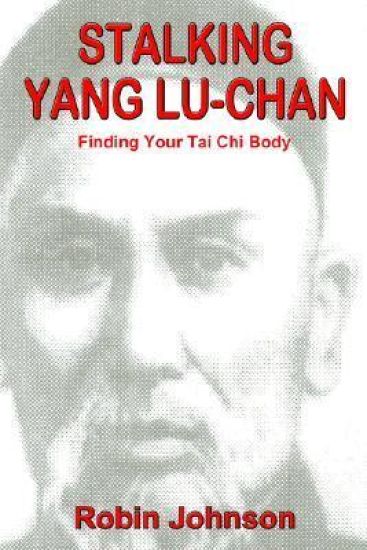
Stalking Yang Lu-Chan

Stalking Yang Lu-Chan

Robin Johnson

Sunstone Press
2005
pokkari
This unique manual of internal methods, inspired by the skills of Yang the Invincible, reveals key elements in finding and training a Tai Chi body. How did Yang do it? From whom did he learn? He watched the Chens but had to train alone in secret. Yang Lu-chan had to learn from himself, through his own body.Beginning in the stillness of Wu Ji standing, the author presents core components of Tai Chi movement. Each chapter identifies, describes, and explains structures and techniques of a moving body.What, in plain language, are the meanings of stillness in motion? How does ground-level attention ensure seamless moves in solo forms and applied technique? Which complementary action principles ensure the correct shape and energy? What is modesty, and how does it optimize energy exchange? Why are form orientations both useful and misleading? How does a Tai Chi boxer employ the fourth dimension?These and other questions about Tai Chi movement are answered in clear and direct language. There are no theories nor confusing aphorisms. And the methods employ sensing and deeds, not thinking and ideas. Whatever your intent--self-care, self-defense, or enhanced understanding--you'll find ways to progress at all levels.The author has distilled thirty years of exploration and deep respect for Yang into this manual. Rather than think and talk, he has tried to put himself in Yang Lu-chan's shoes.ROBIN JOHNSON has engaged in martial arts and natural sciences since childhood. Early steps in Western boxing, jujutsu, then judo, led him in 1972 to Tai Chi Chuan. He has been deeply immersed ever since. The skill and clarity in methods that work have led and guided his studies. And professional practice in science, music, medicine, and martial arts molds the content of this manual. In it he offers simple steps toward Tai Chi Chuan's grace and competence. Sifu Johnson offers classic Tai Chi Chuan six days/week in sunny Santa Fe, New Mexico. He conducts seminars in Tai Chi body, applied form, sword dueling, and Nanjing cane, when and where needed. Leisure may find him playing mountain music, fencing, cooking, and trying to best his daughter Rhiannon at 3D tic tac toe.
Readings from the Lu-Wang School of Neo-Confucianism
This volume provides selected translations from the writings of Lu Xiangshan; Wang Yangming; and the Platform Sutra, a work which had profound influence on neo-Confucian thought. Each of these three sections is preceded by an introduction that sketches important features of the history, biography, and philosophy of the author and explores some of the main features and characteristics of his work. The range of genres represented--letters, recorded sayings, essays, meditations and poetry--provide the reader with insights into the philosophical and stylistic themes of this fascinating and influential branch of neo-Confucian thought.
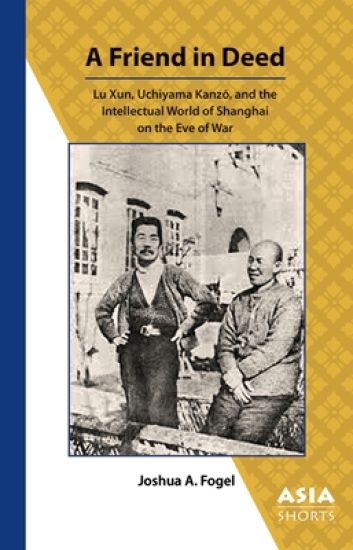
A Friend in Deed – Lu Xun, Uchiyama Kanzo, and the Intellectual World of Shanghai on the Eve of War
Lu Xun spent the last decade of his life in the turbulent world of Shanghai. Soon after arriving in 1927, he befriended Uchiyama Kanzō, owner of a bookstore specializing in Japanese writings. Their friendship and the mutual kindnesses (occasionally involving near-death experiences) form the core of this short volume. In part a meditation of what two people with such different backgrounds--one the most famous intellectual of his time, the other a merchant with a sixth-grade education from a country on the verge of launching total war against China--may speak to our own fractious times. Drawing on his extensive knowledge of Sino-Japanese exchange, Joshua Fogel paints a captivating portrait of two men of very different temperament, background, and political outlook. We see their friendship in ordinary moments over a cup of Karigane tea, a specially-reserved rattan chair, and the efforts at mounting exhibits of woodblock prints but also in extraordinary moments when Uchiyama protected Lu Xun from GMD spies and Japanese military police in the tumultuous years before total war. Theirs was a remarkable friendship indeed.
My Dearest Lu

My Dearest Lu

Andrew Villarreal

Lulu.com
2012
pokkari
Erwin Rommel has just been assigned Command of the 7th Panzer Division which is to spearhead the assault of the Western Offensive in France. On May 10, 1940 the German High Command on the edge of their seat await the news of the kick-off. It's here that Rommel earns his 7th Panzer Division the nickname - Ghost Division. It's here that before he becomes known as the Desert Fox, many have said, ""Where Rommel is there is the front."" His committed unbending character as a soldier transforms him into the warrior he becomes.
The Voice of Lu Xun

The Voice of Lu Xun

David Du

Lulu.com
2024
pokkari
Lu Xun (1881-1936) was a Chinese writer, literary critic, lecturer, and state servant. This is a book for poetry readers who want to learn about Lu Xun or who want a reference to compare different expressions in English, Mandarin, and Japanese. It's well-known in China that Lu Xun is more famous for his novels and essays because during the period Lu Xun lived in China, China was involved in a new cultural movement, which meant most people didn't want to read or learn ancient Chinese. Lu Xun wrote only a few classical poems. Although they're short, some are brilliant, such as the "Self-Deprecating Poem."
The Xin Jing lu; or, Book of Experiments; Being the First of a Series of Contributions to the Study of Chinese
This work has been selected by scholars as being culturally important, and is part of the knowledge base of civilization as we know it. This work was reproduced from the original artifact, and remains as true to the original work as possible. Therefore, you will see the original copyright references, library stamps (as most of these works have been housed in our most important libraries around the world), and other notations in the work.This work is in the public domain in the United States of America, and possibly other nations. Within the United States, you may freely copy and distribute this work, as no entity (individual or corporate) has a copyright on the body of the work.As a reproduction of a historical artifact, this work may contain missing or blurred pages, poor pictures, errant marks, etc. Scholars believe, and we concur, that this work is important enough to be preserved, reproduced, and made generally available to the public. We appreciate your support of the preservation process, and thank you for being an important part of keeping this knowledge alive and relevant.
Who Is Lu Shijia?

Who Is Lu Shijia?

Pingping Dong; Qiang Ye

Royal Collins Publishing Company
2023
sidottu
Little is often known internationally about China's space industry, despite its significant growth in recent years. Figures in China's Space Industry is a series that follows some of the key pioneers in this journey. For readers interested in space, this can be an informative series. This volume tracks the life of Lu Shijia, a woman aerospace engineer. She studied aviation in Germany during the 1930s before returning to China to assist the nation with her knowledge and expertise.