Kirjojen hintavertailu. Mukana 11 342 296 kirjaa ja 12 kauppaa.

Kirjahaku

Etsi kirjoja tekijän nimen, kirjan nimen tai ISBN:n perusteella.

1000 tulosta hakusanalla Landry Signe

Towards Sustainable Artificial Intelligence

Towards Sustainable Artificial Intelligence

Ghislain Landry Tsafack Chetsa

APress
2021
nidottu
So far, little effort has been devoted to developing practical approaches on how to develop and deploy AI systems that meet certain standards and principles. This is despite the importance of principles such as privacy, fairness, and social equality taking centre stage in discussions around AI. However, for an organization, failing to meet those standards can give rise to significant lost opportunities. It may further lead to an organization’s demise, as the example of Cambridge Analytica demonstrates. It is, however, possible to pursue a practical approach for the design, development, and deployment of sustainable AI systems that incorporates both business and human values and principles. This book discusses the concept of sustainability in the context of artificial intelligence. In order to help businesses achieve this objective, the author introduces the sustainable artificial intelligence framework (SAIF), designed as a reference guide in the development and deploymentof AI systems. The SAIF developed in the book is designed to help decision makers such as policy makers, boards, C-suites, managers, and data scientists create AI systems that meet ethical principles. By focusing on four pillars related to the socio-economic and political impact of AI, the SAIF creates an environment through which an organization learns to understand its risk and exposure to any undesired consequences of AI, and the impact of AI on its ability to create value in the short, medium, and long term. What You Will Learn See the relevance of ethics to the practice of data science and AIExamine the elements that enable AI within an organizationDiscover the challenges of developing AI systems that meet certain human or specific standardsExplore the challenges of AI governanceAbsorb the key factors to consider when evaluating AI systems Who This Book Is For Decision makers such as government officials, members of the C-suite and other business managers, and data scientists as well as any technology expert aspiring to a data-related leadership role.
Theatre of Anger

Theatre of Anger

Olivia Landry

University of Toronto Press
2020
sidottu
In Theatre of Anger, Olivia Landry offers a provocative new vision of anger as more than just hate and violence. Studying the work of a new generation of transnational theatre practitioners in Berlin, she illuminates how anger can be an affirmative and critical tool in the project of social justice and resistance. To develop her theory of anger, Landry delves into philosophical texts, theatre history, and Black feminist theory from Aristotle, Gotthold Ephraim Lessing, and Bertolt Brecht to Audre Lorde, bell hooks, and Sara Ahmed. Landry focuses not only on the social and political significance of the theatre of anger and the ways in which it rages against racism, antisemitism, Islamophobia, sexism, and homophobia, but also on its aesthetic and theoretical innovation. Through readings of key works, Theatre of Anger asks what it means in our present world to construct political theatre.
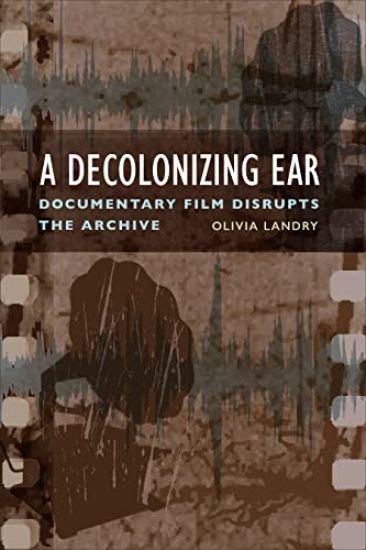
A Decolonizing Ear

A Decolonizing Ear

Olivia Landry

UNIVERSITY OF TORONTO PRESS
2022
sidottu
The recording of Indigenous voices is one of the most well-known methods of colonial ethnography. In A Decolonizing Ear, Olivia Landry offers a sceptical account of listening as a highly mediated and extractive act, influenced by technology and ideology. Returning to early ethnographic practices of voice recording and archiving at the turn of the twentieth century, with a particular focus on the German paradigm, she reveals the entanglement of listening in the logic of Euro-American empire and the ways in which contemporary films can destabilize the history of colonial sound reproduction. Landry provides close readings of several disparate documentary films from the late 1990s and the early 2000s. The book pays attention to technology and knowledge production to examine how these films employ recordings plucked from different colonial sound archives and disrupt their purposes. Drawing on film and documentary studies, sound studies, German studies, archival studies, postcolonial studies, and media history, A Decolonizing Ear develops a method of decolonizing listening from the insights provided by the films themselves.
Homeschooling, simplified: Dictation: how to teach grammar, spelling, reading and almost all language arts in an easy alternative to the homescho
Learning a new skill is complex. Presentation should be simple. Dictation is the simplest and most efficient tool available for teaching all aspects of language to children. This booklet, "Homeschooling, simplified: Dictation" is the first in a series of little books designed to simplify your homeschooling journey. Through dictation, children learn penmanship, reading, spelling, grammar, critical thinking and so much more in one short (5-15 minutes) daily lesson. Dictation even sets the tone for the day in a delightful moment shared with mom or dad. It's a beautiful thing. "You have encouraged me to educate the whole child and to just love on each of them. To cherish my time with them. To have joy in each moment." "Thank you, Bonnie, for revolutionizing the way that I home educate." "I find the dictation method amazing... this method practices all the most important principles of learning and assessment research to date. It's brilliant "
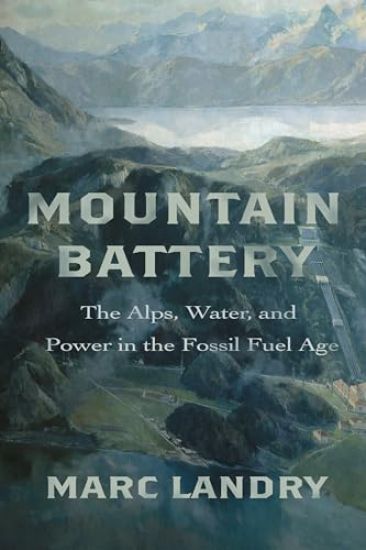
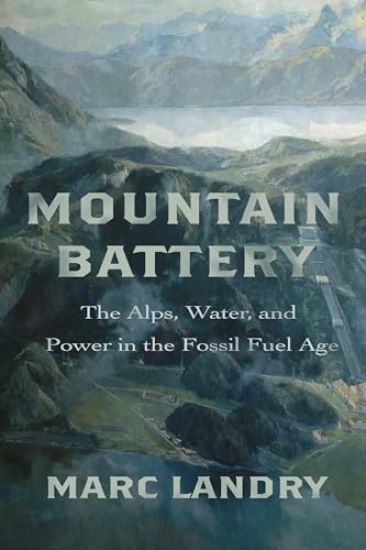
Mountain Battery

Mountain Battery

Marc Landry

STANFORD UNIVERSITY PRESS
2025
sidottu
By the end of the nineteenth century, Europeans had come to see the Alps as the ideal place to fashion an alternative to the era's dominant energy source: coal. After 1850, Alpine water increasingly became "white coal": a power source with the revolutionary economic potential of fossil fuel. In this book, Marc Landry shows how dam-building in the nineteenth and twentieth centuries transformed the Alps into Europe's "battery"—an energy landscape designed to store and produce electricity for use throughout the Continent. These stores of energy played an important role in supplying the war economies of west-central Europe in both world wars as demand for munitions and other factory production necessitated access to electrical energy and the conservation of coal. Through historical research conducted in archives across Europe—especially in Germany, Austria, France, Switzerland, and Italy—Landry shows how and why Europeans thoroughly transformed the Alps in order to generate hydroelectricity, and explores the effects of its attendant economic and military advantages across the turbulent twentieth century. Landry surveys the environmental and energy changes wrought by dam-building, demonstrating that with global warming, melting glaciers, and calls for a green energy transition, the future of white coal is once again in question in twenty-first-century Europe.
Mountain Battery

Mountain Battery

Marc Landry

STANFORD UNIVERSITY PRESS
2025
pokkari
By the end of the nineteenth century, Europeans had come to see the Alps as the ideal place to fashion an alternative to the era's dominant energy source: coal. After 1850, Alpine water increasingly became "white coal": a power source with the revolutionary economic potential of fossil fuel. In this book, Marc Landry shows how dam-building in the nineteenth and twentieth centuries transformed the Alps into Europe's "battery"—an energy landscape designed to store and produce electricity for use throughout the Continent. These stores of energy played an important role in supplying the war economies of west-central Europe in both world wars as demand for munitions and other factory production necessitated access to electrical energy and the conservation of coal. Through historical research conducted in archives across Europe—especially in Germany, Austria, France, Switzerland, and Italy—Landry shows how and why Europeans thoroughly transformed the Alps in order to generate hydroelectricity, and explores the effects of its attendant economic and military advantages across the turbulent twentieth century. Landry surveys the environmental and energy changes wrought by dam-building, demonstrating that with global warming, melting glaciers, and calls for a green energy transition, the future of white coal is once again in question in twenty-first-century Europe.