

Kirjahaku
Etsi kirjoja tekijän nimen, kirjan nimen tai ISBN:n perusteella.
1000 tulosta hakusanalla Louis Legrand

THE SPIRITUAL DOCTRINE OF FATHER LOUIS L
Louis Lallemant; Frederick William (TRN) Faber
UNKNOWN
2007
sidottu
Louis Kossuth And The Lost Revolutions In Hungary And Transylvania
Anonymous
Kessinger Publishing
2007
sidottu


Louis Augusta Lechmere, With Her Own Narrative Of Her Conversion
Henry D'arras; Frederic (TRN) Raymond-barker
Kessinger Pub
2007
pokkari

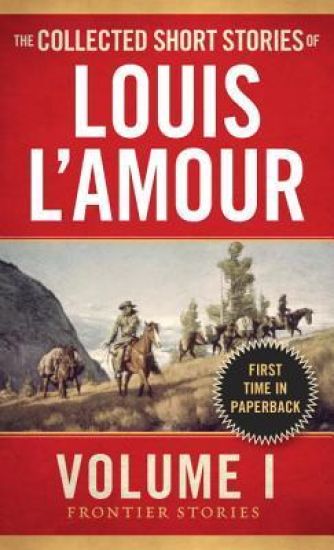
The Collected Short Stories of Louis L'Amour, Volume 1
Louis L'amour
Bantam Dell Publishing Group, Div of Random House, Inc
2014
pokkari
Louis L'Amour is recognized the world over as one of the most prolific and popular American authors. While every one of his eighty-nine novels is still in print, a lesser known fact is that L'Amour is also one of the all-time bestselling authors of short fiction. Compared by The Wall Street Journal to Jack London and Robert Louis Stevenson, L'Amour's Collected Short Stories are now presented for the first time in paperback. The Collected Short Stories of Louis L'Amour, Volume 1, features thirty-five action-packed Frontier Stories. It kicks off a series of nine paperbacks, including a two-part volume of Adventure Stories and a two-part volume of Crime Stories, which will bring all of L'Amour's short fiction to his millions of readers around the world.
The Collected Short Stories of Louis L'Amour, Volume 6
Louis L'Amour
Bantam Dell Publishing Group, Div of Random House, Inc
2008
sidottu
Louis MacNeice
Faber Faber
2005
nidottu
In this series, a contemporary poet selects and introduces a poet of the past. By their selection of verses and by the personal and critical reactions they express in their introductions, the selectors offer a passionate and accessible introduction to some of the greatest poets in history.Louis MacNeice was born in Belfast in 1907 and educated at Marlborough and Merton College, Oxford. For most of his working life he was a writer and producer for BBC radio. His death in 1963 was sudden and unexpected.
T S Eliot called Louis MacNeice 'a poet of genius', a poet's poet, one 'whose virtuosity can be fully appreciated only by other poets'. As his publisher, however, Eliot knew that MacNeice's work could speak to a much larger public. His Autumn Journal, published in May 1939, went through five printings during the war years, and it was to become one of the definitive poems of the 1930s.'I would have a poet,' wrote MacNeice, 'able-bodied, fond of talking, a reader of the newspapers, capable of pity and laughter, informed in economics, appreciative of women, involved in personal relationships, actively interested in politics, susceptible to physical impressions.' Knowing himself to be all of those things, modesty and a desire to demystify his calling led him to make no mention of the one all-important characteristic that distinguishes a poet: a mastery of the music and magic of language.MacNeice's mother died when he was seven, and Jon Stallworthy shows how his imagination transmuted her ghostly presence, and the powerful presence of his father, into an elemental opposition structuring most of what he would write - from anguished indictments of his native Ireland to poignant love poems. Drawing on the testimony of MacNeice's family, friends and lovers, and his extensive correspondence, Stallworthy has produced a remarkable portrait of a poet of rare energy and integrity who was also a brilliant scholar, critic, autobiographer, playwright and translator.'Jon Stallworthy's Louis MacNeice is the indispensable guide to the poetry and is written with great verve, generosity and brilliance. A moving and eloquent account of the life of the poet, as well as a superb analysis of the relationship between the life and the work, this is surely one of the great literary biographies of our time.'Jonathan Allison, editor of The Selected Letters of Louis MacNeice
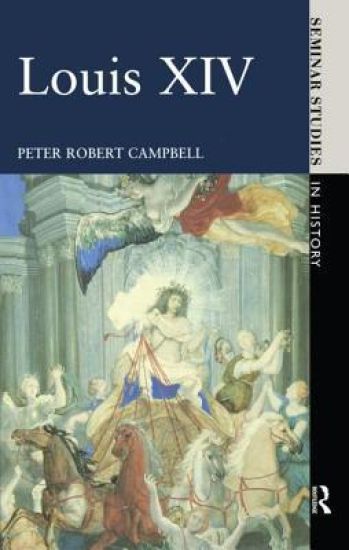
`The Sun King has always been over-exposed -- a habit he started himself. Here is the student's antidote to boredom. Campbell has produced the best short guide available and a vigorous synthesis of the latest research, complete with extensive bibliography, unfamiliar documents and vital glossary. Fresh material abounds and a misconception is demolished on every page. There is no sign here of reheating old recipes.' History Review
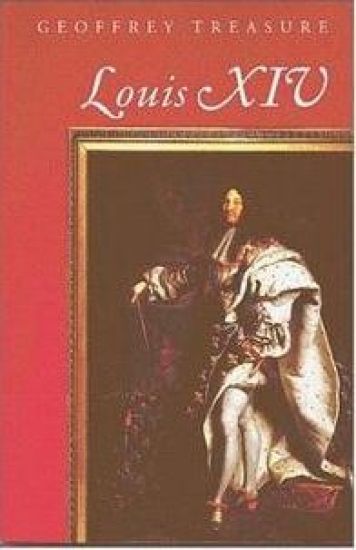
Louis IV represents the apogee of French royal power and the Ancien Regime. Having restored the nation's finances and rebuilt the army, he embarked on a series of wars of conquest which made France universally feared and respected as the central power of continental Europe. In the age of Moliere, Corneille, Racine et al, French culture blossomed at the court of Versailles. The counterpoint to these achievements was the emasculation of the political and legal institutions that might have limited the exercise of the royal will. In this new history, Geoffrey Treasure explores a unique combination of a personal philosophy, moulded by absolutist thinking and propaganda, and by Marzarin's deliberate training. He examines the influences and traits which permitted the growth of this particular exercise of power and its descent into an absolutism that ultimately set France on the road to 1789.
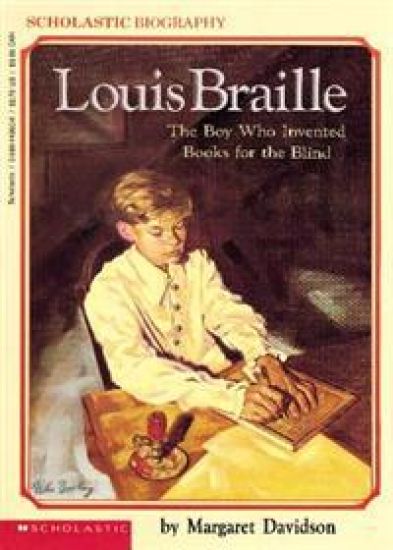
LOUIS BRAILLE BOY WHO INVENTED FOR BLIND
Scholastic Canada Ltd
1991
nidottu
A profile of Louis Braille records his struggle to overcome his blindness by devising an alphabet to help other blind people read