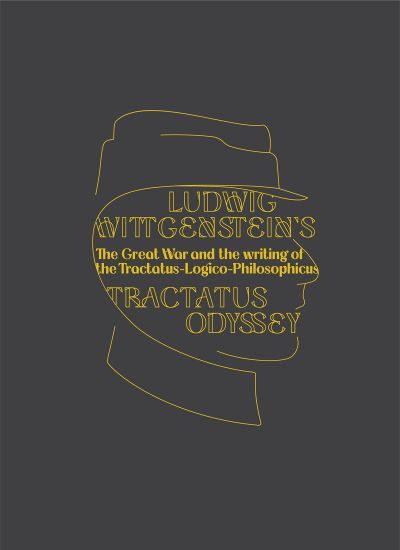
Charts Wittgenstein’s intellectual development, personal struggles, and movements from Vienna to Cambridge and Norway, and to the battlegrounds of WWI, where he completed what was destined to become the most influential philosophy book of the 20th century.Ludwig Wittgenstein’s way to the Tractatus Logico-Philosophicus, one of the ground-breaking works in the history of philosophy, can rightly be termed an Odyssey. Both in terms of his movements and his intellectual development in the course of writing it, the Tractatus incorporated an exciting, improbable journey. A compendium of scholars has come together at the 100th anniversary of the work’s first official publication in 1922 to detail the main stations in Wittgenstein’s life that would entirely transform philosophy. The years 1912 to 1922 are illuminated through photos, military maps, and letters against the backdrop of one of the most dramatic periods in world history.The complex theory of language developed by Wittgenstein In the Tractatus had an enormous influence not only on philosophy, but extended also to literature, music, film, painting, architecture, anthropology, and economics. Its uniqueness and rigor challenge our perceptions to this day.
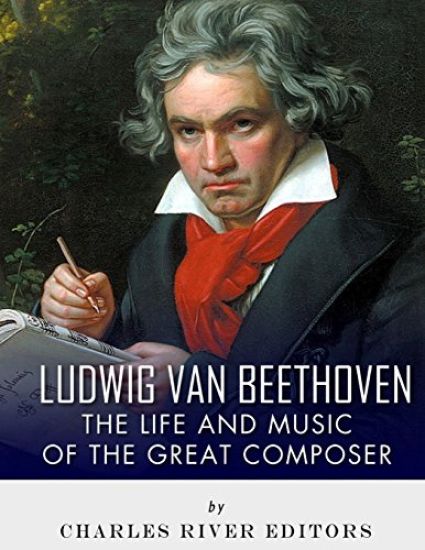
*Analyzes the themes and progression of Beethoven's most famous works, comparing and contrasting them to each other and other composers' great works. *Includes pictures of important people and places in Beethoven's life. *Includes a bibliography for further reading. *Includes a list of Beethoven's works. "Don't only practise your art, but force your way into its secrets; art deserves that, for it and knowledge can raise man to the Divine." - Beethoven Among all of history's greatest musicians, few have been as admired or influential as Ludwig van Beethoven, whose name remains synonymous with composing. Works like his Fifth and Ninth symphonies remain instantly recognizable over 200 years after they were composed, and their sweeping and grandiose nature are made all the more amazing by the fact that their author was gradually going deaf and couldn't hear music very well by the time he was composing them. Similarly, the "Moonlight Sonata" and "F r Elise" are renowned across the world and are some of the most famous piano pieces of all time. At the same time, Beethoven's work ushered in a new era in art, helping the transition from the Classical era to the Romantic era. In the 180 years since his death, Beethoven has been enshrined by modern society as one of the most esteemed classical composers in the history of civilization, but he had a profound and immediate influence on the German musical lineage that would pass through Robert Schumann, Richard Wagner, Gustav Mahler and Richard Strauss all the way to composers of the 20th and early 21st centuries. At a time when music was very much viewed as science, Beethoven was a giant in the field, and as such he was viewed as a genius. As Beethoven himself once put it, "Music is the one incorporeal entrance into the higher world of knowledge which comprehends mankind but which mankind cannot comprehend." In terms of assessing the essence of Beethoven's era, character or musical output, no unqualified categorization is possible, for he straddled a titanic shifting of social ideologies, performance and compositional practices, intra-continental upheavals and an emergence of the championed self in all forms of civic and artistic expressions. The ideals of the Enlightenment, an intellectual tide that swept throughout the late 18th century and opened the door to a new individualism, did not remain static through his lifetime; Beethoven was shaped by the internal and societal bent for revolutionary thought, and he was eager to play his part as a public figure in reflecting and furthering its development. Indeed, by the late Classical age, which largely deemed music a science, it came to be admitted in even academic circles that "music is the inarticulate outpouring of emotion." Such a changing state of music's relationship to society allowed what some have called Beethoven's Promethean personality to prosper in his creative work. Ludwig van Beethoven: The Life and Music of the Great Composer comprehensively analyzes the themes and revolutionary advancements of Beethoven's music, looking at his most famous works and comparing and contrasting them. Along with pictures of important people, places, and events, you will learn about Beethoven and his music like never before, in no time at all.
The 1960s was a time of unrestrained hedonism, of experimentation with new mores, new lifestyles, new forms of political action. But there was also much, much more going on. The late '60s in America were years of intense social strife. By the end of the decade, militant civil rights activity, massive protests against U.S. involvement in Vietnam, combined with the then-young Baby Boom generation's questioning of its parents' values, had left the country more divided than at any time since the Civil War. As the decade progressed, the rancor spread to many other parts of the world. No one who lived through the era with his or her eyes open can truly forget it. This book is a reminiscence of that era, a vivid dramatization of true events, told by Barry Kalb, who as a young reporter expienced the period at close hand: the counter-culture, anti-war activism, racial strife, assassinations, escalating urban violence, and a steady slide by many participants into extremism and even terrorism. All taking place against the steady drumbeat of war half a world away in Indochina. The book is being published 50 years after the terrible year of 1968, but it spans the period from 1964 to early 1970, and roams from the University of California at Berkeley to Washington, New York, Chicago, Dallas and Memphis, Watts and Detroit, Kent State, Woodstock and Altamont. For those who were there, the book will bring back bittersweet memories. For the generations born since then, it will correct some misconceptions about the era, and fill in some gaps in recent history.
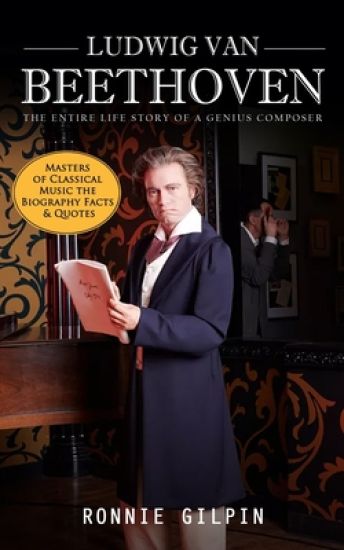
This book is about two outstanding musicians. Probably the most naturally gifted musician the world has ever known, Mozart began his career early as a child prodigy. By the age five, he was already proficient on the violin, the harpsichord and piano keyboard, and had begun composing music that had integrity. He was a showman as well, according to contemporary documents, and charmed many of the crowned heads of Europe with his performance and his manner. Inside you will read about...Groomed for GreatnessBeethoven's Deafness and DepressionF r EliseGuardianship of His Nephew KarlKarl's Suicide AttemptBeethoven's Final NotesAnd much more Producing novel imagery, a careful selection of original documents and bi-lingual text, the reader is presented with a maximum frame of information within a minimum of textual frame, a key to open the door over the fascinating musical universe of great Beethoven.
Ludwig Van Beethoven, ou le Petit maitre de chapelle, par Mme Eugenie FoaDate de l'edition originale: 1841Ce livre est la reproduction fidele d'une oeuvre publiee avant 1920 et fait partie d'une collection de livres reimprimes a la demande editee par Hachette Livre, dans le cadre d'un partenariat avec la Bibliotheque nationale de France, offrant l'opportunite d'acceder a des ouvrages anciens et souvent rares issus des fonds patrimoniaux de la BnF.Les oeuvres faisant partie de cette collection ont ete numerisees par la BnF et sont presentes sur Gallica, sa bibliotheque numerique.En entreprenant de redonner vie a ces ouvrages au travers d'une collection de livres reimprimes a la demande, nous leur donnons la possibilite de rencontrer un public elargi et participons a la transmission de connaissances et de savoirs parfois difficilement accessibles.Nous avons cherche a concilier la reproduction fidele d'un livre ancien a partir de sa version numerisee avec le souci d'un confort de lecture optimal. Nous esperons que les ouvrages de cette nouvelle collection vous apporteront entiere satisfaction.Pour plus d'informations, rendez-vous sur www.hachettebnf.fr
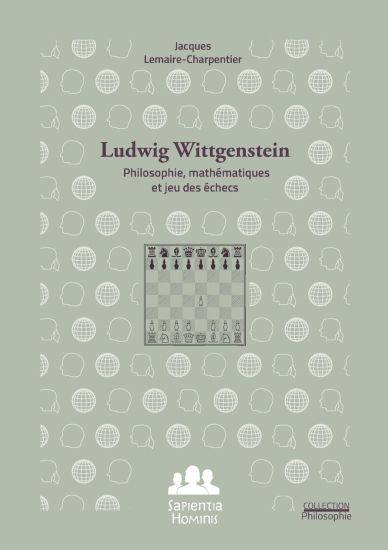
Ludwig Wittgenstein (Vienne, Autriche, n en 1889) interroge sans rel che l'utilisation que nous faisons du langage. Son usage ordinaire, philosophique, mais aussi dans les math matiques est examin sous un angle ludique et anthropologique. Pour mener bien son enqu te, Wittgenstein utilise tr s souvent des comparaisons avec le jeu des checs: il tudie les jeux de langage comme on tudie des variantes chiqu ennes. Pour lui, les mots sont comparables aux pi ces d'un jeu d' checs. C'est ce point essentiel dans l'oeuvre d'un des philosophes les plus lus et tudi s au 20 me si cle qui est expos ici. Ce livre, tout en exposant la pens e originale de Wittgenstein, souligne la proximit des app tences intellectuelles des philosophes, des math maticiens et des joueurs d' checs. Il largit ainsi la maxime des joueurs d' checs: gens una sumus .
Nach München, oder zu den Schlössern?! Ursprünglich sollte das Buch zum Film "Il rinascimento del Ludovico" heißen. Damals lebte ich in Italien und war zur Hochzeit eines Freundes am Starnberger See eingeladen. Später in der Nacht stolperte ich in einen rauschenden Ball, der unter uns im Seehaus tobte. Am nächsten Tag auf der Fahrt ins Ruhrgebiet hatte ich die Idee, Ludwig aus dem See in genau so eine Party platzen zu lassen.Denn irgendwie war der gar nicht tot, sondern lebte weiter in den Herzen und Köpfen der Bayern. Ich dachte, was wohl passieren würde, wenn so jemand wie Ludwig heute wiederkäme, mit der gleichen unbeirrbaren Durchsetzungskraft und einem ebenso energischen Engagement für aktuelle Themen wie einst für seine Schlösser?! Außerdem fand ich, daß Ludwig als Mensch noch einmal eine Chance bekommen sollte. Irgendwie tat mir dieser einsame König leid und ich wollte ihn aus der Einsamkeit in die Freude der Geselligkeit entführen. Und zur Belohnung würde er seine Sissi bekommen. Diesmal nur für immer und wirklich!
This book collects 13 papers that explore Wittgenstein's philosophy throughout the different stages of his career. The author writes from the viewpoint of critical rationalism. The tone of his analysis is friendly and appreciative yet critical. Of these papers, seven are on the background to the philosophy of Wittgenstein. Five papers examine different aspects of it: one on the philosophy of young Wittgenstein, one on his transitional period, and the final three on the philosophy of mature Wittgenstein, chiefly his Philosophical Investigations. The last of these papers, which serves as the concluding chapter, concerns the analytical school of philosophy that grew chiefly under its influence. Wittgenstein’s posthumous Philosophical Investigations ignores formal languages while retaining the view of metaphysics as meaningless -- declaring that all languages are metaphysics-free. It was very popular in the middle of the twentieth century. Now it is passé. Wittgenstein hadhoped to dissolve all philosophical disputes, yet he generated a new kind of dispute. His claim to have improved the philosophy of life is awkward just because he prevented philosophical discussion from the ability to achieve that: he cut the branch on which he was sitting. This, according to the author, is the most serious critique of Wittgenstein.
This is a comprehensive biography of Ludwig Prandtl (1875-1953), the father of modern aerodynamics. His name is associated most famously with the boundary layer concept, but also with several other topics in 20th century fluid mechanics, particularly turbulence (Prandtl's mixing length). Among his disciples are pioneers of modern fluid mechanics such as Heinrich Blasius, Theodore von Kármán and Walter Tollmien. Furthermore, Prandtl founded the Aerodynamische Versuchsanstalt (AVA) and the Kaiser-Wilhelm-Institut für Strömungsforschung in Göttingen, both of them seeds for the growth of fluid mechanics in Germany. Yet Prandtl was also a representative of aeronautical research - from Imperial Germany via the Weimar Republic to the "Third Reich". Although not a party member, he assumed the role of a goodwill ambassador for Nazi Germany. This objective treatment of his career will be of interest to all scientists and historians wanting to learn more about Prandtl's influence and the earlydevelopment of fluid- and aerodynamics.
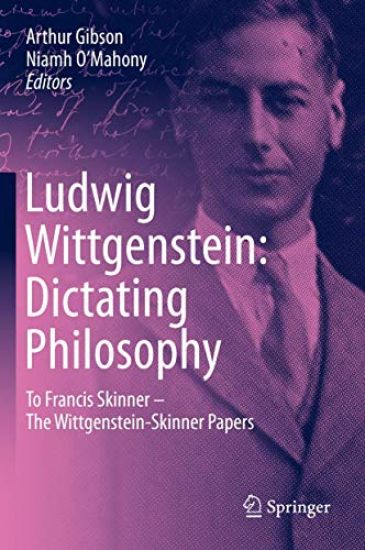
In this volume we witness Wittgenstein in the act of composing and experimenting with his new visions in philosophy. The book includes key explanations of the origin and background of these previously unknown manuscripts. It investigates how Wittgenstein’s philosophical thought-processes are revealed in his dictation to, as well as his editing and revision with Francis Skinner, in the latter’s role of amanuensis. The book displays a considerable wealth and variety of Wittgenstein’s fundamental experiments in philosophy across a wide array of subjects that include the mind, pure and applied mathematics, metaphysics, the identities of ordinary and creative language, as well as intractable problems in logic and life. He also periodically engages with the work of Newton, Fermat, Russell and others. The book shows Wittgenstein strongly battling against the limits of understanding and the bewitchment of institutional and linguistic customs. The reader is drawn in by Wittgenstein as he urges us to join him in his struggles to equip us with skills, so that we can embark on devising new pathways beyond confusion. This collection of manuscripts was posted off by Wittgenstein to be considered for publication during World War 2, in October 1941. None of it was published and it remained hidden for over two generations. Upon its rediscovery, Professor Gibson was invited to research, prepare and edit the Archive to appear as this book, encouraged by Trinity College Cambridge and The Mathematical Association. Niamh O’Mahony joined him in co-editing and bringing this book to publication.
This issue is dedicated to the memorial of professor Ludwig Faddeev, who strongly influenced the physics of few-body systems mainly due to his theoretical works in what at present days are called the Faddeev equations, largely used by the few-body community to describe the dynamics and structure of few-body systems.This issue contains the two winners of the 2018 Faddeev Medal, which was created to recognize distinguished achievements in Few-Body Physics. It is awarded every three years to a scientist who advanced the field of few-body physics significantly. In 2018 an international panel selected the winners of the 2018 award: Prof. Vitaly Efimov and Prof. Rudolf Grimm.The contents show the deep influence of Prof. Faddeev in different fields of physics. The solutions of the Faddeev equations represented a challenge for many years and at present times from their solution theoretical models can be tested with great detail to experimental data. This has boosted thestudied of few-nucleon systems and new methods have been developed as well.Many contributions discuss different aspects of the few-nucleon problem from a theoretical and an experimental point of view. They represent the best of our knowledge at present times. Spin-off from Journal Few-Body Systems, Volumes 60 (2019)
This issue is dedicated to the memorial of professor Ludwig Faddeev, who strongly influenced the physics of few-body systems mainly due to his theoretical works in what at present days are called the Faddeev equations, largely used by the few-body community to describe the dynamics and structure of few-body systems.This issue contains the two winners of the 2018 Faddeev Medal, which was created to recognize distinguished achievements in Few-Body Physics. It is awarded every three years to a scientist who advanced the field of few-body physics significantly. In 2018 an international panel selected the winners of the 2018 award: Prof. Vitaly Efimov and Prof. Rudolf Grimm.The contents show the deep influence of Prof. Faddeev in different fields of physics. The solutions of the Faddeev equations represented a challenge for many years and at present times from their solution theoretical models can be tested with great detail to experimental data. This has boosted thestudied of few-nucleon systems and new methods have been developed as well.Many contributions discuss different aspects of the few-nucleon problem from a theoretical and an experimental point of view. They represent the best of our knowledge at present times. Spin-off from Journal Few-Body Systems, Volumes 60 (2019)
Philosophical thinking allows itself to be nourished by seemingly non-committal exercises of thought but at the same time seeks forms of irrefutable knowledge. Because of this focus on both the subjective and the universal, philosophy also falls for the lure of the “what-if?” question. What if two legendary artists, writers or philosophers, who did not know each other, did enter into a conversation? In this book, Stéphane Symons outlines an (im)possible conversation between Swiss psychiatrist and philosopher Ludwig Binswanger (1881-1966) and French educator, philosopher, poet and filmmaker Fernand Deligny (1913-1996). Although the two never met, this imaginary conversation can offer insight into both authors' thinking and the human condition. According to Binswanger, self-awareness and social consciousness are the most important and characteristic features of human beings. In contrast, from his contacts with children and adolescents with autism, Deligny emphasizes our ability to interact with the material environment, especially with seemingly insignificant things and nature. Bringing the two thinkers into conversation, Symons sheds new light on what it is to be truly human. In the process, leading roles are played by one of Binswanger's patients, Ellen West, and a young boy with autism, Janmari.
Ludwig Mies van der Rohe gehörte zu den führenden Persönlichkeiten in der Architektur des 20. Jahrhunderts und ist für Architekten und viele andere, die sich der Tradition der Moderne verpflichtet haben, eine Schlüsselfigur. Mit wissenschaftlich fundierten Texten und opulentem Plan- und Fotomaterial zeichnet das Buch die facettenreiche Entwicklung seines Werkes nach: Die ersten Berliner Bauten, seine Villenprojekte und Tätigkeit am Bauhaus in den dreißiger Jahren sowie die amerikanischen Projekte der Nachkriegszeit. Jean-Louis Cohen, bis 2003 Direktor des Institut français d’architecture und zur Zeit Professor an der New York University, hat einen etablierten Ruf als international führender Architekturhistoriker. Seine umfassende Perspektive macht das Buch zu einer verlässlichen Einführung in das Werk Mies van der Rohes.
Das Lebensbild seines Vaters P.J. Anselm v. Feuerbach, dargestellt aus dem Briefwechsel und Nachlass, besitzt fur die Geschichte der Burgerlichen Rechts- und Strafrechtstheorie und fur die Biographie des beruhmten "Kriminalisten" bleibende Bedeutung. Von besonderem Gewicht sind Dokumente zur Reform des Rechtswesens in Bayern wahrend der napoleonischen Zeit und des Befreiungskampfes von 1813, wo sich Feuerbach wegen seiner Forderung nach "Vertretung deutscher Voelker durch Landstande" die Ungnade des Bayerischen Hofes und Schmahungen als Kakobiner und Tugendbundler zuzog. Hintergrunde des Falles Kaspar Hause werden aus nachgelassenen Aufzeichnungen offenbart, und schliesslich werden wichtige Einblicke in staatsrechtliche Abhandlungen und in Entwurfe zu einer vergleichenden Rechtsgeschichte und -wissenschaft vermittelt.
Bereits 1839 wurde das philosophische Hauptwerk Ludwig Feuerbachs in den "Hallischen Jahrb chern" als ein Gegenst ck zu Kant, als "Kritik der unreinen Vernunft" erstmals ffentlich angek ndigt. Erschienen ist die 1. Auflage schlie lich im Juni 1841, zwei Monate sp ter war sie nahezu vergriffen - wobei die Verbote in sterreich und einigen anderen Staaten und die sofort einsetzenden publizistischen Angriffe zu seiner Popularit t noch beitrugen. "Das Wesen des Christentums" ist das Resultat eines langwierigen Prozesses der Auseinandersetzung Feuerbachs mit der Hegelschen Philosophie, insbesondere mit dessen Religionsphilosophie. In polemischem Gegensatz zu Hegel zielt die Schrift auf den Nachweis, dass der zentrale Punkt aller Religion der Mensch in seinem Verh ltnis zu sich selbst und zur Natur ist: Die Welt der Religion und Theologie sei nur die phantastisch verkehrte Widerspiegelung der irdischen Welt, Transponierung des Menschen als Gottheit in eine erdachte und geglaubte berirdische Existenz. Feuerbach versucht den Nachweis zu f hren, dass das "innerste Geheimnis" der Religion, ihr undurchschauter "rationeller Kern", der Mensch selbst sei und dass Theologie letztlich nichts anderes ist als die Lehre von dem als g ttliches Wesen vorgestellten Menschen - mithin religi se Anthropologie.
Wittgensteins "Philosophische Untersuchungen" sind mit ihrem philosophiekritischen Feuer, ihrer aphoristischen Brillanz, ihren griffigen Bildern, ihrer argumentativen Verbissenheit zum mehrdeutig verwendbaren Kultbuch geworden, das unterschiedliche Bekenntnisse zu Aufgabe und rechtem Stil der Philosophie eint. Dar ber wird leicht vergessen, dass die klare Sprache, die manifeste Ernsthaftigkeit und die gedankliche Strenge dem Leser die Aufgabe stellen, sich um ein begr ndetes Textverst ndnis zu bem hen. Die Beitr ge dieses Bandes zeigen, wie sehr es sich lohnt, die gro en sprachphilosophischen und anthropologischen Themen des Werkes methodisch diszipliniert zu erschlie en.