Kirjojen hintavertailu. Mukana 11 627 220 kirjaa ja 12 kauppaa.

Kirjahaku

Etsi kirjoja tekijän nimen, kirjan nimen tai ISBN:n perusteella.

1000 tulosta hakusanalla Maral Atmaca

Moral Principles and Social Values

Moral Principles and Social Values

Jennifer Trusted

Routledge
2020
sidottu
Originally published in 1987, this book discusses how matters of fact influence moral judgments and also how the judgments themselves influence facts. It demonstrates that ethics is a practical subject affecting our moral assessment of inter-personal behaviour and the conduct of public affairs. It is designed as in introduction to moral philosophy for first-year undergraduates and provides an excellent basis for further study as well as serving as a valuable background text for those whose primary interests are in law, politics, sociology, social history and education.
Moral Principles and Social Values

Moral Principles and Social Values

Jennifer Trusted

TAYLOR FRANCIS LTD
2022
nidottu
Originally published in 1987, this book discusses how matters of fact influence moral judgments and also how the judgments themselves influence facts. It demonstrates that ethics is a practical subject affecting our moral assessment of inter-personal behaviour and the conduct of public affairs. It is designed as in introduction to moral philosophy for first-year undergraduates and provides an excellent basis for further study as well as serving as a valuable background text for those whose primary interests are in law, politics, sociology, social history and education.
Moral Judgement

Moral Judgement

David Daiches (D. D.) Raphael

Routledge
2020
sidottu
Originally published in 1955, this book covers most of the problems of moral philosophy but concentrates on two of them: the criterion of right action and the nature of moral judgment. Rejecting Utilitarianism, it shows how principles of moral obligation may be unified under Kant’s formula of treating people as ends-in-themselves. This formula is interpreted in terms of a new, naturalistic theory of moral obligation. Throughout the book the social reference of ethics is emphasized and moral obligation is discussed in relation to rights, justice, liberty and equality.
Moral Judgement

Moral Judgement

David Daiches (D. D.) Raphael

TAYLOR FRANCIS LTD
2022
nidottu
Originally published in 1955, this book covers most of the problems of moral philosophy but concentrates on two of them: the criterion of right action and the nature of moral judgment. Rejecting Utilitarianism, it shows how principles of moral obligation may be unified under Kant’s formula of treating people as ends-in-themselves. This formula is interpreted in terms of a new, naturalistic theory of moral obligation. Throughout the book the social reference of ethics is emphasized and moral obligation is discussed in relation to rights, justice, liberty and equality.
Moral Relativism and Reasons for Action
Originally published in 2003, this book examines moral relativism and the author discusses the main arguments for Appraiser Relativism and Agent Relativism. The final chapter of the book discusses the implication of some recent developments in metaethics and develops a theory of reasons for action based on the way in which an action can be good as an alternative to the desire-based, agent-centred account critiqued in the earlier chapters.
Moral Relativism and Reasons for Action

Moral Relativism and Reasons for Action

Robert Streiffer

TAYLOR FRANCIS LTD
2022
nidottu
Originally published in 2003, this book examines moral relativism and the author discusses the main arguments for Appraiser Relativism and Agent Relativism. The final chapter of the book discusses the implication of some recent developments in metaethics and develops a theory of reasons for action based on the way in which an action can be good as an alternative to the desire-based, agent-centred account critiqued in the earlier chapters.
Moral Injury and Soldiers in Conflict
This book advances an interdisciplinary understanding of moral injury by analyzing the stories of military veterans of combat and peace missions.In the past decade, the concept of moral injury has emerged to address the potential moral impact of deployment. This book contributes to an interdisciplinary conceptualization of moral injury while, at the same time, critically evaluating the concept’s premises and implications. It paints an urgent and compassionate picture of the moral impact of soldiers’ deployment experience and the role of political practices and public perceptions in moral injury. It does so by drawing on the experiences of close to a hundred Dutch veterans deployed to Bosnia (Srebrenica) and Afghanistan, and analyzing their stories from the perspectives of psychology, philosophy, theology and social sciences. Ultimately, this book advances the understanding of moral, political and societal dimensions of moral injury and contributes to practical efforts aimed at its prevention.This book will be of much interest to students of ethics and war, cultural anthropology, conflict studies and international relations.
Moral Injury and Soldiers in Conflict

Moral Injury and Soldiers in Conflict

Tine Molendijk

TAYLOR FRANCIS LTD
2023
nidottu
This book advances an interdisciplinary understanding of moral injury by analyzing the stories of military veterans of combat and peace missions.In the past decade, the concept of moral injury has emerged to address the potential moral impact of deployment. This book contributes to an interdisciplinary conceptualization of moral injury while, at the same time, critically evaluating the concept’s premises and implications. It paints an urgent and compassionate picture of the moral impact of soldiers’ deployment experience and the role of political practices and public perceptions in moral injury. It does so by drawing on the experiences of close to a hundred Dutch veterans deployed to Bosnia (Srebrenica) and Afghanistan, and analyzing their stories from the perspectives of psychology, philosophy, theology and social sciences. Ultimately, this book advances the understanding of moral, political and societal dimensions of moral injury and contributes to practical efforts aimed at its prevention.This book will be of much interest to students of ethics and war, cultural anthropology, conflict studies and international relations.
Moral Thought in Educational Practice
This book demonstrates how pervasive moral thought can be in educational thought and practice. By analyzing research on the moral and intellectual qualities in curriculum, as well as the integration of personhood and citizenship development in classroom work, this book demonstrates the primacy of the moral in various educational settings. With an additional emphasis on morality as it pertains to teaching as a vocation, Moral Thought in Educational Practice examines the objectives of teacher education and offers an account of moral purposes within the knowledge base for teaching.
Moral Responsibility and Risk in Society

Moral Responsibility and Risk in Society

Jessica Nihlén Fahlquist

Routledge
2020
nidottu
Risks, including health and technological, attract a lot of attention in modern societies, from individuals as well as policy-makers. Human beings have always had to deal with dangers, but contemporary societies conceptualise these dangers as risks, indicating that they are to some extent controllable and calculable. Conceiving of dangers in this way implies a need to analyse how we hold people responsible for risks and how we can and should take responsibility for risks. Moral Responsibility and Risk in Society combines philosophical discussion of different concepts and notions of responsibility with context-specific applications in the areas of health, technology and environment. The book consists of two parts addressing two crucial aspects of risks and responsibility: holding agents responsible, i.e. ascribing and distributing responsibility for risks, and taking responsibility for risk. More specifically, the book discusses the values of fairness and efficacy in responsibility distributions and makes distinctions between backward-looking and forward-looking responsibility as well as individual and collective responsibility. Additionally, it analyses what it means to take responsibility for technological risks, conceptualising this kind of responsibility as a virtue, and furthermore, explores the notion of responsible risk communication and the implications for adult-child relationships. This book will be of great interest to students and scholars of environmental ethics, bioethics, public health ethics, engineering ethics, philosophy of risk and moral philosophy.
Moral Skepticism
Moral skepticism is at present a vibrant topic of philosophical inquiry. Particularly since the turn of the millennium, the debates between moral skeptics of various stripes and their opponents have gained renewed force not only by taking account of innovative ideas in moral philosophy, but also by drawing on novel positions in epistemology, metaphysics, and philosophy of language as well as on recent findings in empirical sciences. As a result, new arguments for and against moral skepticism have been devised, while the traditional ones have been reexamined. This collection of original essays will advance the ongoing debates about various forms of moral skepticism by discussing such topics as error theory, disagreement, constructivism, non-naturalism, expressivism, fictionalism, and evolutionary debunking arguments. It will be a valuable resource for academics and advanced students working in metaethics and moral philosophy more generally.
Moral Panics and School Educational Policy
How do the moral panics that have plagued school education since it’s nineteenth-century beginnings impact current school education policy? Research has shown young people to be particularly vulnerable to moral panics and, with the rise of social media, the impact of moral panics on school education is growing exponentially. Increasingly, they are reaching into the highest levels of national governments and, so powerful are their effects, some politicians choose to orchestrate them for their own political ends. For many educational administrators, the management of the ‘fallout’ of moral panics has become a time-consuming part of their day, as well as being a problematic time for parents, teachers and students.First developed by British and Canadian sociologists such as Stanley Cohen (1972), moral panic theory has evolved substantially since its early focus on adolescent deviant behaviour, and is now a part of common media talk. This book addresses the need for a single monograph on the topic, with reference to historical moral panics such as those associated with sexuality education, but also wider societal moral panics such as those associated with obesity. Teachers, students, indeed all members of school communities, along with educational administrators and politicians can learn from this study of the impact of moral panics on school educational policy.
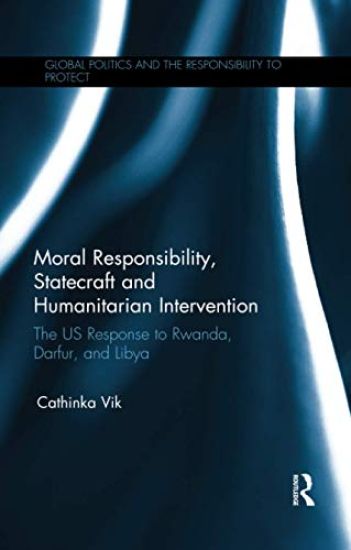
Moral Responsibility, Statecraft and Humanitarian Intervention
This book explores the moral complexity of statecraft in the context of decision-making on armed intervention in the post-Cold War era. This book adds to the debate on humanitarian intervention by analyzing the moral complexity of statecraft when confronted with situations of severe human rights violations. Through a comparative case study of President Bill Clinton administration’s failure to intervene in the Rwanda genocide (1994), the George W. Bush administration’s tepid response to the Darfur atrocities (2003-07), and the Barack Obama administration’s leadership behind the limited U.N. intervention in Libya (2011), it explores the factors – domestic and international – that influence decision-making about humanitarian intervention. These cases show, not only how international moral concerns often compete with interest-based and domestic concerns, but how decision-makers are often confronted by competing moral imperatives. In such situations, it is often not clear which imperatives should be followed. In an increasingly interconnected world, this book examines how we expect state leaders to balance different moral responsibilities.This book will be of much interest to students of humanitarian intervention, the Responsibility to Protect, human rights, US foreign policy, African politics and IR in general.
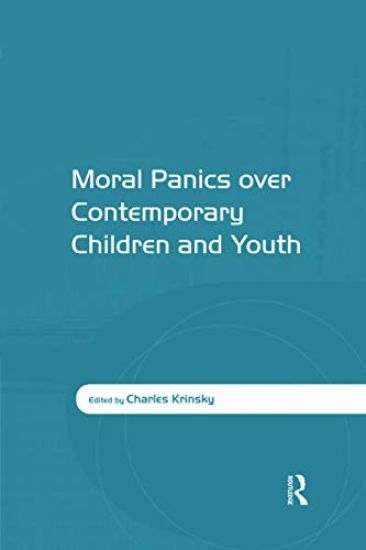
Moral Panics over Contemporary Children and Youth
The concept of moral panic has received considerable scholarly attention, but as yet little attention has been accorded to panics over children and youth. This is the first book to examine this important and controversial social issue by employing a rigorous intellectual framework to explore the cultural construction of youth, through the dissemination of moral panics. It is accessible in manner and makes use of the latest contemporary research by addressing some of the pressing recent concerns relating to children and youth, including cyber-related panics, child abuse and pornography, education and crime. A truly international collection, this volume features new global research focusing on the United Kingdom, Australia, Canada, South Africa, and France as well as the United States. Genuinely multidisciplinary in approach, it will appeal to researchers and students across the social sciences and humanities - from sociology and social theory, to media, education, anthropology, criminology, geography and history.
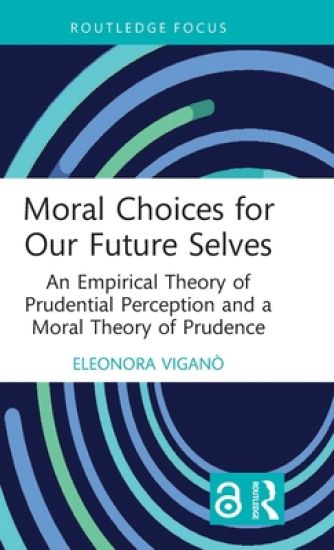
Moral Choices for Our Future Selves

Moral Choices for Our Future Selves

Eleonora Viganò

TAYLOR FRANCIS LTD
2022
sidottu
This book investigates the relationship between our present and future selves. It focuses specifically on diachronic self-regarding decisions: choices involving our earlier and later selves, in which the earlier self makes a decision for the later self.The author connects the scientific understanding of the neurobehavioral processes at the core of individuals’ perceptions of their future selves with the philosophical reflection on individuals’ moral relationship with their future selves. She delineates a descriptive theory of the perception of the future self that is based on empirical evidence and that systematizes and integrates the current theoretical literature. She then argues for the morality of prudence and interprets diachronic self-regarding decisions as decisions between two agents— the earlier and later selves—that belong to the realm of intergenerational ethics, which regulates the relationship between contemporary people and future generations. Finally, the author provides a moral theory of prudence based on respect for one’s agency. This theory identifies what the present and the future selves owe to one another in diachronic self-regarding decisions.Moral Choices for Our Future Selves will be of interest to scholars and students working in ethics, moral psychology, philosophy of mind, and cognitive science.
Moral Choices for Our Future Selves

Moral Choices for Our Future Selves

Eleonora Viganò

TAYLOR FRANCIS LTD
2024
nidottu
This book investigates the relationship between our present and future selves. It focuses specifically on diachronic self-regarding decisions: choices involving our earlier and later selves, in which the earlier self makes a decision for the later self.The author connects the scientific understanding of the neurobehavioral processes at the core of individuals’ perceptions of their future selves with the philosophical reflection on individuals’ moral relationship with their future selves. She delineates a descriptive theory of the perception of the future self that is based on empirical evidence and that systematizes and integrates the current theoretical literature. She then argues for the morality of prudence and interprets diachronic self-regarding decisions as decisions between two agents— the earlier and later selves—that belong to the realm of intergenerational ethics, which regulates the relationship between contemporary people and future generations. Finally, the author provides a moral theory of prudence based on respect for one’s agency. This theory identifies what the present and the future selves owe to one another in diachronic self-regarding decisions.Moral Choices for Our Future Selves will be of interest to scholars and students working in ethics, moral psychology, philosophy of mind, and cognitive science.
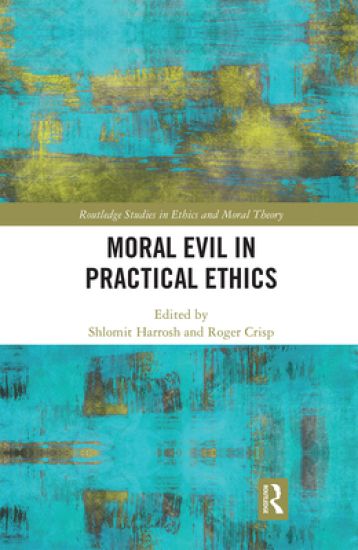
Moral Evil in Practical Ethics
The concept of evil is one of the most powerful in our moral vocabulary, and is commonly used today in both religious and secular spheres to condemn ideas, people, their actions, and much else besides. Yet appeals to evil in public debate have often deepened existing conflicts, through corruption of rational discourse and demonization of the other. With its religious overtones and implied absolutism, the concept of evil seems ill-suited to advancing public discourse and pro-social relations in a liberal democracy, as evidenced by its use in the abortion debate. International relations have also suffered from references to an ‘axis of evil.’ Recently, however, philosophers have begun reconceptualising evil within a secular, moral framework, using the idea of evil as the worst kind of immorality to inform and shape our responses to issues like torture, genocide and rape as a weapon of war. This book continues this trend, exploring a constructive role for the concept of evil in practical ethics.Part I of the book begins with two examinations of the concept itself, one focusing primarily on its secular manifestations and the other on evil in its religious context. Individuals are perhaps the primary focus of attributions of evil, and Part II looks at two particular manifestations of evil, in bullying and in mass killing, before considering the nature of evil as an immoral character trait. Part III moves beyond the individual to issues of collective evildoing, evil environments, and political evil. The final part considers responses to evil: can some evil be unforgiveable, and to what extent should we ‘enhance’ ourselves morally so as to prevent future evildoing?These essays, written by leading philosophers from around the world, including the late Claudia Card, will take the philosophical debate on moral evil in practical ethics to a new level.
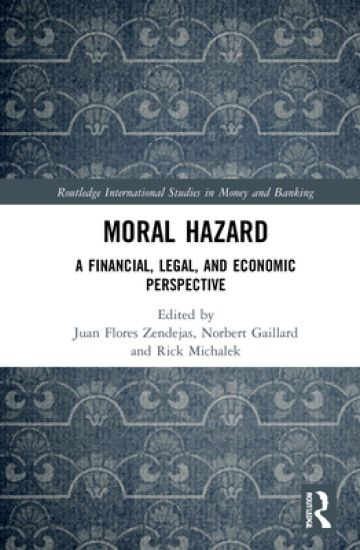
Moral Hazard

Moral Hazard

TAYLOR FRANCIS LTD
2021
sidottu
Moral Hazard is a core concept in economics. In a nutshell, moral hazard reflects the reduced incentive to protect against risk where an entity is (or believes it will be) protected from its consequences, whether through an insurance arrangement or an implicit or explicit guarantee system. It is fundamentally driven by information asymmetry, arises in all sectors of the economy, including banking, medical insurance, financial insurance, and governmental support, undermines the stability of our economic systems and has burdened taxpayers in all developed countries, resulting in significant costs to the community. Despite the seriousness and pervasiveness of moral hazard, policymakers and scholars have failed to address this issue. This book fills this gap. It covers 200 years of moral hazard: from its origins in the 19th century to the bailouts announced in the aftermath of the COVID-19 outbreak. The book is divided into three parts. Part I deals with the ethics and other fundamental issues connected to moral hazard. Part II provides historical and empirical evidence on moral hazard in international finance. It examines in turn the role of the export credit industry, the international lender of last resort, and the IMF. Finally, Part III examines specific sectors such as automobile, banking, and the US industry at large. This is the first book to provide an interdisciplinary analysis of moral hazard and explain why addressing this issue has become crucial today. As such, it will attract interest from scholars across different fields, including economists, political scientists and lawyers.
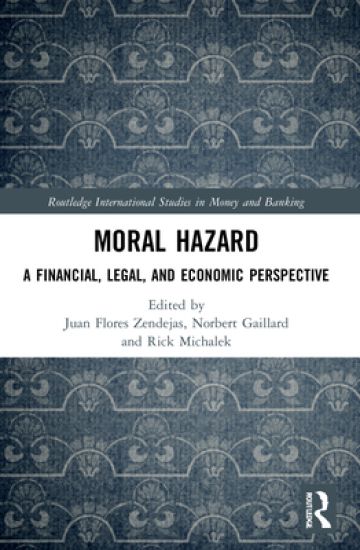
Moral Hazard

Moral Hazard

TAYLOR FRANCIS LTD
2023
nidottu
Moral Hazard is a core concept in economics. In a nutshell, moral hazard reflects the reduced incentive to protect against risk where an entity is (or believes it will be) protected from its consequences, whether through an insurance arrangement or an implicit or explicit guarantee system. It is fundamentally driven by information asymmetry, arises in all sectors of the economy, including banking, medical insurance, financial insurance, and governmental support, undermines the stability of our economic systems and has burdened taxpayers in all developed countries, resulting in significant costs to the community. Despite the seriousness and pervasiveness of moral hazard, policymakers and scholars have failed to address this issue. This book fills this gap. It covers 200 years of moral hazard: from its origins in the 19th century to the bailouts announced in the aftermath of the COVID-19 outbreak. The book is divided into three parts. Part I deals with the ethics and other fundamental issues connected to moral hazard. Part II provides historical and empirical evidence on moral hazard in international finance. It examines in turn the role of the export credit industry, the international lender of last resort, and the IMF. Finally, Part III examines specific sectors such as automobile, banking, and the US industry at large. This is the first book to provide an interdisciplinary analysis of moral hazard and explain why addressing this issue has become crucial today. As such, it will attract interest from scholars across different fields, including economists, political scientists and lawyers.
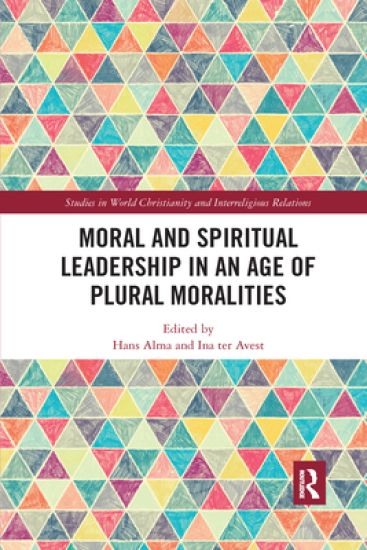
Moral and Spiritual Leadership in an Age of Plural Moralities
In crisis situations, such as terror attacks or societal tensions caused by migration, people tend to look for explicit moral and spiritual leadership and are often inclined to vote for so-called 'strong leaders'. Is there a way to resist the temptation of the simplistic solutions that these ‘strong leader’ offer, and instead encourage constructive engagement with the complex demands of our times? This volume utilises relational and dialogical perspectives to examine and address many of the issues surrounding the moral and spiritual guidance articulated in globalizing Western societies.The essays in this collection focus on the concept of plural moralities, understood as divergent visions on what is a 'good life', both in an ethical, aesthetical, existential, and spiritual sense. They explore the political-cultural context and consequences of plural moralities as well as discussing challenges, possibilities, risks, and dangers from the perspective of two promising relational theories: social constructionism and dialogical self theory. The overarching argument is that it is possible to constructively put in nuanced moral and spiritual guidance into complex, plural societies.By choosing a clear theoretical focus on relational approaches to societal challenges, this interdisciplinary book provides both a broad scope and a coherent argument. It will be of great interest to scholars of social and political psychology, leadership and organization, religious studies, and pedagogy.