Kirjojen hintavertailu. Mukana 11 627 670 kirjaa ja 12 kauppaa.

Kirjahaku

Etsi kirjoja tekijän nimen, kirjan nimen tai ISBN:n perusteella.

1000 tulosta hakusanalla Martin Meisel

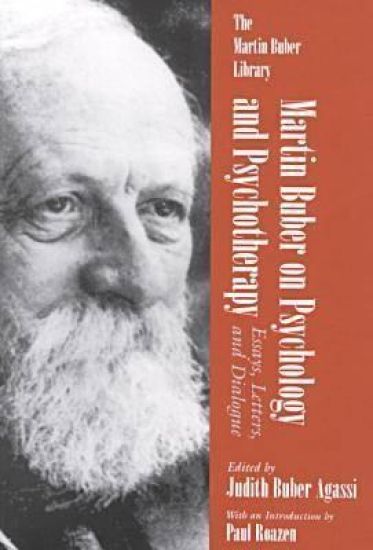
Martin Buber on Psychology and Psychotherapy

Martin Buber on Psychology and Psychotherapy

Judith Buber Agassi

Syracuse University Press
1999
nidottu
This volume covers Martin Buber's views on psychology and psychotherapy, exploring the work of practitioners such as Freud and Jung. Contents include: distance and relation; healing through meeting; Buber and Jung; elements of the interhuman; and guilt and guilt feelings.
Martin Buber

Martin Buber

Paul Mendes-Flohr

Syracuse University Press
2002
nidottu
This volume seeks to honour the memory and legacy of Martin Buber, one of the most illustrious members of the faculty of the Hebrew University and of the world of philosophy. The book is based on the proceedings of a conference held at the Israel Academy of Sciences and Humanities, of which Buber was a founding president, in recognition of the man's contribution to the renaissance of Jewish studies.
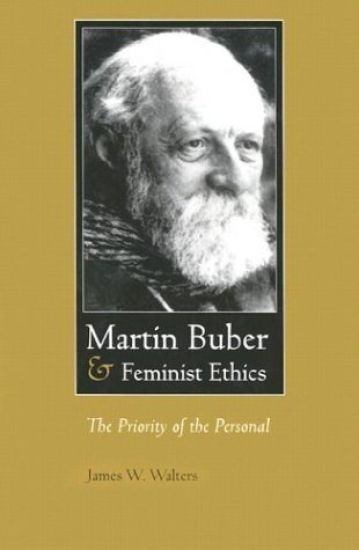
Martin Buber and Feminist Ethics

Martin Buber and Feminist Ethics

James W. Walters

Syracuse University Press
2003
nidottu
As a deeply religious thinker who disclaimed all rationalistic systems, Martin Buber produced an insightful critique of modern philosophical ethics, one that became productive soil for another nontraditional philosophical ethic: feminism's care ethic. In light of the recent emphasis on the new morality, antifoundationalism, and postmodernism in ethics, the dialogical ethics of Martin Buber merits close examination. Most important, Walters compares and contrasts Buber's and feminism's personalist ethics in light of two considerations: the lack of attention by feminist writers to the feminist-Buber linkage and the long-standing and general inattention by twentieth-century thinkers to the ethical dimensions of Buber's thought.
Martin Heidegger Saved My Life

Martin Heidegger Saved My Life

Grant Farred

University of Minnesota Press
2015
pokkari
In Martin Heidegger Saved My Life, Grant Farred combines autobiography with philosophical rumination to offer this unusual meditation on American racism. In the fall of 2013 while raking leaves outside his home, Farred experienced a racist encounter: a white woman stopped to ask him, “Would you like another job?” Farred responded, “Only if you can match my Cornell faculty salary.” The moment, however, stuck with him. The black man had gravitated to, of all people, Martin Heidegger, specifically Heidegger’s pronouncement, “Only when man speaks, does he think-and not the other way around,” in order to unpack this encounter. In this essay, Farred grapples with why it is that Heidegger-well known as a Nazi-resonates so deeply with him during this encounter instead of other, more predictable figures such as Malcolm X, W. E. B. DuBois, or Frantz Fanon. Forerunners is a thought-in-process series of breakthrough digital works. Written between fresh ideas and finished books, Forerunners draws on scholarly work initiated in notable blogs, social media, conference plenaries, journal articles, and the synergy of academic exchange. This is gray literature publishing: where intense thinking, change, and speculation take place in scholarship.
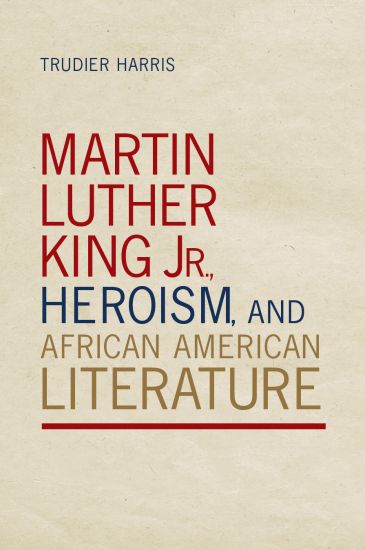
Martin Luther King Jr., Heroism, and African American Literature

Martin Luther King Jr., Heroism, and African American Literature

Trudier Harris

The University of Alabama Press
2014
sidottu
African American writers have incorporated Martin Luther King Jr. into their work since he rose to prominence in the mid-1950s. Martin Luther King Jr., Heroism, and African American Literature is a study by award-winning author Trudier Harris of King’s character and persona as captured and reflected in works of African American literature continue to evolve.One of the most revered figures in American history, King stands above most as a hero. His heroism, argues Harris, is informed by African American folk cultural perceptions of heroes. Brer Rabbit, John the Slave, Stackolee, and Railroad Bill—folk heroes all—provide a folk lens through which to view King in contemporary literature. Ambiguities and issues of morality that surround trickster figures also surround King. Nonconformist traits that define Stackolee and Railroad Bill also inform King’s life and literary portraits. Defiance of the law, uses of indirection, moral lapses, and bad habits are as much a part of the folk-transmitted biography of King as they are a part of writers’ depictions of him in literary texts.Harris first demonstrates that during the Black Arts Movement of the 1960s, when writers such as Nikki Giovanni, Sonia Sanchez, and LeRoi Jones (Amiri Baraka) were rising stars in African American poetry, King’s philosophy of nonviolence was out of step with prevailing notions of militancy (Black Power), and their literature reflected that division.In the quieter times of the 1970s and 1980s and into the twenty-first century, however, treatments of King and his philosophy in African American literature changed. Writers who initially rejected him and nonviolence became ardent admirers and boosters, particularly in the years following his assassination. By the 1980s, many writers skeptical about King had reevaluated him and began to address him as a fallen hero. To the most recent generation of writers, such as Katori Hall, King is fair game for literary creation, no matter what those portrayals may reveal, to a point where King has become simply another source of reference for creativity.Collectively these writers, among many others, illustrate that Martin Luther King Jr. provides one of the strongest influences upon the creative worlds of multiple generations of African American writers of varying political and social persuasions.
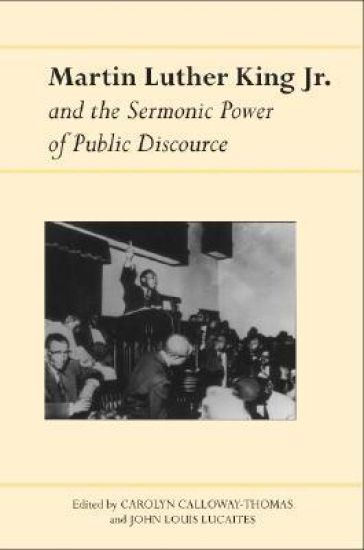
Martin Luther King Jr. and the Sermonic Power of Public Discourse
The nine essays in this volume offer critical studies of the range of King's public discourse as forms of sermonic rhetoric. They focus on five diverse and relative short examples from King's body of work: "Death of Evil on the Seashore," "Letter from Birmingham Jail," "I Have a Dream," "A Time to Break Silence," and "I've Been to the Mountaintop." Taken collectively, these five works span both the duration of King's career as a public advocate but also represent the broad scope of his efforts to craft and project a persuasive vision a beloved community that persists through time.
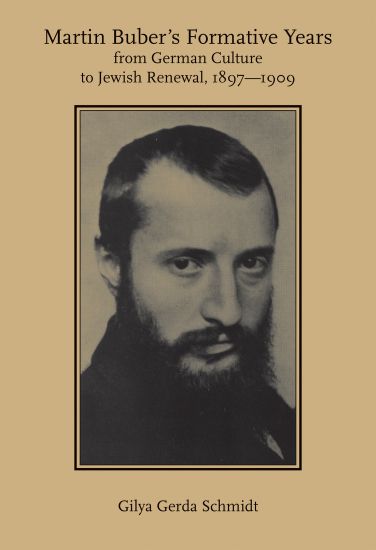
Martin Buber's Formative Years

Martin Buber's Formative Years

Gilya Gerda Schmidt

The University of Alabama Press
2017
nidottu
An illuminating look at an understudied, but critical, period in Buber's early career. Martin Buber (1878–1965) has had a tremendous impact on the development of Jewish thought as a highly influential figure in 20th-century philosophy and theology. However, most of his key publications appeared during the last forty years of his life and little is known of the formative period in which he was searching for, and finding, the answers to crucial dilemmas affecting Jews and Germans alike. Now available in paperback, Martin Buber's Formative Years illuminates this critical period in which the seeds were planted for all of his subsequent work. During the period from 1897 to 1909, Buber's keen sense of the crisis of humanity, his intimate knowledge of German culture and Jewish sources, and his fearlessness in the face of possible ridicule challenged him to behave in a manner so outrageous and so contrary to German-Jewish tradition that he actually achieved a transformation of himself and those close to him. Calling on spiritual giants of great historical periods in German, Christian, and Jewish history–such as Nicolas of Cusa, Jakob Boehme, Israel Baal Shem Tov, Rabbi Nachman of Brazlav, Johann Wolfgang von Goethe, and Friedrich Nietzsche–Buber proceeded to subvert the existing order by turning his upside-down world of slave morality right side up once more. By examining the multitude of disparate sources that Buber turned to for inspiration, Gilya Gerda Schmidt elucidates Buber's creative genius and his contribution to turn-of-the-century Jewish renewal. This comprehensive study concludes that Buber was successful in creating the German-Jewish symbiosis that emancipation was to have created for the two peoples but that this synthesis was tragic because it came too late for practical application by Jews in Germany.
Martin Luther King Jr., Heroism, and African American Literature

Martin Luther King Jr., Heroism, and African American Literature

Trudier Harris

THE UNIVERSITY OF ALABAMA PRESS
2023
nidottu
Examines how representations of Martin Luther King Jr.’s character and persona in works of African American literature have evolved and reflect the changing values and mores of African American culture African American writers have incorporated Martin Luther King Jr. into their work since he rose to prominence in the mid-1950s. Martin Luther King Jr., Heroism, and African American Literature is a study by award-winning author Trudier Harris of King’s character and persona as captured and reflected in works of African American literature continue to evolve. One of the most revered figures in American history, King stands above most as a hero. His heroism, argues Harris, is informed by African American folk cultural perceptions of heroes. Brer Rabbit, John the Slave, Stackolee, and Railroad Bill—folk heroes all—provide a folk lens through which to view King in contemporary literature. Ambiguities and issues of morality that surround trickster figures also surround King. Nonconformist traits that define Stackolee and Railroad Bill also inform King’s life and literary portraits. Defiance of the law, uses of indirection, moral lapses, and bad habits are as much a part of the folk-transmitted biography of King as they are a part of writers’ depictions of him in literary texts. Harris first demonstrates that during the Black Arts Movement of the 1960s, when writers such as Nikki Giovanni, Sonia Sanchez, and LeRoi Jones (Amiri Baraka) were rising stars in African American poetry, King’s philosophy of nonviolence was out of step with prevailing notions of militancy (Black Power), and their literature reflected that division. In the quieter times of the 1970s and 1980s and into the twenty-first century, however, treatments of King and his philosophy in African American literature changed. Writers who initially rejected him and nonviolence became ardent admirers and boosters, particularly in the years following his assassination. By the 1980s, many writers skeptical about King had reevaluated him and began to address him as a fallen hero. To the most recent generation of writers, such as Katori Hall, King is fair game for literary creation, no matter what those portrayals may reveal, to a point where King has become simply another source of reference for creativity. Collectively these writers, among many others, illustrate that Martin Luther King Jr. provides one of the strongest influences upon the creative worlds of multiple generations of African American writers of varying political and social persuasions.
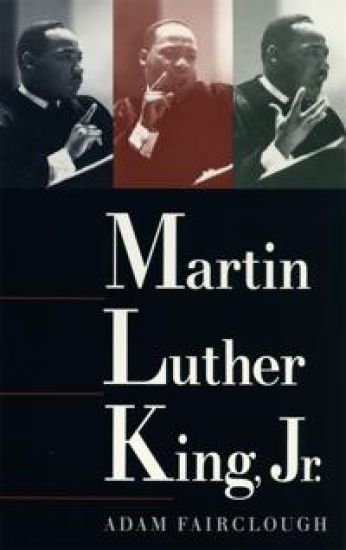
Martin Luther King Jr.

Martin Luther King Jr.

Adam Fairclough

University of Georgia Press
1995
pokkari
During a public career spanning only twelve years, Martin Luther King Jr. transformed the South—and the nation—and reinvigorated American democracy. From the pulpit and from jail, he inspired African Americans to rebel against white supremacy, nonviolently defying racism, bigotry, and brutality. He also sought a better way of life for all poor and powerless people, black and white alike. In this concise and readable biography, Adam Fairclough chronicles the major events of King's life and assesses his achievements as the preeminent leader of the civil rights movement.The biography begins with an examination of King's upbringing in Atlanta, Georgia, and a description of the conditions suffered by black southerners in the 1930s. After tracing King's intellectual growth through college, graduate school, and seminary, Fairclough then tracks his fortuitous involvement in the Montgomery bus boycott and his swift rise to prominence as a spokesman and leader. Subsequent chapters offer incisive accounts of King's major campaigns: the demonstrations in Albany, Georgia, where a wily police chief outwitted him; the militant protests in Birmingham, Alabama, where King transmuted police brutality into a historic victory for African Americans; and the campaign in Selma, Alabama, which paved the way for black political representation throughout the South. Fairclough also looks at other notable triumphs and struggles, from the inspirational "I Have a Dream" speech delivered at the March on Washington rally to King's ill-fated journey to Memphis to help striking sanitation workers.Throughout, Fairclough charts the major stages of King's philosophical and political growth, examining his opposition to the Vietnam War, his response to Black Power, and his growing concern for economic justice. Fairclough rounds out his portrait with an assessment of King's legacy to America and his continuing relevance to the struggle throughout the world for freedom and equality.
Martin Heidegger's Being and Time

Martin Heidegger's Being and Time

Richard M. McDonough

Peter Lang Publishing Inc
2006
nidottu
The ideas of Martin Heidegger, one of the most important philosophers of the twentieth century, have had a profound influence on work in literary theory and aesthetics, as well as on mainstream philosophy. This book offers a clear and concise guide to Heidegger's notoriously complex writings, while giving special attention to his major work Being and Time. Richard McDonough adds historical context by exploring Heidegger's intellectual roots in German idealism and ancient Greek philosophy, and introduces readers to the key themes in Heidegger's work including Dasein, Existenz, time, conscience, death, and phenomenology. This book, which also considers Heidegger's controversial ethics (or anti-ethics ) and politics, would make an excellent text for both introductory and advanced undergraduate courses on existentialism, phenomenology, continental philosophy, and Heidegger himself.
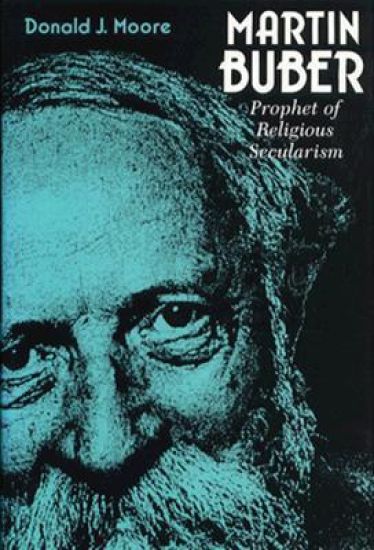
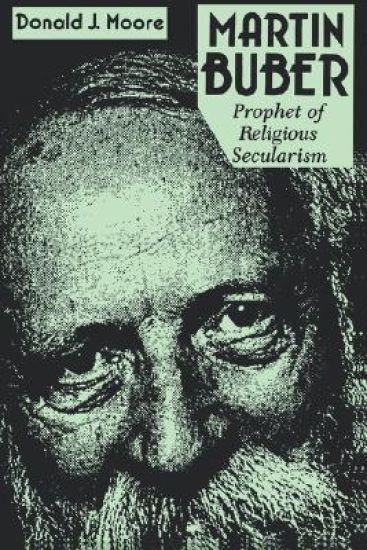
Martin Buber

Martin Buber

Donald Moore

Fordham University Press
1996
sidottu
In this study of Martin Buber's life and work, Donald Moore focuses in on Buber's central message about what it means to be a human being and a person of faith.
Martin Buber

Martin Buber

Donald Moore

Fordham University Press
1996
pokkari
In this study of Martin Buber's life and work, Donald Moore focuses in on Buber's central message about what it means to be a human being and a person of faith.
Martin Heidegger and the Problem of Historical Meaning

Martin Heidegger and the Problem of Historical Meaning

Jeffrey Andrew Barash

Fordham University Press
2003
pokkari
Now in paperback, this important book explores the central role of historical thought in the full range of Heidegger's thought, both the early writings leading up to Being and Time, and after the "reversal" or Kehre that inaugurated his later work. Barash examines Heidegger's views on history in a richly developed context of debates that transpired in the early 20th-century German philosophy of history. He addresses a key unifying theme—the problem of historical meaning and the search for coherent criteria of truth in an era of historical relativism—as he traces the engagement with historicity throughout all major epochs and works. Barash revises this edition to explore new material, including Heidegger's lecture course texts from 1910 to 1923, and adds an expanded, updated bibliography.
Martin Buber's Journey to Presence

Martin Buber's Journey to Presence

Phil Huston

Fordham University Press
2007
sidottu
What does Martin Buber mean, in I and Thou, by the claim that the one thing that matters is full acceptance of presence? An attempt to answer this question led the author on a journey of exploration through Buber's early writings, to reach a clarification of Buber's predialogical concept of God. She examines Buber's first major philosophical work: Daniel: Dialogues in Realization, drawing attention to inaccuracies in the available English translation. Buber's desire for presence, she finds, began with an overwhelming experience of absence. His search is for a presence that will not let him down, that will not be a "mis-encounter"--that is, for a presence that will ensure that there is meaning. This book will be an invaluable text for the student looking for a readable guide to Buber's early writings. It will help readers to understand the rich depth and many layers of thought in Buber's masterpiece, I and Thou, and to appreciate the radical change that took place in Buber's concept of God prior to its publication in 1923.
The Essential Martin Luther Commentary Set

The Essential Martin Luther Commentary Set

Martin Luther

Kregel Publications,U.S.
2006
muu
This set brings together the most popular New Testament commentaries by the great Reformer. These affordable, paperback volumes are the perfect option for readers that want to benefit from Luther's verse-by-verse exposition. This set includes Luther's Commentary on Romans, Commentary on Galatians, and Commentary on Peter & Jude.
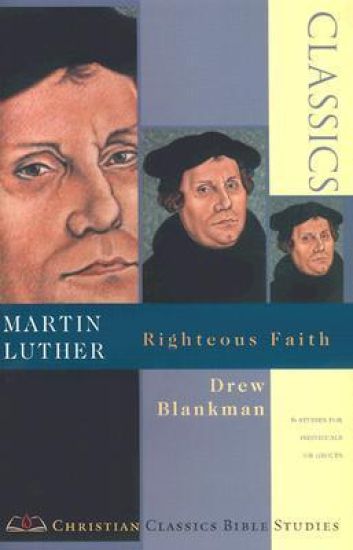
Martin Luther – Righteous Faith

Martin Luther – Righteous Faith

Drew Blankman

Inter-Varsity Press
2002
nidottu
Christian Classics Bible Studies provide a unique opportunity to gain a feel for the original work of some of the most significant minds in Christian history. Selected readings from classic works are followed by insightful questions and Bible studies based on themes and texts from the readings. The sessions conclude with opportunities for individuals to go deeper "along the road" with ideas for spiritual formation and reflection. Notes for leaders provide a helpful guide for those leading discussion groups.
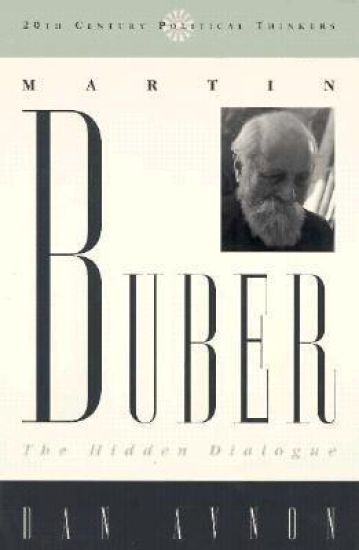
Martin Buber

Martin Buber

Dan Avnon

Rowman Littlefield
1998
nidottu
In Martin Buber: The Hidden Dialogue, Dan Avnon analyzes and reconstructs Buber's corpus of mature writings. Avnon's novel reading of Buber's diverse writings on the Bible, Christianity, Judaism, philosophy, socialism, Zionism, and the Jewish-Arab conflict is based on his discovery of a 'hidden' code of writing that grants Buber's apparently eclectic works and literary styles a coherent and unifying hermeneutic center. The term 'hidden dialogue' refers to the dialogue that takes place between reader and text, between diverse communities, and between humanity and creation. An essential introduction to Buber's work and his unique approach to writing, this book's solution to 'the Buber enigma' is fascinating reading and a valuable addition to scholarship on Buber, political philosophy, hermeneutics, and biblical interpretation.
Martin Margiela

Martin Margiela

Alexandre Samson

Rizzoli International Publications
2018
sidottu
Timed to coincide with a major exhibition, this volume revisits the years during which celebrated designer Martin Margiela achieved the status as one of the most important designers at work today. One of the Antwerp group of six who changed the face of contemporary fashion, Margiela created 41 runway shows between 1989 and 2009 which promoted a unique vision of understated luxury -- monochromes, oversize volumes, and his signature constructed-deconstructed cuts - whose credo is comfort, timelessness, sensuality, and authenticity. Famously reclusive, Margiela never showed his face even at his own shows in order that the work could stand purely on its own, free from any link to celebrity or self-promotion. This volume chronicles these amazing fashion shows in careful detail: the extraordinary spaces, the music, the designer's intentions, the iconic pieces. Over the years, recurring motifs and inspirations become more apparent including anonymity, whiteness, past and anteriority, diversion. The book reveals the sensitive, poetic and incredibly innovative universe of this most influential contemporary fashion designer.
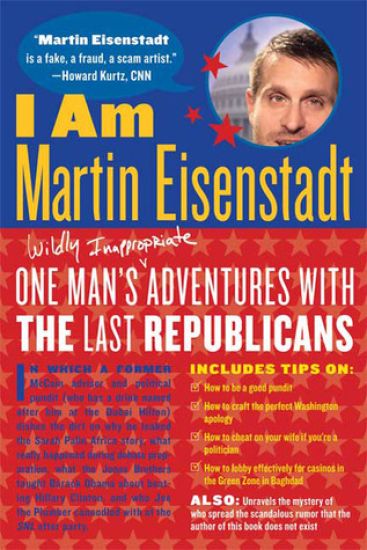
I Am Martin Eisenstadt: One Man's (Wildly Inappropriate) Adventures with the Last Republicans
In the days after the 2008 presidential election, we heard that Sarah Palin thought Africa was one big country. We heard that the leak came from Martin Eisenstadt, a McCain policy adviser. And then, within forty-eight hours, we heard that he was a fraud, a fake, and that Martin Eisenstadt didn't exist. Maybe he doesn't. But in a world where "news" can spread like wildfire on the Internet and a hoax can tell you more about politics than the facts, Martin Eisenstadt--whose blog and think tank fooled the world--has something to tell us. With the savviness of Primary Colors and the playfulness of Forrest Gump, his book is a mix of political intrigue, campaign-trail escapades, and cyberspace detective work. From debate preparation with Sarah Palin to his mother's basement (yes, he still lives at home), from Liberation of Iraq softball games to Saturday Night Live; from his campaign for casinos in the Green Zone to happy hour in Washington, we follow a neocon pundit on his travels. This is his version of the election campaign. Martin Eisenstadt: Hoaxster? Hero? You decide.