
Kirjahaku
Etsi kirjoja tekijän nimen, kirjan nimen tai ISBN:n perusteella.
1000 tulosta hakusanalla Mary F Nixon-Roulet
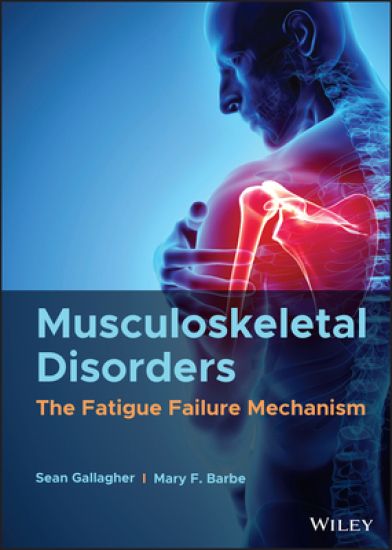
Musculoskeletal Disorders Hands-on guidance and tools for the prevention of musculoskeletal injuries in the workplace In Musculoskeletal Disorders: The Fatigue Failure Mechanism, a team of accomplished occupational health experts delivers an essential and incisive discussion of how musculoskeletal disorders (MSDs) develop and progress, as well as how they can be prevented and controlled. Offering a novel, evidence-based approach to this costly problem, the book has broad implications for employers, insurers, and other stakeholders in workplace health and safety. The authors identify new risk assessment approaches based on the cumulative effects of exposure to highly variable loading conditions. These new approaches can also be applied to evaluate the efficacy of job rotation scenarios and to quantify exoskeleton efficacy. The complexities associated with fatigue failure in biological environments are also explored in addition to suggested models for understanding how the body maintains musculoskeletal homeostasis. Readers will also find: Thorough introductions to the material properties of musculoskeletal tissues and the fundamental principles of fatigue failure analysisIn-depth explorations of the structure and function of the musculoskeletal system and up-to-date epidemiological research on MSDsComprehensive discussions of validated fatigue failure risk assessment methods, including continuous exposure assessment to better quantify injury riskInsightful treatments of remodeling and healing processes as they apply to MSD risk, as well as factors that impair the healing process, like stress, obesity, and aging Perfect for occupational and environmental health and safety (OEHS) professionals, Musculoskeletal Disorders: The Fatigue Failure Mechanism will also earn a place in the libraries of ergonomists, physical therapists, biomechanists, industrial hygienists, occupational physicians, orthopedists, and musculoskeletal disorder researchers.
Service is increasingly recognized as a crucial part of academic life, and in this incredibly competitive industry, trustworthy best practice guides are notably missing. Even with supportive mentors, many emergent scholars are left to learn these lessons the hard way. In this straightforward and thorough book, Joy Egbert and Mary Roe address the most common challenges facing academics at all stages of their careers as they navigate the world of professional service. Illuminating the unspoken rules behind book reviewing, anticipating the difficulties of collaborating, offering support on chairing, mentoring, and graduate student committees chairmanship, and more, this book is a must-have for anyone starting an academic career in Education, and for veteran academics who want to polish their skills.
Service is increasingly recognized as a crucial part of academic life, and in this incredibly competitive industry, trustworthy best practice guides are notably missing. Even with supportive mentors, many emergent scholars are left to learn these lessons the hard way. In this straightforward and thorough book, Joy Egbert and Mary Roe address the most common challenges facing academics at all stages of their careers as they navigate the world of professional service. Illuminating the unspoken rules behind book reviewing, anticipating the difficulties of collaborating, offering support on chairing, mentoring, and graduate student committees chairmanship, and more, this book is a must-have for anyone starting an academic career in Education, and for veteran academics who want to polish their skills.

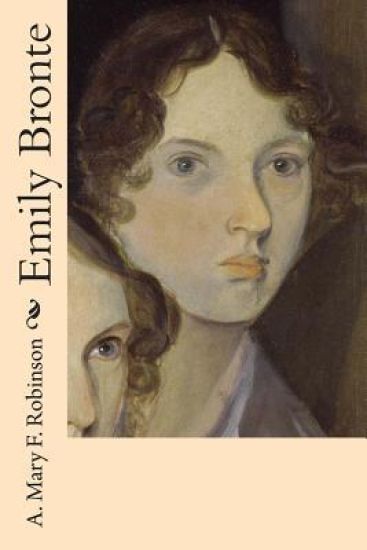
Emily Jane Bront was an English novelist and poet who is best known for her only novel, Wuthering Heights, now considered a classic of English literature. Emily was the third-eldest of the four surviving Bront siblings, between the youngest Anne and her brother Branwell. She wrote under the pen name Ellis Bell. Emily Bront was born on 30 July 1818 in the village of Thornton Market Street on the outskirts of Bradford, in the West Riding of Yorkshire, in Northern England, to Maria Branwell and an Irish father, Patrick Bront . She was the younger sister of Charlotte Bront and the fifth of six children. In 1820, shortly after, the birth of Emily's younger sister Anne, the family moved eight miles away to Haworth, where Patrick was employed as perpetual curate; here the children developed their literary talents. After the death of their mother on 15 September 1821 from cancer, when Emily was three years old, 5] the older sisters Maria, Elizabeth and Charlotte were sent to the Clergy Daughters' School at Cowan Bridge, where they encountered abuse and privations later described by Charlotte in Jane Eyre. At the age of six on 25 November 1824, Emily joined her sisters at school for a brief period. 6] When a typhoid epidemic swept the school, Maria and Elizabeth caught it. Maria, who may actually have had tuberculosis, was sent home, where she died. Emily was subsequently removed from the school, in June 1825, along with Charlotte and Elizabeth. Elizabeth died soon after their return home. The three remaining sisters and their brother Patrick Branwell were thereafter educated at home by their father and aunt Elizabeth Branwell, their mother's sister. A shy girl, Emily was very close to her siblings and was known as a great animal lover, being especially noted for befriending the stray dogs she found wandering around the countryside. 8] Despite the lack of formal education, Emily and her siblings had access to a wide range of published material; favourites included Sir Walter Scott, Byron, Shelley, and Blackwood's Magazine. In their leisure time the children began to write fiction at home, inspired by a box of toy soldiers Branwell had received as a gift 10] and created a number of fantasy worlds (including 'Angria') which featured in stories they wrote - all "very strange ones" according to Charlotte- and enacted about the imaginary adventures of their toy soldiers along with the Duke of Wellington and his sons, Charles and Arthur Wellesley. Little of Emily's work from this period survives, except for poems spoken by characters. When Emily was 13, she and Anne withdrew from participation in the Angria story and began a new one about Gondal, a fictional island whose myths and legends were to preoccupy the two sisters throughout their lives. With the exception of their Gondal poems and Anne's lists of Gondal's characters and place-names, the writings on Gondal were not preserved. Some "diary papers" of Emily's have survived in which she describes current events in Gondal, some of which were written, others enacted with Anne. One dates from 1841, when Emily was twenty-three: another from 1845, when she was twenty-seven. The heroes of Gondal resemble the popular image of the Highlanders of Scotland as a sort of British version of the "noble savage", being romantic outlaws who were capable of more romanticism, nobility, passion and bravery than those from "civilization". One of the fictional works produced by the Bront siblings was Branwell's The Life of Alexander Percy, which tells the story of how he and his wife have such a complete love and understanding for one another that eventually their love becomes self-destructive. Her brother's story was to become the inspiration for Wuthering Heights.

The End of the Middle Ages: Essays and Questions in History
A. Mary F. Robinson
Createspace Independent Publishing Platform
2016
nidottu
Originally published in 1889. "The End of the Middle Ages" is a series of essays - studies towards a serious historical work. CONTENTS Dedication. The Beguines and the Weaving Brothers. The Convent of Helfta. The Attraction of the Abyss. The Schism. Valentine Visconti. The Claim of the House of Orleans to Milan. The Malatestas of Rimini. The Ladies of Milan. The Flight of Piero de' Medici. The French at Pisa.
The End of the Middle Ages: Essays and Questions in History
A. Mary F. Robinson
Createspace Independent Publishing Platform
2017
nidottu
Secret Societies Reconsidered: Perspectives on the Social History of Early Modern South China and Southeast Asia
David Ownby; Mary F. Somers Heidhues
M.E. Sharpe
1993
sidottu
A discussion of the development of secret societies within China and among Chinese communities in colonial Southeast Asia in the late 18th and 19th centuries.
Secret Societies Reconsidered: Perspectives on the Social History of Early Modern South China and Southeast Asia
David Ownby; Mary F. Somers Heidhues
M.E. Sharpe
1993
nidottu
A discussion of the development of secret societies within China and among Chinese communities in colonial Southeast Asia in the late 18th and 19th centuries.

Living in Faith: A History of the Greater Holy Temple Church of God in Christ
Ed D. Mary F. Lenox; Mary F. Lenox
Tbl Publishers
2008
nidottu

Natural History of Western Wild Animals - and guide for hunters, trappers, and sportsmen - Vol. 1, Second Edition is an unchanged, high-quality reprint of the original edition of 1875. Hansebooks is editor of the literature on different topic areas such as research and science, travel and expeditions, cooking and nutrition, medicine, and other genres. As a publisher we focus on the preservation of historical literature. Many works of historical writers and scientists are available today as antiques only. Hansebooks newly publishes these books and contributes to the preservation of literature which has become rare and historical knowledge for the future.

Cyrano De Bergerac
Edmond Rostand; Gladys (TRN) Thomas; Mary F. (TRN) Guillemard
Kessinger Pub
2008
pokkari
evoLve: The True Story of a Physician Who Was Struck by Lightning, The Shaman She Befriended, and the Healing that Changed Her Life
M. D. Mary F. Hewitt
Createspace Independent Publishing Platform
2010
nidottu

Perhaps the most extensive book to date ever written on the Montgomery Bus Boycott, Let My People Go! may prove to be the encyclopedia of this pivotal event in American history. While other books written on the boycott primarily focus on the point of view of one key leader, this book discusses the boycott from several viewpoints and takes the reader on an historical journey through time, illustrating how God consistently intervened in the course of history to free His people from the evils of human injustice. Although historically based, this book is mostly inspirational, in that readers will feel inspired to activism. This work serves, in particular, to remind readers that the same God who delivered 50,000 African-American citizens of Montgomery out of the bondage of Jim Crow, is still in the business of delivering His people out of any circumstances. God still speaks to the forces of evil by willing, "Let My People Go!"
Clinical Analytics and Data Management for the DNP
Martha L. Sylvia; Mary F. Terhaar
Springer Publishing Co Inc
2018
nidottu
This is the only text to deliver the strong data management knowledge and skills that are required competencies for all DNP students. It enables readers to design data tracking and clinical analytics in order to rigorously evaluate clinical innovations/programs for improving clinical outcomes, and to document and analyze change. The second edition is greatly expanded and updated to address major changes in our health care environment. Incorporating faculty and student input, it now includes modalities such as SPSS, Excel, and Tableau to address diverse data management tasks. Eleven new chapters cover the use of big data analytics, ongoing progress towards value-based payment, the ACA and its future, shifting of risk and accountability to hospitals and clinicians, advancement of nursing quality indicators, and new requirements for Magnet certification.The text takes the DNP student step by step through the complete process of data management from planning to presentation, and encompasses the scope of skills required for students to apply relevant analytics to systematically and confidently tackle the clinical interventions data obtained as part of the DNP student project. Of particular value is a progressive case study illustrating multiple techniques and methods throughout the chapters. Sample data sets and exercises, along with objectives, references, and examples in each chapter, reinforce information.Key Features:Provides extensive content for rigorously evaluating DNP innovations/projectsTakes DNP students through the complete process of data management from planning through presentationIncludes a progressive case study illustrating multiple techniques and methodsOffers very specific examples of application and utility of techniquesDelivers sample data sets, exercises, PowerPoint slides and more, compiled in Supplemental Materials and an Instructor Manual