Kirjojen hintavertailu. Mukana 11 710 954 kirjaa ja 12 kauppaa.

Kirjahaku

Etsi kirjoja tekijän nimen, kirjan nimen tai ISBN:n perusteella.

1000 tulosta hakusanalla Matthew Hartley; Alan Ruby

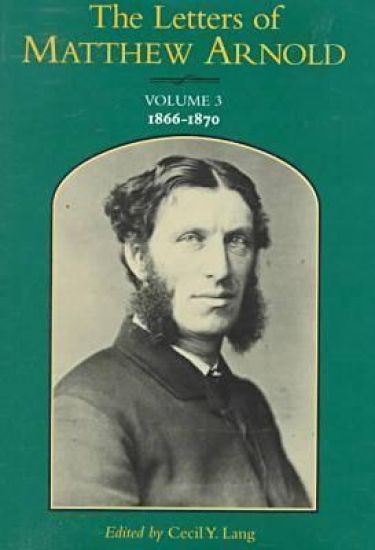
The Letters of Matthew Arnold v. 3; 1866-70

The Letters of Matthew Arnold v. 3; 1866-70

Matthew Arnold

University of Virginia Press
1998
sidottu
The letters in this volume show Arnold, now midway in his professional career, publishing his first volume of poems in a decade and emerging as a critic - simultaneously - of society, of education, of religion, and, as always, of politics. In 1867 he publishes ""New Poems"", containing several of his best-known and most beloved works, ""Dover Beach, ""Thyrsis"", ""Stanzas from the Grande Chartreuse"", and many others, including the first reprint since 1852 of ""Empedocles on Etna"", and in 1869 ""Culture and Anarchy"", of which the germ is visible in a remarkable letter to his mother in 1867, as well as the influential reports on continental schools, and the seminal ""St. Paul and Protestantism"". The letters to his mother and other family members continue unabated; two of his sons die, their deaths recorded in wrenching accents; his essays, possibly by design, draw flak from all directions, which Arnold evades (any poet to any critic) as adroitly or disarmingly as usual; for two years he takes into his home an Italian prince; and he is awarded an honourary Oxford degree. He remains in every way both Establishment and anti-Establishment, both courteous, as has been said, and something better than courteous: honest.
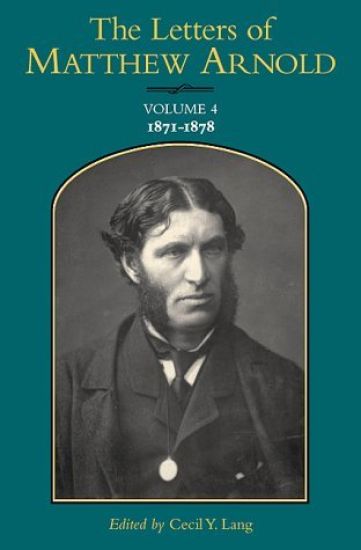
The Letters of Matthew Arnold v. 4; 1871-1878

The Letters of Matthew Arnold v. 4; 1871-1878

Matthew Arnold

University of Virginia Press
2000
sidottu
This is the fourth in a series of six volumes collecting together all the known letters of Matthew Arnold. In his writings, Arnold ranges from religion to literature; ""St Paul and Protestantism"" in 1870 is followed by ""Literature and Dogma, God and the Bible"", and ""Last Essays on Church and Religion"". These books have all more or less been forgotten, but in the 1870s they were an integral part of intellectual culture, as was ""Friendship's Garland"". Equally, the letters here contribute to chronicle Arnold's personal life in the characteristically intimate note of all his correspondence. Arnold loses a son, a brother and his mother (as well as his mother-in-law), and he moves seamlessly from the marvellous letters to his sister remaining at Fox How almost as of he had been writing all along not merely to an individual but also to a spiritual anchor, or even to his moral centre. Arnold travels to France, Switzerland and Italy, recording as always his incomparable impressions. He settles, finally, in Surrey, and poignantly says farewell to his youth in ""George Sand"".
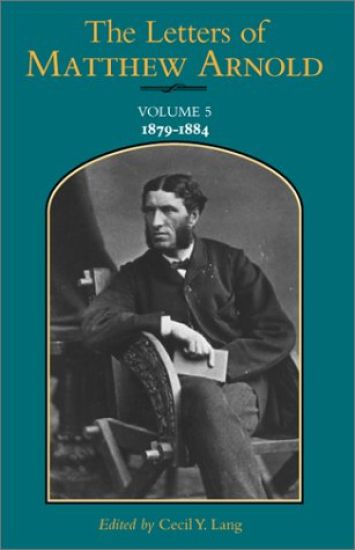
The Letters of Matthew Arnold v.5; 1879-1884

The Letters of Matthew Arnold v.5; 1879-1884

Matthew Arnold

University of Virginia Press
2001
sidottu
The emotional and moral centre of this collection is the series of letters written during Arnold's first American visit, during which he ranged from New York and New England to Madison, Chicago, Richmond, Washington, Toronto, Montreal and Quebec. Like most visiting British luminaries, he meets everyone, everywhere, including the president and former president, the Delanos, the Roosevelts, the Vanderbilts and especially Andrew Carnegie. But the visit - a lecture tour taken to pay off his sons debts - had other and far more significant repercussions, for Arnold was accompanied by his wife and by his elder daughter, who met the man she was to marry - the direct cause of a second American visit and, in due course, of a flourishing branch of Arnold descendants in the United States.
The Letters of Matthew Arnold v. 6; 1885-1888

The Letters of Matthew Arnold v. 6; 1885-1888

Matthew Arnold

University of Virginia Press
2002
sidottu
In this final volume of the Virginia edition of Arnold's letters, Arnold joins for the last time a Royal Commission on Education, travelling first to Germany, and then on to Switzerland and Paris. Following his wife and younger daughter, Arnold also makes his second American visit, this time to see ""the Midget"", his first grandchild. Both missions reveal his well-known and characteristic zest for people and places - new acquaintances, new scenery, the total experience of living - observing, absorbing, recording and moving on. Finally, with maximum nostalgia and minimum regret, he resigned the inspectorship of schools in which he had spent nearly all of his adult existence and settles down, in sweet, bucolic content, to the life of a country squire. Then, tragically, abruptly and predictably, it screeches to a halt. Manifestly, he had lived daily with intimations of mortality. The series-cumulative index included with this volume is a valuable resource for tracking Arnold's records of his active life.
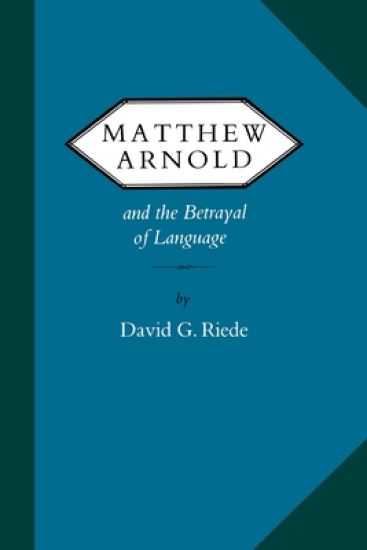
Matthew Arnold and the Betrayal of Language

Matthew Arnold and the Betrayal of Language

David G. Riede

University of Virginia Press
2015
nidottu
Matthew Arnold was one of the nineteenth century's greatest spokesmen for the saving power of culture, especially of poetry, to substitute for a vanishing religion. Yet he was persistently troubled throughout his career by the difficulty of finding adequate authority in language. Matthew Arnold and the Betrayal of Language explores Arnold's attempts to find an authoritative language, and argues that his occasional claims for such a language reveal more uneasiness than confidence in the value of ""letters."" It examines Arnold's poetry within this context and demonstrates that his various experiments - to speak in oracular voice, to use classic forms, to achieve a grand style - and their failures, reflect the inevitable difficulties facing any poet in an age of intellectual and cultural upheaval. Riede argues that Arnold's determined efforts to write with authority, combined with his deep-seated suspicion of his medium, result in an exciting if often agonized tension in his poetic language - a language that strains against its inevitable but generally unacknowledged limitations.
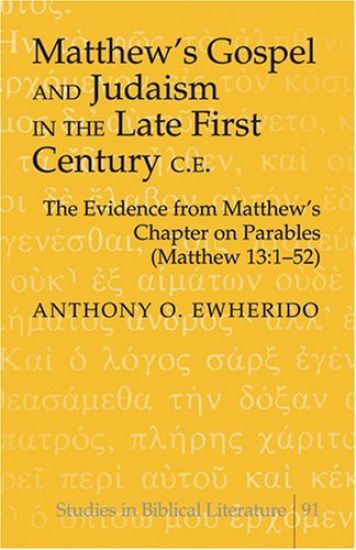
Matthew's Gospel and Judaism in the Late First Century C.E.

Matthew's Gospel and Judaism in the Late First Century C.E.

Anthony O. Ewherido

Peter Lang Publishing Inc
2006
sidottu
Following a thorough examination of the structure, language, and argument of Matthew's discourse on parables, Anthony O. Ewherido underscores its primary relevance to the ongoing discussion on the social context of Matthew's Gospel. The convincing analysis of the textual evidence and study of some social and historical trends in Christianity and Judaism in the post-70 C.E. era inform Ewherido's conclusion that at the time the Gospel was written to its predominantly Jewish-Christian community, that community had parted ways with Judaism and stood at an ideologically irreconcilable distance from the -synagogue across the street.-"
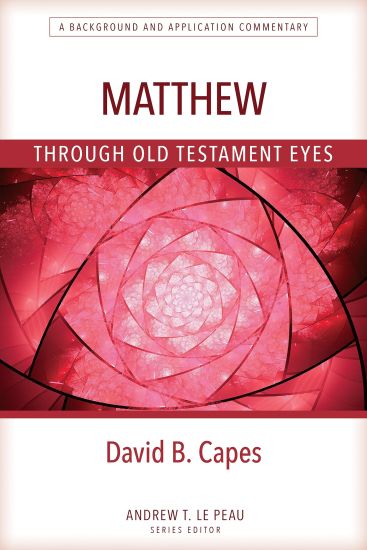
Matthew Through OT Eyes

Matthew Through OT Eyes

David Capes

Kregel Academic Professional
2024
pokkari
A New Testament commentary steeped in the Old Testament Through Old Testament Eyes is a new kind of commentary series that illuminates the Old Testament backgrounds, allusions, patterns, and references that saturate the New Testament. These links were second nature to the New Testament authors and their audiences, but today's readers often cannot see them. Bible teachers, preachers, and students committed to understanding Scripture will gain insight through these rich Old Testament connections, which clarify puzzling passages and explain others in fresh ways. The Gospel of Matthew contains both overt and subtle connections to the Old Testament, capitalizing on the scriptural literacy of the work's original, first-century Jewish audience. These complex and multifaceted connections are not always recognized by today's readers, meaning significant ideas can be easily missed or misappropriated. David B. Capes elucidates these extensive backgrounds, echoes, quotations, ways of thinking, and patterns of living, showing how God's plan--introduced in the Hebrew Scriptures--is revealed through the very person, work, life, and ministry of Jesus. Avoiding overly technical discussions and interpretive debates to concentrate on Old Testament influences, this book combines rigorous, focused New Testament scholarship with deep respect for the entire biblical text.
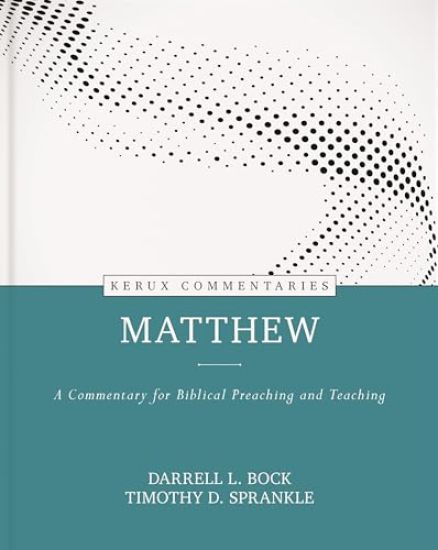
Matthew - Kerux: A Commentary for Biblical Preaching and Teaching

Matthew - Kerux: A Commentary for Biblical Preaching and Teaching

Darrell L. Bock; Timothy Sprankle

Kregel Publications
2025
sidottu
Kerux Commentaries enable pastors and teachers to understand and effectively present the main message in a biblical text. Each volume uniquely combines the insights of an experienced Bible exegete (trained in interpretation) and a homiletician (trained in preaching). These two authors work together to explain the essential message for the original listeners or readers, unpack its timeless truth, and then provide a contemporary restatement and communication insights for the key biblical concept. Every book is a resource designed and written with the real needs of the pastor and teacher always in sight, providing many ways to creatively express the principal thought in a biblical passage. Based on the Big Idea preaching model, Kerux enhances the reader's ability to deliver a message that is biblical, cohesive, and dynamic. The book of Matthew conveys the most important story of all time: God becoming man for the redemption of the world. While the story itself can appear clear, much is missed if we don't understand the symbolism, history, context, and language in which the book was written and initially dispersed. Through the pairing of exegetical analysis and pastoral application, authors Darrell L. Bock and Timothy D. Sprankle provide an accessible and comprehensive commentary for the teacher and preacher alike.
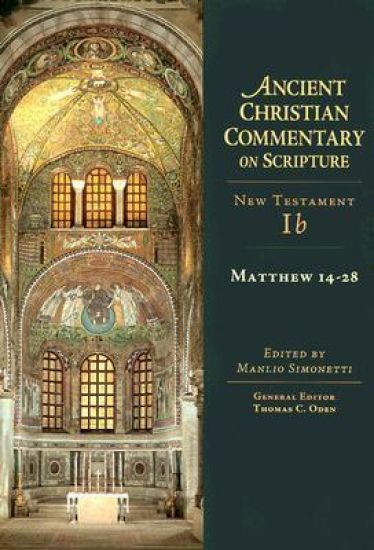
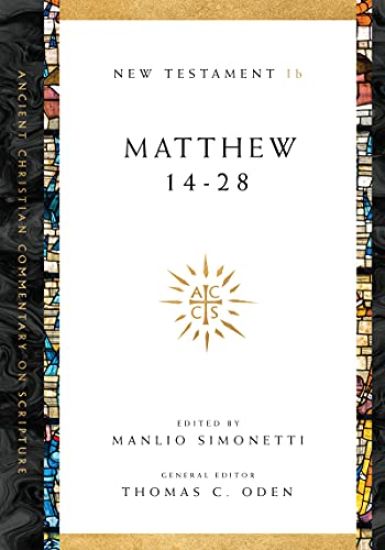
Matthew 14–28

Matthew 14–28

Manlio Simonetti; Thomas C. Oden

IVP Academic
2002
sidottu
The Gospel of Matthew stands out as a favorite biblical text among patristic commentators. The patristic commentary tradition on Matthew begins with Origen's pioneering twenty-five-volume commentary on the First Gospel in the mid-third century. In the Latin-speaking West, where commentaries did not appear until about a century later, the first commentary on Matthew was written by Hilary of Poitiers in the mid-fourth century. From that point the First Gospel became one of the texts most frequently commented on in patristic exegesis. Outstanding examples are Jerome's four-volume commentary and the valuable but anonymous and incomplete Opus imperfectum in Matthaeum. Then there are the Greek catena fragments derived from commentaries by Theodore of Heraclea, Apollinaris of Laodicea, Theodore of Mopsuestia and Cyril of Alexandria. The ancient homilies also provide ample comment, including John Chrysostom's ninety homilies and Chromatius of Aquileia's fifty-nine homilies on the Gospel of Matthew. In addition, there are various Sunday and feast-day homilies from towering figures such as Augustine and Gregory the Great, as well as other fathers. This rich abundance of patristic comment, much of it presented here in English translation for the first time by editor Manlio Simonetti, provides a bountiful and varied feast of ancient interpretation of the First Gospel.
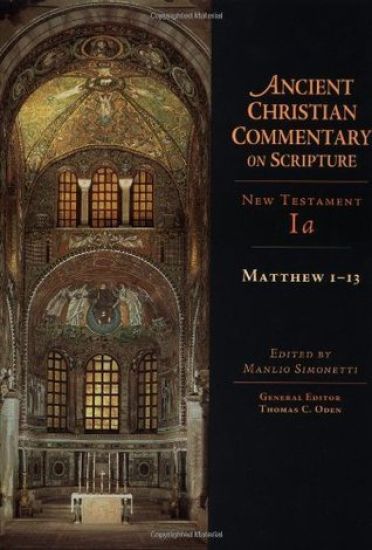
Matthew 1–13

Matthew 1–13

Manlio Simonetti; Thomas C. Oden

Inter-Varsity Press
2001
sidottu
The Gospel of Matthew stands out as a favorite biblical text among patristic commentators. The patristic commentary tradition on Matthew begins with Origen's pioneering twenty-five-volume commentary on the First Gospel in the mid-third century. In the Latin-speaking West, where commentaries did not appear until about a century later, the first commentary on Matthew was written by Hillary of Poitiers in the mid-fourth century. From that point the First Gospel became one of the most frequently commented texts in patristic exegesis. Outstanding examples are Jerome's four-volume commentary and the valuable but anonymous and incomplete Opus imperfectum in Matthaeum. Then there are the Greek catena fragments derived from commentaries by Theodore of Heraclea, Apollinaris of Laodicea, Theodore of Mopsuestia and Cyril of Alexandria. The ancient homilies also provide ample comment, including John Chrysostom's ninety homilies and Chromatius's fifty-nine homilies on the Gospel of Matthew. In addition there are various Sunday and feast-day homilies from towering figures such as Augustine and Gregory the Great as well as other fathers. This abundance of patristic comment, much of it presented here in English translation for the first time, provides a rich and varied feast of ancient interpretation of the First Gospel.
Matthew: 25 Studies for Individuals and Groups
With a scholar's mind and a pastor's heart, Tom Wright walks you through Matthew in this guide designed especially with everyday readers in mind. Perfect for group use or daily personal reflection, this study uses the popular inductive method combined with Wright's thoughtful insights to bring contemporary application of Scripture to life.
Matthew: The Gospel of Identity

Matthew: The Gospel of Identity

Michael Card

Inter-Varsity Press,US
2013
nidottu
"You are the salt of the earth . . . You are the light of the world." Matthew 5:13-14 "I also say to you that you are Peter, and on this rock I will build My church." Matthew 16:18 The world tries to define us in different ways. We try to define ourselves one way or another. But who are we really? How does God define us? The Gospel of Matthew was written to a group of Christians who didn?t yet know who they were. They were faithful Jews in the synagogue community in Galilee who had found the Messiah. Jesus had changed everything. But how should they think of themselves now, as Jewish or Christian? What did it all mean? Matthew writes his Gospel to help his readers define their new identity as followers of Jesus the Messiah. Michael Card unpacks how Matthew?s emphasis on fulfillment confirms their Jewish connection to the Torah, while his focus on the kingdom helps them understand their new identities in Christ. Matthew presents this process of redefinition as an exercise of the imagination, in which Jesus reshapes who we are in light of who he is. Come alongside Matthew in this pilgrimage, and discover how your new identity in Christ fulfills all that you are meant to be.
Matthew: A Commentary on the New Testament
Matthew was the most popular Gospel in the early church, widely read for its clear emphasis on Jesus' teaching. Drawing on its use as a teaching or discipleship manual, this clear, incisive commentary by Craig Keener expounds Matthew as a discipleship manual for believers today.
Matthew 1–13

Matthew 1–13

Manlio Simonetti; Thomas C. Oden

IVP Academic
2019
nidottu
The Gospel of Matthew stands out as a favorite biblical text among patristic commentators. The patristic commentary tradition on Matthew begins with Origen's pioneering twenty-five-volume commentary on the First Gospel in the mid-third century. In the Latin-speaking West, where commentaries did not appear until about a century later, the first commentary on Matthew was written by Hilary of Poitiers in the mid-fourth century. From that point the First Gospel became one of the texts most frequently commented on in patristic exegesis. Outstanding examples are Jerome's four-volume commentary and the valuable but anonymous and incomplete Opus imperfectum in Matthaeum. Then there are the Greek catena fragments derived from commentaries by Theodore of Heraclea, Apollinaris of Laodicea, Theodore of Mopsuestia and Cyril of Alexandria. The ancient homilies also provide ample comment, including John Chrysostom's ninety homilies and Chromatius of Aquileia's fifty-nine homilies on the Gospel of Matthew. In addition, there are various Sunday and feast-day homilies from towering figures such as Augustine and Gregory the Great as well as other fathers. In this ACCS volume, the rich abundance of patristic comment, much of it presented here in English translation for the first time, provides a bountiful and varied feast of ancient interpretation of the First Gospel.
Matthew 14–28

Matthew 14–28

Manlio Simonetti; Thomas C. Oden

IVP Academic
2019
nidottu
The Gospel of Matthew stands out as a favorite biblical text among patristic commentators. The patristic commentary tradition on Matthew begins with Origen's pioneering twenty-five-volume commentary on the First Gospel in the mid-third century. In the Latin-speaking West, where commentaries did not appear until about a century later, the first commentary on Matthew was written by Hilary of Poitiers in the mid-fourth century. From that point the First Gospel became one of the texts most frequently commented on in patristic exegesis. Outstanding examples are Jerome's four-volume commentary and the valuable but anonymous and incomplete Opus imperfectum in Matthaeum. Then there are the Greek catena fragments derived from commentaries by Theodore of Heraclea, Apollinaris of Laodicea, Theodore of Mopsuestia and Cyril of Alexandria. The ancient homilies also provide ample comment, including John Chrysostom's ninety homilies and Chromatius of Aquileia's fifty-nine homilies on the Gospel of Matthew. In addition, there are various Sunday and feast-day homilies from towering figures such as Augustine and Gregory the Great as well as other fathers. In this ACCS volume, the rich abundance of patristic comment, much of it presented here in English translation for the first time, provides a bountiful and varied feast of ancient interpretation of the First Gospel.
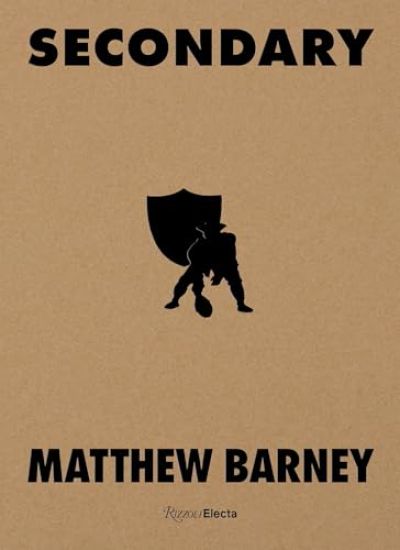
Matthew Barney: Secondary

Matthew Barney: Secondary

Matthew Barney

RIZZOLI INTERNATIONAL PUBLICATIONS
2025
sidottu
SECONDARY is a five-channel video installation, performed in Barney s Long Island City studio in 2023, then in London, Paris, and Los Angeles in 2024. The plot revolves around an accident that occurred during a football game in 1978, when Oakland Raiders Jack Tatum delivered an open field hit on Darryl Stingley, a wide receiver for the New England Patriots. Stingley was left paralyzed. The tragic event remained seared in the minds of American fans, including Barney himself, a youth-league quarterback at the time. Through allusion to American sports culture, SECONDARY explores the complex intersection of violence, its representation, and its celebration. It reimagines the game through a unique movement vocabulary. The result is a physical study that focuses on every element of the game, from drills and pre-game rituals to moments of impact and their slow-motion replays. Volume 1 explores SECONDARY in depth, with essays by leading contemporary voices. Volume 2 maps the life of Barney s former Long Island City studio, where SECONDARY premiered to the public.
Matthew and George Culley: Farming Letters, 1798-1804
Letters from two farming brothers provide fascinating insights into rural life at the turn of the eighteenth century. The brothers Matthew and George Culley were successful farmers in Northumberland in the late eighteenth century. They contributed greatly to the improvement of agriculture in their area and beyond, notably through sheep breeding [the `Culley sheep' or Border Leicester], and also by practising and inculcating the use of modern techniques of husbandry and modern crop varieties. The letters presented here, written to the steward of the farms they ownedin County Durham, give a detailed day by day account of the Culleys' farming activities, advice and instructions on cultivation, the movement and selling of livestock, the state of the markets, local and family news, and commentson the state of the country. Written in a lively, readable style, they provide a vivid picture of and commentary upon the life of northern England at the time of important change in agriculture and society. Dr ANNE ORDE was until her retirement Senior Lecturer in History at the University of Durham.
Matthew Klein Book 2

Matthew Klein Book 2

Matthew Klein

Corvus
2014
sidottu
A strange, last-minute phone call convinces Mitch Traiger to change his career plans and come work for a Greenwich hedge fund after college, rather than a boring Midwestern engineering firm. The money is impossible to turn down - and so Mitch comes east, dragging his reluctant wife, Sara.Not long after starting the new job, he falls under the spell of a mentor, Turk Cain, who seems to have everything that a kid from the Midwest could dream of: a stunning house, a sailboat, an island retreat off the coast of Maine, and a beautiful, volatile wife. Everything about Turk Cain's life is perfect, and - to Mitch's delight - Turk is willing to share it all with Mitch - willing to share everything: his inside knowledge of office politics, his house in Maine, even his wife, Grace. It happens on a summer night, over a long booze-filled weekend, the two couples agree to a swap: The young innocent couple from the Midwest, the beautiful rich couple from Connecticut. Just one night. Just one time. What could go wrong? Only everything. When Mitch wakes the next morning, his world has been changed. Soon he finds himself in a trap, and the choices he has made seem worse than misguided and mistaken. They seem deadly.
Matthew Klein Book 2

Matthew Klein Book 2

Klein Matthew

Corvus
2018
nidottu
A strange, last-minute phone call convinces Mitch Traiger to change his career plans and come work for a Greenwich hedge fund after college, rather than a boring Midwestern engineering firm. The money is impossible to turn down - and so Mitch comes east, dragging his reluctant wife, Sara.Not long after starting the new job, he falls under the spell of a mentor, Turk Cain, who seems to have everything that a kid from the Midwest could dream of: a stunning house, a sailboat, an island retreat off the coast of Maine, and a beautiful, volatile wife. Everything about Turk Cain's life is perfect, and - to Mitch's delight - Turk is willing to share it all with Mitch - willing to share everything: his inside knowledge of office politics, his house in Maine, even his wife, Grace. It happens on a summer night, over a long booze-filled weekend, the two couples agree to a swap: The young innocent couple from the Midwest, the beautiful rich couple from Connecticut. Just one night. Just one time. What could go wrong? Only everything. When Mitch wakes the next morning, his world has been changed. Soon he finds himself in a trap, and the choices he has made seem worse than misguided and mistaken. They seem deadly.