Kirjojen hintavertailu. Mukana 12 390 323 kirjaa ja 12 kauppaa.

Kirjahaku

Etsi kirjoja tekijän nimen, kirjan nimen tai ISBN:n perusteella.

1000 tulosta hakusanalla Matthias Engelhardt

Year Book of Endocrinology 2011

Year Book of Endocrinology 2011

Matthias Schott

Mosby
2011
sidottu
The Year Book of Endocrinology brings you abstracts of the articles that reported the year's breakthrough developments in endocrinology carefully selected from more than 500 journals worldwide. Expert commentaries evaluate the clinical importance of each article and discuss its application to your practice. Topics such as Diabetes, Lipoproteins and Ahterosclerosis, Obesity, Thyroid, Calcium and Bone Metabolism, Adrenal Cortex, and Neuroendocrinology are represented highlighting the most current and relevant articles in the field.
Year Book of Endocrinology 2012

Year Book of Endocrinology 2012

Matthias Schott

Mosby
2012
sidottu
The Year Book of Endocrinology brings you abstracts of the articles that reported the year's breakthrough developments in endocrinology carefully selected from more than 500 journals worldwide. Expert commentaries evaluate the clinical importance of each article and discuss its application to your practice. Topics such as Diabetes, Lipoproteins and Ahterosclerosis, Obesity, Thyroid, Calcium and Bone Metabolism, Adrenal Cortex, and Neuroendocrinology are represented highlighting the most current and relevant articles in the field.
Year Book of Endocrinology 2014

Year Book of Endocrinology 2014

Matthias Schott

Elsevier - Health Sciences Division
2015
sidottu
The Year Book of Endocrinology brings you abstracts of the articles that reported the year's breakthrough developments in endocrinology carefully selected from more than 500 journals worldwide. Expert commentaries evaluate the clinical importance of each article and discuss its application to your practice. Topics such as Diabetes, Lipoproteins and Ahterosclerosis, Obesity, Thyroid, Calcium and Bone Metabolism, Adrenal Cortex, and Neuroendocrinology are represented highlighting the most current and relevant articles in the field.
Semiclassical Physics

Semiclassical Physics

Matthias Brack; Rajat Bhaduri

CRC Press
2019
sidottu
This book attempts to convey to the reader that semiclassical physics can be fun, as well as useful for understanding quantum fluctuations in interacting many-body systems. It presents applications to finite fermion systems in diverse areas of physics.
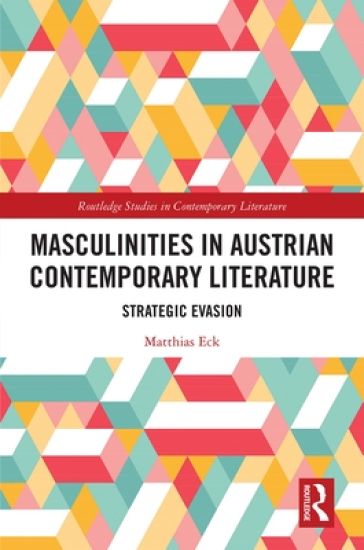
Masculinities in Austrian Contemporary Literature
Masculinities in Austrian Contemporary Literature: Strategic Evasion shows the important contribution that literature can make to the understanding of masculinities, by offering insights into the mental structures of hegemonic masculinity. It argues that while there is evidence of frustrating hegemonic masculinities, contemporary Austrian literature offers few positive images of alternative masculinity. The texts simultaneously criticize and present fantasies of hegemonic masculinity and as such provide a space for ambiguity and evasion. While providing readers with an in-depth study of the works of the authors Daniel Kehlmann, Doron Rabinovici and Arno Geiger, Matthias Eck elaborates the concept of strategic evasion. In order to bridge the gap between the ideal of masculinity and reality the male characters adopt two strategies of evasion: evasion to hide a softer and gentler side, and evasion into a world of fantasy where they pretend to live up to the ideal of hegemonic masculinity.
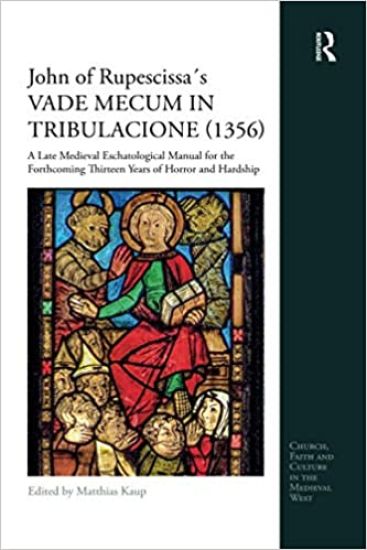
John of Rupescissa´s VADE MECUM IN TRIBULACIONE (1356)
The VADE MECUM IN TRIBULACIONE was meant as an eschatological manual for the thirteen catastrophic years between its composition in December 1356 and the Thousand-Year Reign of Christ expected to begin in 1370. This manual, permeated by passion for clerical reform, was intended to give righteous Christians practical and spiritual advice on how to survive this period of tribulation. Likewise, it aimed to inform them about what to expect from the envoys of Satan, the Western and the Eastern Antichrists, but also from Christ’s warriors, the papal restorer and his secular assistant, the French-Roman Emperor. Moreover, it offered a brief outline of Christ’s Thousand-Year Reign and of Armageddon.The VADE MECUM was written by John of Rupescissa OFM (c. 1310-1366), the most prolific apocalyptic author of the Middle Ages, as the central work of in all three manuals designed to prepare Christendom for the impending crises. As a completely new text type and summary of the late Rupescissa’s doctrines, this eschatological manual fascinated numerous readers in the Late Middle Ages, who copied, reworked and translated it and made it thus a pivotal text of medieval apocalypticism: ten versions of the Latin VADE MECUM in more than forty manuscripts have come down to us.Rupescissa’s eschatological manual is his last known and most widely distributed work; the present study provides an annotated critical edition equipped with an English translation. It inducts in the manual’s contents, places them in the context of Rupescissa’s work and medieval prophetic literature, investigates important aspects of its reception and clarifies the relationships between its different versions. Furthermore, it ends with a critical edition of the VENI MECUM IN TRIBULACIONE, the most influential compendious version of the VADE MECUM. Thus this book offers an indispensable fundamental contribution to the flourishing studies of Rupescissa and medieval apocalypticism.
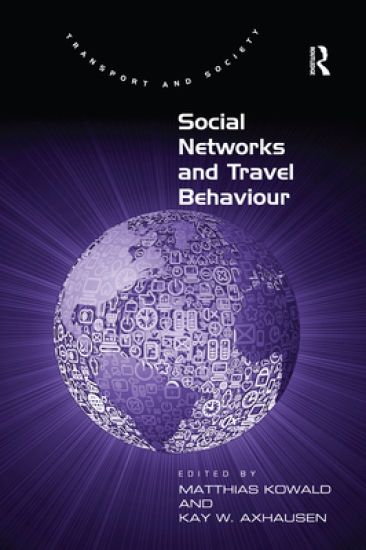
Social Networks and Travel Behaviour

Social Networks and Travel Behaviour

Matthias Kowald; Kay W. Axhausen

Routledge
2020
nidottu
In aiming to understand and model peoples’ out-of-home movements, the academic field of transport planning is confronted with two major challenges. Firstly, leisure travel is increasing in importance and is more complex and variable than work-related travel, being less rigid in temporal and spatial patterns and more influenced by external factors such as social contacts or weather conditions. Secondly, traditional aggregated transport models do not include any information on peoples’ social interactions or their personal social networks. In contrast, the recent development and availability of disaggregated models allows more detailed modelling of elements such as individual characteristics, motivations, constraints and travel costs, as well as a consideration of influences from an actor’s social environment. People travel not only within an infrastructure but also within a social structure. These two main factors have driven transport planners to focus on peoples’ interaction and their social network. In recent years there have been a remarkable number of data collection efforts in the field, surveying information on the link between travel behaviour and social motivation. Providing an overview of selected exemplary studies, this volume addresses the overlap between transport planning and methods of social network analysis; applied methods of social network analysis and related empirical results; and current challenges and new research questions in this field.
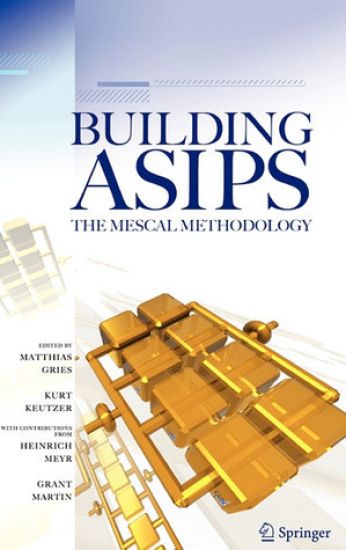
Building ASIPs:  The Mescal Methodology

Building ASIPs: The Mescal Methodology

Matthias Gries; Kurt Keutzer

Springer-Verlag New York Inc.
2005
sidottu
An increasing number of system designers are using ASIP’s rather than ASIC’s to implement their system solutions. Building ASIPs: The Mescal Methodology gives a simple but comprehensive methodology for the design of these application-specific instruction processors (ASIPs). The key elements of this methodology are: Judiciously using benchmarking Inclusively identifying the architectural space Efficiently describing and evaluating the ASIPs Comprehensively exploring the design space Successfully deploying the ASIP This book includes demonstrations of applications of the methodologies using the Tipi research framework as well as state-of-the-art commercial toolsets from CoWare and Tensilica.
Multivariate and Mixture Distribution Rasch Models

Multivariate and Mixture Distribution Rasch Models

Matthias Davier; Claus H. Carstensen

Springer-Verlag New York Inc.
2006
sidottu
This volume gathers together a set of extensions of the Rasch model, one of the most prominent models for measurement in educational research and - cial science developed by Danish mathematician Georg Rasch. The idea for this volume emerged during a meeting of the Psychometric Society in M- terey, CA. At that meeting, friends and colleagues discussed news about the impending retirement of Dr. Jurgen ¨ Rost, an important innovator and m- tor in this ?eld. To recognize Jurgen’s ¨ contributions, we decided to produce a collection of research on extending the Rasch model as well as embedding the Rasch model in more complex statistical models, an area that is receiving broad interest in many ?elds of social sciences at the current time. This collection contains 22 chapters by recognized international experts in the?eld.Thecontributionscovertopicsrangingfromgeneralmodelextensions to application in ?elds as diverse as cognition, personality, organizational and sports psychology, and health sciences and education. The Rasch model is designed for categorical data, often collected as ex- inees’ responses to multiple tasks such as cognitive items from psychological tests or from educational assessments. The Rasch model’s elegant mathema- cal form is suitable for extensions that allow for greater ?exibility in handling complex samples of examinees and collections of tasks from di?erent domains. In these extensions, the Rasch model is enhanced by additional structural - ements that account either for di?erences between diverse populations or for di?erences among observed variables.
Environmental NGOs in World Politics

Environmental NGOs in World Politics

Matthias Finger; Thomas Princen

Routledge
1994
sidottu
At a time when states are reactive, at best, to the global ecological crisis and when economic globalization seems to be significantly contributing to the acceleration of that crisis, environmental non-governmental orgainisations (NGOs) are proliferating. This book explains the key role of NGOs in an emerging world environmental politics, showing how NGOs act both as independent bargainers and as agents of social learning, to link biophysical conditions to the political realm at both the local and global levels.Throught the use of case studies the authors reveal the richness and diversity of NGO activity and the dificulty of the choices facing decision-makers in their attempts to protect the environment, seek new forms of governance and foster social environmental learning. The book generates questions that are central, not only to an understanding of NGO relations, but to the study of international environmental politics.Environmental NOGs in World Politics will be of great interest to upper level student sand scholars of both environmental politics and international relations. It will also appeal to environmental-policy professionals.
Ideas and Economic Crises in Britain from Attlee to Blair (1945-2005)
During the period from 1945 to 2005, Britain underwent two deep-seated institutional transformations when political elites successfully challenged the prevailing wisdom on how to govern the economy. Attlee and Thatcher were able to effectively implement most of their political platforms. During this period there were also two opportunities to challenge existing institutional arrangements. Heath's 'U-turn' in 1972 signalled his failure to implement the radical agenda promised upon election in 1970, whilst Tony Blair’s New Labour similarly failed to instigate a major break with the 'Thatcherite' settlement. Rather than simply retell the story of British economic policymaking since World War II, this book offers a theoretically informed version of events, which draws upon the literatures on institutional path dependence, economic constructivism and political economy to explain this puzzle. It will be of great interest to both researchers and postgraduates with an interest in British economic history and the fields of political economy and economic crisis more widely.
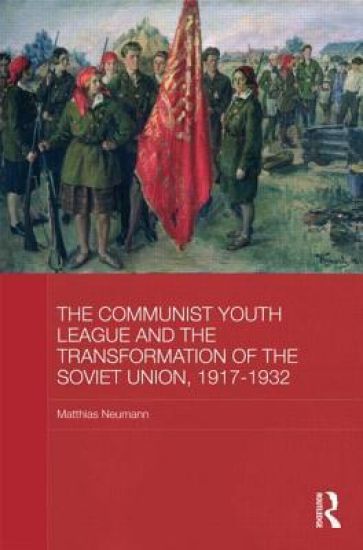
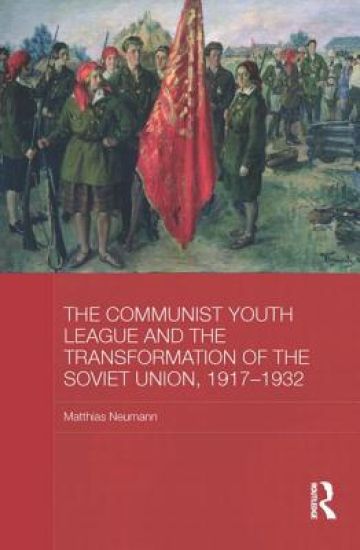
The Communist Youth League and the Transformation of the Soviet Union, 1917-1932
The study of Soviet youth has long lagged behind the comprehensive research conducted on Western European youth culture. In an era that saw the emergence of youth movements of all sorts across Europe, the Soviet Komsomol was the first state-sponsored youth organization, in the first communist country. Born out of an autonomous youth movement that emerged in 1917, the Komsomol eventually became the last link in a chain of Soviet socializing agencies which organized the young. Based on extensive archival research and building upon recent research on Soviet youth, this book broadens our understanding of the social and political dimension of Komsomol membership during the momentous period 1917–1932. It sheds light on the complicated interchange between ideology, policy and reality in the league's evolution, highlighting the important role ordinary members played. The transformation of the country shaped Komsomol members and their league's social identity, institutional structure and social psychology, and vice versa, the organization itself became a crucial force in the dramatic changes of that time. The book investigates the complex dialogue between the Communist Youth League and the regime, unravelling the intricate process that transformed the Komsomol into a mere institution for political socialization serving the regime's quest for social engineering and control.
Ideas and Economic Crises in Britain from Attlee to Blair (1945-2005)
During the period from 1945 to 2005, Britain underwent two deep-seated institutional transformations when political elites successfully challenged the prevailing wisdom on how to govern the economy. Attlee and Thatcher were able to effectively implement most of their political platforms. During this period there were also two opportunities to challenge existing institutional arrangements. Heath's 'U-turn' in 1972 signalled his failure to implement the radical agenda promised upon election in 1970, whilst Tony Blair’s New Labour similarly failed to instigate a major break with the 'Thatcherite' settlement.Rather than simply retell the story of British economic policymaking since World War II, this book offers a theoretically informed version of events, which draws upon the literatures on institutional path dependence, economic constructivism and political economy to explain this puzzle. It will be of great interest to both researchers and postgraduates with an interest in British economic history and the fields of political economy and economic crisis more widely.
Community-based Entrepreneurship and Rural Development

Community-based Entrepreneurship and Rural Development

Matthias Fink; Stephan Loidl; Richard Lang

Routledge
2012
sidottu
How can municipalities in Central Europe create favourable conditions for local business? What and how can municipalities learn from each other? How can each individual in the local area contribute? And what requirements have to be met before know-how can successfully be transferred on a communal level? To answer all these questions, the authors of this book draw on results from a six-year research programme and comprehensively discuss the manifold opportunities, restrictions and prerequisites of establishing favourable conditions for small and medium enterprises in rural municipalities in Central Europe.
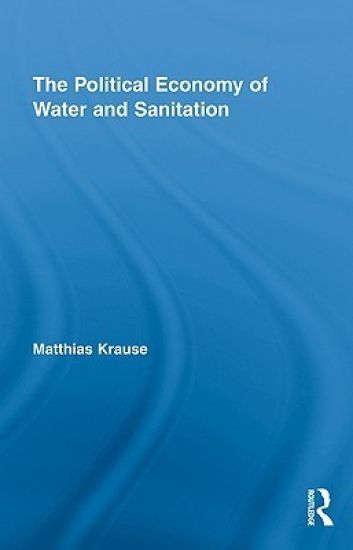
The Political Economy of Water and Sanitation
According to recent estimates, around 6,000 people – mostly children under five – die every day from diseases caused by inappropriate water and sanitation (WS) services. Much of the academic and political debate surrounding this issue has focused on private sector participation. By shifting the attention towards the influence of governance, Krause examines the political and sectoral institutions that are essential for the provision of WS services. Utilizing data from sixty-nine developing countries, Matthias Krause demonstrates that the level of democracy has a statistically significant positive impact on access to WS services and that low-quality governance of sub-national governments compromises the internal efficiency of providers and the widespread access to services. This book makes a critical contribution to the water and sanitation research and will help academics and policy-makers to rethink the way in which they deal with water issues.
Implementing Sustainability in Higher Education
In a time of unprecedented transformation as society seeks to build a more sustainable future, education plays an increasingly central role in training key agents of change. This book asks how we can equip students and scholars with the capabilities to promote sustainability and how the higher education curriculum can be changed to facilitate the paradigm shift needed.Across the globe, a rising number of higher education institutions and academics are responding to these questions by transforming their own teaching and learning and their institutions’ curricula. This book contributes to that development by examining in-depth case studies of innovative approaches and curriculum changes at multiple levels of the education sector. Elaborating key principles of higher education for sustainable development and identifying drivers and barriers to implementing sustainability in the curriculum, the book provides a comprehensive overview of what makes higher education for sustainable development a unique field of research and practice, as well as offering a coherent narrative of how change can be effected in it.This much-needed book is a valuable resource to inform, guide and inspire students, academics, administrators and community partners, whether experienced or new to the field, whether already committed or not to higher education for sustainable development in an age of transformation.
New Perspectives on the Economics of Ronald H. Coase
Ronald Coase is widely recognised as one of the most influential economists of the 20th century. In this new volume, Matthias Klaes argues that Coase is a self-styled disciplinary renegade, whose aim for the past four decades has been to re-orient the shape and practice of modern economics. This book will provide an account of the alternative economics present in Coase's work, offering a balanced analysis of the full breadth of his writings over eight decades.The book starts by introducing the reader to the key features of late 19th century neoclassical economics, in particular as it emerged through the Marshallian and Austrian traditions, and as it was taken up in applied fields such as commerce and business studies. Building on these conceptual roots, it will offer the reader an analytical reconstruction of Coase's work as a strand of modern historical economics presently not properly recognised or acknowledged as such in the discipline, taking the full corpus of Coase's writings into account. This contemporary history of economic thought perspective on Coase's work will offer the basis for four policy case studies. These will illustrate how the analytical framework of historical economics thus recovered from Coase's work can be applied to the economics of intellectual property rights, the political economy of Europen Monetary Union, the economic governance of carbon trading, and Chinese economic reform.The book also explores the issue of the value and relevance of the history of economics to economic analysis and its applications, and the book as a whole will serve as a demonstration of a possible answer to that question.
The Communist Youth League and the Transformation of the Soviet Union, 1917-1932
The study of Soviet youth has long lagged behind the comprehensive research conducted on Western European youth culture. In an era that saw the emergence of youth movements of all sorts across Europe, the Soviet Komsomol was the first state-sponsored youth organization, in the first communist country. Born out of an autonomous youth movement that emerged in 1917, the Komsomol eventually became the last link in a chain of Soviet socializing agencies which organized the young. Based on extensive archival research and building upon recent research on Soviet youth, this book broadens our understanding of the social and political dimension of Komsomol membership during the momentous period 1917–1932. It sheds light on the complicated interchange between ideology, policy and reality in the league's evolution, highlighting the important role ordinary members played. The transformation of the country shaped Komsomol members and their league's social identity, institutional structure and social psychology, and vice versa, the organization itself became a crucial force in the dramatic changes of that time. The book investigates the complex dialogue between the Communist Youth League and the regime, unravelling the intricate process that transformed the Komsomol into a mere institution for political socialization serving the regime's quest for social engineering and control.
Renewable Energies

Renewable Energies

Matthias Gross; Rüdiger Mautz

Routledge
2014
sidottu
Renewable Energy normally refers to usable energy sources that are an alternative to fuel sources, but without the negatively evaluated consequences of the replaced fuels. Although energy issues have a long tradition in sociology and other social sciences, it may now be high time to conceptualize these in sociological terms as the lynchpin in our understanding of the way societies are set to develop in the 21st century. This concise book focuses on sociological attempts at better framing contemporary theories of energy transformations and to deliver an accessible overview on the relationships between different types of renewable energy sources and their practical usages in modern societies. A strong focus is laid upon new forms of environmental governance and unavoidable knowledge gaps triggered by attempts to transform contemporary energy systems to renewable ones. Critical topics include the challenge of transition from centralized to decentralized system structures, the integration of renewable energies into existing energy structures or the replacement of these, coping strategies to unforeseen risks and conflict issues, and socio-cultural reservations to new technologies connected to renewable energies.
The Political Economy of Water and Sanitation
According to recent estimates, around 6,000 people – mostly children under five – die every day from diseases caused by inappropriate water and sanitation (WS) services. Much of the academic and political debate surrounding this issue has focused on private sector participation. By shifting the attention towards the influence of governance, Krause examines the political and sectoral institutions that are essential for the provision of WS services. Utilizing data from sixty-nine developing countries, Matthias Krause demonstrates that the level of democracy has a statistically significant positive impact on access to WS services and that low-quality governance of sub-national governments compromises the internal efficiency of providers and the widespread access to services. This book makes a critical contribution to the water and sanitation research and will help academics and policy-makers to rethink the way in which they deal with water issues.