Just a few months short of the completion of his final thesis, a student has an unexpected meeting with a mysterious being. This sets off a fateful chain of events, which seems to be connected to a strange plague and to a rogue secret agent. Reaching the original goal of his intergalactic odyssee, the line between good and evil starts to blur and a new perspective begins to form. It becomes clear that the university of life accepts no final thesis, that instead it is an eternal lecture in which everyone is student and teacher simultaneously.
Unaufhaltsam wird Juukor in die Rebellion gegen den tyrannischen Gott der Auserw hlten hineingezogen, w hrend in einer fernen Galaxie der Replikant kurz davor steht, unwissentlich die letzte Zivilisation biologischer Lebewesen endg ltig auszul schen. Lila und Simon m ssen inzwischen lernen sich in den VR-Welten der modernen Menschen zurechtzufinden. Hannes ist in der einfachen Ringwelt zur ckgeblieben, und beginnt dort eine Fehde mit dem B rgermeister einer kleinen Stadt, der keine "Zauberei" in seiner Umgebung duldet. Auf der Jocelyn Bell stehen die Zeichen zum Aufbruch. Kreios hat die Station schon in Richtung des galaktischen Zentrums verlassen, und Dima plant ebenfalls eine gro e Reise. Thallo und Selene versuchen weiterhin, dem au erirdischen Beobachter neue Informationen zu entlocken, solange dieser noch auf der Station verweilt. Zwischen den Sterneninseln treibt w hrenddessen eine Arche, auf der Flucht vor einer feindlichen Rasse. Die Bewohner ahnen nicht, was sie am Ziel ihrer Reise erwarten wird.
Die Menschheit breitet sich in rasantem Tempo zwischen den benachbarten Sternen aus, unter den wachsamen Augen eines geheimnisvollen Beobachters. Der Beobachter ahnt schon, dass er mit ihnen eine besonders schwierige Mission erhalten hat. Fern von der Heimat der Menschen entsteht inzwischen ein neues Bewusstsein aus den Uberresten einer uralten Technologie und verbreitet sich unkontrolliert. Unter der Eiskruste einer groen Ozeanwelt versucht wahrenddessen einer der Auserwahlten, sich aus der Knechtschaft seines grausamen Gottes zu befreien, der ein Monopol auf alle hoheren Technologien besitzt. Und auf einer gut versteckten, mittelalterlichen Welt wissen die Bewohner derweil nichts von alldem, bis ein ungewohnlicher Vorfall sie ebenfalls in das chaotische Geschehen verwickelt.
Jo und Dima haben ihren Weg verloren, und sind dem trickreichen, skrupellosen Gulon ausgeliefert, wenn sie jemals wieder in die Sph ren der Menschheit zur ckfinden wollen. Juukor hingegen steht kurz davor, bei Sol anzukommen. Aber was oder wen wird er dort vorfinden? Auch die Avian sind gestrandet, doch ein weiterer Beobachter mischt sich pl tzlich in das Geschehen ein. In der Zwischenzeit bricht eine Kolonie von der Jocelyn Bell auf. Haben die letzten Menschen eine Chance auf Vana?
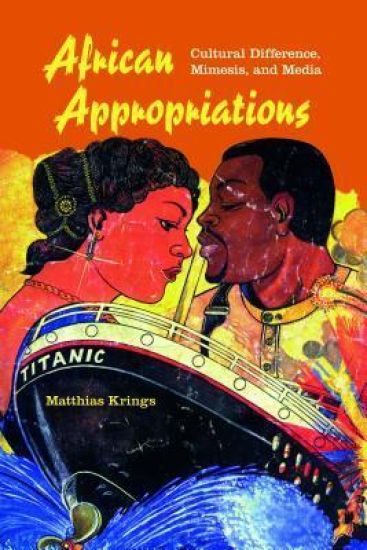
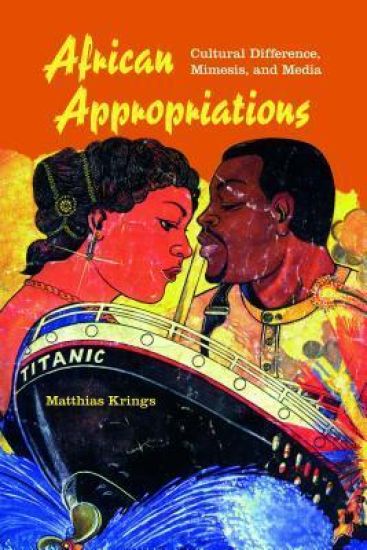
Why would a Hollywood film become a Nigerian video remake, a Tanzanian comic book, or a Congolese music video? Matthias Krings explores the myriad ways Africans respond to the relentless onslaught of global culture. He seeks out places where they have adapted pervasive cultural forms to their own purposes as photo novels, comic books, songs, posters, and even scam letters. These African appropriations reveal the broad scope of cultural mediation that is characteristic of our hyperlinked age. Krings argues that there is no longer an "original" or "faithful copy," but only endless transformations that thrive in the fertile ground of African popular culture.
Why would a Hollywood film become a Nigerian video remake, a Tanzanian comic book, or a Congolese music video? Matthias Krings explores the myriad ways Africans respond to the relentless onslaught of global culture. He seeks out places where they have adapted pervasive cultural forms to their own purposes as photo novels, comic books, songs, posters, and even scam letters. These African appropriations reveal the broad scope of cultural mediation that is characteristic of our hyperlinked age. Krings argues that there is no longer an "original" or "faithful copy," but only endless transformations that thrive in the fertile ground of African popular culture.
In this pathbreaking book, Matthias B. Lehmann explores Ottoman Sephardic culture in an era of change through a close study of popularized rabbinic texts written in Ladino, the vernacular language of the Ottoman Jews. This vernacular literature, standing at the crossroads of rabbinic elite and popular cultures and of Hebrew and Ladino discourses, sheds valuable light on the modernization of Sephardic Jewry in the Eastern Mediterranean in the 19th century. By helping to form a Ladino reading public and imparting shape to its values, the authors of this literature negotiated between perpetuating rabbinic tradition and addressing the challenges of modernity. The book offers close readings of works that examine issues such as social inequality, exile and diaspora, gender, secularization, and the clash between scientific and rabbinic knowledge. Ladino Rabbinic Literature and Ottoman Sephardic Culture will be welcomed by scholars of Sephardic as well as European Jewish history, culture, and religion.
Photographs and text document disappearing cultural landscapes and lifestyles in rural China, capturing poignant scenes far from Beijing or Shanghai.Just a few kilometers from the glittering skylines of Shanghai and Beijing, we encounter a vast countryside, an often forgotten and seemingly limitless landscape stretching far beyond the outskirts of the cities. Following traces of old trade routes, once-flourishing marketplaces, abandoned country estates, decrepit model villages, and the sites of mystic rituals, the authors of this book spent seven years exploring, photographing, and observing the vast interior of China, where the majority of Chinese people live in ways virtually unchanged for centuries.China's Vanishing Worlds is an impressive documentation in images and text of modernization's effect on traditional ways of life, and a sympathetic portrait of lives burdened by hardship but blessed by simplicity and tranquility. The scars of China's recent history and the decay of centuries-old traditions are made visible in this volume, but so is the lure and promise of technology and another life for young people. In the next twenty years, an estimated 280 million Chinese villagers will become city dwellers, leaving their ancestral homes in search of urban jobs and opportunities. In striking and evocative color photographs, we see picturesque villages set against a background of rolling hills, planned centuries ago according to the principles of feng shui; a restaurant with bright pink resin chairs and a wide-screen television; traditional buildings preserved by the accident of poverty and isolation; ramshackle rooms decorated with portraits of Chairman Mao; backpack-wearing children walking to school; festivals with elaborately costumed performers; old men playing cards; buyers and sellers at open-air markets.China's Vanishing Worlds offers readers a rare opportunity to glimpse China as it once was, and as it will soon no longer be.
The first comprehensive presentation of reduction semantics in one volume, and the first tool set for such forms of semantics.This text is the first comprehensive presentation of reduction semantics in one volume; it also introduces the first reliable and easy-to-use tool set for such forms of semantics. Software engineers have long known that automatic tool support is critical for rapid prototyping and modeling, and this book is addressed to the working semantics engineer (graduate student or professional language designer). The book comes with a prototyping tool suite to develop, explore, test, debug, and publish semantic models of programming languages. With PLT Redex, semanticists can formulate models as grammars and reduction models on their computers with the ease of paper and pencil. The text first presents a framework for the formulation of language models, focusing on equational calculi and abstract machines, then introduces PLT Redex, a suite of software tools for expressing these models as PLT Redex models. Finally, experts describe a range of models formulated in Redex. PLT Redex comes with the PLT Scheme implementation, available free at http://www.plt-scheme.org/. Readers can download the software and experiment with Redex as they work their way through the book.
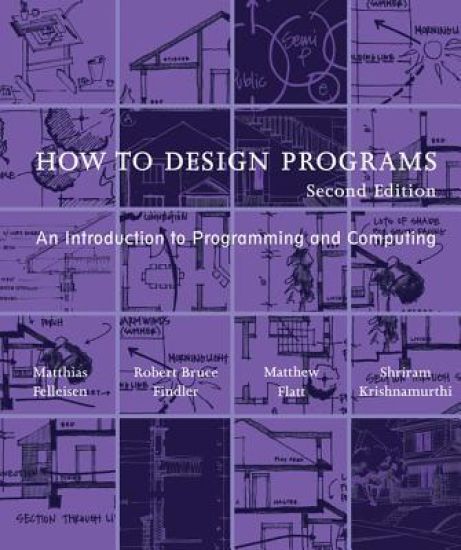
A completely revised edition, offering new design recipes for interactive programs and support for images as plain values, testing, event-driven programming, and even distributed programming.This introduction to programming places computer science at the core of a liberal arts education. Unlike other introductory books, it focuses on the program design process, presenting program design guidelines that show the reader how to analyze a problem statement, how to formulate concise goals, how to make up examples, how to develop an outline of the solution, how to finish the program, and how to test it. Because learning to design programs is about the study of principles and the acquisition of transferable skills, the text does not use an off-the-shelf industrial language but presents a tailor-made teaching language. For the same reason, it offers DrRacket, a programming environment for novices that supports playful, feedback-oriented learning. The environment grows with readers as they master the material in the book until it supports a full-fledged language for the whole spectrum of programming tasks.This second edition has been completely revised. While the book continues to teach a systematic approach to program design, the second edition introduces different design recipes for interactive programs with graphical interfaces and batch programs. It also enriches its design recipes for functions with numerous new hints. Finally, the teaching languages and their IDE now come with support for images as plain values, testing, event-driven programming, and even distributed programming.
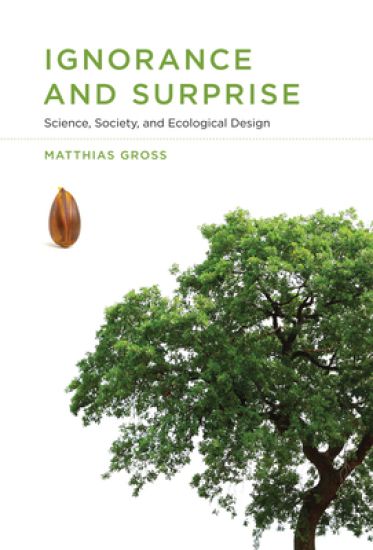
The relationship between ignorance and surprise and a conceptual framework for dealing with the unexpected, as seen in ecological design projects. Ignorance and surprise belong together: surprises can make people aware of their own ignorance. And yet, perhaps paradoxically, a surprising event in scientific research--one that defies prediction or risk assessment--is often a window to new and unexpected knowledge. In this book, Matthias Gross examines the relationship between ignorance and surprise, proposing a conceptual framework for handling the unexpected and offering case studies of ecological design that demonstrate the advantages of allowing for surprises and including ignorance in the design and negotiation processes. Gross draws on classical and contemporary sociological accounts of ignorance and surprise in science and ecology and integrates these with the idea of experiment in society. He develops a notion of how unexpected occurrences can be incorporated into a model of scientific and technological development that includes the experimental handling of surprises. Gross discusses different projects in ecological design, including Chicago's restoration of the shoreline of Lake Michigan and Germany's revitalization of brownfields near Leipzig. These cases show how ignorance and surprise can successfully play out in ecological design projects, and how the acknowledgment of the unknown can become a part of decision making. The appropriation of surprises can lead to robust design strategies. Ecological design, Gross argues, is neither a linear process of master planning nor a process of trial and error but a carefully coordinated process of dealing with unexpected turns by means of experimental practice.
An enchanting history of the otherworld of elves and fairies, from the nature spirits of Iceland and Ireland to Avalon and Middle Earth Originating in Norse and Celtic mythologies, elves and fairies are a firmly established part of Western popular culture. Since the days of the Vikings and Arthurian legend, these sprites have undergone huge transformations. From J. R. R. Tolkien’s warlike elves, based on medieval legend, to little flower fairies whose charms even Sir Arthur Conan Doyle succumbed to, they permeate European art and culture. In this engaging cultural history, Matthias Egeler explores these mythical creatures of Iceland, Ireland, Scotland, and England, and their continental European cousins. Egeler goes on a journey through enchanted landscapes and literary worlds. He describes both their friendly and their dangerous, even deadly, sides. We encounter them in the legends of King Arthur’s round table and in Shakespeare’s A Midsummer Night’s Dream, in the terrible era of the witch trials, in magic’s peaceful conquest of Victorian bourgeois salons, in the child-friendly form of Peter Pan, and even as helpers in the contemporary fight against environmental destruction.
From Ernest L. Mazzaferri, MD MACP: ." . . experts in their respective areas, provide succinct editorial comments with references for each article, which the practicing physician will find useful in day-to-day practice." There's no faster or easier way to stay informed! The Year Book of Endocrinology brings you abstracts of the articles that reported the year's breakthrough developments in endocrinology carefully selected from more than 500 journals worldwide. Expert commentaries evaluate the clinical importance of each article and discuss its application to your practice.
The Year Book of Endocrinology brings you abstracts of the articles that reported the year's breakthrough developments in endocrinology carefully selected from more than 500 journals worldwide. Expert commentaries evaluate the clinical importance of each article and discuss its application to your practice. Topics such as Diabetes, Lipoproteins and Ahterosclerosis, Obesity, Thyroid, Calcium and Bone Metabolism, Adrenal Cortex, and Neuroendocrinology are represented highlighting the most current and relevant articles in the field.
The Year Book of Endocrinology brings you abstracts of the articles that reported the year's breakthrough developments in endocrinology carefully selected from more than 500 journals worldwide. Expert commentaries evaluate the clinical importance of each article and discuss its application to your practice. Topics such as Diabetes, Lipoproteins and Ahterosclerosis, Obesity, Thyroid, Calcium and Bone Metabolism, Adrenal Cortex, and Neuroendocrinology are represented highlighting the most current and relevant articles in the field.
The Year Book of Endocrinology brings you abstracts of the articles that reported the year's breakthrough developments in endocrinology carefully selected from more than 500 journals worldwide. Expert commentaries evaluate the clinical importance of each article and discuss its application to your practice. Topics such as Diabetes, Lipoproteins and Ahterosclerosis, Obesity, Thyroid, Calcium and Bone Metabolism, Adrenal Cortex, and Neuroendocrinology are represented highlighting the most current and relevant articles in the field.
This book attempts to convey to the reader that semiclassical physics can be fun, as well as useful for understanding quantum fluctuations in interacting many-body systems. It presents applications to finite fermion systems in diverse areas of physics.