Kirjojen hintavertailu. Mukana 12 502 628 kirjaa ja 12 kauppaa.

Kirjahaku

Etsi kirjoja tekijän nimen, kirjan nimen tai ISBN:n perusteella.

1000 tulosta hakusanalla Michèle Labbre-Cayla

The Monumental Challenge of Preservation
The enormous task of preserving the world's heritage in the face of war, natural disaster, vandalism, neglect, and technical obsolescence.The monuments-movable, immovable, tangible, and intangible-of the world's shared cultural heritage are at risk. War, terrorism, natural disaster, vandalism, and neglect make the work of preservation a greater challenge than it has been since World War II. In The Monumental Challenge of Preservation Michele Cloonan makes the case that, at this critical juncture, we must consider preservation in the broadest possible contexts. Preservation requires the efforts of an increasing number of stakeholders.In order to explore the cultural, political, technological, economic, and ethical dimensions of preservation, Cloonan examines particular monuments and their preservation dilemmas. The massive Bamiyan Buddhas, blown up by the Taliban in 2001, are still the subject of debates over how, or whether, to preserve what remains, and the U. S. National Park Service has undertaken the complex task of preserving the symbolic and often ephemeral objects that visitors leave at the Vietnam Veterans Memorial-to take just two of the many examples described in the book. Cloonan also considers the ongoing genocide and cultural genocide in Syria; the challenges of preserving our digital heritage; the dynamic between original and copy; efforts to preserve the papers and architectural fragments of the architect Louis Sullivan; and the possibility of sustainable preservation. In the end, Cloonan suggests, we are what we preserve-and don't preserve. Every day we make preservation decisions, individually and collectively, that have longer-term ramifications than we might expect.

Touch Screen Theory

Touch Screen Theory

Michele White

MIT PRESS LTD
2022
nidottu
Technology companies claim to connect people through touchscreens, but by conflating physical contact with emotional sentiments, they displace the constructed aspects of devices and women and other oppressed individuals' critiques of how such technologies function. Technology companies and device designers correlate touchscreens and online sites with physical contact and emotional sentiments, promising unmediated experiences in which the screen falls away in favor of visceral materiality and connections. While touchscreens are key elements of most people's everyday lives, critical frameworks for understanding the embodied experiences of using them are wanting. In Touch Screen Theory, Michele White focuses on the relation between physically touching and emotionally feeling to recenter the bodies and identities that are empowered, produced, and displaced by these digital technologies and settings. Drawing on detailed cases and humanities methods, White shows how and why gender, race, and sexuality should be further analyzed in relation to touchscreen use and design. White delves into such details as how women are informed that their bodies and fingernails are not a fit for iPhones, how cellphone surfaces are correlated with skin and understood as erotic, the ways social networks use heart buttons and icons to seem to physically and emotionally connect with individuals, how online references to feminine and queer feelings are resisted by many men, and how women producers of autonomous sensory meridian response (ASMR) videos use tactile strategies and touch screens to emotionally bond with viewers. Proposing critical methods for studying touchscreens and digital engagement, Touch Screen Theory expands a variety of research areas, including digital and internet cultures, hardware, interfaces, media and screens, and popular culture.
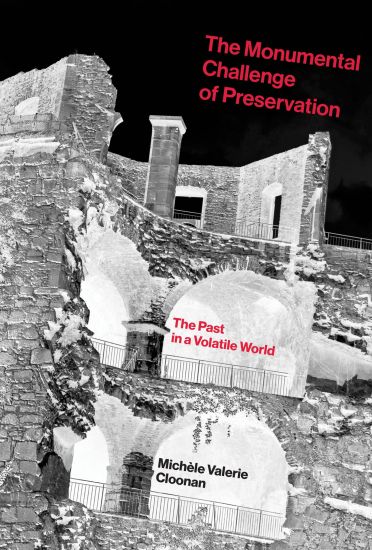
The Monumental Challenge of Preservation

The Monumental Challenge of Preservation

Michele Valerie Cloonan

MIT PRESS LTD
2023
pokkari
The enormous task of preserving the world's heritage in the face of war, natural disaster, vandalism, neglect, and technical obsolescence. The monuments--movable, immovable, tangible, and intangible--of the world's shared cultural heritage are at risk. War, terrorism, natural disaster, vandalism, and neglect make the work of preservation a greater challenge than it has been since World War II. In The Monumental Challenge of Preservation Mich le Cloonan makes the case that, at this critical juncture, we must consider preservation in the broadest possible contexts. Preservation requires the efforts of an increasing number of stakeholders. In order to explore the cultural, political, technological, economic, and ethical dimensions of preservation, Cloonan examines particular monuments and their preservation dilemmas. The massive Bamiyan Buddhas, blown up by the Taliban in 2001, are still the subject of debates over how, or whether, to preserve what remains, and the U. S. National Park Service has undertaken the complex task of preserving the symbolic and often ephemeral objects that visitors leave at the Vietnam Veterans Memorial--to take just two of the many examples described in the book. Cloonan also considers the ongoing genocide and cultural genocide in Syria; the challenges of preserving our digital heritage; the dynamic between original and copy; efforts to preserve the papers and architectural fragments of the architect Louis Sullivan; and the possibility of sustainable preservation. In the end, Cloonan suggests, we are what we preserve--and don't preserve. Every day we make preservation decisions, individually and collectively, that have longer-term ramifications than we might expect.
Bewitched: I Put A Spell On You

Bewitched: I Put A Spell On You

Michele Hauf

HARPERCOLLINS PUBLISHERS
2023
nidottu
Hocus pocus Tired of his desk job, Ethan Pierce decides it’s time for a more exciting occupation. This straitlaced vampire may be ready for demons and blood magic, but nothing can prepare him for Tuesday Knightsbridge. She’s brash, she’s bold and she’s the sexiest woman he’s ever met. She also happens to be a witch…and the key to saving the world.•After Kelyn Saint-Pierre’s sacrifice to save witch Valor Hearst from a gruesome death, he’s certain that any spark between them is gone. Valor wishes she’d known about his feelings before she ruined everything. There may be a way she can repay him…but it won’t be easy. The two are pushed close together on a dangerous mission, but will their passion only bind them further in pain?
Cinderella's Billion-Dollar Invitation / Beauty And The Playboy Prince

Cinderella's Billion-Dollar Invitation / Beauty And The Playboy Prince

Michele Renae; Justine Lewis

HARPERCOLLINS PUBLISHERS
2024
nidottu
A DATE UNTIL MIDNIGHT… In this If the Fairy Tale Fits… story, scientist Ivy’s dreams are derailed following her brother’s devastating illness. Now she’s working as a barista to make ends meet. So when billionaire Wolf—Ivy’s most charming customer!—invites her to be his fake date at a glamorous ball, stepping out of her ordinary life is impossible to resist… As is his kiss! But what happens when Wolf wants her to be his Cinderella for more than just one night? SOMETHING THERE THAT WASN’T THERE BEFORE? In this If the Fairy Tale Fits… story, Simone’s quiet life in a Parisian bookshop is upended when best friend Prince Edouard arrives on her doorstep to hide from a royal scandal! Despite her embarrassing teenage crush on the Playboy Prince, she’s always seen the man beneath the façade, and when they're trapped together until the storm blows over their friendship unexpectedly gives way to indescribable passion! Simone knows it’s only temporary, but she can’t help dreaming of a happy-ever-after…
Faking It With The Boss / Another Shot At Forever

Faking It With The Boss / Another Shot At Forever

Michele Renae; Hana Sheik

HARPERCOLLINS PUBLISHERS
2025
nidottu
Perfect for fans of: ?? Fake dating ?? Workplace romance ?? Second chance – A picture-perfect ruse! In this Art of Being a Billionaire story, art broker Asher is intent on securing a coveted new artist. He jets off to Iceland with his trusted secretary, Maeve—only to discover they’ve registered for the artist’s couples’ retreat! Fake dating her billionaire boss won’t be difficult—Maeve’s always felt a simmering attraction towards him. But as the intimacy exercises and the cosy single bed draw them closer, it becomes obvious her desire is reciprocated. Until they can’t remember why they shouldn’t explore it… Reunited by their unexpected miracle… When Zaynab shows up at her estranged husband’s door, clutching divorce papers, she doesn’t expect their goodbye to result in one final dazzling night of passion. But the bigger shock? She’s pregnant! Determined to support Zaynab, Ara offers a convenient solution: move in together until the baby’s arrival. Only being back in such tempting proximity to each other reignites the unresolved feelings they’ve tried desperately to suppress… With just six months until Zaynab’s due date, can they find a way to undo past mistakes—and give their marriage another shot?
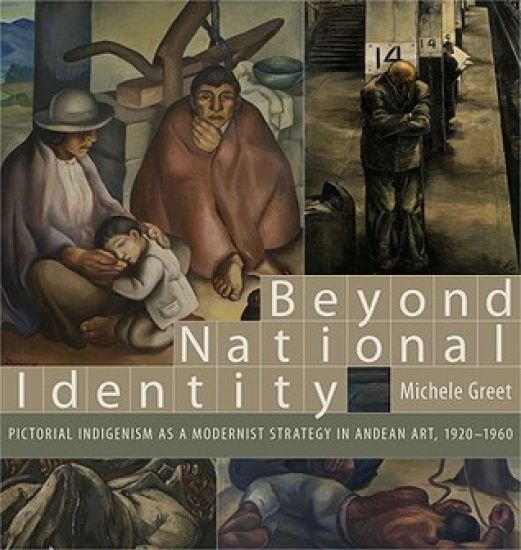
Beyond National Identity

Beyond National Identity

Michele Greet

Pennsylvania State University Press
2009
pokkari
Indigenism is not folk art. It is a vanguard movement conceived of by intellectuals and artists conversant in international modernist idioms and defined in response to global trends. Beyond National Identity traces changes in Andean artists’ vision of indigenous peoples as well as shifts in the critical discourse surrounding their work between 1920 and 1960. By challenging the notion of pictorial indigenism as a direct expression of national identity, Greet demonstrates the complexity of the indigenists’ critical engagement with European and pan-American cultural developments and presents the trend in its global context. Through case studies of works by three internationally renowned Ecuadoran artists, Camilo Egas, Eduardo Kingman Riofrío, and Oswaldo Guayasamín Calero, Beyond National Identity pushes the idea of modernism in new directions—both geographically and conceptually—to challenge the definitions and boundaries of modern art.
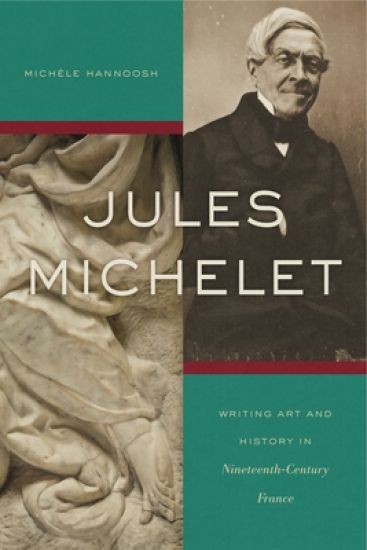
Jules Michelet

Jules Michelet

Michèle Hannoosh

Pennsylvania State University Press
2019
sidottu
Jules Michelet, one of France’s most influential historians and a founder of modern historical practice, was a passionate viewer and relentless interpreter of the visual arts. In this book, Michèle Hannoosh examines the crucial role that art writing played in Michelet’s work and shows how it decisively influenced his theory of history and his view of the practice of the historian.The visual arts were at the very center of Michelet’s conception of historiography. He filled his private notes, public lectures, and printed books with discussions of artworks, which, for him, embodied the character of particular historical moments. Michelet believed that painting, sculpture, architecture, and engraving bore witness to histories that frequently went untold; that they expressed key ideas standing behind events; and that they articulated concepts that would come to fruition only later.This groundbreaking reevaluation of Michelet’s approach to history elucidates how writing about art provided a model for the historian’s relation to, and interpretation of, the past, and thus for a new type of historiography—one that acknowledges and enacts the historian’s own implication in the history he or she tells.
Jules Michelet

Jules Michelet

Michèle Hannoosh

Pennsylvania State University Press
2020
pokkari
Jules Michelet, one of France’s most influential historians and a founder of modern historical practice, was a passionate viewer and relentless interpreter of the visual arts. In this book, Michèle Hannoosh examines the crucial role that art writing played in Michelet’s work and shows how it decisively influenced his theory of history and his view of the practice of the historian.The visual arts were at the very center of Michelet’s conception of historiography. He filled his private notes, public lectures, and printed books with discussions of artworks, which, for him, embodied the character of particular historical moments. Michelet believed that painting, sculpture, architecture, and engraving bore witness to histories that frequently went untold; that they expressed key ideas standing behind events; and that they articulated concepts that would come to fruition only later.This groundbreaking reevaluation of Michelet’s approach to history elucidates how writing about art provided a model for the historian’s relation to, and interpretation of, the past, and thus for a new type of historiography—one that acknowledges and enacts the historian’s own implication in the history he or she tells.
Strategic Pragmatism

Strategic Pragmatism

Michele Schmiegelow; Henrik Schmiegelow

Praeger Publishers Inc
1989
sidottu
This powerful study suggests that strategic pragmatism has enabled Japan to use Western theories and doctrines more comprehensively and thoroughly than the West. The authors contend that Japan's success depends, in part, upon three factors: the ability to recognize a need for action; the ability to respond to such a need even under less than optimal technological conditions, cutting across theoretical and ideological lines; and the ability to adjust or correct action as soon as failure is recognized. By comparing Japan's policies and structure to patterns prevailing in major Western countries, Japan's `secret' can be translated into concepts familiar to the West. This brilliant and provocative book…is a tour de force that argues that Japanese-type economic policies can be duplicated in other capitalist states and that it is a mistake to believe that such policies can only evolve in the unique environment of Japanese culture and society. Foreign Affairs Japan's rise to economic power has been the focus of much attention and speculation in the West. This powerful study suggests that strategic pragmatism has enabled Japan to use Western theories and doctrines more comprehensively and thoroughly than the West. The authors contend that Japan's success depends, in part, upon three factors. The first is the ability to recognize a need for action. Next, the Japanese are able to respond to such a need even under less than optimal technological conditions and can cut across theoretical and ideological lines. Finally, they are ready to adjust or correct action as soon as failure is recognized. Western countries should look at the global significance of Japan's economic performance and learn from their model of action. By comparing Japan's policies and structure to patterns prevailing in major Western countries, Japan's 'secret' can be translated into concepts familiar to the West. Economists, government officials, and business policy makers will find this new approach to Japan's success a worthwhile study. Strategic Pragmatism opens with an explanation for Japan's economic performance. The book then presents the interesting way in which Japan makes functional cuts across doctrines. There is a chapter addressing adaptation and how Western economic concepts are incorporated into Japanese policy. Goal attainment includes such topics as neo-classical infant industry protection and mercantilist aspects in the policy of industrial development. Pattern maintenance is followed by integration, and then the relation of structure and action. Finally the authors develop a model demonstrating how Japan derives a sense of direction from the nature of the changing problems to be solved--the heart of strategic pragmatism.
The Swedish Farmers' Movement and Government Agricultural Policy
This comprehensive study explores the influence and organization of the Swedish farmers' movement in the 20th century. The first such study of its kind to appear in print, the analysis focuses on the ways in which the movement has represented its members in light of the myriad social, political, and economic changes that have affected its strategy, tactics, and overall position within the Swedish economy. Writing for scholars of political economy in general and Scandinavian area studies in particular, the author both explains the history of the incorporation of the interest organizations of farmers into the Swedish state and fully examines the effect of current reforms that are forcing the farmers' movement to change its traditional structures and ways of thinking.Among the issues addressed by the author are the advantages and disadvantages of the corporatist exchange for the farmers' movement and the important role played by farmers in the electoral politics of Sweden's political parties. Micheletti concludes that vote maximization is an important reason for the concern shown by the parties for the interests of farmers. She further discusses the development of Swedish agricultural policy, the changes in policy resulting from social democracy, and the role played by consumer interest organizations within the Swedish social democratic system. Throughout, Micheletti emphasizes the influence of Swedish political traditions and the prevailing political culture as well as the impact of international developments in the current reform of agriculture in Sweden. How the farmer's movement copes with the changes and the new issues of the environment and deregulation are also a key focus of inquiry.
Understanding Workplace Violence

Understanding Workplace Violence

Michele A. Paludi; Rudy Nydegger; Carmen A. Paludi Jr.

Praeger Publishers Inc
2006
sidottu
By any measure, workplace violence is increasing in frequency and intensity. A recent report estimates its cost at over $120 billion. Meanwhile, experts agree that risk factors, including psychological, behavioral, and situational stressors, are increasing in the context of today's volatile business environment. This timely book integrates insights from the fields of management and social psychology to identify the sources of workplace violence and offer readers practical strategies for preventing it, protecting themselves and their employees from it, and reacting swiftly and effectively when it happens. Featuring case examples, interviews, practical recommendations, and resources for additional information, the authors debunk common myths and misconceptions about workplace violence, its perpetrators, and its victims, and consider the link between domestic and workplace violence—in particular, its implications for women and minorities. The result is an essential guide for anyone, including managers and employees, human resource professionals and counselors, psychologists and other advocates, affected by the impact of workplace violence and seeking solutions. The statistics are alarming. Homicide is the most frequent manner in which female employees are fatally injured at work; it is the number two cause for men. According to a recent study cited by the Society for Human Resource Management, incidents of workplace violence have increased steadily over the past sixteen years; 58 percent of participating companies reported that disgruntled employees have threatened senior managers in the past year, 17 percent said employees had intentionally and maliciously downloaded computer viruses, and 10 percent said they were victims of product tampering. Meanwhile, the costs linked to workplace violence have been estimated at over $120 billion. Experts agree that risk factors for workplace violence include psychological, behavioral, and situational stressors—and today's volatile business environment increases their intensity. This timely book integrates insights from the fields of management and social psychology to identify the sources of workplace violence and offer readers practical strategies for preventing it, protecting themselves and their employees from it, and reacting swiftly and effectively when it happens. Featuring case examples, interviews, practical recommendations, and resources for additional information, the authors debunk common myths and misconceptions about workplace violence, its perpetrators, and its victims, and consider the link between domestic and workplace violence—in particular, its implications for women and minorities. The result is an essential guide for anyone, including managers and employees, human resource professionals and counselors, psychologists and other advocates, who is affected by the impact of workplace violence and is seeking solutions.
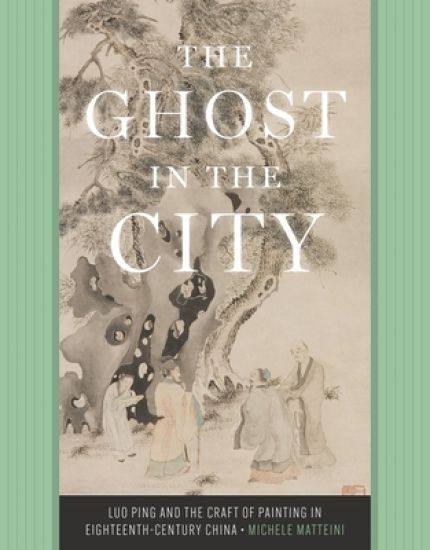
The Ghost in the City

The Ghost in the City

Michele Matteini

UNIVERSITY OF WASHINGTON PRESS
2023
sidottu
A visual and social exploration of early modern Beijing's cultural milieuIn 1771 the artist Luo Ping (1733–99) left his native Yangzhou to relocate to the burgeoning hub of Beijing's Southern City. Over two decades, he became the favored artist of a cosmopolitan community of scholars and officials who were at the forefront of the cultural life of the Qing-dynasty (1644–1911). From his spectacular ghost paintings to his later work exploring the city's complex history, compressed spatial layout, and unique social rituals, Luo Ping captured the pleasures and concerns of a changing world at the end of the Qing's "Prosperous Age."This study takes the reader into the vibrant artistic and literary cultures of Beijing outside the court and to the networks of scholars, artists, and entertainers that turned the Southern City into a place like no other in the Qing empire. At the center of this narrative lie Luo Ping's layered reflections on the medium of painting and its histories and formal conventions. Close reading of the work of Luo Ping and his contemporaries reveals how this generation of experimental artists sought to reform ink painting, paving the way for further developments in the nineteenth and twentieth centuries. Drawing on a vast range of textual and visual sources, The Ghost in the City shares groundbreaking research that will transform our understanding of the evolution of modern ink painting.
Party Building in the Modern Middle East

Party Building in the Modern Middle East

Michele Penner Angrist

University of Washington Press
2006
sidottu
Why was Turkey - alone of all the modern states that emerged from the Ottoman Empire - the only Middle Eastern country to evolve lasting competitive political institutions? While democratic processes grew steadily in Turkey during the twentieth century, its neighbors turned to forms of authoritarian rule that reinforced the powers of armies, families, single parties, or monarchs. Michele Angrist argues that democracy and dictatorship in the Middle East can be understood by studying the nature and status of political parties operating at the moment of independence.Looking carefully at Muslim-majority states where parties played a crucial role in state formation between the 1940s and the 1960s, Angrist challenges the idea that Islam, class structures, levels of development, and/or international factors dominated domestic politics in the region. She writes across the regional divides that have isolated Turkish, Arab, and Persian studies from each other. Comparative political scientists, Middle East social scientists, and scholars of Turkey will find here a compelling account of party building and democratization in the modern Middle East.
The Jews in Mussolini's Italy

The Jews in Mussolini's Italy

Michele Sarfatti

University of Wisconsin Press
2006
nidottu
Often overshadowed by the persecution of Jews in Germany, the treatment of Jews in fascist Italy comes into sharp focus in this volume by Italian historian Michele Sarfatti. Using thorough and careful statistical evidence to document how the Italian social climate changed from relatively just to irredeemably prejudicial, Sarfatti begins with a history of Italian Jews in the decades before fascism - when Jews were fully integrated into Italian national life - and provides a deft and comprehensive history from fascism's rise in 1922 to its defeat in 1945.
Strange Bird

Strange Bird

Michele K. Troy

Yale University Press
2017
sidottu
The first book about the Albatross Press, a Penguin precursor that entered into an uneasy relationship with the Nazi regime to keep Anglo-American literature alive under fascism The Albatross Press was, from its beginnings in 1932, a “strange bird”: a cultural outsider to the Third Reich but an economic insider. It was funded by British-Jewish interests. Its director was rumored to work for British intelligence. A precursor to Penguin, it distributed both middlebrow fiction and works by edgier modernist authors such as D. H. Lawrence, Virginia Woolf, James Joyce, and Ernest Hemingway to eager continental readers. Yet Albatross printed and sold its paperbacks in English from the heart of Hitler’s Reich. In her original and skillfully researched history, Michele K. Troy reveals how the Nazi regime tolerated Albatross—for both economic and propaganda gains—and how Albatross exploited its insider position to keep Anglo-American books alive under fascism. In so doing, Troy exposes the contradictions in Nazi censorship while offering an engaging detective story, a history, a nuanced analysis of men and motives, and a cautionary tale.
Transatlantic Encounters

Transatlantic Encounters

Michele Greet

Yale University Press
2018
sidottu
An unprecedented and comprehensive survey of Latin American artists in interwar Paris Paris was the artistic capital of the world in the 1920s and ’30s, providing a home and community for the French and international avant-garde, whose experiments laid the groundwork for artistic production throughout the rest of the century. Latin American artists contributed to and reinterpreted nearly every major modernist movement that took place in the creative center of Paris between World War I and World War II, including Cubism (Diego Rivera), Surrealism (Antonio Berni and Roberto Matta), and Constructivism (Joaquín Torres-García). Yet their participation in the Paris art scene has remained largely overlooked until now. This vibrant book examines their collective role, surveying the work of both household names and an extraordinary array of lesser-known artists. Author Michele Greet illuminates the significant ways in which Latin American expatriates helped establish modernism and, conversely, how a Parisian environment influenced the development of Latin American artistic identity. These artists, hailing from former Spanish and Portuguese colonies, encountered expectations of primitivism from their European audiences, and their diverse responses to such biased perceptions—ranging from rejection to embrace to selective reinterpretation of European tendencies—yielded a rich variety of formal innovation. Magnificently illustrated and conveying with clarity a nuanced portrait of modernism, Transatlantic Encounters also engages in a wider discussion of the relationship between displacement, identity formation, and artistic production.
Social Psychiatry across Cultures

Social Psychiatry across Cultures

Michele S. Trimarchi

Kluwer Academic/Plenum Publishers
1995
sidottu
The World Health Organization's concept of health as "the condition of psychophysical and social well-being" must be translated into opera­ tional terms. The objective is to place the human person within the social system, given that mental health, mental illness, and suffering are individual, despite the fact that their causes are to be sought in the society and environment that surround and interact with the indi­ vidual. One dimension that must be emphasized in this field is the contin­ uum that exists between social environment and cerebral development. This continuum consists of the physical and biological features of the two interacting systems: on one hand, the brain managed and con­ trolled by the genetic program, and, on the other hand, the environ­ ment, be it natural or social. A simple dichotomy of individual and environment is no longer a sufficient concept in understanding the etiology of mental health and illness. Needless to say, socioepidemiological research in psychiatry and transcultural psychiatry is useful in reaching these ends. However, at the root of mental illness, one can always find the same causal elements: informational chaos, inadequate dietary intake, substance abuse, trauma, conditioning, and so on, which make the interactive systems dysfunctional. Subsequent organic and psychotic disorders occur to the detriment of both the individual and society. Current biological psychiatry is inadequately equipped in treating mental illness.
The Handbook for Lightning Strike Survivors

The Handbook for Lightning Strike Survivors

Michele Young-Stone

Broadway Books
2010
nidottu
When lightning strikes, lives are changed. BECCA On a sunny day in Chapel Hill, North Carolina, eight-year-old Becca Burke was struck by lightning. No one believed her-not her philandering father or her drunk, love-sick mother-not even when her watch kept losing time and a spooky halo of light appeared overhead in photographs. Becca was struck again when she was sixteen. She survived, but over time she would learn that outsmarting lightning was the least of her concerns. BUCKLEY In rural Arkansas, Buckley R. Pitank's world seemed plagued by disaster. Ashamed but protective of his obese mother, fearful of his scathing grandmother, and always running from bullies (including his pseudo-evangelical stepfather), he needed a miracle to set him free. At thirteen years old, Buckley witnessed a lightning strike that would change everything. Now an art student in New York City, Becca Burke is a gifted but tortured painter who strives to recapture the intensity of her lightning-strike memories on canvas. On the night of her first gallery opening, a stranger appears and is captivated by her art. Who is this odd young man with whom she shares a mysterious connection? When Buckley and Becca finally meet, neither is prepared for the charge of emotions-or for the perilous event that will bring them even closer to one another, and to the families they've been running from for as long as they can remember. Crackling with atmosphere and eccentric characters, The Handbook for Lightning Strike Survivors explores the magic of nature and the power of redemption in a novel as beautiful and unpredictable as lightning itself.