Kirjojen hintavertailu. Mukana 12 083 983 kirjaa ja 12 kauppaa.

Kirjahaku

Etsi kirjoja tekijän nimen, kirjan nimen tai ISBN:n perusteella.

1000 tulosta hakusanalla Michele Rodriguez

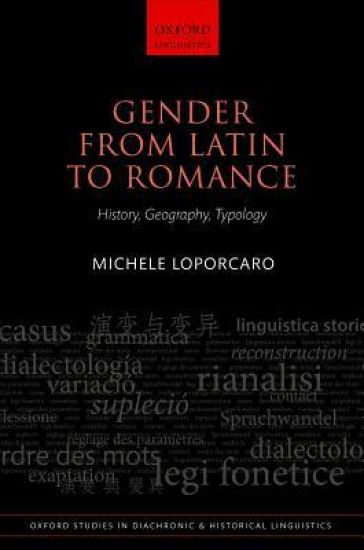
Gender from Latin to Romance

Gender from Latin to Romance

Michele Loporcaro

Oxford University Press
2017
sidottu
This book explores grammatical gender in the Romance languages and dialects and its evolution from Latin. Michele Loporcaro investigates the significant diversity found in the Romance varieties in this regard; he draws on data from the Middle Ages to the present from all the Romance languages and dialects, discussing examples from Romanian to Portuguese and crucially also focusing on less widely-studied varieties such as Sursilvan, Neapolitan, and Asturian. The investigation first reveals that several varieties display more complex systems than the binary masculine/feminine contrast familiar from modern French or Italian. Moreover, it emerges that traditional accounts, whereby neuter gender was lost in the spoken Latin of the late Empire, cannot be correct: instead, the neuter gender underwent a range of different transformations from Late Latin onwards, which are responsible for the different systems that can be observed today across the Romance languages. The volume provides a detailed description of many of these systems, which in turns reveals a wealth of fascinating data, such as varieties where 'husbands' are feminine and others where 'wives' are masculine; dialects in which nouns overtly mark gender, but only in certain syntactic contexts; and one Romance variety (Asturian) in which it appears that grammatical gender has split into two concurrent systems. The volume will appeal to linguists from a range of backgrounds, including Romance linguistics, historical linguistics, typology, and morphosyntax, and is also of relevance to those working in sociology, gender studies, and psychology.
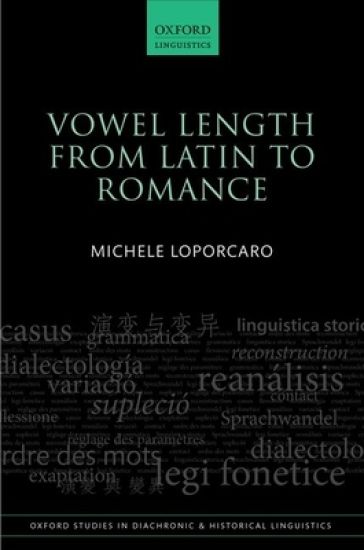
Vowel Length From Latin to Romance

Vowel Length From Latin to Romance

Michele Loporcaro

Oxford University Press
2015
sidottu
This book investigates the changes that affected vowel length during the development of Latin into the Romance languages and dialects. In Latin, vowel length was contrastive (e.g. pila 'ball' vs. pila 'pile', like English bit vs. beat), but no modern Romance language has retained that same contrast. However, many non-standard Romance dialects (as well as French, up to the early 20th century) have developed novel vowel length contrasts, which are investigated in detail here. Unlike previous studies of this phenomenon, this book combines detailed historical evidence spanning three millennia (as attested by extant texts) with extensive data from present-day Romance varieties collected from first-hand fieldwork, which are subjected to both phonological and experimental phonetic analysis. Professor Loporcaro puts forward a detailed account of the loss of contrastive vowel length in late Latin, showing that this happened through the establishment of a process which lengthened all stressed vowels in open syllables, as in modern Italian casa ['ka:sa]. His analysis has implications for many of the most widely-debated issues relating to the origin of novel vowel length contrasts in Romance, which are also shown to have been preserved to different degrees in different areas. The detailed investigation of the rise and fall of vowel length in dozens of lesser-known (non-standard) varieties is crucial in understanding the development of this aspect of Romance historical phonology, and will be of interest not only to researchers and students in comparative Romance linguistics, but also, more generally, to phonologists and those interested in historical linguistics beyond the Latin-Romance language family.
Advances in Culture and Psychology

Advances in Culture and Psychology

Michele J. Gelfand; Chi-yue Chiu; Ying-yi Hong

Oxford University Press Inc
2012
sidottu
With applications throughout the social sciences, culture and psychology is a rapidly growing field that has experienced a surge in publications over the last decade. From this proliferation of books, chapters, and journal articles, exciting developments have emerged in the relationship of culture to cognitive processes, human development, psychopathology, social behavior, organizational behavior, neuroscience, language, marketing, and other topics. In recognition of this exponential growth, Advances in Culture and Psychology is the first annual series to offer state-of-the-art reviews of scholarly research in the growing field of culture and psychology. The Advances in Culture and Psychology series is: * Developing an intellectual home for culture and psychology research programs * Fostering bridges and connections among cultural scholars from across the discipline * Creating a premier outlet for culture and psychology research * Publishing articles that reflect the theoretical, methodological, and epistemological diversity in the study of culture and psychology * Enhancing the collective identity of the culture and psychology field Comprising chapters from internationally renowned culture scholars and representing diversity in the theory and study of culture within psychology, Advances in Culture and Psychology is an ideal resource for research programs and academics throughout the psychology community.
Advances in Culture and Psychology

Advances in Culture and Psychology

Michele J. Gelfand; Chi-yue Chiu; Ying-yi Hong

Oxford University Press Inc
2013
sidottu
With applications throughout the social sciences, culture and psychology is a rapidly growing field that has experienced a surge in publications over the last decade. From this proliferation of books, chapters, and journal articles, exciting developments have emerged in the relationship of culture to cognitive processes, human development, psychopathology, social behavior, organizational behavior, neuroscience, language, marketing, and other topics. In recognition of this exponential growth, Advances in Culture and Psychology is the first annual series to offer state-of-the-art reviews of scholarly research in the growing field of culture and psychology. The Advances in Culture and Psychology series is: * Developing an intellectual home for culture and psychology research programs * Fostering bridges and connections among cultural scholars from across the discipline * Creating a premier outlet for culture and psychology research * Publishing articles that reflect the theoretical, methodological, and epistemological diversity in the study of culture and psychology * Enhancing the collective identity of the culture and psychology field Comprising chapters from internationally renowned culture scholars and representing diversity in the theory and study of culture within psychology, Advances in Culture and Psychology is an ideal resource for research programs and academics throughout the psychology community.
Women in the Club

Women in the Club

Michele L. Swers

University of Chicago Press
2013
sidottu
In the run-up to the 2012 presidential election, Democrats and Republicans were locked in a fierce battle for the female vote. Democrats charged Republicans with waging a "war on women," while Republicans countered that Democratic policies actually undermined women's rights. The women of the Senate wielded particular power throughout, planning press conferences, appearing on political programs, and taking to the Senate floor over gender-related issues such as workplace equality and reproductive rights. The first book to examine the impact of gender differences in the Senate, "Women in the Club" is an eye-opening exploration of how women are influencing policy and politics in this erstwhile male bastion of power. Gender, Michele L. Swers shows, is a fundamental factor for women in the Senate, interacting with both party affiliation and individual ideology to shape priorities on policy. Women, for example, are more active proponents of social welfare and women's rights. But the effects of gender extend beyond mere policy preferences. Senators also develop their priorities with an eye to managing voter expectations about their expertise and advancing their party's position on a given issue. The election of women in increasing numbers has also coincided with the evolution of the Senate as a highly partisan institution. The stark differences between the parties on issues pertaining to gender have meant that Democratic and Republican senators often assume very different roles as they reconcile their policy views on gender issues with the desire to act as members of partisan teams.
Women in the Club

Women in the Club

Michele L. Swers

University of Chicago Press
2013
nidottu
In the run-up to the 2012 presidential election, Democrats and Republicans were locked in a fierce battle for the female vote. Democrats charged Republicans with waging a "war on women," while Republicans countered that Democratic policies actually undermined women's rights. The women of the Senate wielded particular power throughout, planning press conferences, appearing on political programs, and taking to the Senate floor over gender-related issues such as workplace equality and reproductive rights. The first book to examine the impact of gender differences in the Senate, "Women in the Club" is an eye-opening exploration of how women are influencing policy and politics in this erstwhile male bastion of power. Gender, Michele L. Swers shows, is a fundamental factor for women in the Senate, interacting with both party affiliation and individual ideology to shape priorities on policy. Women, for example, are more active proponents of social welfare and women's rights. But the effects of gender extend beyond mere policy preferences. Senators also develop their priorities with an eye to managing voter expectations about their expertise and advancing their party's position on a given issue. The election of women in increasing numbers has also coincided with the evolution of the Senate as a highly partisan institution. The stark differences between the parties on issues pertaining to gender have meant that Democratic and Republican senators often assume very different roles as they reconcile their policy views on gender issues with the desire to act as members of partisan teams.
The Politics of Urban Beauty

The Politics of Urban Beauty

Michele H. Bogart

University of Chicago Press
2006
sidottu
Since its founding in 1898, the Art Commission of the City of New York (ACNY) has served as the city’s aesthetic gatekeeper, evaluating all works of art intended for display on city property. And over the years, the commission’s domain has expanded dramatically to include everything from parks and courthouses to trash cans and sidewalks. In ThePolitics of Urban Beauty, Michele H. Bogart argues that this unprecedented authority has made the commission host to some complex negotiations—involving artists, architects, business leaders, activists, and politicians—about not only the role of art in urban design, but also the shape and meaning of the city and its public spaces. A former vice president of the ACNY, Bogart tells its story here from an insider’s perspective, tracing the commission’s history from its origins as an outgrowth of progressive reform to its role in New York’s reconstruction after 9/11. Drawing on archival correspondence, drawings, and photographs from commission collections, Bogart presents bracing examples of works—ranging from New Deal murals to Louis Kahn’s unbuilt Memorial to Six Million Jewish Martyrs—that illuminate the ACNY’s subtle yet powerful role in shaping New York’s identity. The Politics of Urban Beauty is thus a fascinating history of a New York art world that paralleled—and sometimes unpredictably intersected with—the more familiar realm of prominent architects, painters, galleries, and museums. Bogart’s fresh view adds a critical dimension to our understanding of “the city beautiful” and makes an important and lively contribution to the study of art history, urban design, and New York City itself.
Artists, Advertising, and the Borders of Art

Artists, Advertising, and the Borders of Art

Michele H. Bogart

University of Chicago Press
1995
sidottu
Norman Rockwell and Andy Warhol, J.C. Leyendecker and Georgia O'Keeffe, the Metropolitan Museum of Art and Pepsi-Cola, the "avant garde" and the Famous Artists Schools, Inc.: these are some of the unexpected pairings encountered in this book. In this interdisciplinary study of the imagery and practices of commercial artists, Michele H. Bogart explores the world of commercial art - its illustrators, publishers, art directors, photographers and painters. She maps out the long, permeable border between art and commerce, aiming to expand our picture of artistic culture in the 20th century. From the turn of the century through the 1950s, the growth of popular magazines and national advertising offered artists new sources of income and new opportunities for reaching huge audiences. Bogart shows how, at the same time, this change in the market-place also forced a rethinking of the purpose of the artistic enterprise itself. She examines how illustrators such as Howard Pyle, Charles Dana Gibson and Norman Rockwell claimed their identities as artists within a market-oriented framework. She looks at billboard production and the growing schism between "art" posters and billboard advertisements; at the new roles of the art director; at the emergence of photography as the dominant advertising medium; and at the success of painters in producing "fine art" for advertising during the 1930s and 1940s.
Artists, Advertising, and the Borders of Art

Artists, Advertising, and the Borders of Art

Michele H. Bogart

University of Chicago Press
1997
nidottu
Norman Rockwell and Andy Warhol, J.C. Leyendecker and Georgia O'Keeffe, the Metropolitan Museum of Art and Pepsi-Cola, the avant-garde and the Famous Artists Schools, Inc.: these are some of the unexpected pairings encountered in this study of commercial art and design. In this interdisciplinary study of the imagery and practices of commercial artists, the author explores in detail the world of commercial art - its illustrators, publishers, art directors, photographers, and painters. She maps out the long, permeable border between art and commerce, seeking to expand our understanding of artistic culture in the 20th century. From the turn of the century through the 1950s, the explosive growth of popular magazines and national advertising offered artists new sources of income and new opportunities for reaching huge audiences. Bogart shows how, at the same time, this change in the marketplace also forced a rethinking of the purpose of the artistic enterprise itself. She examines how illustrators such as Howard Pyle, Charles Dana Gibson, and Norman Rockwell claimed their identities as artists within a market-oriented framework. She looks at billboard production and the growing schism between "art" posters and billboard advertisements; at the new roles of the art director; at the emergence of photography as the dominant advertising medium; and at the success of painters in producing "fine art" for advertising during the 1930s and 1940s.
African Royal Court Art

African Royal Court Art

Michele Coquet

University of Chicago Press
1998
sidottu
Grounding its analysis in the social and historical context of traditional royalty systems, this text examines the diverse roles played by artisans, nobles, and kings in the production and use of royal objects. From the precolonial kingdoms of the Edo and the Yoruba, the Ashanti and the Igbo, Michele Coquet reconstructs from a comparativist view the essential cultural connections between art, representation and the king. More than ornamentation, royal objects embodied the strength and status of African rulers. The gold-plated stools of the Ashanti, the delicately carved ivory bracelets of the Edo - these objects were meant not simply to adorn but to affirm and enhance the power and prestige of the wearer. Unlike the abstract style frequently seen in African ritual art, realism became manifest in courtly arts. Realism directly linked the symbolic value of the object - a portrait or relief - with the physical person of the king. The contours of the monarch's face, his political and military exploits rendered on palace walls, became visual histories, the work of art in essence corroborating the ruler's sovereign might.
Market Day in Provence

Market Day in Provence

Michele de La Pradelle; Jack Katz

University of Chicago Press
2006
sidottu
At farmers' markets, we expect to see fruit bursting with juicy sweetness and produce greener than a golf course. For Michele de La Pradelle these expectations are mostly the result of a show performed by merchants and sustained by our propensity to see what we want to see. Hailed upon its release in France, the award-winning "Market Day in Provence" lays bare the mechanisms of the contemporary outdoor market by providing a definitive account of the centuries-old institution at Carpentras, a city near Avignon in the south of France famous for its quintessential public street market. The renewal and celebration of the outdoor market culture in recent years, argues La Pradelle, artfully masks a fierce commitment to modern-day free-market economics. Responding to consumer desire for an experience that recalls a time before impersonal supermarket chains and mass-produced products, buyers and sellers alike create an atmosphere built on various fictions. Vendors at the market at Carpentras, for example, oblige patrons by acting like lifelong acquaintances of those whom they've only just met as they dispense free samples and lively, witty banter. Likewise, going to the market to look for "freshness" becomes a way for the consumer to signify the product's relation to nature - a denial of the workaday reality of growing melons under plastic sheets, then machine-sorting, crating, and transporting them. Offering captivating descriptions of goods and the friendly exchanges between buyers and sellers, "Market Day in Provence" will be devoured by any reader with an interest in areas as diverse as food, ethnography, globalization, modernity, and French culture.
Market Day in Provence

Market Day in Provence

Michele de La Pradelle; Jack Katz

University of Chicago Press
2015
nidottu
At farmers' markets, we expect to see fruit bursting with juicy sweetness and vegetables greener than a golf course. For Michele de La Pradelle these expectations are mostly the result of a show performed by merchants and sustained by our propensity to see what we want to see there. Hailed upon its release in France, the award-winning Market Day in Provence lays bare the mechanisms of the contemporary outdoor market by providing a definitive account of the centuries-old institution at Carpentras, a city near Avignon in the south of France famous for its quintessential public street market.The renewal and celebration of the outdoor market culture in recent years, argues de La Pradelle, artfully masks a fierce commitment to modern-day free-market economics. Responding to consumer desire for an experience that recalls a time before impersonal supermarket chains and mass-produced products, buyers and sellers alike create an atmosphere built on various fictions. Vendors at the market at Carpentras, for example, oblige patrons by acting like lifelong acquaintances of those whom they've only just met as they dispense free samples and lively, witty banter. Likewise, going to the market to look for freshness becomes a way for the consumer to signify the product's relation to nature-a denial of the workaday reality of growing melons under plastic sheets, then machine-sorting, crating, and transporting them. Offering captivating descriptions of goods and the friendly and occasionally piquant exchanges between buyers and sellers, Market Day in Provence will be devoured by any reader with an interest in areas as diverse as food, ethnography, globalization, modernity, and French culture.
Puccini

Puccini

Michele Girardi

University of Chicago Press
2000
sidottu
Giacomo Puccini's operas are among the most widely performed in the world, and include such masterpieces as "La Boheme", "Tosca" and "Madama Butterfly". Yet although critical studies of individual operas have appeared, very few books have examined Puccini's works as a whole from an analytical perspective. Michele Girardi remedies this lack, providing detailed analyses of all of Puccini's operas, complete with 196 musical examples. Writing in clear and lively prose accessible to scholar and passionate opera enthusiast alike, Girardi considers Puccini's musical and dramatic techniques together, demonstrating how his manipulation of dense networks of themes, sophisticated harmonic techniques and masterly orchestrations work to arouse the audience's emotions. Girardi also discusses the question of Puccini's assimilation of influences from composers as diverse as Verdi, Wagner, Bizet, Richard Strauss, Debussy and Stravinsky, showing how Puccini attempted to reconcile Italian techniques with those of European musical theatre as a whole to make Italian opera a truly international art.
Puccini

Puccini

Michele Girardi

University of Chicago Press
2002
nidottu
Puccini's operas are among the most popular and widely performed in the world, yet few books have examined his body of work from an analytical perspective. This volume remedies that lack in lively prose accessible to scholars and opera enthusiasts alike.
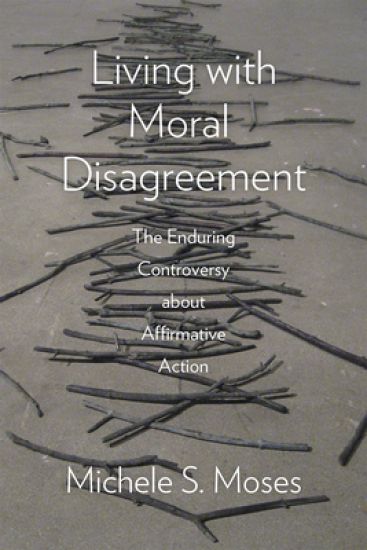
Living with Moral Disagreement

Living with Moral Disagreement

Michele S. Moses

University of Chicago Press
2016
sidottu
How to handle affirmative action is one of the most intractable policy problems of our era, touching on controversial issues such as race-consciousness and social justice. Much has been written both for and against affirmative action policies—especially within the realm of educational opportunity. In this book, philosopher Michele S. Moses offers a crucial new pathway for thinking about the debate surrounding educational affirmative action, one that holds up the debate itself as an important emblem of the democratic process. Central to Moses’s analysis is the argument that we need to understand disagreements about affirmative action as inherently moral, products of conflicts between deeply held beliefs that shape differing opinions on what justice requires of education policy. As she shows, differing opinions on affirmative action result from different conceptual values, for instance, between being treated equally and being treated as an equal or between seeing race-consciousness as a pernicious political force or as a necessary variable in political equality. As Moses shows, although moral disagreements about race-conscious policies and similar issues are often seen as symptoms of dysfunctional politics, they in fact create rich opportunities for discussions about diversity that nourish democratic thought and life.
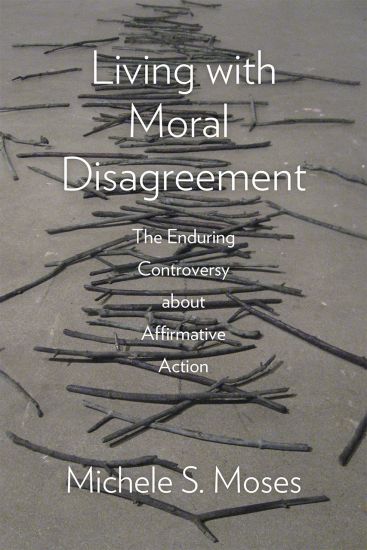
Living with Moral Disagreement

Living with Moral Disagreement

Michele S. Moses

University of Chicago Press
2016
nidottu
How to handle affirmative action is one of the most intractable policy problems of our era, touching on controversial issues such as race-consciousness and social justice. Much has been written both for and against affirmative action policies—especially within the realm of educational opportunity. In this book, philosopher Michele S. Moses offers a crucial new pathway for thinking about the debate surrounding educational affirmative action, one that holds up the debate itself as an important emblem of the democratic process. Central to Moses’s analysis is the argument that we need to understand disagreements about affirmative action as inherently moral, products of conflicts between deeply held beliefs that shape differing opinions on what justice requires of education policy. As she shows, differing opinions on affirmative action result from different conceptual values, for instance, between being treated equally and being treated as an equal or between seeing race-consciousness as a pernicious political force or as a necessary variable in political equality. As Moses shows, although moral disagreements about race-conscious policies and similar issues are often seen as symptoms of dysfunctional politics, they in fact create rich opportunities for discussions about diversity that nourish democratic thought and life.
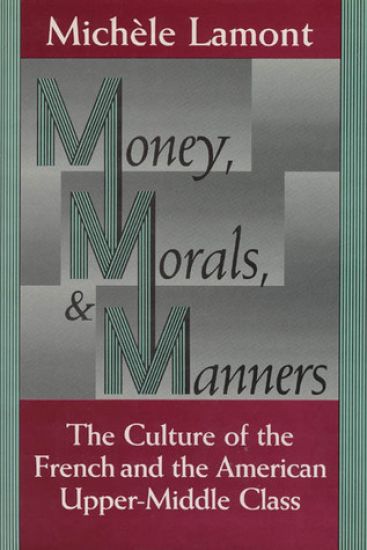
Money, Morals, and Manners

Money, Morals, and Manners

Michele Lamont

University of Chicago Press
1992
sidottu
Drawing on remarkably frank, in-depth interviews with 160 successful men in the United States and France, Michhle Lamont provides a rare and revealing collective portrait of the upper-middle class--the managers, professionals, entrepreneurs, and experts at the center of power in society. Her book is a subtle, textured description of how these men define the values and attitudes they consider essential in separating themselves--and their class--from everyone else. Money, Morals, and Manners is an ambitious and sophisticated attempt to illuminate the nature of social class in modern society. For all those who downplay the importance of unequal social groups, it will be a revelation.
Money, Morals, and Manners

Money, Morals, and Manners

Michele Lamont

University of Chicago Press
1994
nidottu
Drawing on remarkably frank, in-depth interviews with 160 successful men in the United States and France, Michèle Lamont provides a rare and revealing collective portrait of the upper-middle class—the managers, professionals, entrepreneurs, and experts at the center of power in society. Her book is a subtle, textured description of how these men define the values and attitudes they consider essential in separating themselves—and their class—from everyone else.Money, Morals, and Manners is an ambitious and sophisticated attempt to illuminate the nature of social class in modern society. For all those who downplay the importance of unequal social groups, it will be a revelation. "A powerful, cogent study that will provide an elevated basis for debates in the sociology of culture for years to come."—David Gartman, American Journal of Sociology"A major accomplishment! Combining cultural analysis and comparative approach with a splendid literary style, this book significantly broadens the understanding of stratification and inequality. . . . This book will provoke debate, inspire research, and serve as a model for many years to come."—R. Granfield, Choice"This is an exceptionally fine piece of work, a splendid example of the sociologist's craft."—Lewis Coser, Boston College
From Politics to the Pews

From Politics to the Pews

Michele F. Margolis

University of Chicago Press
2018
sidottu
One of the most substantial divides in American politics is the "God gap." Religious voters tend to identify with and support the Republican Party, while secular voters generally support the Democratic Party. Conventional wisdom suggests that religious differences between Republicans and Democrats have produced this gap, with voters sorting themselves into the party that best represents their religious views. Michele F. Margolis offers a bold challenge to the conventional wisdom, arguing that the relationship between religion and politics is far from a one-way street that starts in the church and ends at the ballot box. Margolis contends that political identity has a profound effect on social identity, including religion. Whether a person chooses to identify as religious and the extent of their involvement in a religious community are, in part, a response to political surroundings. In today's climate of political polarization, partisan actors also help reinforce the relationship between religion and politics, as Democratic and Republican elites stake out divergent positions on moral issues and use religious faith to varying degrees when reaching out to voters.
From Politics to the Pews

From Politics to the Pews

Michele F. Margolis

University of Chicago Press
2018
pokkari
One of the most substantial divides in American politics is the "God gap." Religious voters tend to identify with and support the Republican Party, while secular voters generally support the Democratic Party. Conventional wisdom suggests that religious differences between Republicans and Democrats have produced this gap, with voters sorting themselves into the party that best represents their religious views. Michele F. Margolis offers a bold challenge to the conventional wisdom, arguing that the relationship between religion and politics is far from a one-way street that starts in the church and ends at the ballot box. Margolis contends that political identity has a profound effect on social identity, including religion. Whether a person chooses to identify as religious and the extent of their involvement in a religious community are, in part, a response to political surroundings. In today's climate of political polarization, partisan actors also help reinforce the relationship between religion and politics, as Democratic and Republican elites stake out divergent positions on moral issues and use religious faith to varying degrees when reaching out to voters.