Kirjojen hintavertailu. Mukana 12 595 353 kirjaa ja 12 kauppaa.

Kirjahaku

Etsi kirjoja tekijän nimen, kirjan nimen tai ISBN:n perusteella.

1000 tulosta hakusanalla Mohammad Awad

Risk Management in Public-Private Partnerships

Risk Management in Public-Private Partnerships

Mohammad Heydari; Kin Keung Lai; Zhou Xiaohu

Routledge
2020
sidottu
Public-Private Partnership (PPP) is a channel through which the public sector can seek alternative funding and expertise from the private sector to procure public infrastructure. Governments around the world are increasingly turning to Public-Private Partnerships to deliver essential goods and services. Unfortunately, PPPs, like any other public procurement, can be at risk of corruption. This book begins by looking at the basics of PPP and the challenges of the PPP process. It then conceptualizes the vulnerability of various stages of Public-Private Partnership models and corruption risk against the backdrop of contract theory, principal-agent theory and transaction cost economics. The book also discusses potential control mechanisms.The book also stresses the importance of good governance for PPP. It outlines principles and procedures of project risk management (PRM) developed by a working party of the Association of Project Managers. Finally, the book concludes by proposing strategies and solutions to overcome the limitations and challenges of the current approach toward PPP.

Risk Management in Public-Private Partnerships

Risk Management in Public-Private Partnerships

Mohammad Heydari; Kin Keung Lai; Zhou Xiaohu

TAYLOR FRANCIS LTD
2022
nidottu
Public-Private Partnership (PPP) is a channel through which the public sector can seek alternative funding and expertise from the private sector to procure public infrastructure. Governments around the world are increasingly turning to Public-Private Partnerships to deliver essential goods and services. Unfortunately, PPPs, like any other public procurement, can be at risk of corruption. This book begins by looking at the basics of PPP and the challenges of the PPP process. It then conceptualizes the vulnerability of various stages of Public-Private Partnership models and corruption risk against the backdrop of contract theory, principal-agent theory and transaction cost economics. The book also discusses potential control mechanisms.The book also stresses the importance of good governance for PPP. It outlines principles and procedures of project risk management (PRM) developed by a working party of the Association of Project Managers. Finally, the book concludes by proposing strategies and solutions to overcome the limitations and challenges of the current approach toward PPP.
Commercial Space Technologies and Applications: Communication, Remote Sensing, GPS, and Meteorological Satellites, Second Edition
This new edition introduces and examines the space technologies that benefit our everyday lives. Each chapter now includes exercises and problems, and the content covers new satellites and emerging technologies. It explores the ever-improving quality of satellite systems and services, and also investigates ways to bring about higher resolution satellite imagery and lower satellite costs. The focus is on man-made satellites, which are becoming smaller, smarter, cheaper, and easier to launch, having a longer life span, and are less susceptible to interference. Furthermore, the book considers advances in several key technologies that affect the satellite industry.Includes extensive study questions and exercises after each chapter. Explains present commercial space technology and its future outlook. Explores the many applications of space technologies and their impact on our lives, including real world examples. Presents a future outlook on robotics, communications and navigation, and human health and nanotechnology. Provides a clear understanding of space, space technologies, space applications, space security, space regulations, a space roadmap, and their impact on the lives of humans now and for generations to come.
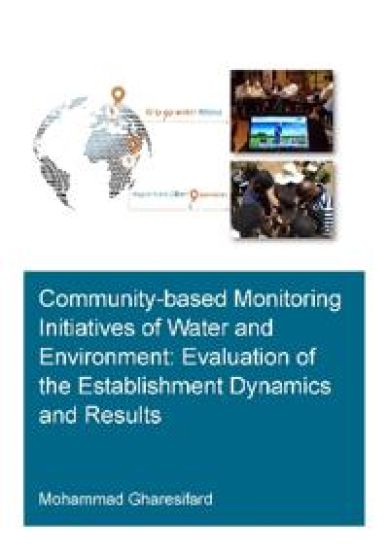
Community-Based Monitoring Initiatives of Water and Environment: Evaluation of Establishment Dynamics and Results
Citizen participation in water and environmental management via community-based monitoring (CBM) has been praised for the potential to facilitate better informed, more inclusive, transparent, and representative decision making. However, methodological and empirical research trying to conceptualize and evaluate the dynamics at play that might enable or hinder these initiatives from delivering on their potential is limited. This research contributed to the conceptualization of CBMs through development of a conceptual framework that is suitable for Context analysis, Process evaluation and Impact assessment of CBMs – the CPI Framework. This conceptualization provides an interpretation of what 'community' means in the context of a CBM initiative. In addition, this research contributed to the existing empirical knowledge about the establishment, functioning and outcomes of CBMs by testing the CPI Framework for studying two real life CBMs throughout the lifetime of an EU-funded project - the Ground Truth 2.0. The first CBM is called Grip op Water Altena that focuses on the issue of pluvial floods in 'Land van Heusden en Altena' of the Netherlands. The second CBM is Maasai Mara Citizen Observatory and aims at contributing to a better balance between biodiversity conservation and sustainable livelihood management in the Mara ecosystem in Kenya.
Transfer Learning through Embedding Spaces
Recent progress in artificial intelligence (AI) has revolutionized our everyday life. Many AI algorithms have reached human-level performance and AI agents are replacing humans in most professions. It is predicted that this trend will continue and 30% of work activities in 60% of current occupations will be automated.This success, however, is conditioned on availability of huge annotated datasets to training AI models. Data annotation is a time-consuming and expensive task which still is being performed by human workers. Learning efficiently from less data is a next step for making AI more similar to natural intelligence. Transfer learning has been suggested a remedy to relax the need for data annotation. The core idea in transfer learning is to transfer knowledge across similar tasks and use similarities and previously learned knowledge to learn more efficiently.In this book, we provide a brief background on transfer learning and then focus on the idea of transferring knowledge through intermediate embedding spaces. The idea is to couple and relate different learning through embedding spaces that encode task-level relations and similarities. We cover various machine learning scenarios and demonstrate that this idea can be used to overcome challenges of zero-shot learning, few-shot learning, domain adaptation, continual learning, lifelong learning, and collaborative learning.
Transfer Learning through Embedding Spaces

Transfer Learning through Embedding Spaces

Mohammad Rostami

TAYLOR FRANCIS LTD
2023
nidottu
Recent progress in artificial intelligence (AI) has revolutionized our everyday life. Many AI algorithms have reached human-level performance and AI agents are replacing humans in most professions. It is predicted that this trend will continue and 30% of work activities in 60% of current occupations will be automated.This success, however, is conditioned on availability of huge annotated datasets to training AI models. Data annotation is a time-consuming and expensive task which still is being performed by human workers. Learning efficiently from less data is a next step for making AI more similar to natural intelligence. Transfer learning has been suggested a remedy to relax the need for data annotation. The core idea in transfer learning is to transfer knowledge across similar tasks and use similarities and previously learned knowledge to learn more efficiently.In this book, we provide a brief background on transfer learning and then focus on the idea of transferring knowledge through intermediate embedding spaces. The idea is to couple and relate different learning through embedding spaces that encode task-level relations and similarities. We cover various machine learning scenarios and demonstrate that this idea can be used to overcome challenges of zero-shot learning, few-shot learning, domain adaptation, continual learning, lifelong learning, and collaborative learning.
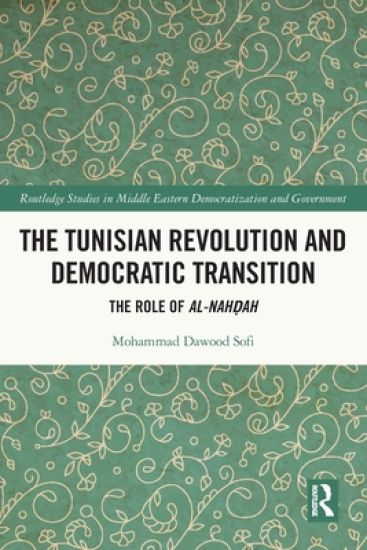
The Tunisian Revolution and Democratic Transition
Drawing on the history of post-independence Tunisia, the book studies the evolution of al-Nah?ah as a political party in Tunisia and its role in a protracted struggle to shape the post-authoritarian order along democratic lines. It explores al-Nah?ah's relationship with the Tunisian state, society and beyond that resulted in shaping its fluctuating expressions of ideology and practices.State repression, political participation, or internal differentiation (among other factors) place an Islamic movement (in this case al-Nah?ah) in such a situation that demands a perpetual self re-evaluation as well as implementation of ideology, objectives, and political programmes. The study explains how the socio-political setting in Tunisia demanded various ideologically opposite currents (Islamic, liberal, or leftist) to endure cross-ideological cooperation either to contest authoritarian regimes or to engage in the political process. It more importantly analyzes the trajectory of a gradual democratization process in the country and provides evidence explaining the impact and importance of a vibrant civil society, building alliances, and sharing of power.The book provides comparative analytical attention to the primary sources on these issues to create a critical historiography. It thus adds to the body of literature on the state, society, and politics in the MENA region and particularly targets students, scholars, and social scientists interested in understanding the nature of power and politics in Tunisia and beyond.
The Tunisian Revolution and Democratic Transition

The Tunisian Revolution and Democratic Transition

Mohammad Dawood Sofi

TAYLOR FRANCIS LTD
2023
nidottu
Drawing on the history of post-independence Tunisia, the book studies the evolution of al-Nah?ah as a political party in Tunisia and its role in a protracted struggle to shape the post-authoritarian order along democratic lines. It explores al-Nah?ah's relationship with the Tunisian state, society and beyond that resulted in shaping its fluctuating expressions of ideology and practices.State repression, political participation, or internal differentiation (among other factors) place an Islamic movement (in this case al-Nah?ah) in such a situation that demands a perpetual self re-evaluation as well as implementation of ideology, objectives, and political programmes. The study explains how the socio-political setting in Tunisia demanded various ideologically opposite currents (Islamic, liberal, or leftist) to endure cross-ideological cooperation either to contest authoritarian regimes or to engage in the political process. It more importantly analyzes the trajectory of a gradual democratization process in the country and provides evidence explaining the impact and importance of a vibrant civil society, building alliances, and sharing of power.The book provides comparative analytical attention to the primary sources on these issues to create a critical historiography. It thus adds to the body of literature on the state, society, and politics in the MENA region and particularly targets students, scholars, and social scientists interested in understanding the nature of power and politics in Tunisia and beyond.
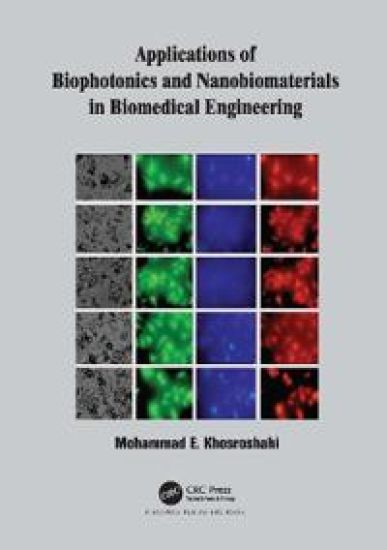
Applications of Biophotonics and Nanobiomaterials in Biomedical Engineering
This book provides a link between different disciplines of nanophysics, biophotonics, nanobiomaterials & applications of nanobiophotonics in biomedical research and engineering. The fundamentals of light, matter, nanobiomaterials & nanophysics are discussed together, and relevant applications in biomedical engineering as well as other related factors influencing the interaction process are explicated. Theoretical and experimental research is combined, emphasizing the influence of crucial common factors on applications.
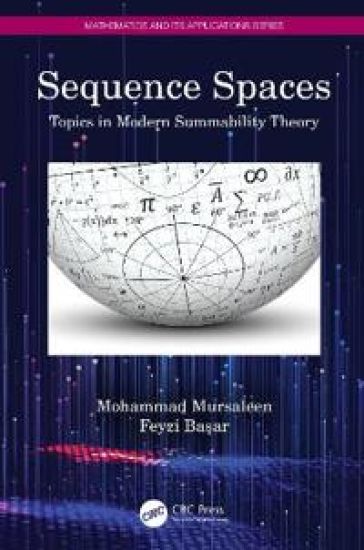
Sequence Spaces

Sequence Spaces

Mohammad Mursaleen; Feyzi Basar

CRC Press
2020
sidottu
This book is aimed at both experts and non-experts with an interest in getting acquainted with sequence spaces, matrix transformations and their applications. It consists of several new results which are part of the recent research on these topics. It provides different points of view in one volume, e.g. their topological properties, geometry and summability, fuzzy valued study and more. This book presents the important role sequences and series play in everyday life, it covers geometry of Banach Sequence Spaces, it discusses the importance of generalized limit, it offers spectrum and fine spectrum of several linear operators and includes fuzzy valued sequences which exhibits the study of sequence spaces in fuzzy settings. This book is the main attraction for those who work in Sequence Spaces, Summability Theory and would also serve as a good source of reference for those involved with any topic of Real or Functional Analysis.
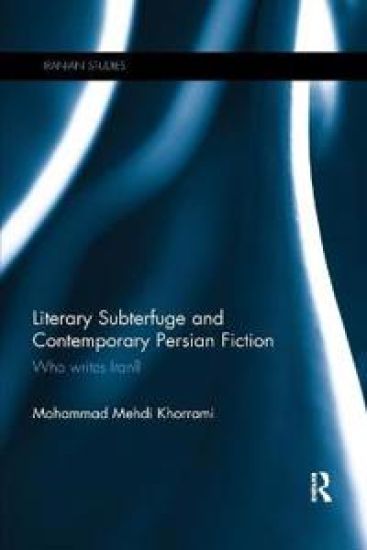
Literary Subterfuge and Contemporary Persian Fiction
The main focus of Literary Subterfuge and Contemporary Persian Fiction is to identify components and elements which define Persian modernist fiction, placing an emphasis on literary concepts and devices which provide the dynamics of the evolutionary trajectory of this modernism. The question of ‘who writes Iran’ refers to a contested area which goes beyond the discipline of literary criticism. Non-literary discourses have made every effort to impose their "committed" readings on literary texts; they have even managed to exert influence on the process of literary creation. In this process, inevitably, many works, or segments of them, and many concepts which do not lend themselves to such readings have been ignored; at the same time, many of them have been appropriated by these discourses. Yet components and elements of Persian literary tradition have persistently engaged in this discursive confrontation, mainly by insisting on literature’s relative autonomy, so that at least concepts such as conformity and subterfuge, essential in terms of defining modern and modernist Persian fiction, could be defined in a literary manner.Proffering an alternative in terms of literary historiography; this book supports a methodological approach that considers literary narratives which occur in the margins of dominant discourses, and indeed promote non-discursivity, as the main writers of Persian modernist fiction. It is an essential resource for scholars and researchers interested in Persian and comparative literature, as well as Middle Eastern Studies more broadly.
Iran and the Nuclear Question

Iran and the Nuclear Question

Mohammad Homayounvash

Routledge
2019
nidottu
Spanning over a period of more than five decades since its inception, Iran’s nuclear programme is the most protracted civilian nuclear program in the world and one of the most politicized projects in Iran’s history.'Iran and the Nuclear Question' offers a historiographical portrait of Iran’s early nuclear program under Mohammad Reza Shah Pahlavi. Using declassified archival material, the book thematically chronicles the program’s genesis, evolutionary trajectory, and devolution from the 1950s through to the 1970s. It also catalogues the Revolutionary Iran’s early socialization into the atom and the Islamic Republic’s gradual change of heart about nuclear energy that culminated in the incremental resuscitation of the Shah’s nuclear enterprise in the 1980s. As the first archive-based account of one of the most long-lasting and capital-intensive nuclear enterprises during the Cold War, ‘Iran and the Nuclear Question’ is a valuable resource for students and scholars of Iranian, Middle East and Security Studies. Written in a clear and accessible format, it will also appeal to those with a more general interest in Iran and its nuclear journey.
The Art of Coding

The Art of Coding

Mohammad Majid al-Rifaie; Anna Ursyn; Theodor Wyeld

CRC Press
2020
sidottu
As the title suggests, this book explores the concepts of drawing, graphics and animation in the context of coding. In this endeavour, in addition to initiating the process with some historical perspectives on programming languages, it prides itself by presenting complex concepts in an easy-to-understand fashion for students, artists, hobbyists as well as those interested in computer science, computer graphics, digital media, or interdisciplinary studies.Being able to code requires abstract thinking, mathematics skills, spatial ability, logical thinking, imagination, and creativity. All these abilities can be acquired with practice, and can be mastered by practical exposure to art, music, and literature. This book discusses art, poetry and other forms of writing while pondering difficult concepts in programming; it looks at how we use our senses in the process of learning computing and programming.Features:Introduces coding in a visual wayExplores the elegance behind coding and the outcomeIncludes types of outcomes and options for codingCovers the transition from front-of-classroom instruction to the use of online-streamed video tutorialsEncourages abstract and cognitive thinking, as well as creativityThe Art of Coding contains a collection of learning projects for students, instructors and teachers to select specific themes from. Problems and projects are aimed at making the learning process entertaining, while also involving social exchange and sharing. This process allows for programming to become interdisciplinary, enabling projects to be co-developed by specialists from different backgrounds, enriching the value of coding and what it can achieve.The authors of this book hail from three different continents, and have several decades of combined experience in academia, education, science and visual arts.Source Code: The source code for the book can be accessed here.
Epigraphy and Islamic Culture

Epigraphy and Islamic Culture

Mohammad Yusuf Siddiq

Routledge
2015
sidottu
Architectural inscriptions are a fascinating aspect of Islamic cultural heritage because of their rich and diverse historical contents and artistic merits. These inscriptions help us understand the advent of Islam and its gradual diffusion in Bengal, which eventually resulted in a Muslim majority region, making the Bengali Muslims the second largest linguistic group in the Islamic world.This book is an interpretive study of the Arabic and Persian epigraphic texts of Bengal in the wider context of a rich epigraphic tradition in the Islamic world. While focusing on previously untapped sources, it takes a fresh look into the Islamic inscriptions of Bengal and examines the inner dynamics of the social, intellectual and religious transformations of this eastern region of South Asia. It explores many new inscriptions including Persian epigraphs that appeared immediately after the Muslim conquest of Bengal indicating an early introduction of Persian language in the region through a cultural interaction with Khurasan and Central Asia. In addition to deciphering and editing the epigraphic texts, the information derived from them has been analyzed to construct the political, administrative, social, religious and cultural scenario of the period. The first survey of the Muslim inscriptions in India ever to be attempted on this scale, the book reveals the significance of epigraphy as a source for Islamic history and culture. As such, it will be of interest to students and scholars of Asian Studies, Asian History and Islamic Studies.
Pakistan - Social and Cultural Transformations in a Muslim Nation
This is the first English-language survey of Pakistan’s socio-economic evolution. Mohammad Qadeer gives an essential overview of social and cultural transformation in Pakistan since independence, which is crucial to understanding Pakistan’s likely future direction. Pakistan examines how tradition and family life continue to contribute long term stability, and explores the areas where very rapid changes are taking place: large population increase, urbanization, economic development, and the nature of civil society and the state. It offers an insightful view into Pakistan, exploring the wide range of ethnic groups, the countryside, religion and community, and popular culture and national identity. It concludes by discussing the likely future social development in Pakistan, captivating students and academics interested in Pakistan and multiculturalism. Qadeer’s impressive work is a comprehensive examination of social and cultural forces in Pakistani society, and is an important resource for anyone wanting to understand contemporary Pakistan.
Pakistan - Social and Cultural Transformations in a Muslim Nation
This is the first English-language survey of Pakistan’s socio-economic evolution. Mohammad Qadeer gives an essential overview of social and cultural transformation in Pakistan since independence, which is crucial to understanding Pakistan’s likely future direction. Pakistan examines how tradition and family life continue to contribute long term stability, and explores the areas where very rapid changes are taking place: large population increase, urbanization, economic development, and the nature of civil society and the state. It offers an insightful view into Pakistan, exploring the wide range of ethnic groups, the countryside, religion and community, and popular culture and national identity. It concludes by discussing the likely future social development in Pakistan, captivating students and academics interested in Pakistan and multiculturalism. Qadeer’s impressive work is a comprehensive examination of social and cultural forces in Pakistani society, and is an important resource for anyone wanting to understand contemporary Pakistan.
Agriculture, Poverty and Reform in Iran (RLE Iran D)
As in many developing countries, the prospects for land reform in Iran seemed promising. It was expected to improve rural poverty and stimulate agricultural development by replacing the traditional landlord-peasant system with more peasant-biased, modern farming. This book assesses the economic consequences of land reform, focusing particularly on its effect on the living standards of the rural poor. Amid describes a ‘biomodal’ system of large and small farms that emerged after the reform. Large farms, with government support, modernized and grew more profitable cash crops, whereas small farms found difficulty in obtaining credit and continued to rely on traditional techniques and staple food crops. Land reform was not, the author argues a success for the majority of the Iranian rural population who experienced virtually no improvement in living standards and a growth of rural inequality as a result.