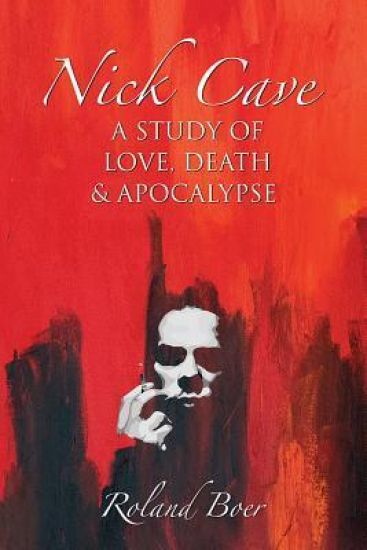
This study analyses the work of Nick Cave, a singular, idiosyncratic and brilliant musician, specifically through his engagements with theology and the Bible. It does so not merely in terms of his written work - the novels and plays and poetry and lyrics that he continues to produce - but also the music itself. Covering more than three decades of extraordinarily diverse creativity, this book explores such themes as the depravity of the worlds invoked in Cave's novels and other written work, the consistent invocation of apocalyptic, his restoration of death as a valid dimension of life, the twists of the love song, and the role of a sensual and heretical Christ. This book draws upon a select number of theorists who provide the methodological possibilities of digging deep into the theological nature of Cave's work, namely Ernst Bloch, the methodological foundation stone, as well as Theodor Adorno, Theodore Gracyk and Jacques Attali.
Cobain on Cobain places the reader at the key moments of Kurt Cobain's rollercoaster ride, telling the tale of Nirvana entirely through his words and those of his bandmates as they unleashed the whirlwind that would consume them for the last half of their five-year career.This is the most comprehensive compendium of interviews with the band ever released. The interviews start from the release of their first album Bleach to the band's collapse on their 1994 European tour followed shortly by Cobain's suicide. Includes interviews that have never been seen in print before.
Not many artists can boast a career like Nick Cave, which has gone from strength to strength since the debut album from his band The Bad Seeds in 1984. Most musicians in their 60s are relegated to the periphery as the quality of their output becomes tired and predictable and they fail to match the success of their earlier offerings - Nick Cave is an exception to this. His 2019 album Ghosteen may arguably be his best, still sounding as potent as those Old Testament, drug-fuelled 80s albums or the mid-90s streak of classics that the band are most renowned for. Cave's eclectic career has been fruitful, not only as a musician but as a literary mastermind whose lyrics have been analysed and theorised on countless occasions, as he consistently and compellingly mulls over themes of religion, love, redemption, loss and death. This book delves into the music and lyrics of every track in The Bad Seeds' current back-catalogue, starting with their post-punk beginnings on From Her To Eternity right the way through to the ambient synth-driven soundscapes of Ghosteen. Hidden gems from the band's two B-sides compilations, as well as their thrilling live albums, are also be included in this appraisal of a band that are still very much alive and kicking.
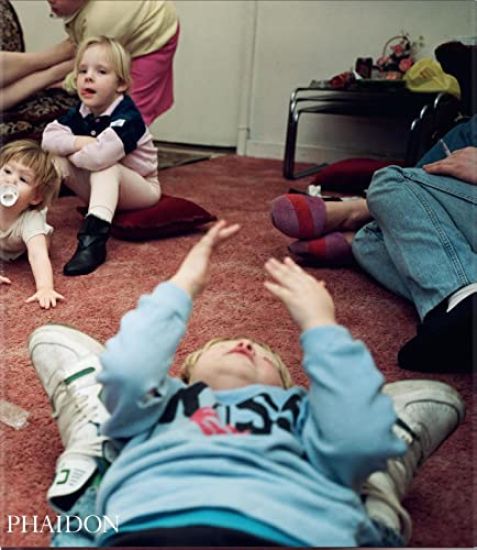
As featured in The Guardian, Wall Street Journal and The Sunday Times An expansive and timely survey on contemporary British photographer and artist Nick Waplington, with work spanning his entire 40-year career – his first comprehensive retrospective volume London- and New York-based artist Nick Waplington uses photography to capture the complex and far-reaching aspects of our lived experience. He rose to prominence in the early 1990s with Living Room and has since become known for his unfiltered depictions of people and places, and the sociopolitical backgrounds that define them. From the chaos, violence, and euphoria of riots, protests, and free parties to the surreal, hypnotic quiet of his large-format landscapes, Waplington’s work (in all its messy humanness) transcends stereotypes and confounds expectations, and this book is no exception. Including never-before-published images, offering new insight into both well- and lesser-known projects, as well as Waplington’s painting and artistic practice, the book opens with a newly commissioned introduction from Simon Baker, one of the leading curators of contemporary photography in Europe and director of the Maison Européenne de la photographie (MEP), Paris. This is the most extensive survey of Waplington's work to date, and includes previously unpublished photographs, as well as paintings, sketchbooks, and other artworks that complement his practice.
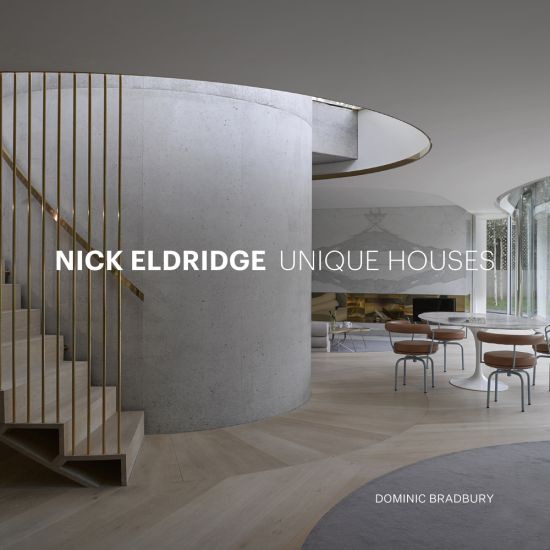
Since launching his practice in 2001 with The Lawns, which was shortlisted for the Stirling Prize, Nick Eldridge has become renowned for his beautiful bespoke houses. This book provides a wide-ranging survey of his key projects up to the present day including the Manser Medal-winning house, Greenways in Coombe Park. Eldridge is an architectural storyteller: thoughtfully responding to different landscapes, settings, histories and clients, each house explores fresh narratives, while at the same time, being connected by strong threads to a cohesive body of work. Throughout the book, from earliest projects to new work, including a beach house in Shoreham, a barn conversion in Cornwall and an innovative modern modular house in Devon, Eldridge’s work explores and experiments: his houses feel fresh and different, lifted by an innovative approach to tectonic engineering and form fused with a passion for artisanal interiors, fine detailing and characterful materials. They show the architect’s varied influences: from Arts & Crafts and mid-century modern through to hi-tech design - Eldridge spent six years with Norman Foster. The projects analysed in the book are broadly divided into two main sections: new build projects, and highly imaginative, responsive adaptations, extensions and reinventions of existing buildings.
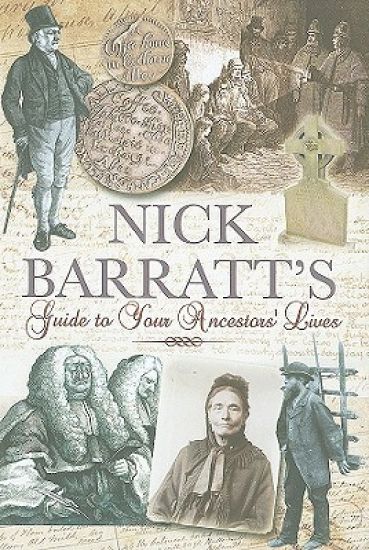
Family history is only one part of your personal heritage - there's more to your background than who your ancestors were. This differs from most books on the market as it places this process on an equal footing with the social history that surrounds each generation, as much as the technical know-how on which records to examine, and where. This book takes you on a unique journey back in time, examining the houses, streets, communities and ways of life that shaped the world around us, and in particular the precise circumstances that made us who we are today. Furthermore, this book will not just explain how and where to undertake this personal detective process - it shows you how to organise and shape your findings, and create your own personal archive using the latest technology and online resources, and how to add your store of knowledge to the emerging social networks that allow us to create a People's Archive and tell the forgotten story of the past that never makes it into the textbooks.
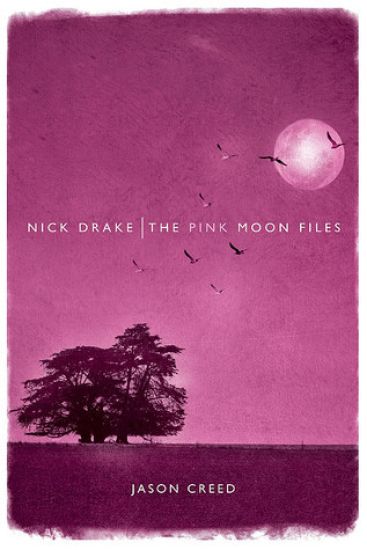
Included are original reviews of Nick's albums as they appeared at the time of release, the solitary interview with Nick that appeared in Sounds magazine, and interviews with many who knew him, including producer Joe Boyd, Nick's sister Gabrielle and parents Rodney and Molly Drake, musical collaborator Robert Kirby and many more. In addition The Pink Moon Files features musical analysis of Nick's recordings, including discussion of his guitar techniques and alternative tunings, reviews of tribute concerts and articles about Nick's legacy in Tanworth-in-Arden and elsewhere. A superb compendium of writing about Nick, this book is a valuable addition to any bookshelf and a must for fans old and new.
This volume analyses the work of Nick Cave, a singular, idiosyncratic and brilliant musician, specifically through his engagements with theology and the Bible. It does so not merely in terms of his written work, the novels and plays and poetry and lyrics that he continues to produce, but also the music itself. Covering more than three decades of extraordinarily diverse creativity, the book has seven chapters focusing on: the modes in which Cave engages with the Bible; the total depravity of the worlds invoked in his novels and other written work; the consistent invocation of apocalyptic themes; his restoration of death as a valid dimension of life; the twists of the love song; the role of a sensual and heretical Christ; and then a detailed, dialectical analysis of his musical forms. The book draws upon a select number of theorists who provide the methodological possibilities of digging deep into the theological nature of Cave's work, namely Ernst Bloch, who is the methodological foundation stone, as well as Theodor Adorno, Theodore Gracyk and Jacques Attali.
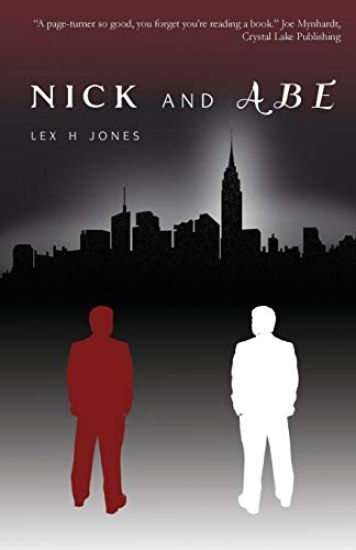
Every once in a while, God and Lucifer visit the earth and make a wager. Now it's time for the next one; the most daring yet, and quite possibly the last. "This venture to live as men for a full year had been such a hilarious idea to start with. Prove Abe wrong... again... then head back to their respective domains and gloat about it forever. Only it hadn't worked out that way. Things were different now. Having omniscient sight removed from him actually made Nick see things more clearly than he ever had. There's harm in getting too close to a picture, but a different sort of harm comes from getting too far away from it." What starts as a simple contest becomes something more as their newfound humanity forces them to revaluate their relationship not only with the world, but with each other as father and son. Seen through the eyes of two men, on opposing sides of a family feud of epic proportions, each of them faces trials, heartache, love and real pain as they learn what it means to be human. Can old wounds ever really be closed? Can the past truly be forgiven? And can anyone ever fall so far that it's too late for them to be caught? "After the fall? You rise."
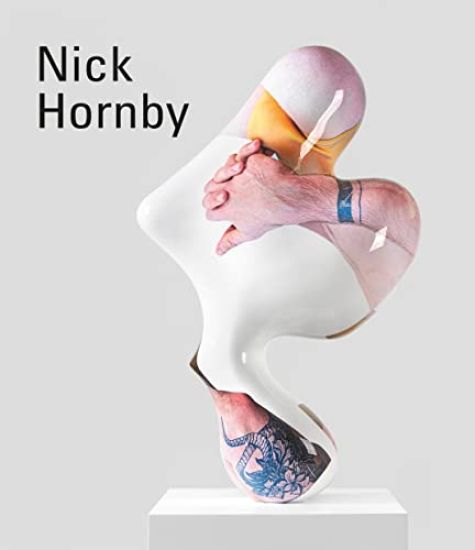
Nick Hornby (b. 1980, London) is one of the leading sculptors of his generation in Britain today, creating works on both intimate and monumental scales, and at the intersection of art history and contemporary technology. Hornby’s practice uses software that allows him to extract, alter and hybridise sculptures from art history into new works made from marble, steel, bronze, resin, wood and composite materials. It could be said that Hornby has opened up a new sculptural language for the twenty-first century.This, his first major monograph, features approximately 175 images, many of which are reproduced here for the first time or have been commissioned for the publication. Alongside documentation of works presented in galleries and outdoor spaces are production images taken in the studio and fabrication workshops. Hornby’s practice is here divided into four categories: Intersections, Extrusions, Hydrographics and Collaborations.A foreword by Luke Syson, Director of the Fitzwilliam Museum, Cambridge, offers insight into Hornby’s internal and external relationship with sculpture, considering the links between two and three dimensions, abstraction and representation, the ‘real’ and the digital.Editor Matt Price’s introduction takes readers on a whistlestop tour of the artist’s oeuvre, from his early family life and studies at Chelsea and The Slade in London, to his latest major exhibitions and commissions. Price covers a range of significant aspects such as the importance of music and sound, which were key elements of Hornby’s early work, to sculptures made in collaboration with others, and recent pieces combining art history with technology in their design and fabrication.An essay by Dr Hannah Higham, Senior Curator of Collections and Research at the Henry Moore Foundation, provides the most substantial piece of critical writing on Hornby’s work to date, drawing out specific touchstones in the history of art and discussing the relationship between the work and time. Higham further explores the ways that the motion and position of the viewer alter the experience of the sculptures, with new angles revealing fresh artistic inspirations from Hans Arp or Elizabeth Frink to ideas from communities Hornby has worked with and other contemporary artists with whom he has collaborated.An interview with Dr Helen Pheby, Associate Director, Programme, at Yorkshire Sculpture Park, probes the artist further about his cultural and theoretical inspirations, methods, materials and ideologies, including his views on collaboration, the public nature of art and its accessibility. Their conversation provides an insight into the thinking of the artist at a crucial stage in his career.The monograph brings together works spanning Hornby’s career for the first time. It follows Hornby’s first institutional solo exhibition at MOSTYN, Wales, and his first permanent outdoor sculptural commission for Harlow Science Park in Essex. The publication is edited by Matt Price, designed by Herman Lelie, printed by EBS, Verona, and published by Anomie, London. Nick Hornby, born in 1980, is a British artist living and working in London. Hornby studied at The Slade School of Art and Chelsea College of Art where he was awarded the UAL Sculpture Prize. In the UK he has exhibited at Tate Britain, Southbank Centre, Leighton House (all London), Cass Sculpture Foundation, Sussex, MOSTYN, Wales, and the Fitzwilliam Museum, Cambridge. International exhibitions have been held at the Museum of Arts and Design, New York and Poznan Biennale, Poland, along with residencies with Outset, Israel, and Eyebeam, New York. In 2014 Hornby was made a Fellow of the Royal Society of Sculptors.
Zygotes and Confessions is a publication devoted to the work of London-based artist Nick Hornby, and has been produced to accompany his first solo exhibition in a public gallery. The exhibition, which shares its title with the publication, is presented at MOSTYN, Wales, UK, from November 2020 to April 2021.Hornby is known for his monumental site-specific works that combine digital software with traditional materials such as bronze, steel, granite and marble. In this publication he presents a substantial new body of smaller, more intimate work comprising three discrete yet interrelated series of works inspired by the history of sculptural busts, modernist abstractions and mantelpiece ceramic dogs. United by glossy photographic surfaces created by means of an industrial process in which his marble and resin composite sculptures are dipped into liquid photographs, these new works explore themes of portraiture, the body, identity, sexuality and intimacy in the digital era. A number of the works have been made in collaboration with fashion photographer Louie Banks.Along with a foreword by Helen Boyd, Head of Marketing and Publisher Relations at the Casemate Group, the publication features a text by MOSTYN director Alfredo Cramerotti and an essay by London-based publisher, editor and writer Matt Price. Price writes: "With one eye on the sculpture of the past and the other on that of tomorrow, technology is at the heart of London-based Nick Hornby’s practice and is central to the production of his often imposing, mind-bending and futuristic-looking sculptures. Using materials such as bronze and marble, his work points back towards the Renaissance or the nineteenth century, yet his use of resin and digital technology positions him very much in the present, exploring languages both figurative and abstract, often simultaneously."The texts are presented in both English and Welsh. Newly commissioned studio photography of the works by Ben Westoby, along with installation views of the exhibition commissioned by MOSTYN from Mark Blower, illustrate the publication, which has been designed by Joe Gilmore / Qubik. The publication is co-published by MOSTYN, Wales, UK, and Anomie Publishing, London, and distributed internationally by Casemate Art, a division of the Casemate Group.Nick Hornby (b.1980) is a British artist living and working in London. Hornby studied at the Slade School of Art and Chelsea College of Art. His work has been exhibited at Tate Britain, Southbank Centre London, Leighton House London, CASS Sculpture Foundation, Glyndebourne, Fitzwilliam Museum Cambridge, Museum of Arts and Design New York, and Poznan Biennale, Poland. Residencies include Outset (Israel) and Eyebeam (USA), and awards include the UAL Sculpture Prize. His work has been reviewed in the New York Times, frieze, Artforum, The Art Newspaper, The FT, and featured in Architectural Digest and Sculpture Magazine.
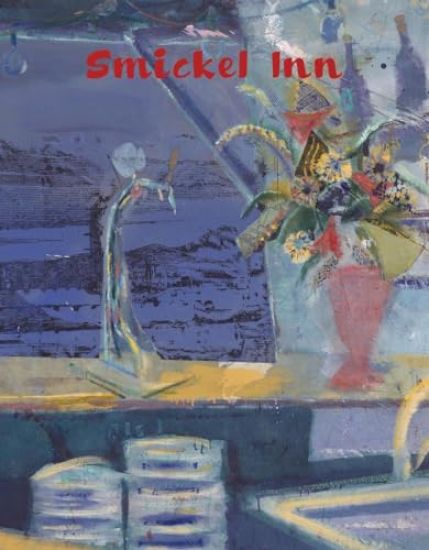
_Smickel Inn_ is a publication of works by London-based Anglo-Dutch artist Nick Goss, produced by Ingleby, Edinburgh, and co-published with Matthew Brown, Los Angeles, and Anomie Publishing, London. Along with around sixty plates and illustrations, the publication features an essay by writer, journalist and critic Hettie Judah, and an in-conversation between Goss, fellow painter Michael Armitage and writer Thomas Marks. ‘Smickel Inn is a real place in an unreal place,’ writes Judah, ‘a snack bar on an outer extremity of the port of Rotterdam.’ It’s a venue that is popular with port workers and sailors—a clientele of regular and transitory people often involved in sea freight or oil shipping, though their lives, personalities and stories are largely played out in Goss’s mixed-media paintings through the bar’s interior décor: an old vase with fresh flowers, a stack of glass ashtrays, a well-worn piano with a pile of books on top, an eclectic selection of picture frames with faded scenes and a clock that might only be right twice a day. Filtered through Goss’s imagination, Smickel Inn carries its history with it, much of it decorating the countertop; it’s a venue that charms with its informality—a place that knows itself, and its disparate customers. In real life, the bar has a cinematic view of the port and the North Sea, translated here, through Goss’s creative process of painting and silk-screening, into a scene from an engraving of seventeenth-century Sicily. Fragments from different places and eras infiltrate his images, creating a patina of palimpsests, visual echoes, perhaps, of memories of travellers coming through the port. The body of work takes us around the wider Dutch coastline and beyond—we see passengers on foot disembarking a ferry, have a backseat view of a car ride around the village of Stavenisse, and join a night-time campfire on the beach at Scheveningen, among other more mysterious, if not abstruse, locations and scenarios. Observation from contemporary life mingles with visual culture spanning centuries and continents in Goss’s oeuvre, creating lyrical yet strangely haunting and melancholic paintings, trapped in time somewhere between personal experience and collective memory. Nick Goss is an Anglo-Dutch painter, born in Bristol in 1981\. He studied first at the Slade School of Art (2002–06) and then at the Royal Academy Schools, London (2006–09). He has exhibited widely in Europe and America, including solo exhibitions with Josh Lilley, London, Matthew Brown, Los Angeles, Simon Preston, New York, and Contemporary Fine Arts, Berlin. His first institutional survey, Morley’s Mirror, was presented in 2019 at Pallant House, Chichester, UK. _Smickel Inn_ is published to coincide with Goss’s first exhibition at Ingleby, Edinburgh, in the autumn of 2023.
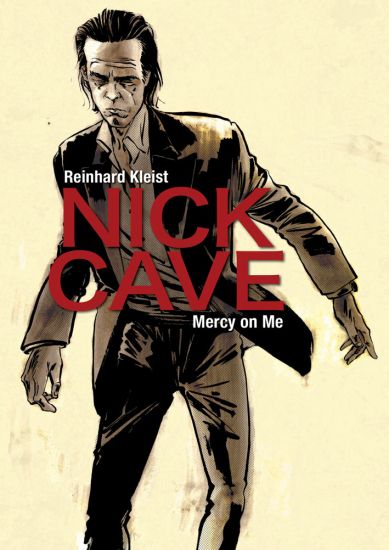
Musician, novelist, poet, actor: Nick Cave (b. 1957) is a Renaissance man. His wide-ranging artistic output—always uncompromising, hypnotic, and intense—is defined by an extraordinary gift for storytelling. In Nick Cave: Mercy on Me, Reinhard Kleist employs a cast of characters drawn from Cave’s music and writing to tell the story of a formidable artist and influencer. Kleist paints an expressive and enthralling portrait of Cave’s childhood in Australia; his early years fronting The Birthday Party; the sublime highs of his success with The Bad Seeds; and the crippling lows of his battle with heroin. Capturing everything from Cave’s frenzied performances in Berlin to the tender moments he spent with love and muse Anita Lane, Kleist’s graphic biography, like Cave’s songs, is by turns electrifying, sentimental, morbid, and comic—but always engrossing.
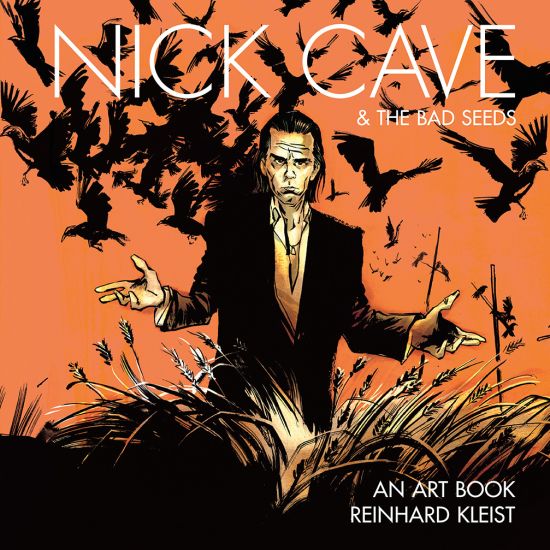
In his graphic biography Nick Cave: Mercy on Me, Reinhard Kleist paints an expressive and enthralling portrait of the musician, novelist, poet, and actor. It is, according to Nick Cave himself, “a complex, chilling and completely bizarre journey into Cave World.” Nick Cave & The Bad Seeds: An Art Book collects Kleist’s moody and expressive portraits of the musician and his band, spanning 30 years of writing, recording, and live performance. Kleist also returns readers to Cave’s imaginative world with comic book reimaginings of “Deanna,” “The Good Son,” and “Stagger Lee.” Filled with visual delights, this record-size art book is a kaleidoscopic portrait of Nick Cave’s wide-ranging career as a storyteller, musician, and cultural icon.
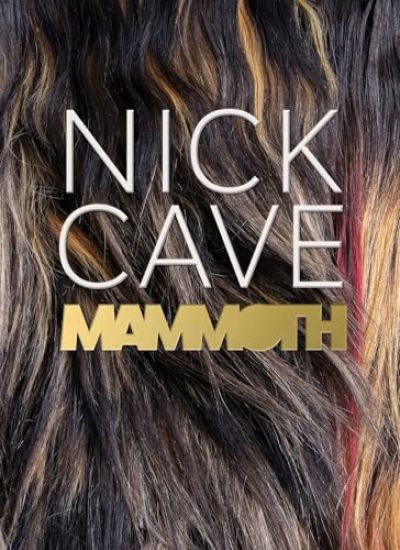
A lavishly illustrated catalogue that features an eclectic mix of poetic, narrative, and scholarly perspectives on Nick Cave's Mammoth.Nick Cave--born 1959 in Fulton, Missouri, and now active in Chicago, Illinois--is an artist who defies categorization. Working between sculpture, installation, performance, video and fashion, and best known for the exuberant Soundsuits that he originally created in response to racialized police violence, Cave has long been interested in the intersections of history and identity. Like the landmark exhibition it accompanies, this catalogue is a creative excavation of shared and personal memory. The mammoth represents hidden stories waiting to be uncovered and rediscovered. Cave's bronze sculptures, beaded wall hangings, video and found-object assemblages, tell stories of identity, environmental crisis, societal inequality, and institutional history.The book also features a sketchbook-style exploration of Cave's studio and mind, including in-process photography, artist sketches, and handwritten notes. This wide-ranging publication represents a significant contribution to scholarship on the artist, and will be a lasting resource for artists, art historians, and general readers.