Kirjojen hintavertailu. Mukana 11 244 527 kirjaa ja 12 kauppaa.

Kirjahaku

Etsi kirjoja tekijän nimen, kirjan nimen tai ISBN:n perusteella.

1000 tulosta hakusanalla Olga Pattern

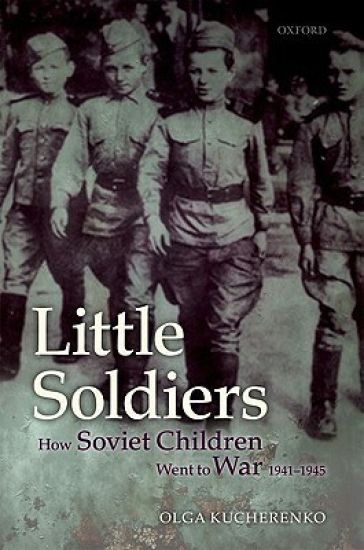
Little Soldiers

Little Soldiers

Olga Kucherenko

Oxford University Press
2011
sidottu
Germany's war against the Soviet Union raised a small army of child soldiers. Thousands of those below the enlistment age served with regular and paramilitary formations, even though they were not formally mobilised or allowed at the front. For several decades after the war, these youngsters played an important part in Soviet remembrance culture, though their true experiences were obscured by the myth of the Great Patriotic War. Situated at the crossroads of social, cultural, and military history, Little Soldiers is the first to tell the story of the Soviet Union's child soldiers in a critical and systematic fashion. Focusing on the mechanisms and psychological consequences of propaganda on Soviet children, as well as their combat deployment, Kucherenko adopts a three-tier approach to writing the history of childhood: 'from above', 'from below', and 'from within'. A wide variety of new sources provide insight into young soldiers' combat motivations and the roles they played in the field, as well as their routine experiences and relationship with older comrades. Far from being victims, Soviet child soldiers emerge as independent social actors capable of making choices about their behaviour . Little Soldiers interconnects with matters of increasing importance: the role of propaganda in military conflicts, the totalization of warfare, child-soldiering, and social reflexivity.
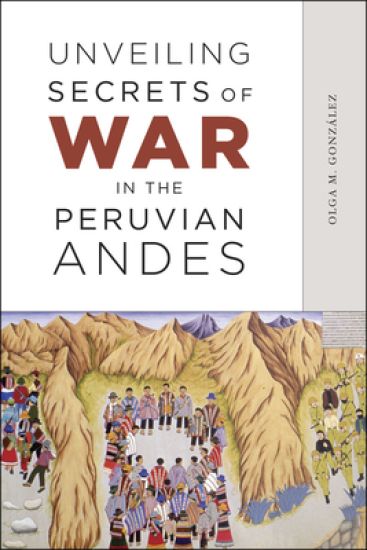
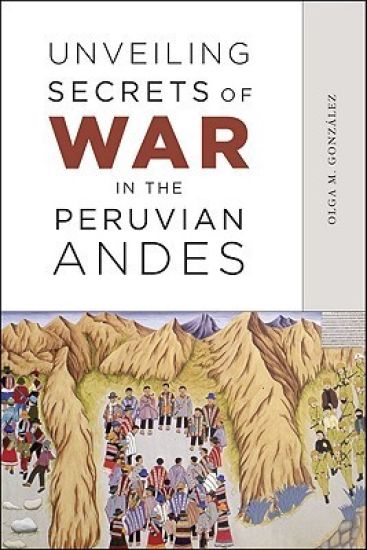
Unveiling Secrets of War in the Peruvian Andes

Unveiling Secrets of War in the Peruvian Andes

Olga M. Gonzalez

University of Chicago Press
2011
sidottu
The Maoist guerrilla group Shining Path launched its violent campaign against the government in Peru's Ayacucho region in 1980. When the military and counterinsurgency police forces were dispatched to oppose the insurrection, the violence quickly escalated. The peasant community of Sarhua was at the epicenter of the conflict, and this small village is the focus of "Unveiling Secrets of War in the Peruvian Andes". There, more than a decade after the event, Olga M. Gonzalez follows the tangled thread of a public secret: the disappearance of Narciso Huicho, the man blamed for plunging Sarhua into a conflict that would sunder the community for years. Drawing on extensive fieldwork and a novel use of a cycle of paintings, Gonzalez examines the relationship between secrecy and memory. Her attention to the gaps and silences within both the Sarhuinos' oral histories and the paintings reveals the pervasive reality of secrecy for people who have endured episodes of intense violence. Gonzalez conveys how public secrets turn the process of unmasking into a complex mode of truth telling. Ultimately, public secrecy is an intricate way of 'remembering to forget' that establishes a normative truth that makes life livable in the aftermath of a civil war.
Unveiling Secrets of War in the Peruvian Andes

Unveiling Secrets of War in the Peruvian Andes

Olga M. Gonzalez

University of Chicago Press
2011
nidottu
The Maoist guerrilla group Shining Path launched its violent campaign against the government in Peru's Ayacucho region in 1980. When the military and counterinsurgency police forces were dispatched to oppose the insurrection, the violence quickly escalated. The peasant community of Sarhua was at the epicenter of the conflict, and this small village is the focus of "Unveiling Secrets of War in the Peruvian Andes". There, more than a decade after the event, Olga M. Gonzalez follows the tangled thread of a public secret: the disappearance of Narciso Huicho, the man blamed for plunging Sarhua into a conflict that would sunder the community for years. Drawing on extensive fieldwork and a novel use of a cycle of paintings, Gonzalez examines the relationship between secrecy and memory. Her attention to the gaps and silences within both the Sarhuinos' oral histories and the paintings reveals the pervasive reality of secrecy for people who have endured episodes of intense violence. Gonzalez conveys how public secrets turn the process of unmasking into a complex mode of truth telling. Ultimately, public secrecy is an intricate way of 'remembering to forget' that establishes a normative truth that makes life livable in the aftermath of a civil war.
The Man Who Couldn't Die

The Man Who Couldn't Die

Olga Slavnikova

Columbia University Press
2019
sidottu
In the chaos of early-1990s Russia, the wife and stepdaughter of a paralyzed veteran conceal the Soviet Union’s collapse from him in order to keep him—and his pension—alive until it turns out the tough old man has other plans. Olga Slavnikova’s The Man Who Couldn’t Die tells the story of how two women try to prolong a life—and the means and meaning of their own lives—by creating a world that doesn’t change, a Soviet Union that never crumbled.After her stepfather’s stroke, Marina hangs Brezhnev’s portrait on the wall, edits the Pravda articles read to him, and uses her media connections to cobble together entire newscasts of events that never happened. Meanwhile, her mother, Nina Alexandrovna, can barely navigate the bewildering new world outside, especially in comparison to the blunt reality of her uncommunicative husband. As Marina is caught up in a local election campaign that gets out of hand, Nina discovers that her husband is conspiring as well—to kill himself and put an end to the charade. Masterfully translated by Marian Schwartz, The Man Who Couldn’t Die is a darkly playful vision of the lost Soviet past and the madness of the post-Soviet world that uses Russia’s modern history as a backdrop for an inquiry into larger metaphysical questions.
The Man Who Couldn't Die

The Man Who Couldn't Die

Olga Slavnikova

Columbia University Press
2019
pokkari
In the chaos of early-1990s Russia, the wife and stepdaughter of a paralyzed veteran conceal the Soviet Union’s collapse from him in order to keep him—and his pension—alive until it turns out the tough old man has other plans. Olga Slavnikova’s The Man Who Couldn’t Die tells the story of how two women try to prolong a life—and the means and meaning of their own lives—by creating a world that doesn’t change, a Soviet Union that never crumbled.After her stepfather’s stroke, Marina hangs Brezhnev’s portrait on the wall, edits the Pravda articles read to him, and uses her media connections to cobble together entire newscasts of events that never happened. Meanwhile, her mother, Nina Alexandrovna, can barely navigate the bewildering new world outside, especially in comparison to the blunt reality of her uncommunicative husband. As Marina is caught up in a local election campaign that gets out of hand, Nina discovers that her husband is conspiring as well—to kill himself and put an end to the charade. Masterfully translated by Marian Schwartz, The Man Who Couldn’t Die is a darkly playful vision of the lost Soviet past and the madness of the post-Soviet world that uses Russia’s modern history as a backdrop for an inquiry into larger metaphysical questions.
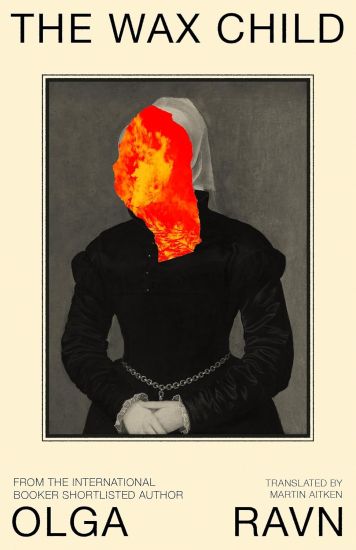
The Wax Child

The Wax Child

Olga Ravn

PENGUIN BOOKS LTD
2025
sidottu
An extraordinary vision of witchcraft from one of the world's most acclaimed authors It was a black night in the year 1620 when Christenze Krukow made the wax child, when she melted down beeswax and set it in the image of a small human. For days, she carried it tucked beneath her arm, shaping it with the warmth of her flesh, giving it life. She fashioned for it eyes and ears that cannot open, and yet – it watches and listens.It looks on as Christenze is haunted by rumour, it hears what the people whisper. It sees how, in the candlelight, she gazes with love at her friends, and hears the things they say in the shadows. It knows pine forest, misty fjord and the crackle of the burning pyre. It observes the violence in men’s eyes and the cruelty of their laws. In time, it begins to understand that once a suspicion of witchcraft has taken hold, it can prove impossible to shake…Based on an infamous seventeenth century Danish witch trial, The Wax Child is the extraordinary new novel from Olga Ravn, one of the most acclaimed and original writers at work today: a mesmerising, frightening vision of a time when witches and magic were as real to the human mind as soil and seawater.'Dark and strange and beautiful and completely gripping' Mark Haddon'The Wax Child has emerged from an imagination that is wild, visionary, and absolutely original. It is beautiful, eerie, sublime, and, like a fingerprint or a snowflake, only one of its kind. Olga Ravn is a roof-raisingly brilliant writer.' Neel Mukherjee
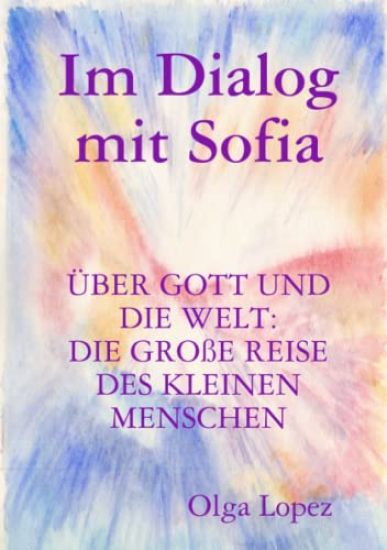
Im Dialog mit Sofia

Im Dialog mit Sofia

Olga Lopez

Lulu.com
2018
pokkari
"Warum denkst du sind wir hier?" fragte sie dann und Michael war ein wenig Yberrascht von dieser Frage, obwohl ihm klar war, dass er sich mit der Zeit an diese plstzlichen Pistolen-Schuss-artigen Fragen gewshnen sollte. "Nun..." seufzte er. "Ich wYrde gerne glauben, dass wir nicht alleine im Universum sind und dass wir nicht nur das Produkt irgendeines Zufalls sind."
Nos vemos en tus sueños

Nos vemos en tus sueños

Olga López Molina

Lulu.com
2016
pokkari
ngel, un joven asesor financiero dedicado en cuerpo y alma a su trabajo, sufre una traum tica experiencia que le deja prisionero en el mundo de los sue os. All conoce a una misteriosa joven, que dice hablar en nombre de su chispa divina y que le hace reflexionar sobre lo verdaderamente importante en la vida.
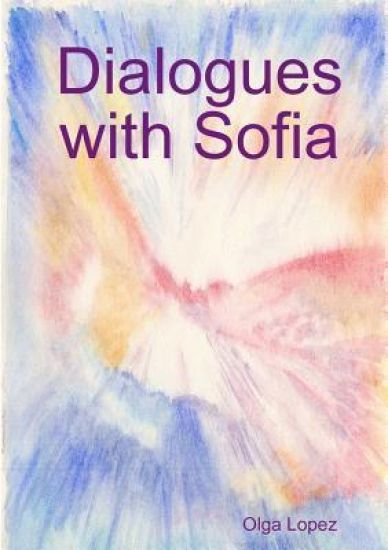
Dialogues with Sofia

Dialogues with Sofia

Olga Lopez

Lulu.com
2018
pokkari
"Why do you think we are here?" she asked without any further ado. Michael was a little surprised, although over time he would become accustomed to such point blank questions from Sofia. "Well," he sighed, "I would like to think that we are not alone in the universe, that we are not just the product of chance."
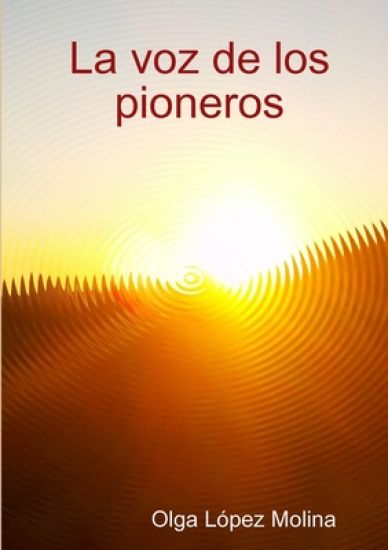
La voz de los pioneros

La voz de los pioneros

Olga López Molina

Lulu.com
2017
pokkari
En el siglo XXIII, la raza humana ha aprendido de sus errores y avanza con paso seguro hacia una nueva etapa de progreso y logros sin precedentes, pero el camino recorrido hasta llegar all' no ha sido f+cil. Podr'a ser este el relato de nuestro futuro como humanidad? Acompa-emos a Irene, su protagonista, y respondamos a esa pregunta despuZs de caminar con ella por su mundo.
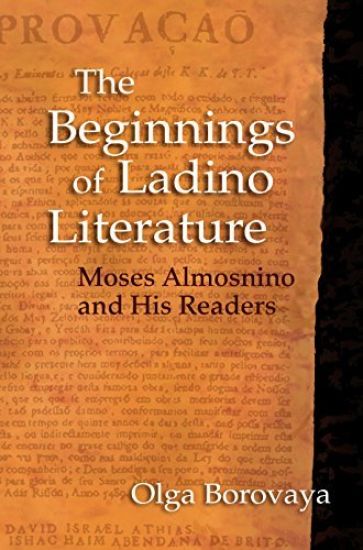
The Beginnings of Ladino Literature

The Beginnings of Ladino Literature

Olga Borovaya

Indiana University Press
2017
sidottu
Moses Almosnino (1518-1580), arguably the most famous Ottoman Sephardi writer and the only one who was known in Europe to both Jews and Christians, became renowned for his vernacular books that were admired by Ladino readers across many generations. While Almosnino's works were written in a style similar to contemporaneous Castilian, Olga Borovaya makes a strong argument for including them in the corpus of Ladino (Judeo-Spanish) literature. Borovaya suggests that the history of Ladino literature begins at least 200 years earlier than previously believed and that Ladino, like most other languages, had more than one functional style. With careful historical work, Borovaya establishes a new framework for thinking about Ladino language and literature and the early history of European print culture.
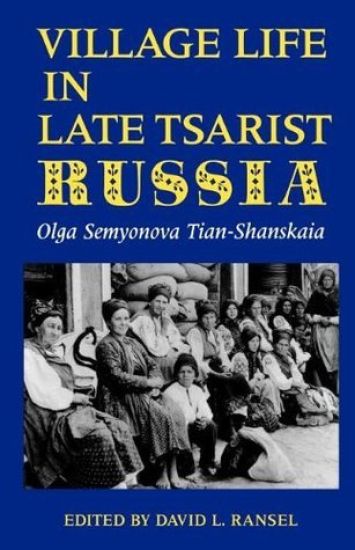
Village Life in Late Tsarist Russia

Village Life in Late Tsarist Russia

Olga Semyonova Tian-Shanskaia

Indiana University Press
1993
pokkari
" . . . a marvelous source for the social history of Russian peasant society in the years before the revolution. . . . The translation is superb." —Steven Hoch " . . . one of the best ethnographic portraits that we have of the Russian village. . . . a highly readable text that is an excellent introduction to the world of the Russian peasantry." —Samuel C. Ramer Village Life in Late Tsarist Russia provides a unique firsthand portrait of peasant family life as recorded by Olga Semyonova Tian-Shanskaia, an ethnographer and painter who spent four years at the turn of the twentieth century observing the life and customs of villagers in a central Russian province. Unusual in its awareness of the rapid changes in the Russian village in the late nineteenth century and in its concentration on the treatment of women and children, Semyonova's ethnography vividly describes courting rituals, marriage and sexual practices, childbirth, infanticide, child-rearing practices, the lives of women, food and drink, work habits, and the household economy. In contrast to a tradition of rosy, romanticized descriptions of peasant communities by Russian upper-class observers, Semyonova gives an unvarnished account of the harsh living conditions and often brutal relationships within peasant families.
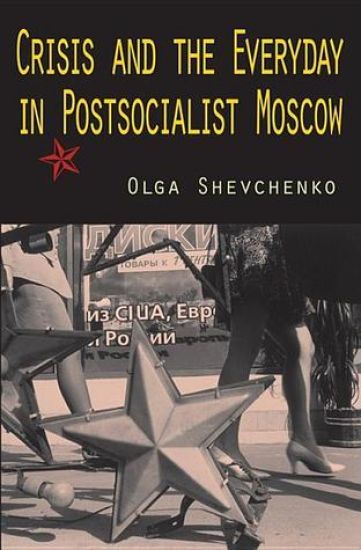
Crisis and the Everyday in Postsocialist Moscow

Crisis and the Everyday in Postsocialist Moscow

Olga Shevchenko

Indiana University Press
2008
pokkari
In this ethnography of postsocialist Moscow in the late 1990s, Olga Shevchenko draws on interviews with a cross-section of Muscovites to describe how people made sense of the acute uncertainties of everyday life, and the new identities and competencies that emerged in response to these challenges. Ranging from consumption to daily rhetoric, and from urban geography to health care, this study illuminates the relationship between crisis and normality and adds a new dimension to the debates about postsocialist culture and politics.
Conscription and the Search for Modern Russian Jewry

Conscription and the Search for Modern Russian Jewry

Olga Litvak

Indiana University Press
2006
sidottu
"Olga Litvak has written a book of astonishing originality and intellectual force. . . . In vivid prose, she takes the reader on a journey through the Russian-Jewish literary imagination." —Benjamin Nathans Russian Jews were first conscripted into the Imperial Russian army during the reign of Nicholas I in an effort to integrate them into the population of the Russian Empire. Conscripted minors were to serve, in practical terms, for life. Although this system was abandoned by his successor, the conscription experience remained traumatic in the popular memory and gave rise to a large and continuing literature that often depicted Jewish soldiers as heroes. This imaginative and intellectually ambitious book traces the conscription theme in novels and stories by some of the best-known Russian Jewish writers such as Osip Rabinovich, Judah-Leib Gordon, and Mendele Mokher Seforim, as well as by relatively unknown writers. Published with the generous support of the Koret Foundation.
Mamontov's Private Opera

Mamontov's Private Opera

Olga Haldey

Indiana University Press
2010
sidottu
The Moscow Private Opera, founded, sponsored, and directed by Savva Mamontov (1841–1918), was one of Russia's most important theatrical institutions at the dawn of the age of modernism. It presented the Moscow premieres of Lohengrin, La Bohème, and Khovanshchina, among others; launched the career of Feodor Chaliapin; gave Sergei Rachmaninov his first conducting job; employed Vasily Polenov, Victor Vasnetsov, Valentin Serov, Konstantin Korovin, and Mikhail Vrubel as set designers; and served as a model for Diaghilev's Ballets Russes. Part commercial enterprise, part experimental studio, Mamontov's company revolutionized opera directing and design, and trained a generation of opera singers. Drawing on a wealth of unpublished primary sources and evidence from art and theater history, Olga Haldey paints a fascinating portrait of a railway tycoon turned artiste and his pioneering opera company.
Toward the Endless Day

Toward the Endless Day

Olga Lossky

University of Notre Dame Press
2010
sidottu
Elisabeth Behr-Sigel (1907-2005) was one of the most important Orthodox theologians of the twentieth century. For seventy years she helped her church, dispersed and uprooted from its cultural heritage, adapt to a new world. Born in Alsace, France, to a Protestant father and a Jewish mother, Behr-Sigel received a master's degree in theology from the Protestant Faculty of Theology at Strasbourg and began a pastoral ministry. It lasted only a year. Already attracted by the beauty of its liturgy and by its characteristic spirituality, Behr-Sigel officially embraced the Orthodox faith at age twenty-four. During World War II her family (husband André Behr and their three children) lived in Nancy, France, where Behr-Sigel taught in the public school system. She later referred to this time as her real apprenticeship in ecumenism, when people of different traditions came together in opposition to Nazism, hiding Jews and providing escape routes. After the war she took advantage of courses at St. Sergius Theological Institute in Paris, where she later joined the faculty. Behr-Sigel also taught at the Catholic Institute of Paris, the Dominican College of Ottowa, and the Ecumenical Institute of Tantur near Jerusalem. She wrote and published books in Orthodox theology, spirituality, and the role of women in the Orthodox Church. In her retirement she continued to work on behalf of women and of the ecumenical movement. Published in 2007 in France as Vers le jour sans déclin, this biography by the Orthodox writer Olga Lossky will bring to English-speaking readers of all religious persuasions the life and career of a remarkable and admirable woman of faith. Behr-Sigel fully cooperated with this biography, meeting with Lossky weekly during the last year of her life and giving Lossky access to her journal and personal letters.
Erotic Utopia

Erotic Utopia

Olga Matich

University of Wisconsin Press
2007
nidottu
The first generation of Russian modernists experienced a profound sense of anxiety. What made them unique was their utopian prescription for overcoming the inevitability of decline and death. They theorized their defiance of death by suggesting the immortalization of the body through the power of erotic love. Matich suggests that same-sex desire underlay their most radical proposal of abolishing the traditional procreative family in favor of erotically induced abstinence. She shows how a brilliant group of Russian writers - among them the late Tolstoy, Vladimir Solov'ev, Zinaida Gippius, Alexander Blok, and Vasilii Rozanov - addressed the pressing concerns of a culture in transition, ranging from physical and psychological health, marriage, sexuality, and gender to anti-Semitism and the meaning of history.
From the Shadow of Empire

From the Shadow of Empire

Olga Maiorova

University of Wisconsin Press
2010
nidottu
As nationalism spread across nineteenth-century Europe, Russia's national identity remained murky: there was no clear distinction between the Russian nation and the expanding multiethnic empire that called itself 'Russian.' When Tsar Alexander II's Great Reforms (1855-1870s) allowed some freedom for public debate, Russian nationalist intellectuals embarked on a major project - which they undertook in daily press, popular historiography, and works of fiction - of finding the Russian nation within the empire and rendering the empire in nationalistic terms. From the Shadow of Empire traces how these nationalist writers refashioned key historical myths - the legend of the nation's spiritual birth, the tale of the founding of Russia, stories of Cossack independence - to portray the Russian people as the ruling nationality, whose character would define the empire. In an effort to press the government to alter its traditional imperial policies, writers from across the political spectrum made the cult of military victories into the dominant form of national myth-making: in the absence of popular political participation, wars allowed for the people's involvement in public affairs and conjured an image of unity between ruler and nation. With their increasing reliance on the war metaphor, Reform-era thinkers prepared the ground for the brutal Russification policies of the late nineteenth century and contributed to the aggressive character of twentieth-century Russian nationalism.
Daytime Stars

Daytime Stars

Olga Berggolts; Katharine Hodgson

University of Wisconsin Press
2018
sidottu
For 872 days during World War II, the city of Leningrad endured a crushing blockade at the hands of German forces. Close to one million civilians died, most from starvation. Amid the devastation, Olga Berggolts broadcast her poems on the one remaining radio station, urging listeners not to lose hope. When the siege had begun, the country had already endured decades of revolution, civil war, economic collapse, and Stalin's purges. Berggolts herself survived the deaths of two husbands and both of her children, her own arrest, and a stillborn birth after being beaten under interrogation.Berggolts wrote her memoir Daytime Stars in the spirit of the thaw after Stalin's death. In it, she celebrated the ideals of the revolution and the heroism of the Soviet people while also criticizing censorship of writers and recording her doubts and despair. This English translation by Lisa A. Kirschenbaum makes available a unique autobiographical work by an important author of the Soviet era. In her foreword, Katharine Hodgson comments on experiences of the Terror about which Berggolts was unable or unwilling to write.