

Kirjahaku
Etsi kirjoja tekijän nimen, kirjan nimen tai ISBN:n perusteella.
1000 tulosta hakusanalla Patrick T. Merricks
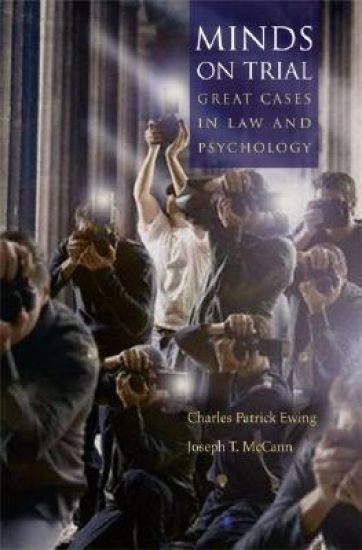
Everyday, in courtrooms everywhere, people's lives are touched and shaped by judgments and verdicts influenced by the testimony of psychologists and other mental health experts. This casebook details 20 high-profile court cases that turned, at least in part, on the expertise of forensic psychologists and psychiatrists and involved such psychological issues as insanity, criminal profiling, capital punishment, competence to stand trial, infanticide, domestic violence, false confessions, and psychological autopsies. The defendents in these cases range from household names such as Woodly Allen, Mike Tyson, Patty Hearst, and Jeffrey Dahmer to others whose brief brush with infamy has long been forgotten. But regardless of their notoriety or celebrity status, each of these carefully selected cases teaches important lessons about the role that psychology and the other behavioral sciences play in our legal system.
The Ceramics of Tikal––Vessels from the Burials, – Tikal Report 25A
T. Patrick Culbert
University Museum Publications
1993
sidottu
This monograph contains the illustrations and descriptions of ceramics from special deposits (the burials, caches, and problematical deposits) from the central area of Tikal. These include the best-preserved whole vessels and elaborate polychrome painted and stuccoed cylinders, urns, and tripod vessels with appliqu?d and painted ornament, and figural representations. Glyphs painted on some of these ceramics provide insights into the potentially royal lineage of the individuals. The ceramic sequence includes ten complexes dating between 800 B.C. (Middle Preclassic) and ca. A.D. 1200 (Postclassic).
This book takes stories from Norse literature, English folklore, Middle English stories, and even some from Celtic mythology to form an anthology of stories about the Anglo-Saxon gods and goddesses. Original sources are explained as well. The gods of the Anglo-Saxons have been lost over the centuries. We know their names: Woden, Frige, unor, Tiw. Within these pages, the worlds of the gods once again come to life. From the very top of the great tree Eormensyl to the deepest depths of Hel, the tales of gods, elves, dwarves, giants, and men are revealed.
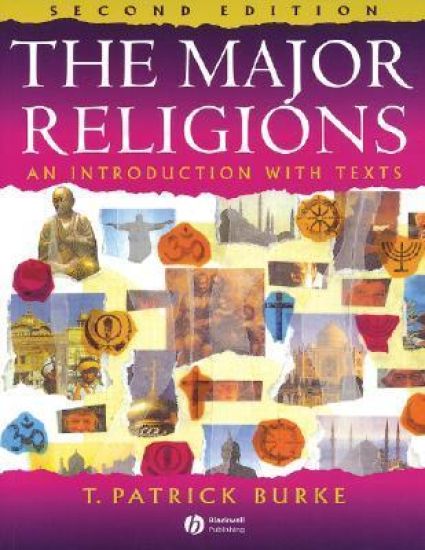
The Major Religions
T. Patrick Burke
Wiley-Blackwell (an imprint of John Wiley Sons Ltd)
2004
nidottu
This popular introduction to the world’s major religions provides a comprehensive survey of the major traditions together with selected primary readings. A new edition of this popular introduction to the world’s major religions Provides a comprehensive survey of the major religious traditions together with selected primary readings Focuses on the beliefs and values that animate each religion, helping students to understand what makes them meaningful to their followers Includes new material on Sikhism and additional material on each religion’s ethics and their encounter with the modern world Features chapter-by-chapter discussion and test questions, summaries, and suggestions for further reading Improved visual design, with extensive student aids including revised maps, timeline and charts. The book is accompanied by a website at http://www.blackwellpublishing.com/burke

Heartless: (a Derek Cole Thriller)
T. Patrick Phelps
Createspace Independent Publishing Platform
2014
nidottu

Those of the Margin: a Derek Cole Suspense Thriller
T. Patrick Phelps
Createspace Independent Publishing Platform
2014
nidottu

The Observer: a Derek Cole Suspense Thriller
T. Patrick Phelps
Createspace Independent Publishing Platform
2016
nidottu

The Devil's Snare: a Derek Cole Suspense Thriller
T. Patrick Phelps
Createspace Independent Publishing Platform
2016
nidottu

Still Heartless: a Derek Cole Thriller
T. Patrick Phelps
Createspace Independent Publishing Platform
2016
nidottu

In No Place for Ethics, Hill argues that contemporary judicial review by the Supreme Court rests on its mistaken positivist understanding of law—law simply because so ordered—as something separate from ethics. To assert any relation between the two is to contaminate both, either by turning law into an arm of ethics, or making ethics an expression of law.To address this mistake, Hill contends that an understanding of natural law theory provides the basis for a constitutive relation between ethics and law without confusing their distinct role in answering the basic question, how should I behave in society? To secure that relation, the Court has an overriding responsibility when carrying out its review to do so with reference to normative ethics from which the US Constitution is derived and to which it is accountable. While the Constitution confirms, for example, the liberty interests of individuals, it does not originate those interests which have their origin in human rights that long preceded it. Essential to this argument is an appreciation of ethics as objective and normatively based on principles, like that of justice and truth that ought to inform human behavior at its very springs. Applied in an analysis of five major Supreme Court cases, this appreciation of ethics reveals how wrongly decided these cases are.
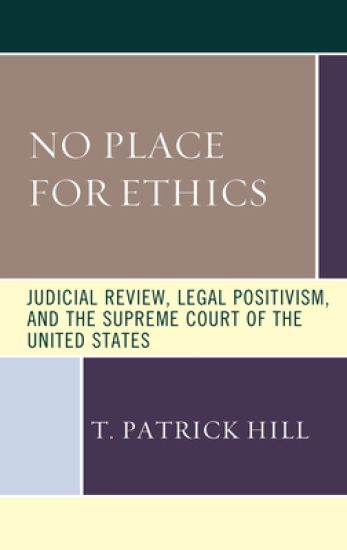
In No Place for Ethics, Hill argues that contemporary judicial review by the U.S. Supreme Court rests on its mistaken positivist understanding of law—law simply because so ordered—as something separate from ethics. Further, to assert any relation between the two is to contaminate both, either by turning law into an arm of ethics, or by making ethics an expression of law. This legal positivism was on full display recently when the Supreme Court declared that the CDC was acting unlawfully by extending the eviction moratorium to contain the spread of the Covid-19 Delta variant, something that, the Court admitted, was of indisputable benefit to the public. How mistaken however to think that acting for the good of the public is to act unlawfully when actually it is to act ethically and must therefore be lawful.To address this mistake, Hill contends that an understanding of natural law theory provides the basis for a constitutive relation between ethics and law without confusing their distinct role in answering the basic question, how should I behave in society? To secure that relation, the Court has an overriding responsibility when carrying out its review to do so with reference to normative ethics from which the U.S. Constitution is derived and to which it is accountable. While the Constitution confirms, for example, the liberty interests of individuals, it does not originate those interests which have their origin in human rights that long preceded it. Essential to this argument is an appreciation of ethics as objective and based on principles, like those of justice, truth, and reason that ought to inform human behavior at its very springs. Applied in an analysis of five major Supreme Court cases, this appreciation of ethics reveals how wrongly decided these cases are.
The Ceramic Sequence of Tikal – Tikal Report 25B
T. Patrick Culbert; Laura J. Kosakowsky
University Museum Publications
2019
sidottu
The two volumes of the central Tikal ceramic reports (Tikal Reports 25A and 25B) present the information gathered from the analysis of all ceramics recovered by the University of Pennsylvania research project at Tikal between 1956 and 1970. Tikal Report 25A (Culbert 1993) contains illustrations and brief descriptive captions for all whole vessels recovered from burials, caches, and problematical deposits. Because Tikal Report 25A illustrates the often-spectacular decorated vessels from major burials, it is of the most general interest for comparative purposes. This volume, Tikal Report 25B, presents the Tikal sequence of nine ceramic complexes (the analysis of the small sample of Postclassic Caban ceramics was not completed), describes the ceramics from each complex, presents the data for all counted lots, and illustrates the material from sherd collections. It is a specialist volume, primarily of interest to those actively involved in research with Maya ceramics. The material is complemented by data in the Tikal Reports devoted to excavations and by the analysis of nonceramic artifactual material in Tikal Reports 27A and 27B (Moholy-Nagy and Coe 2008; Moholy-Nagy 2003).
Punishing Corporate Crime
James T. O'Reilly; James Patrick Hanlon; Ralph F. Hall; Steven L. Jackson; Erin Lewis
Oxford University Press Inc
2009
sidottu
Punishing Corporate Crime: Legal Penalties for Criminal and Regulatory Violations provides a practical discussion of criminal punishment trends directed at the corporate entity. Corporate punishment, for the most part, has traditionally occurred either in the form of a fine or, in the extreme, a heavy sanction that terminates the business. This timely book analyzes the historical and statutory bases of corporate punishment and reviews the latest remedies now employed by the government, including receivership and monitoring, disgorgement of profits, restitution, integrity agreements, and disbarment from regulated fields. Punishing Corporate Crime explores the new and evolving area of corporate criminal punishment that has emerged in the post- Enron era. This book offers key advice in addressing the new and evolving punishments that face corporations, as well as a consideration of preventative programs.
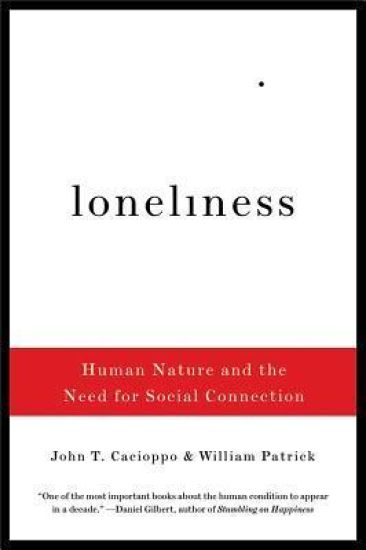
University of Chicago social neuroscientist John T. Cacioppo pioneered research on the startling effects of loneliness: a sense of isolation or social rejection disrupts not only our ability to think and will power but also our immune systems, and can be as damaging as obesity or smoking. On the flip side, social connection can be a powerful therapy. Cacioppo’s sophisticated studies relying on brain imaging, analysis of blood pressure, immune response, stress hormones, behavior, and even gene expression show that human beings are simply far more intertwined and interdependent—physiologically as well as psychologically—than our cultural assumptions have ever allowed us to acknowledge. Loneliness traces the evolution of these tandem forces, showing how, for our primitive ancestors, survival depended not on greater brawn but on greater commitments to each other. Serving as a prompt to repair frayed social bonds, the pain of loneliness engendered a fear response so powerfully disruptive that even now, millions of years later, a persistent sense of rejection or isolation can impair DNA transcription in our immune cells. This disruption also impairs our ability to read social signals and exercise social skills, as well as limits our ability to internally regulate our emotions—all of which can combine to trap us in self-defeating behaviors that reinforce the very isolation and rejection that we dread. Loneliness shows us how to overcome this feedback loop to achieve better health and greater happiness. As individuals and as a society, we have everything to gain, and everything to lose, in how well or how poorly we manage our need for social bonds.

The Foreign Exchange Market
Richard T. Baillie; Patrick C. McMahon
Cambridge University Press
1990
pokkari
The flotation of exchange rates in the early 1970s saw a significant increase in the importance of foreign exchange markets and in the interest shown in them. Apart from the consequent institutional changes, this period also witnessed a revolution in macroeconomic analysis and finance theory based on the concept of rational expectations. This book provides an integrated approach to recent developments in the understanding of foreign exchange markets. It begins by charting the institutional background and looks at the recent history of movements in some of the major exchange rates. The theoretical sections focus on the economic and finance theory of the asset market approach, the macroeconomic models developed from this approach, and on interest rate parity theory. The empirical chapters draw on the authors’ own research from a high quality set of exchange rate and interest rate data. The statistical properties of exchange rates are analysed; the relationship between spot and forward rates is examined; and the modelling and impact of new information on the forward and spot relationship is considered. The final chapter is devoted to the estimation and testing of exchange rate models.
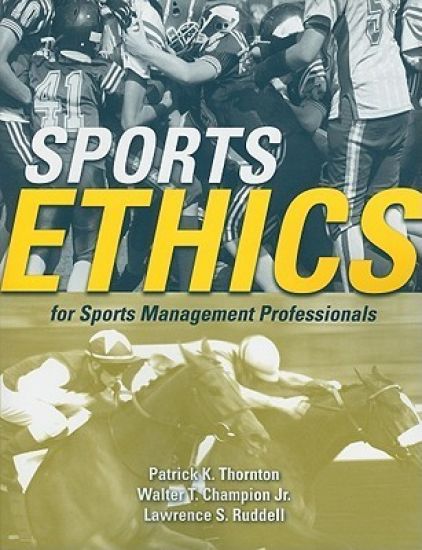
Sports Ethics For Sports Management Professionals
Patrick K. Thornton; Walter T. Champion Jr.; Lawrence S. Ruddell
Jones and Bartlett Publishers, Inc
2011
nidottu
Sports Ethics for Sports Management Professionals provides students with the necessary tools to make ethical decisions in the sports management field. It presents several ethical models that the sports management professional can use as a platform to make ethical decisions. Directed at future sports executives and sports managers, the book contains numerous case studies which allow students to apply the ethical decision-making process to a sports-related ethical dispute.
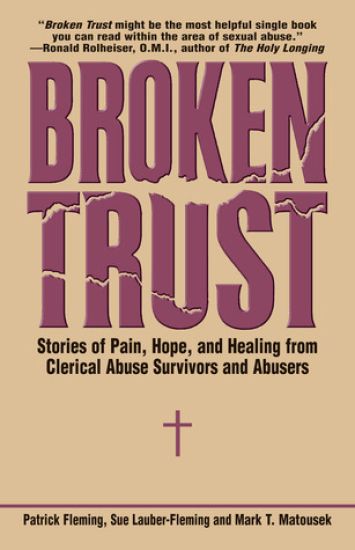
Broken Trust Stories of Pain, Hope, and Healing from Clerical Abuse Survivors and Abusers
Patrick Fleming; Sue Lauber Fleming; Mark T. Matousek
Crossroad Publishing
2011
nidottu
From Boston to Los Angeles, Catholic sexual abuse scandals have been widely coverd in the media. Here for the first time the personal stories of those involved, both abusers and survivors, are presented with profound psychological insight. Five priest abusers reveal the personal tragedy behind the terrible betrayals they committed. Told in their own words-words of anger, repentance, and even self-delusion-they share their struggles with the dark forces that led them to abuse those in their care. And they give us insight into their difficult road to recovery. Silent no more, the survivors reveal the pain, trauma, shame, and devastation they have experienced at the hands of those they trusted most. We witness their courage as they go on to seek healing and peace with the past. Anyone serious about understanding the clergy abuse scandals, and everyone dedicated to building a world where such atrocities can never happen again, must read this book.

Theology and Race Relations
Joseph T. Leonard; Patrick A. O'Boyle
Literary Licensing, LLC
2012
sidottu
Theology and Race Relations
Joseph T. Leonard; Patrick A. O'Boyle
Literary Licensing, LLC
2012
nidottu