Kirjojen hintavertailu. Mukana 11 699 587 kirjaa ja 12 kauppaa.

Kirjahaku

Etsi kirjoja tekijän nimen, kirjan nimen tai ISBN:n perusteella.

1000 tulosta hakusanalla Paul Mathieu

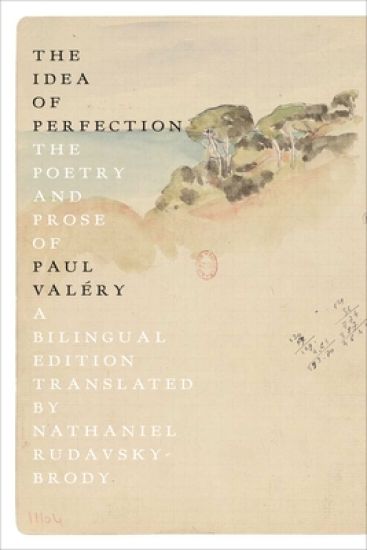
The Idea of Perfection: The Poetry and Prose of Paul Valéry; A Bilingual Edition
A fresh look into the monumental work of Paul Val ry, one of the major French literary figures of the twentieth century. Heir to Mallarm and the symbolists, godfather to the modernists, Paul Val ry was a poet with thousands of readers and few followers, great resonance and little echo. Along with Rilke and Eliot, he stands as a bridge between the tradition of the nineteenth century and the novelty of the twentieth. His reputation as a poet rests on three slim volumes published in a span of only ten years. Yet these poems, it turns out, are inseparable from another, much vaster intellectual and artistic enterprise: the Notebooks. Behind the published works, behind the uneventful life of the almost forgotten and then exceedingly famous poet, there hides another story, a private life of the mind, that has its record in 28,000 pages of notes revealed in their entirety only after his death. Their existence had been hinted at, evoked in rumors and literary asides; but once made public it took years for their significance to be fully appreciated. It turned out that the prose fragments published in Val ry's lifetime were not the after-the-fact musings of an accomplished poet, nor his occasional sketchbook, nor excerpts from his private journal. They were a disfigured glimpse of a vast and fragmentary "exercise of thought," a restless intellectual quest as unguided and yet as persistent, as rigorous, and as uncontainable as the sea that is so often their subject. The Idea of Perfection shows both sides of Val ry: the craftsman of sublimely refined verse, and the fervent investigator of the limits of human intellect and expression. It intersperses his three essential poetic works--Album of Early Verse, The Young Fate, and Charms--with incisive selections from the Notebooks and finishes with the prose poem "The Angel." Masterfully translated by Nathaniel Rudavsky-Brody, with careful attention to form and a natural yet metrical contemporary poetic voice, The Idea of Perfection breathes new life into poems that are among the most beautiful in the French language and the most influential of the twentieth century.
Paul Among the People: The Apostle Reinterpreted and Reimagined in His Own Time
In Paul Among the People, Sarah Ruden explores the writings of the evangelist Paul in the context of his time and culture, to recover his original message of freedom and love while overturning the common--and fundamental--misconception that Paul represented a puritanical, hysterically homophobic, misogynist, or reactionary vision. By setting famous and controversial words of Paul against ancient Greek and Roman literature, Ruden reveals a radical message of human freedom and dignity at the heart of Paul's preaching. Her training in the Classics allows her to capture the stark contrast between Paul's Christianity and the violence, exploitation, and dehumanization permeating the Roman Empire in his era. In contrast to later distortions, the vision of Christian life Ruden finds in Paul is centered on equality before God and the need for people to love one another. A remarkable work of scholarship, synthesis, and understanding, Paul Among the People recaptures the moral urgency and revolutionary spirit that made Christianity such a shock to the ancient world and laid the foundation of the culture in which we live today.
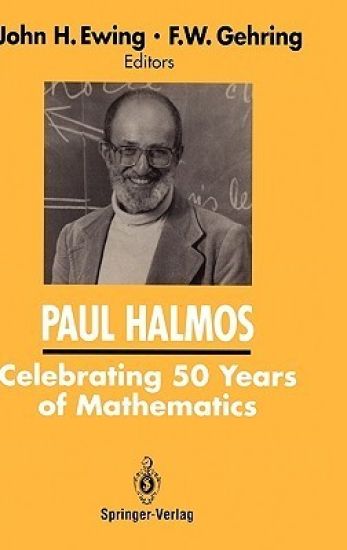
PAUL HALMOS Celebrating 50 Years of Mathematics
Paul Halmos will celebrate his 75th birthday on the 3rd of March 1991. This volume, from colleagues, is an expression of affection for the man and respect for his contributions as scholar, writer, and teacher. It contains articles about Paul, about the times in which he worked and the places he has been, and about mathematics. Paul has furthered his profession in many ways and this collection reflects that diversity. Articles about Paul are not biographical, but rather tell about his ideas, his philosophy, and his style. Articles about the times and places in which Paul has worked describe people, events, and ways in which Paul has influenced students and colleagues over the past 50 years. Articles about mathematics are about all kinds of mathematics, including operator theory and Paul's research in the subject. This volume represents a slice of mathematical life and it shows how many parts of mathematics Paul has touched. It is fitting that this volume has been produced with the support and cooperation of Springer-Verlag. For over 35 years, Paul has contributed to mathematics publishing as founder and editor of many outstanding series.
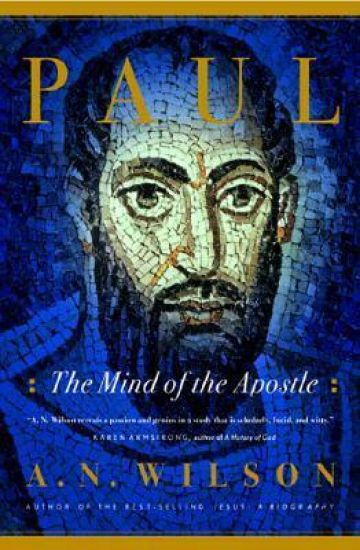
Paul: The Mind of the Apostle

Paul: The Mind of the Apostle

A. N. Wilson

Airphoto International Ltd.
1998
nidottu
As A. N. Wilson, biographer of Tolstoy, C. S. Lewis, and Jesus, makes clear in this astonishing and gripping narrative, Christianity without Paul is quite literally nothing. Jesus, with the layers of exegesis, scholarship, and ceremony stripped away, is a Jew, a fastidious and fervent Jew, who would lead his followers into a stricter, purer observance of Judaism. It is Paul who will claim divinity for him, who will transform him into the Messiah, center of an entirely new religion. In Wilson's deft and psychologically astute narrative, we see Paul negotiating the dangerous political currents of the Roman Empire; traveling everywhere; making converts; writing the great epistles that define our understanding of Christ and the sublime paradoxes of his teaching; defusing the natural antagonism of the supreme temporal power to this dangerous spiritual force, Christianity, which would in time consume that empire from within. What drove Paul? What fueled this act of inspired creativity? What would he think of what his church has become? The answers lie in Wilson's extraordinary biography, which lays bare the psychological journey of Christianity's true inventor.
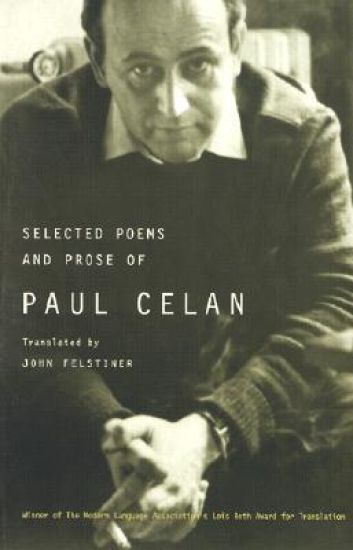
Selected Poems and Prose of Paul Celan
Paul Celan was born in 1920 in the East European province of Bukovina. Soon after his parents, German-speaking Jews, had perished at the hands of the Nazis, Celan wrote "Todesfuge" ("Deathfugue"), the most compelling poem to emerge from the Holocaust. Self-exiled in Paris, for twenty-five years Celan continued writing in his German mother tongue, although it had "passed through the thousand darknesses of deathbringing speech." His writing purges and remakes that language, often achieving a hope-struck radiance never before seen in modern poetry. But in 1970, his psychic wounds unhealed, Celan drowned himself in the Seine. This landmark volume includes youthful lyrics, unpublished poems, and prose. All poems appear in the original and in translation on facing pages. John Felstiner's translations stem from a twenty-year immersion in Celan's life and work. John Bayley wrote in the New York Review of Books, "Felstiner translates ... brilliantly."
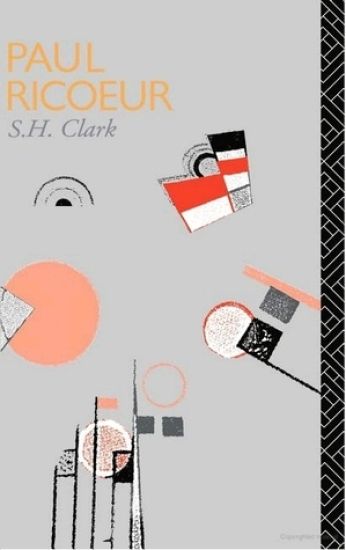
Paul Ricoeur

Paul Ricoeur

Steven H. Clark

Routledge
1990
nidottu
This introductory study surveys the entire range of Ricoeur's work, placing it within the context of post-structuralism. Includes a discussion of Time and Narrative and shows how Ricoeur's work links European and American traditions.
Paul de Man

Paul de Man

Martin McQuillian

Routledge
2001
sidottu
Paul de Man's work is key to the American deconstruction movement and to the so-called political turn in critical theory. Seventeen years after his death, his works continue to arouse violent reactions among critics. This book explains why de Man is such an important voice, detailing his critical position, exploring his intellectual and historical contexts, tracing the influence of his work and enabling readers to undertake independent study of his criticism.
Paul de Man

Paul de Man

Martin McQuillian

Routledge
2001
nidottu
Paul de Man's work is key to the American deconstruction movement and to the so-called political turn in critical theory. Seventeen years after his death, his works continue to arouse violent reactions among critics. This book explains why de Man is such an important voice, detailing his critical position, exploring his intellectual and historical contexts, tracing the influence of his work and enabling readers to undertake independent study of his criticism.
Paul Ricoeur

Paul Ricoeur

Karl Simms

Routledge
2002
sidottu
Paul Ricoeur is one of the most wide-ranging thinkers to emerge in the twentieth century. He has developed a unique 'theory of reading' or hermeneutics, which extends far beyond the reading of literary works to build into a theory for the reading of 'life'. For this reason, his work has impacted not only upon literary studies, but upon such disciplines as philosophy, psychoanalysis, history, religion, legal studies and politics.This introductory guide:* details Ricoeur's most significant contributions to contemporary critical thought* provides an intellectual context to his key ideas* explores the debate around his work on good and evil, psychoanalysis, metaphor, narrative, politics and justice* suggests the continuing relevance of Ricoeur's thought and examines the increasing interest in his work across a range of disciplines.Karl Simms also provides a guide to further reading, which offers advice on Ricoeur's publications and relevant secondary texts. Refreshingly clear and impressively comprehensive, Paul Ricoeur is the essential guide to an essential theorist.
Paul Ricoeur

Paul Ricoeur

Karl Simms

Routledge
2002
nidottu
Paul Ricoeur is one of the most wide-ranging thinkers to emerge in the twentieth century. He has developed a unique 'theory of reading' or hermeneutics, which extends far beyond the reading of literary works to build into a theory for the reading of 'life'. For this reason, his work has impacted not only upon literary studies, but upon such disciplines as philosophy, psychoanalysis, history, religion, legal studies and politics.This introductory guide:* details Ricoeur's most significant contributions to contemporary critical thought* provides an intellectual context to his key ideas* explores the debate around his work on good and evil, psychoanalysis, metaphor, narrative, politics and justice* suggests the continuing relevance of Ricoeur's thought and examines the increasing interest in his work across a range of disciplines.Karl Simms also provides a guide to further reading, which offers advice on Ricoeur's publications and relevant secondary texts. Refreshingly clear and impressively comprehensive, Paul Ricoeur is the essential guide to an essential theorist.
Paul Virilio

Paul Virilio

Ian James

Routledge
2007
sidottu
Paul Virilio is a challenging and original thinker whose work on technology, state power and war is increasingly relevant today. Exploring Virilio's main texts from their political and historical contexts, and case studies from contemporary culture and media in order to explain his philosophical concepts, Ian James introduces the key themes in Virlio's work, including:speedvirtualizationwarpoliticsart.As technological and scientific innovations continue to set the agenda for the present and future development of culture, communications, international economy, military intervention and diverse forms of political organization, Virilio's unique theoretical and critical insights are of enormous value and importance for anyone wishing to understand the nature of modern culture and society.
Paul Virilio

Paul Virilio

Ian James

Routledge
2007
nidottu
Paul Virilio is a challenging and original thinker whose work on technology, state power and war is increasingly relevant today. Exploring Virilio's main texts from their political and historical contexts, and case studies from contemporary culture and media in order to explain his philosophical concepts, Ian James introduces the key themes in Virlio's work, including:speedvirtualizationwarpoliticsart.As technological and scientific innovations continue to set the agenda for the present and future development of culture, communications, international economy, military intervention and diverse forms of political organization, Virilio's unique theoretical and critical insights are of enormous value and importance for anyone wishing to understand the nature of modern culture and society.
Paul Tillich, Carl Jung and the Recovery of Religion
Is religion a positive reality in your life? If not, have you lost anything by forfeiting this dimension of your humanity?This book compares the theology of Tillich with the psychology of Jung, arguing that they were both concerned with the recovery of a valid religious sense for contemporary culture. Paul Tillich, Carl Jung and the Recovery of Religion explores in detail the diminution of the human spirit through the loss of its contact with its native religious depths, a problem on which both spent much of their working lives and energies.Both Tillich and Jung work with a naturalism that grounds all religion on processes native to the human being. Tillich does this in his efforts to recover that point at which divinity and humanity coincide and from which they differentiate. Jung does this by identifying the archetypal unconscious as the source of all religions now working toward a religious sentiment of more universal sympathy. This book identifies the dependence of both on German mysticism as a common ancestry and concludes with a reflection on how their joint perspective might affect religious education and the relation of religion to science and technology.Throughout the book, John Dourley looks back to the roots of both men's ideas about mediaeval theology and Christian mysticism making it ideal reading for analysts and academics in the fields of Jungian and religious studies.
Paul de Man (Routledge Revivals)

Paul de Man (Routledge Revivals)

Christopher Norris

Routledge
2010
sidottu
Paul de Man - literary critic, literary philosopher, "American deconstructionist" - changed the landscape of criticism through his rigorous theories and writings. Upon its original publication in 1988, Christopher Norris' book was the first full-length introduction to de Man, a reading that offers a much-needed corrective to the pattern of extreme antithetical response which marked the initial reception to de Man's writings.Norris addresses de Man's relationship to philosophical thinking in the post-Kantian tradition, his concern with "aesthetic ideology" as a potent force of mystification within and beyond that tradition, and the vexed issue of de Man's politics. Norris brings out the marked shift of allegiance in de Man's thinking, from the thinly veiled conservative implications of the early essays to the engagement with Marx and Foucault on matters of language and politics in the late, posthumous writing. At each stage, Norris raises these questions through a detailed close reading of individual texts which will be welcomed by those who lack any specialised knowledge of de Man's work.
Paul de Man (Routledge Revivals)

Paul de Man (Routledge Revivals)

Christopher Norris

Routledge
2010
nidottu
Paul de Man - literary critic, literary philosopher, "American deconstructionist" - changed the landscape of criticism through his rigorous theories and writings. Upon its original publication in 1988, Christopher Norris' book was the first full-length introduction to de Man, a reading that offers a much-needed corrective to the pattern of extreme antithetical response which marked the initial reception to de Man's writings.Norris addresses de Man's relationship to philosophical thinking in the post-Kantian tradition, his concern with "aesthetic ideology" as a potent force of mystification within and beyond that tradition, and the vexed issue of de Man's politics. Norris brings out the marked shift of allegiance in de Man's thinking, from the thinly veiled conservative implications of the early essays to the engagement with Marx and Foucault on matters of language and politics in the late, posthumous writing. At each stage, Norris raises these questions through a detailed close reading of individual texts which will be welcomed by those who lack any specialised knowledge of de Man's work.
Paul Gilroy

Paul Gilroy

Paul Williams

Routledge
2012
sidottu
Paul Gilroy has been a controversial force at the forefront of debates around race, nation, and diaspora. Working across a broad range of disciplines, Gilroy has argued that racial identities are historically constructed, formed by colonization, slavery, nationalist philosophies, and consumer capitalism.Paul Williams introduces Gilroy’s key themes and ideas, including: the essential concepts, including ethnic absolutism, civilizationism, postcolonial melancholia, iconization, and the ‘black Atlantic’ analysis of Gilroy’s broad-ranging cultural references, from Edmund Burke to hip-hop a comprehensive overview of Gilroy’s influences and the academic debates his work has inspired.Emphasizing the timeliness and global relevance of Gilroy’s ideas, this guide will appeal to anyone approaching Gilroy’s work for the first time or seeking to further their understanding of race and contemporary culture.
Paul Gilroy

Paul Gilroy

Paul Williams

Routledge
2012
nidottu
Paul Gilroy has been a controversial force at the forefront of debates around race, nation, and diaspora. Working across a broad range of disciplines, Gilroy has argued that racial identities are historically constructed, formed by colonization, slavery, nationalist philosophies, and consumer capitalism.Paul Williams introduces Gilroy’s key themes and ideas, including: the essential concepts, including ethnic absolutism, civilizationism, postcolonial melancholia, iconization, and the ‘black Atlantic’ analysis of Gilroy’s broad-ranging cultural references, from Edmund Burke to hip-hop a comprehensive overview of Gilroy’s influences and the academic debates his work has inspired.Emphasizing the timeliness and global relevance of Gilroy’s ideas, this guide will appeal to anyone approaching Gilroy’s work for the first time or seeking to further their understanding of race and contemporary culture.
Paul Ricoeur and Contemporary Moral Thought
Here, some of the most influential thinkers in theological and philosophical ethics develop new directions for research in contemporary moral thought. Taking as their starting point Ricoeur's recent work on moral anthropology, the contributors set a vital agenda for future conversations about ethics and just community.
Paul Auster's Postmodernity

Paul Auster's Postmodernity

Brendan Martin

Routledge
2010
nidottu
This book focuses upon the literary and autobiographical writings of American novelist Paul Auster, investigating his literary postmodernity in relation to a full range of his writings. Martin addresses Auster’s evocation of a range of postmodern notions, such as the duplicitous art of self-invention, the role of chance and contingency, authorial authenticity and accountability, urban dislocation, and the predominance of duality.