Harness the power of Dynamics 365 Operations and discover all you need to implement it About This Book • Master all the necessary tools and resources to evaluate Dynamics 365 for Operations, implement it, and proactively maintain it. • Troubleshoot your problems effectively with your Dynamics 365 partner • Learn about architecture, deployment choices, integration, configuration and data migration, development, testing, reporting and BI, support, upgrading, and more. Who This Book Is For This book is for technology leaders, project managers solution architects, and consultants who are planning to implement, are in the process of implementing, or are currently upgrading to Dynamics 365 for Operations. This book will help you effectively learn and implement Dynamics 365 for Operations. What You Will Learn • Learn about Microsoft Dynamics 365, it's offerings, plans and details of Finance and Operations, Enterprise edition • Understand the methodology and the tool, architecture, and deployment options • Effectively plan and manage configurations and data migration, functional design, and technical design • Understand integration frameworks, development concepts, best practices, and recommendations while developing new solutions • Learn how to leverage intelligence and analytics through Power BI, machine learning, IOT, and Cortana intelligence • Master testing, training, going live, upgrading, and how to get support during and after the implementation In Detail Microsoft Dynamics 365 for Finance and Operations, Enterprise edition, is a modern, cloud-first, mobile-first, ERP solution suitable for medium and large enterprise customers. This book will guide you through the entire life cycle of a implementation, helping you avoid common pitfalls while increasing your efficiency and effectiveness at every stage of the project. Starting with the foundations, the book introduces the Microsoft Dynamics 365 offerings, plans, and products. You will be taken through the various methodologies, architectures, and deployments so you can select, implement, and maintain Microsoft Dynamics 365 for Finance and Operations, Enterprise edition. You will delve in-depth into the various phases of implementation: project management, analysis, configuration, data migration, design, development, using Power BI, machine learning, Cortana analytics for intelligence, testing, training, and finally deployment, support cycles, and upgrading. This book focuses on providing you with information about the product and the various concepts and tools, along with real-life examples from the field and guidance that will empower you to execute and implement Dynamics 365 for Finance and Operations, Enterprise edition. Style and approach This book is a step-by-step guide focusing on implementing Dynamics 365 Operations solutions for your organization.
Harness the power and simplicity of Informatica PowerCenter 10.x to build and manage efficient data management solutions About This Book • Master PowerCenter 10.x components to create, execute, monitor, and schedule ETL processes with a practical approach. • An ideal guide to building the necessary skills and competencies to become an expert Informatica PowerCenter developer. • A comprehensive guide to fetching/transforming and loading huge volumes of data in a very effective way, with reduced resource consumption Who This Book Is For If you wish to deploy Informatica in enterprise environments and build a career in data warehousing, then this book is for you. Whether you are a software developer/analytic professional and are new to Informatica or an experienced user, you will learn all the features of Informatica 10.x. A basic knowledge of programming and data warehouse concepts is essential. What You Will Learn • Install or upgrade the components of the Informatica PowerCenter tool • Work on various aspects of administrative skills and on the various developer Informatica PowerCenter screens such as Designer, Workflow Manager, Workflow Monitor, and Repository Manager. • Get practical hands-on experience of various sections of Informatica PowerCenter, such as navigator, toolbar, workspace, control panel, and so on • Leverage basic and advanced utilities, such as the debugger, target load plan, and incremental aggregation to process data • Implement data warehousing concepts such as schemas and SCDs using Informatica • Migrate various components, such as sources and targets, to another region using the Designer and Repository Manager screens • Enhance code performance using tips such as pushdown optimization and partitioning In Detail Informatica PowerCenter is an industry-leading ETL tool, known for its accelerated data extraction, transformation, and data management strategies. This book will be your quick guide to exploring Informatica PowerCenter's powerful features such as working on sources, targets, transformations, performance optimization, scheduling, deploying for processing, and managing your data at speed. First, you'll learn how to install and configure tools. You will learn to implement various data warehouse and ETL concepts, and use PowerCenter 10.x components to build mappings, tasks, workflows, and so on. You will come across features such as transformations, SCD, XML processing, partitioning, constraint-based loading, Incremental aggregation, and many more. Moreover, you'll also learn to deliver powerful visualizations for data profiling using the advanced monitoring dashboard functionality offered by the new version. Using data transformation technique, performance tuning, and the many new advanced features, this book will help you understand and process data for training or production purposes. The step-by-step approach and adoption of real-time scenarios will guide you through effectively accessing all core functionalities offered by Informatica PowerCenter version 10.x. Style and approach You'll get hand-on with sources, targets, transformations, performance optimization, scheduling, deploying for processing, and managing your data, and learn everything you need to become a proficient Informatica PowerCenter developer.
Your hands-on reference guide to developing, training, and optimizing your machine learning modelsKey FeaturesYour guide to learning efficient machine learning processes from scratchExplore expert techniques and hacks for a variety of machine learning conceptsWrite effective code in R, Python, Scala, and Spark to solve all your machine learning problemsBook DescriptionMachine learning makes it possible to learn about the unknowns and gain hidden insights into your datasets by mastering many tools and techniques. This book guides you to do just that in a very compact manner.After giving a quick overview of what machine learning is all about, Machine Learning Quick Reference jumps right into its core algorithms and demonstrates how they can be applied to real-world scenarios. From model evaluation to optimizing their performance, this book will introduce you to the best practices in machine learning. Furthermore, you will also look at the more advanced aspects such as training neural networks and work with different kinds of data, such as text, time-series, and sequential data. Advanced methods and techniques such as causal inference, deep Gaussian processes, and more are also covered.By the end of this book, you will be able to train fast, accurate machine learning models at your fingertips, which you can easily use as a point of reference. What you will learnGet a quick rundown of model selection, statistical modeling, and cross-validationChoose the best machine learning algorithm to solve your problemExplore kernel learning, neural networks, and time-series analysisTrain deep learning models and optimize them for maximum performanceBriefly cover Bayesian techniques and sentiment analysis in your NLP solutionImplement probabilistic graphical models and causal inferencesMeasure and optimize the performance of your machine learning modelsWho this book is forIf you’re a machine learning practitioner, data scientist, machine learning developer, or engineer, this book will serve as a reference point in building machine learning solutions. You will also find this book useful if you’re an intermediate machine learning developer or data scientist looking for a quick, handy reference to all the concepts of machine learning. You’ll need some exposure to machine learning to get the best out of this book.
Use Java and Deeplearning4j to build robust, scalable, and highly accurate AI models from scratchKey FeaturesInstall and configure Deeplearning4j to implement deep learning models from scratchExplore recipes for developing, training, and fine-tuning your neural network models in JavaModel neural networks using datasets containing images, text, and time-series dataBook DescriptionJava is one of the most widely used programming languages in the world. With this book, you will see how to perform deep learning using Deeplearning4j (DL4J) – the most popular Java library for training neural networks efficiently.This book starts by showing you how to install and configure Java and DL4J on your system. You will then gain insights into deep learning basics and use your knowledge to create a deep neural network for binary classification from scratch. As you progress, you will discover how to build a convolutional neural network (CNN) in DL4J, and understand how to construct numeric vectors from text. This deep learning book will also guide you through performing anomaly detection on unsupervised data and help you set up neural networks in distributed systems effectively. In addition to this, you will learn how to import models from Keras and change the configuration in a pre-trained DL4J model. Finally, you will explore benchmarking in DL4J and optimize neural networks for optimal results.By the end of this book, you will have a clear understanding of how you can use DL4J to build robust deep learning applications in Java.What you will learnPerform data normalization and wrangling using DL4JBuild deep neural networks using DL4JImplement CNNs to solve image classification problemsTrain autoencoders to solve anomaly detection problems using DL4JPerform benchmarking and optimization to improve your model's performanceImplement reinforcement learning for real-world use cases using RL4JLeverage the capabilities of DL4J in distributed systemsWho this book is forIf you are a data scientist, machine learning developer, or a deep learning enthusiast who wants to implement deep learning models in Java, this book is for you. Basic understanding of Java programming as well as some experience with machine learning and neural networks is required to get the most out of this book.
Discover how project Reactor enhances the reactive programming paradigm and allows you to build scalable asynchronous applicationsKey FeaturesUse reactive APIs, Flux, and Mono to implement reactive extensionsCreate concurrent applications without the complexity of Java's concurrent APIUnderstand techniques to implement event-driven and reactive applicationsBook DescriptionReactor is an implementation of the Java 9 Reactive Streams specification, an API for asynchronous data processing. This specification is based on a reactive programming paradigm, enabling developers to build enterprise-grade, robust applications with reduced complexity and in less time. Hands-On Reactive Programming with Reactor shows you how Reactor works, as well as how to use it to develop reactive applications in Java.The book begins with the fundamentals of Reactor and the role it plays in building effective applications. You will learn how to build fully non-blocking applications and will later be guided by the Publisher and Subscriber APIs. You will gain an understanding how to use two reactive composable APIs, Flux and Mono, which are used extensively to implement Reactive Extensions. All of these components are combined using various operations to build a complete solution. In addition to this, you will get to grips with the Flow API and understand backpressure in order to control overruns. You will also study the use of Spring WebFlux, an extension of the Reactor framework for building microservices.By the end of the book, you will have gained enough confidence to build reactive and scalable microservices.What you will learnExplore benefits of the Reactive paradigm and the Reactive Streams APIDiscover the impact of Flux and Mono implications in ReactorExpand and repeat data in stream processingGet to grips with various types of processors and choose the best oneUnderstand how to map errors to make corrections easierCreate robust tests using testing utilities offered by ReactorFind the best way to schedule the execution of codeWho this book is forIf you’re looking to develop event- and data-driven applications easily with Reactor, this book is for you. Sound knowledge of Java fundamentals is necessary to understand the concepts covered in the book.
Become proficient in designing, developing and deploying effective software systems using the advanced constructs of Rust Key FeaturesImprove your productivity using the latest version of Rust and write simpler and easier codeUnderstand Rust’s immutability and ownership principle, expressive type system, safe concurrencyDeep dive into the new doamins of Rust like WebAssembly, Networking and Command line toolsBook DescriptionRust is an empowering language that provides a rare combination of safety, speed, and zero-cost abstractions. Mastering Rust – Second Edition is filled with clear and simple explanations of the language features along with real-world examples, showing you how you can build robust, scalable, and reliable programs. This second edition of the book improves upon the previous one and touches on all aspects that make Rust a great language. We have included the features from latest Rust 2018 edition such as the new module system, the smarter compiler, helpful error messages, and the stable procedural macros. You’ll learn how Rust can be used for systems programming, network programming, and even on the web. You’ll also learn techniques such as writing memory-safe code, building idiomatic Rust libraries, writing efficient asynchronous networking code, and advanced macros. The book contains a mix of theory and hands-on tasks so you acquire the skills as well as the knowledge, and it also provides exercises to hammer the concepts in. After reading this book, you will be able to implement Rust for your enterprise projects, write better tests and documentation, design for performance, and write idiomatic Rust code.What you will learnWrite generic and type-safe code by using Rust’s powerful type system How memory safety works without garbage collection Know the different strategies in error handling and when to use themLearn how to use concurrency primitives such as threads and channels Use advanced macros to reduce boilerplate code Create efficient web applications with the Actix-web frameworkUse Diesel for type-safe database interactions in your web applicationWho this book is forThe book is aimed at beginner and intermediate programmers who already have familiarity with any imperative language and have only heard of Rust as a new language. If you are a developer who wants to write robust, efficient and maintainable software systems and want to become proficient with Rust, this book is for you. It starts by giving a whirlwind tour of the important concepts of Rust and covers advanced features of the language in subsequent chapters using code examples that readers will find useful to advance their knowledge.
Learn Java programming concepts to design automation testing frameworksKey FeaturesLearn to use Java program logic in application testingUnderstand various test-driven development concepts with Java toolsMaster Java with lots of programming examplesBook DescriptionJava is one of the most commonly-used software languages by programmers and developers. Are you from a non-technical background and looking to master Java for your automation needs? Then Hands-On Automation Testing with Java for Beginners is for you.This book provides you with efficient techniques to effectively handle Java-related automation projects. You will learn how to handle strings and their functions in Java. As you make your way through the book, you will get to grips with classes and objects, along with their uses. In the concluding chapters, you will learn about the importance of inheritance and exceptions with practical examples. By the end of this book, you will have gained comprehensive knowledge of Java.What you will learnUnderstand the practical usage of Java conditions and loopsWrite any Java program logic with strategies, tips, and tricksLeverage advanced topics in Java collections to solve Java-related problemsUnderstand and use objects, classes, methods, and functions in JavaBuild Java automation frameworks from scratchObtain knowledge of Java object-oriented programming (OOP) concepts with practical implementationsWho this book is forHands-On Automation Testing with Java for Beginners is for software developers who want to step into the world of software quality assurance and perform automation testing using various testing frameworks. Prior experience of writing tests in Java is assumed.
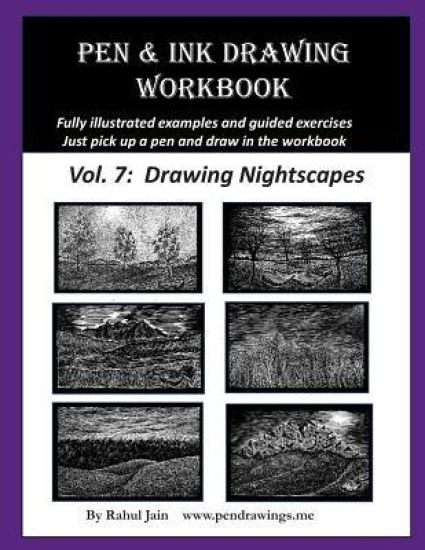
Learn to draw nightscapes with this next volume in pen and ink workbook series. With step by step illustrations and guided exercises, you will learn to capture the feeling and emotions of night and use other elements to create a pleasing nightscape.For more information, pl. visit www.pendrawings.me/vol7Drawing is not just for artists. All of us enjoy this creative pursuit. With his pen and ink workbook series, accomplished pen and ink artist Rahul Jain has made doing pen and ink landscapes easily accessible to anybody. With fully illustrated instructions and use of simple pen lines, you can learn to draw a pleasing pen and ink landscape. Get started today. Visit www.pendrawings.me/workbooks for more information.
A lot of time many students pursue the dream of being an IITian and many of them actually tend to get screwed up in the exam.This book can act as a guide to those students who are willing to go for IIT-JEE preparations. It focuses on the trait and the personality type that is suitable for IIT-JEE. This book also gives you a previous insight that whether you will qualify or fail in IIT-JEE.
In this third installment of Attorney Rahul Manchanda's expose of deep-state corruption in the United States and beyond, the author takes us into the first few years of the Trump presidency and the obstacles and impediments faced by him in his struggles against the deep-state, entrenched powers therein.
In this third installment of Attorney Rahul Manchanda's expose of deep-state corruption in the United States and beyond, the author takes us into the first few years of the Trump presidency and the obstacles and impediments faced by him in his struggles against the deep-state, entrenched powers therein.
"Sabores da ndia" convida voc a uma jornada culin ria deslumbrante pelo cora o vibrante da ndia. Escrito pelo renomado chef Rahul Kapoor, este livro uma homenagem riqueza e diversidade da cozinha indiana, revelando segredos e sabores que cativar o seus sentidos.Explore os aromas ex ticos, os temperos luxuriantes e as texturas sedutoras da ndia enquanto Rahul compartilha sua paix o por essa culin ria ancestral. Desde os pratos picantes do sul at as del cias arom ticas do norte, cada p gina deste livro uma celebra o da autenticidade e da tradi o."Sabores da ndia" n o apenas um livro de receitas, uma experi ncia gastron mica completa. Aprenda a escolher os ingredientes certos, a dominar t cnicas culin rias e a criar pratos emblem ticos, como o curry de frango, o biryani e o paneer tikka.Com belas hist rias de viagem e dicas pr ticas, este livro perfeito para iniciantes e chefs experientes que desejam explorar a magia da culin ria indiana em sua pr pria cozinha.Descubra a ndia atrav s de seus sabores e mergulhe em uma viagem gastron mica fascinante com "Sabores da ndia."
"Tajemnice Indyjskiego Smaku: Kulinarna Podr ż przez Indie" to zbi r wyjątkowych przepis w, kt re zabiorą Cię w fascynującą podr ż po bogatym świecie indyjskiej kuchni. Autor, Rahul Kapoor, prawdziwy pasjonat kulinari w i milośnik tradycji kulinarnej Indii, dzieli się tajemnicami przygotowywania autentycznych potraw.W tej książce odkryjesz niezwyklą r żnorodnośc smak w i aromat w, kt re sprawily, że indyjska kuchnia jest ceniona na calym świecie. Poznasz tajniki przygotowywania curry, biryani, tandoori i wiele innych dań, kt re oczarują Twoje podniebienie.Niech "Tajemnice Indyjskiego Smaku" staną się Twoim przewodnikiem po kulinarnej Indii. Bez względu na to, czy jesteś początkującym kucharzem czy doświadczonym szefem kuchni, te przepisy pomogą Ci stworzyc niezapomniane posilki.Odkryj magię indyjskich przypraw, świeżych skladnik w i technik gotowania, kt re uczynią Twoje dania wyjątkowymi. Ta książka to nie tylko zbi r przepis w, to prawdziwa opowieśc o milości do jedzenia i tęsknocie za smakami Indii.
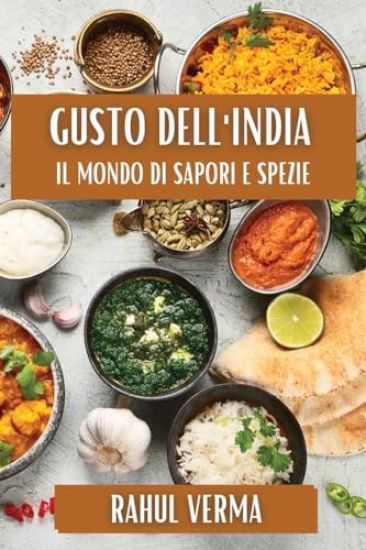
"Il Gusto dell'India: Il Mondo di Sapori e Spezie" un'opera culinaria straordinaria che vi porter in un viaggio attraverso la cucina indiana, ricca di tradizioni, sapori e spezie affascinanti. Scritto da Rahul Verma, questo libro non solo una raccolta di ricette, ma una vera e propria esplorazione delle radici e delle storie che si nascondono dietro a queste deliziose pietanze.Rahul Verma, un esperto di cucina indiana, condivide la sua passione per la cucina del suo paese in modo coinvolgente e ispirante. Con un approccio dettagliato e accessibile, vi guider attraverso gli ingredienti chiave, le tecniche di cottura e i segreti delle ricette tradizionali."Il Gusto dell'India" un libro ideale per chiunque sia interessato alla cucina indiana, dai principianti ai cuochi esperti. Vi permetter di sperimentare i sapori autentici dell'India nella comodit della vostra cucina e di scoprire il fascino di una cucina ricca di storia e cultura.Questo libro sar la vostra guida affidabile nel mondo della cucina indiana, e vi ispirer a creare piatti deliziosi che delizieranno il palato e il cuore. Prendete parte a un viaggio culinario unico con "Il Gusto dell'India" e immergetevi nei sapori avvincenti e nelle tradizioni affascinanti di questa straordinaria cucina.
Design and implement professional-level programs by leveraging modern data structures and algorithms in RustKey FeaturesImprove your productivity by writing more simple and easy code in RustDiscover the functional and reactive implementations of traditional data structuresDelve into new domains of Rust, including WebAssembly, networking, and command-line toolsBook DescriptionRust is a powerful language with a rare combination of safety, speed, and zero-cost abstractions. This Learning Path is filled with clear and simple explanations of its features along with real-world examples, demonstrating how you can build robust, scalable, and reliable programs.You’ll get started with an introduction to Rust data structures, algorithms, and essential language constructs. Next, you will understand how to store data using linked lists, arrays, stacks, and queues. You’ll also learn to implement sorting and searching algorithms, such as Brute Force algorithms, Greedy algorithms, Dynamic Programming, and Backtracking. As you progress, you’ll pick up on using Rust for systems programming, network programming, and the web. You’ll then move on to discover a variety of techniques, right from writing memory-safe code, to building idiomatic Rust libraries, and even advanced macros. By the end of this Learning Path, you’ll be able to implement Rust for enterprise projects, writing better tests and documentation, designing for performance, and creating idiomatic Rust code.This Learning Path includes content from the following Packt products:Mastering Rust - Second Edition by Rahul Sharma and Vesa KaihlavirtaHands-On Data Structures and Algorithms with Rust by Claus MatzingerWhat you will learnDesign and implement complex data structures in RustCreate and use well-tested and reusable components with RustUnderstand the basics of multithreaded programming and advanced algorithm designExplore application profiling based on benchmarking and testingStudy and apply best practices and strategies in error handlingCreate efficient web applications with the Actix-web frameworkUse Diesel for type-safe database interactions in your web applicationWho this book is forIf you are already familiar with an imperative language and now want to progress from being a beginner to an intermediate-level Rust programmer, this Learning Path is for you. Developers who are already familiar with Rust and want to delve deeper into the essential data structures and algorithms in Rust will also find this Learning Path useful.
This book presents practical tutorials and focuses on fun projects. It contains a lot of serious training material, but is presented in a fun and entertaining way. This book targets game designers/developers, artists, and product designers who want to create realistic images, 3D models, and videos of machines. You are expected to have experience with basic Blender operation, as the book is not a 'getting started' tutorial.
"Introduction to Embedded System Design Using Field Programmable Gate Arrays" provides a starting point for the use of field programmable gate arrays in the design of embedded systems. The text considers a hypothetical robot controller as an embedded application and weaves around it related concepts of FPGA-based digital design. The book details: use of FPGA vis-à-vis general purpose processor and microcontroller; design using Verilog hardware description language; digital design synthesis using Verilog and Xilinx® SpartanTM 3 FPGA; FPGA-based embedded processors and peripherals; overview of serial data communications and signal conditioning using FPGA; FPGA-based motor drive controllers; and prototyping digital systems using FPGA. The book is a good introductory text for FPGA-based design for both students and digital systems designers. Its end-of-chapter exercises and frequent use of example can be used for teaching or for self-study.