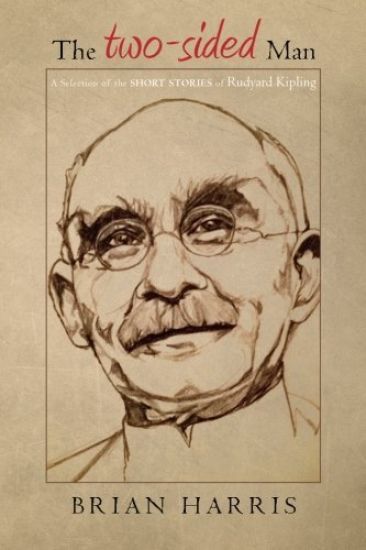
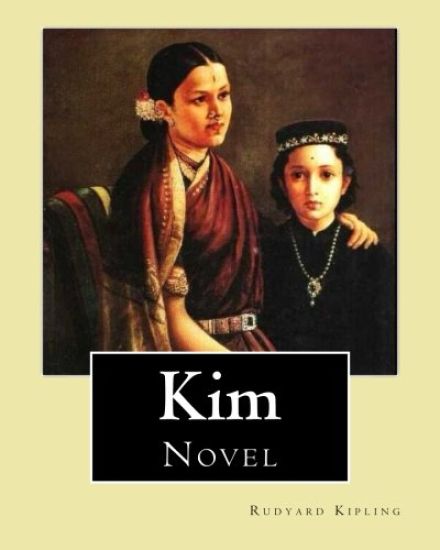
This work has been selected by scholars as being culturally important, and is part of the knowledge base of civilization as we know it. This work was reproduced from the original artifact, and remains as true to the original work as possible. Therefore, you will see the original copyright references, library stamps (as most of these works have been housed in our most important libraries around the world), and other notations in the work.This work is in the public domain in the United States of America, and possibly other nations. Within the United States, you may freely copy and distribute this work, as no entity (individual or corporate) has a copyright on the body of the work.As a reproduction of a historical artifact, this work may contain missing or blurred pages, poor pictures, errant marks, etc. Scholars believe, and we concur, that this work is important enough to be preserved, reproduced, and made generally available to the public. We appreciate your support of the preservation process, and thank you for being an important part of keeping this knowledge alive and relevant.
Ce guide de lecture pratique propose un r sum et une analyse complets du Livre de la jungle de Rudyard Kipling. Il fournit un aper u complet de l'intrigue de chacune des histoires du recueil, ainsi qu'une discussion sur les personnages principaux et une exploration des th mes cl s qui reviennent tout au long de l'anthologie. Le style clair et concis facilite la compr hension et constitue l'occasion id ale d'am liorer vos connaissances litt raires en un rien de temps.
The Barrack-Room Ballads is the collective name given to a series of songs and poems by Rudyard Kipling, dealing with the late-Victorian British Army and mostly written in a vernacular dialect. The series contains some of Kipling's most well-known work, including the poems "Gunga Din", "Tommy" and "Danny Deever", and helped consolidate his early fame as a poet. The first poems were published in the Scots Observer in the first half of 1890, and collected in Barrack-Room Ballads and Other Verses in 1892. Kipling later returned to the theme in a group of poems collected in The Seven Seas under the same title. A third group of vernacular Army poems from the Boer War, titled "Service Songs" and published in The Five Nations (1903), can be considered part of the Ballads, as can a number of other uncollected pieces.While two volumes of Kipling's poems are clearly labelled as "Barrack-Room Ballads", identifying which poems should be grouped in this way can be complex. The main collection of the Ballads was published in the 1890s, in two volumes: Barrack-Room Ballads and Other Verses (1892, the first major publishing success for Methuen) and The Seven Seas (1896), sometimes published as The Seven Seas and Further Barrack-Room Ballads. In both books, they were collected into a specific section set aside from the other poems, and can be easily identified. (Barrack-Room Ballads and Other Verses has an introductory poem ("To T.A.") in Kipling's own voice, which is strictly not part of the set but is often collected with them.) A third group of poems, published in 1903 in The Five Nations, continued the theme of military vernacular ballads; while they were titled "Service Songs", they fit well with the themes of the earlier ballads and are clearly connected. Charles Carrington produced the first comprehensive volume of the Ballads in 1973, mainly drawn from these three collections but including five additional pieces not previously collected under the title. Three of these date from the same period: an untitled vernacular poem ("My girl she gave me the go onst") taken from a short story, The Courting of Dinah Shadd, in Life's Handicap (1891); Bobs (1892 or 1898), citation needed] a poem praising Lord Roberts; and The Absent-Minded Beggar (1899), a poem written to raise funds for the families of soldiers called up for the Boer War. The remaining two date from the First World War; Carrington considered Epitaphs of the War, written in a first-person style, and Gethsemane, also in a soldier's voice, to meet his definition. Both were published in The Years Between (1919). Kipling wrote profusely on military themes during the war, but often from a more detached perspective than the first-person vernacular he had previously adopted. Finally, there are some confusingly captioned pieces. Many of Kipling's short stories were introduced with a short fragment of poetry, sometimes from an existing poem and sometimes an incidental new piece. These were often identified "A Barrack-Room Ballad", though not all the poems they were taken from would otherwise be collected or classed this way. This includes pieces such as the introductory poem to My Lord the Elephant (from Many Inventions, 1899), later collected in Songs from Books but not identified as a Ballad. It is not clear if these were deliberately omitted by Carrington or if he explicitly chose not to include them....Wolcott Balestier (December 13, 1861 - December 6, 1891, in Rochester, New York) was an American writer and editor notable primarily through his connection to Rudyard Kipling....Joseph Rudyard Kipling ( 30 December 1865 - 18 January 1936) was an English journalist, short-story writer, poet, and novelist.
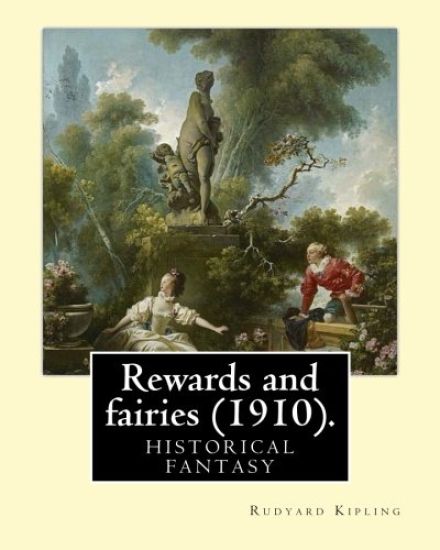
Rewards and Fairies is a historical fantasy book by Rudyard Kipling published in 1910. The title comes from the poem "Farewell, Rewards and Fairies" by Richard Corbet.The poem is referred to by the children in the first story of the preceding book Puck of Pook's Hill. Rewards and Fairies is set one year later chronologically although published four years afterwards. The book consists of a series of short stories set in historical times with a linking contemporary narrative. Dan and Una are two children, living in the Weald of Sussex in the area of Kipling's own home Bateman's. They have encountered Puck and he magically conjures up real and fictional individuals from Sussex's past to tell the children some aspect of its history and prehistory, though the episodes are not always historically accurate. Another recurring character is Old Hobden who represents the continuity of the inhabitants of the land. His ancestors sometimes appear in the stories and seem very much like him. Some stories contain elements of the supernatural as well as history. Each story is preceded and followed by a poem, including If-, often described as Britain's favourite poem. Other well known poems included in the book are Cold Iron and The Way through the Woods..... Charles Edmund Brock (5 February 1870 - 28 February 1938) was a widely published English painter, line artist and book illustrator, who signed most of his work C. E. Brock. He was the eldest of four artist brothers, including Henry Matthew Brock, also an illustrator........ Joseph Rudyard Kipling kip-ling, About this sound listen; 30 December 1865 - 18 January 1936) was an English journalist, short-story writer, poet, and novelist. Kipling's works of fiction include The Jungle Book (1894), Kim (1901), and many short stories, including "The Man Who Would Be King" (1888). His poems include "Mandalay" (1890), "Gunga Din" (1890), "The Gods of the Copybook Headings" (1919), "The White Man's Burden" (1899), and "If-" (1910). He is regarded as a major innovator in the art of the short story;his children's books are classics of children's literature; and one critic described his work as exhibiting "a versatile and luminous narrative gift".
Joseph Rudyard Kipling ( 30 December 1865 - 18 January 1936) was an English journalist, short-story writer, poet, and novelist. Kipling's works of fiction include The Jungle Book (1894), Kim (1901), and many short stories, including "The Man Who Would Be King" (1888).His poems include "Mandalay" (1890), "Gunga Din" (1890), "The Gods of the Copybook Headings" (1919), "The White Man's Burden" (1899), and "If-" (1910). He is regarded as a major innovator in the art of the short story; his children's books are classics of children's literature; and one critic described his work as exhibiting "a versatile and luminous narrative gift". Kipling was one of the most popular writers in the United Kingdom, in both prose and verse, in the late 19th and early 20th centuries. Henry James said: "Kipling strikes me personally as the most complete man of genius, as distinct from fine intelligence, that I have ever known." In 1907, at the age of 42, he was awarded the Nobel Prize in Literature, making him the first English-language writer to receive the prize, and its youngest recipient to date.He was also sounded out for the British Poet Laureateship and on several occasions for a knighthood, both of which he declined. Kipling's subsequent reputation has changed according to the political and social climate of the age and the resulting contrasting views about him continued for much of the 20th century. George Orwell called him a "prophet of British imperialism". Literary critic Douglas Kerr wrote: " Kipling] is still an author who can inspire passionate disagreement and his place in literary and cultural history is far from settled. But as the age of the European empires recedes, he is recognised as an incomparable, if controversial, interpreter of how empire was experienced. That, and an increasing recognition of his extraordinary narrative gifts, make him a force to be reckoned with." William Heath Robinson (31 May 1872 - 13 September 1944) was an English cartoonist and illustrator best known for drawings of ridiculously complicated machines for achieving simple objectives. In the UK, the term "Heath Robinson" entered the language during the 1914-1918 First World War as a description of any unnecessarily complex and implausible contrivance, much as "Rube Goldberg machines" came to be used in the US from the 1920s onwards as a term for similar efforts. "Heath Robinson contraption" is perhaps more often used in relation to temporary fixes using ingenuity and whatever is to hand, often string and tape, or unlikely cannibalisations. Its continuing popularity was undoubtedly linked to Second World War Britain's shortages and the need to "make do and mend".