Kirjojen hintavertailu. Mukana 11 627 220 kirjaa ja 12 kauppaa.

Kirjahaku

Etsi kirjoja tekijän nimen, kirjan nimen tai ISBN:n perusteella.

1000 tulosta hakusanalla S. Englander

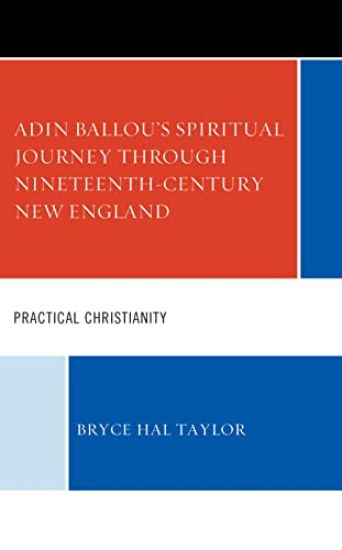
Adin Ballou's Spiritual Journey through Nineteenth-Century New England
New England Christianity in the nineteenth century produced an almost unending stream of new and old denominations that speckled the landscape. Baptists, Congregationalists, Methodists, Universalists, Spiritualists, Unitarians, Restorationists, and Calvinists—to name a few—beckoned each individual to join their growing movements. Each professed its truths and some proclaimed theirs was the only path leading to salvation. Admist this Christian angst, Adin Ballou began his spiritual quest to obtain truth.Through Ballou's lengthy spiritual quest, from 1820 to 1880, this book examines how denominational histories, however important, do not explain what a nineteenth-century New England Christian became. Ballou exemplifies this paradox. Always fixed, but never settled. Once a believer chose a path, new phenomena and teachings immediately appeared leaving one's truth claims transient. Through the Christian maze of nineteenth-century New England, Ballou's Christian faith was simply his own.
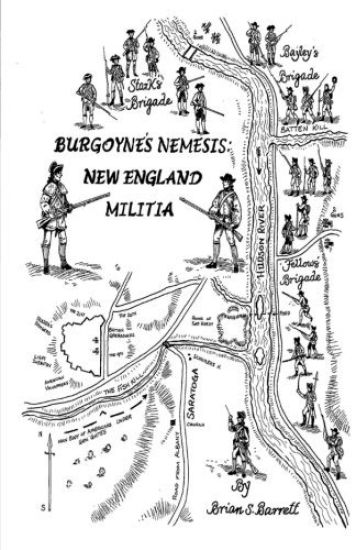
Burgoyne's Nemesis: New England Militia

Burgoyne's Nemesis: New England Militia

Brian S. Barrett

Createspace Independent Publishing Platform
2015
nidottu
There's probably a hundred books written about Revolutionary War battles at Saratoga but this is the only one that gives a detailed account of a select group of militiamen who took part in these battles. In "Burgoyne's Nemesis: New England Militia" author and historian Brian S. Barrett teased out new details from correspondence, military records and personal accounts to construct a well-documented and untold story about militia activities that occurred in upstate New York and Vermont. This book confirms the importance of militia reinforcements that came from Massachusetts, Vermont and New Hampshire to stop an invasion. The militia reinforcement was comprised of thousands of ordinary farmers and tradesmen who were transformed into a formidable component of the Northern Continental Army. It played a key role in dogging General John Burgoyne and his 8000 man army during the fall of 1777. Along with Continental Soldiers, this so-called rabble of militiamen helped subdue British Regulars, Canadians, Indians and Hessians in less than two months. It was a turning point in the American Revolution. Anyone interested in United States history and the struggle to win independence will benefit from reading this book.
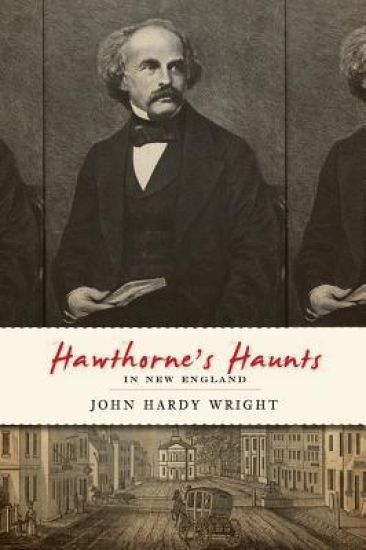
Hawthorne's Haunts in New England

Hawthorne's Haunts in New England

John Hardy Wright

History Press Library Editions
2008
sidottu
Loose the latchstring and peer into the places whereNathaniel Hawthorne passed back and forth from nineteenth century New England to the fertile country of his imagination. The historic images in this pictorial biography many by famed Salem photographer Frank Cousins might not inspire readers to the same literary genius as the celebrated author, but the dim and dusky grandeur lingering in his favorite haunts will no doubtenlighten as to the provocation of his pen. From Salem to Bowdoin College, and through Lenox and Concord, Salemite John Hardy Wright trails the famous author to his old accustomed chambers and reveals the inspiration behind an American literary legend."
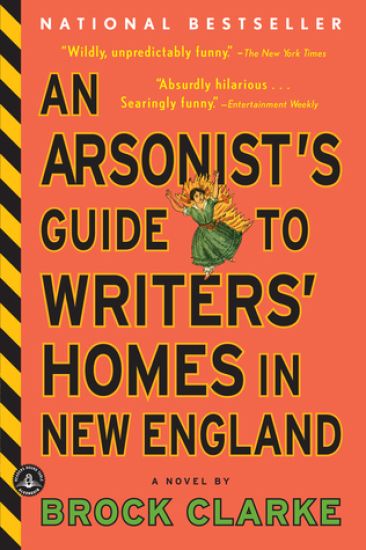
An Arsonist's Guide to Writers' Homes in New England
"Funny, profound . . . a seductive book with a payoff on every page."--People A lot of remarkable things have happened in the life of Sam Pulsifer, the hapless hero of this incendiary novel, beginning with the ten years he spent in prison for accidentally burning down Emily Dickinson's house and unwittingly killing two people. emerging at age twenty-eight, he creates a new life and identity as a husband and father. But when the homes of other famous New England writers suddenly go up in smoke, he must prove his innocence by uncovering the identity of this literary-minded arsonist. In the league of such contemporary classics as A Confederacy of Dunces and The World According to Garp, An Arsonist's Guide to Writers' Homes in New England is an utterly original story about truth and honesty, life and the imagination.
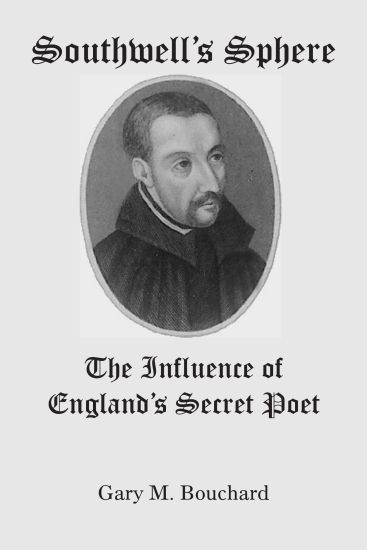
Southwell`s Sphere – The Influence of England`s Secret Poet
Once feared by Queen Elizabeth I and admired by William Shakespeare, Robert Southwell, s.j. (1561–1595), clings today to a thinning canonical presence in English literature among a sphere of other writers incongruously called the metaphysical poets. Southwell’s Sphere lifts this sixteenth century Jesuit priest and prolific writer from the obscurity in which he too often resides and places him instead at the center of a sphere of English poets upon whom his life and works exerted an observable influence. As he weaved his religious content into the familiar loom of Elizabethan form and style, this young missionary priest was seeking not just to catechize those whom he regarded as the faithful and the fallen, but to intentionally reform the verse of his native England. Remarkably, during his brief six-year mission, he actually managed in many respects to do so. Surviving for six years by successfully navigating and fostering a complicated underground Catholic network in and around London before being captured, tortured and imprisoned, Southwell was brought to trial and executed at Tyburn at age 33. He therefore never knew most of the “skillfuller wits” that he called upon to direct their poetic skills to the service of God. And like the marks upon his tortured body, the poetic marks of influence that his work left upon individual writers of this era were in many cases deliberately concealed. Southwell’s Sphere seeks to rediscover those marks and offer the reader a renewed appreciation for this subverted and subverting literary force in Early Modern England. In individual explicative chapters this book examines works by six poets whose verse may be appreciated differently in light of Robert Southwell’s life and work. The author makes the case that Southwell’s works, posthumously and prolifically published, instructed William Alabaster, provoked Edmund Spenser, prompted George Herbert, haunted John Donne, inspired Richard Crashaw and — two and a half centuries later — consoled Gerard Manley Hopkins, s.j. With the exception of Spenser, all of these poets were, like Southwell, ordained ministers. The particular personal, political and religious complexities of each of their lives notwithstanding, what they most shared in common with Southwell was their priestly vocation, their talent as English poets and the inevitable and inextricable joining of these two activities in their lives. While it would have made little sense for any of these poets to acknowledge Southwell as a poetic peer, each of them authored important verse that can best be appreciated within the sphere of this improbably successful and influential English poet.