Kirjojen hintavertailu. Mukana 12 016 292 kirjaa ja 12 kauppaa.

Kirjahaku

Etsi kirjoja tekijän nimen, kirjan nimen tai ISBN:n perusteella.

1000 tulosta hakusanalla Steven M. Neuse

Volume 15, Tome VI: Kierkegaard's Concepts

Volume 15, Tome VI: Kierkegaard's Concepts

Steven M. Emmanuel; William McDonald; Jon Stewart

Routledge
2015
sidottu
Kierkegaard’s Concepts is a comprehensive, multi-volume survey of the key concepts and categories that inform Kierkegaard’s writings. Each article is a substantial, original piece of scholarship, which discusses the etymology and lexical meaning of the relevant Danish term, traces the development of the concept over the course of the authorship, and explains how it functions in the wider context of Kierkegaard’s thought. Concepts have been selected on the basis of their importance for Kierkegaard’s contributions to philosophy, theology, the social sciences, literature and aesthetics, thereby making this volume an ideal reference work for students and scholars in a wide range of disciplines.
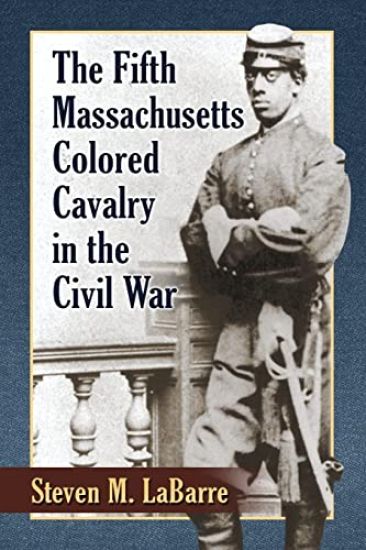
The Fifth Massachusetts Colored Cavalry in the Civil War
In January 1863, a long-anticipated military order arrived on the desk of Massachusetts Governor John Andrew. President Lincoln's secretary of war, Edwin Stanton, had granted the governor authority to raise regiments of black soldiers. Two units--the 54th and 55th Massachusetts Infantry--were soon mustered and in December, Andrew issued General Order No. 44, announcing "a Regiment of Cavalry Volunteers, to be composed of men of color...is now in the process of recruitment in the Commonwealth." Drawing on letters, diaries, memoirs and official reports, this book provides the first full-length regimental history of the Fifth Massachusetts Cavalry--its organization, participation in the Petersburg campaign and the guarding of prisoners at Point Lookout, Maryland, and its triumphant ride into Richmond. Accounts of the postwar lives of many of the men are included.
The Visible Word of the Unseen God

The Visible Word of the Unseen God

Steven M. Bryan

Baylor University Press
2025
sidottu
From the late first century to the end of late antiquity, three rival traditions—pagan, Jewish, and Christian—found themselves at odds over one issue in particular: the nature of the relationship between divine reality and the material world. In this context, the Evangelist John constructed his bios of Jesus as a narrative apologia addressed primarily to Jews whose objection to the worship of Jesus was essentially the same as their longstanding objection to pagan iconic worship. The Visible Word of the Unseen God argues that John wrote his Gospel for readers inclined to regard Christian claims about an incarnate Messiah as an illicit intermingling of the invisible reality of God with the visible creation. As such, the Gospel is best read as an act of scriptural reasoning that portrays the incarnation as a recapitulation of Israel's encounter with God at Sinai, where the visible appearance of God in his Word formed the basis for proscribing any attempt to contain God's presence in images. John designs his narrative to enable readers to hear the words spoken at Sinai as the life-giving words of the Logos and to see the incarnation, crucifixion, and resurrection as the definitive repudiation of idolatry—the climactic revelation of God's visible glory as his presence in his Word. An appreciation of this core feature of John's Gospel serves as a striking counterpoint to a reductive secularism that strips reality of all but stuff and the self-creating human words we inhabit. At the same time, John is no ally to those critics of secularism who trace its rise to Reformation-era iconoclasm. John does not offer a ressourcement for post-secular reenchantment but rather an entirely different conceptual world. As John renders the world, God is not absent from his creation but neither is his presence diffuse within it. Rather, the Creator is and always has been present in his Word. Through the incarnation, crucifixion, and resurrection, the Word has become the sanctuary that human beings coinhabit with God and share in the life he lives and speaks.
The Proof of the External World

The Proof of the External World

Steven M Duncan

Wipf Stock Publishers
2008
sidottu
""Descartes' attempt to ground the possibility of human knowledge in the existence of God was judged to be a complete failure by his contemporaries, and this remains the universal opinion of philosophers to this day, despite the fact that three and a half centuries of secular epistemology--which attempts to ground the possibility of knowledge either in the unaided human intellect or in natural processes--has failed to do any better. Further, the leading twentieth-century attempts at theistic epistemology reject both the conception of knowledge and the standards of epistemic evaluation that Descartes takes for granted. ""In this book--partly an interpretation of Descartes and partly an attempt to complete his project-- the author attempts to show that a theistic epistemology incorporating Platonic and Aristotelian/Thomist elements can revitalize the Cartesian approach to the solution of the central problems of epistemology, including that most elusive of prizes--the proof of the external world."" --From the author's preface
How the Liberal Arts Can Save Liberal Democracy
Currently, liberal democracy is threatened by authoritarian movements, not just in the United States but also in societies around the world. The liberal arts arrests authoritarian tendencies by advancing what it shares with the citizens of a liberal democracy: autonomy and freedom. Autonomy is the capacity to make reasoned decisions about a host of political, social, and personal matters—independent of external parties who seek to control our lives for the sake of their ends and at the cost of our freedom. But autonomy depends on people being able to enter into discussions—what I call discourses of mutual respect—designed to test ideas in public against facts and good reasons. This discourse is facilitated by an enlarged culture through which individuals identify what they hold in common and by which individuals work to understand their differences. Now, authoritarian regimes reject autonomy because it empowers citizens to designate the boundaries and content of political authority. Liberal democracies, in contrast, embrace autonomy because it is the basis for the political institutions that provide civic equality—and through it—the freedom of citizens to control their destiny. Yet, ironically, an enlarged culture and the discourse of mutual respect that, together, sustain autonomy are not likely to be produced within a highly partisan political atmosphere of a liberal democracy. Still, a liberal democracy is open to the importation of these elements from the liberal arts. Thus, saving liberal democracy from authoritarianism depends on a robust liberal arts presence in society. What reforms of the liberal arts are needed to make this objective possible? Much rides on the answer to this question. For the fact is that if the liberal arts recedes to a whisper, liberal democracy is likely to be defeated by the authoritarian’s bluster-filled and always nihilist roar.
How the Liberal Arts Can Save Liberal Democracy
Currently, liberal democracy is threatened by authoritarian movements, not just in the United States but also in societies around the world. The liberal arts helps to arrest these tendencies because of the support by citizens in liberal democracies for the values the latter shares with the liberal arts: autonomy and freedom. Autonomy is the capacity to make reasoned decisions about a host of political, social, and personal matters—independent of external parties who seek to control our lives for the sake of their ends and at the cost of our freedom. But autonomy depends on people being able to enter into discussions—what I call discourses of mutual respect—designed to test ideas in public against facts and good reasons. This discourse is facilitated by an enlarged culture through which individuals identify what they hold in common and by which individuals work to understand their differences. Now, authoritarian regimes reject autonomy because it empowers citizens to designate the boundaries and content of political authority. Liberal democracies, in contrast, embrace autonomy because it is the basis for the political institutions that provide civic equality—and through it—the freedom of citizens to control their destiny. Yet, ironically, an enlarged culture and the discourse of mutual respect that, together, sustain autonomy are not likely to be produced within a highly partisan political atmosphere of a liberal democracy. Still, a liberal democracy is open to the importation of these elements from the liberal arts. Thus, saving liberal democracy from authoritarianism depends on a robust liberal arts presence in society. What reforms of the liberal arts are needed to make this objective possible? Much rides on the answer to this question. For the fact is that if the liberal arts recedes to a whisper, liberal democracy is likely to be defeated by the authoritarian’s bluster-filled and always nihilist roar.
Multimodal Management of Canine Osteoarthritis

Multimodal Management of Canine Osteoarthritis

Steven M. Fox

Productivity Press
2016
sidottu
Multimodal Management of Canine Osteoarthritis, Second Edition takes an evidence-based approach to the canine patient with osteoarthritis, pursuing the objective of the best available medicine by a variety of means: multiple drugs, agents, adjuncts and delivery methods. Appreciating that surgical intervention may initially be required, particularly for stabilizing a joint, the major focus in this work is the conservative management of osteoarthritis. A clear and visual approach is taken with the overlapping of two three-pointed triangles of management: medical and non-medical. The completely updated new edition offers a major new chapter on Regenerative Medicine in collaboration with Drs Sherman Canapp and Brittany Jean Carr. It is recommended for any small animal veterinary practitioner, as well as researchers and students of the RCVS CertAVP.