

Kirjahaku
Etsi kirjoja tekijän nimen, kirjan nimen tai ISBN:n perusteella.
1000 tulosta hakusanalla Stuart Kelly

John Stuart Mill is one of the hallowed figures of the liberal tradition, revered for his defense of liberal principles and expansive personal liberty. By examining Mill's arguments in On Liberty in light of his other writings, however, Joseph Hamburger reveals a Mill very different from the "saint of rationalism" so central to liberal thought. He shows that Mill, far from being an advocate of a maximum degree of liberty, was an advocate of liberty and control--indeed a degree of control ultimately incompatible with liberal ideals. Hamburger offers this powerful challenge to conventional scholarship by presenting Mill's views on liberty in the context of his ideas about, in particular, religion and historical development. The book draws on the whole range of Mill's philosophical writings and on his correspondence with, among others, Harriet Taylor Mill, Auguste Comte, and Alexander Bain to show that Mill's underlying goal was to replace the traditional religious basis of society with a form of secular religion that would rest on moral authority, individual restraint, and social control. Hamburger argues that Mill was not self-contradictory in thus championing both control and liberty. Rather, liberty and control worked together in Mill's thought as part of a balanced, coherent program of social and moral reform that was neither liberal nor authoritarian. Based on a lifetime's study of nineteenth-century political thought, this clearly written and forcefully argued book is a major reinterpretation of Mill's ideas and intellectual legacy.
John Stuart Mill and Representative Government
Dennis F. Thompson
Princeton University Press
2015
pokkari
Although Mill regarded Considerations on Representative Government as a mature statement of his theory of democracy, critics have tended to treat it less seriously than most of his other major works. Dennis Thompson argues that this neglect has led to inadequate interpretations of Mill's thought on democracy. Drawing where appropriate on other writings by Mill, the author restores a balanced view by studying the structure of the theory expounded in Representative Government. Representative Government is shown to be more coherent and systematic than has generally been assumed. In the first two chapters the author examines separately Mill's views of political participation and competence. He then considers the philosopher's effort to combine participation and competence at any particular time in a theory of government and to reduce conflict between them over time in a theory of development. Basic features of Mill's view are subjected to critical scrutiny, and modifications are suggested to overcome the deficiencies noted. Throughout, Mill's claims are compared with the ideas and findings of recent social science, leading to the conclusion that his theory remains a valuable resource for contemporary thinking about democracy. Originally published in 1976. The Princeton Legacy Library uses the latest print-on-demand technology to again make available previously out-of-print books from the distinguished backlist of Princeton University Press. These editions preserve the original texts of these important books while presenting them in durable paperback and hardcover editions. The goal of the Princeton Legacy Library is to vastly increase access to the rich scholarly heritage found in the thousands of books published by Princeton University Press since its founding in 1905.

John Stuart Mill and Representative Government
Dennis F. Thompson
Princeton University Press
2016
sidottu
Although Mill regarded Considerations on Representative Government as a mature statement of his theory of democracy, critics have tended to treat it less seriously than most of his other major works. Dennis Thompson argues that this neglect has led to inadequate interpretations of Mill's thought on democracy. Drawing where appropriate on other writings by Mill, the author restores a balanced view by studying the structure of the theory expounded in Representative Government. Representative Government is shown to be more coherent and systematic than has generally been assumed. In the first two chapters the author examines separately Mill's views of political participation and competence. He then considers the philosopher's effort to combine participation and competence at any particular time in a theory of government and to reduce conflict between them over time in a theory of development. Basic features of Mill's view are subjected to critical scrutiny, and modifications are suggested to overcome the deficiencies noted. Throughout, Mill's claims are compared with the ideas and findings of recent social science, leading to the conclusion that his theory remains a valuable resource for contemporary thinking about democracy. Originally published in 1976. The Princeton Legacy Library uses the latest print-on-demand technology to again make available previously out-of-print books from the distinguished backlist of Princeton University Press. These editions preserve the original texts of these important books while presenting them in durable paperback and hardcover editions. The goal of the Princeton Legacy Library is to vastly increase access to the rich scholarly heritage found in the thousands of books published by Princeton University Press since its founding in 1905.

In the early draft of his Autobiography (London, 1873), John Stuart Mill described himself as “a pupil of Plato, and cast in the mould of his dialectics.” However, how Plato’s influence came about, to what extent, and with regard to which aspects of Mill’s thought, form questions that do not usually preoccupy Mill scholarship. To fill this gap in critical attention, this book draws upon a variety of primary sources to pay particular attention to Mill’s concern with reform, method, character, virtue, and happiness through his reading of the ancient Greeks—particularly Plato. At the same time, this book focuses on the intellectual relationship between father and son, studying their responses to the prevalent trends as to the worth of classical studies and of Platonic philosophy in nineteenth-century Britain. Not only does John Stuart Mill’s “intoxication” with ancient Greece manifest itself in all those aspects of his works already mentioned; but—what is most important—it also permeates his unvarying aim: the improvement of mankind through the improvement of its individual members.

This book offers a clear and highly readable introduction to the ethical and social-political philosophy of John Stuart Mill. Dale E. Miller argues for a "utopian" reading of Mill's utilitarianism. He analyses Mill's views on happiness and goes on to show the practical, social and political implications that can be drawn from his utilitarianism, especially in relation to the construction of morality, individual freedom, democratic reform, and economic organization. By highlighting the utopian thinking which lies at the heart of Mill's theories, Miller shows that rather than allowing for well-being for the few, Mill believed that a society must do everything in its power to see to it that each individual can enjoy a genuinely happy life if the happiness of its members is to be maximized. Miller provides a cogent and careful account of the main arguments offered by Mill, considers the critical responses to his work, and assesses its legacy for contemporary philosophy. Lucidly and persuasively written, this book will be a valuable resource for students and scholars seeking to understand the continued importance of Mill's thinking.

This book offers a clear and highly readable introduction to the ethical and social-political philosophy of John Stuart Mill. Dale E. Miller argues for a "utopian" reading of Mill's utilitarianism. He analyses Mill's views on happiness and goes on to show the practical, social and political implications that can be drawn from his utilitarianism, especially in relation to the construction of morality, individual freedom, democratic reform, and economic organization. By highlighting the utopian thinking which lies at the heart of Mill's theories, Miller shows that rather than allowing for well-being for the few, Mill believed that a society must do everything in its power to see to it that each individual can enjoy a genuinely happy life if the happiness of its members is to be maximized. Miller provides a cogent and careful account of the main arguments offered by Mill, considers the critical responses to his work, and assesses its legacy for contemporary philosophy. Lucidly and persuasively written, this book will be a valuable resource for students and scholars seeking to understand the continued importance of Mill's thinking.

Alison Plowden provides a study of the fascinating lives of the six princesses of the House of Stuart who lived through the violent social and political upheavals of the 17th century. Of these six princesses, one was the direct ancestress of the present British royal family, one was the mother of a king of England and one died in prison at the age of 14. Another became Madame de France and two were English queens regnant. The book describes the lives of these aunts and nieces, sisters and cousins, which were interwoven with the fortunes and misfortunes of their fathers and brothers, sons and husbands. Set against a backdrop of war, intrigue and high politics, these are stories of tragedy and conflict, intimate domestic drama, romance and adventure.

The regal courts of the English Stuart Kings, from James I (1603-1625) to the ill-fated James II (1685-1689), were magnificent affairs. In a country otherwise given to increasingly austere Puritan ways of living, the royal court shone with a brilliance usually associated with the courts of the Catholic kings of mainland Europe. They were centres of great culture, patronage, ceremony and politics. The real importance of the courts, though down-played for many years, is now beginning to be fully recognised and this first major study of the Stuart courts in England, Scotland and Ireland examines them in their full cultural and historical context. Scholars of international reputation and up and coming, younger scholars have been brought together to give us an insight into many aspects of the Stuart courts. This book includes essays on culture and patronage of the arts and social history. What was it really like at the court? What rules applied? How did the courtiers behave? Finally, the crucial interplay between court life and political life, and politics, is examined in detail. This book is a major contribution to a flourishing area of scholarship and will be required reading for anyone interested in seventeenth-century history, court studies or the arts in the early modern period.

'This is the most lucid and engaged account of Stuart Hall's work. Meticulously, and with an exemplary generosity, Helen Davis patiently unravels the threads of Hall's intellectual history. The result is a most useful and thoughtful book, which could prove to be indispensable for students of cultural studies' - Graeme Turner, University of Queensland Understanding Stuart Hall traces the development of one of the most influential and respected figures within cultural studies. Focusing on Stuart Hall's writings over a period of nearly fifty years, this volume offers students and academics a cogent and exploratory route through complex and overlapping areas of analysis. In her critical assessment of Hall's most important contributions to academic and public debate, Davis shows the extent to which his analyses of race and ethnicity have been informed by early studies of Marxism, class and 'societies structured in dominance'. Davis offers fresh insight into the formation of one of the most prolific, charismatic and controversial intellectuals of his generation. Despite having been branded a 'cultural pessimist', Stuart Hall has long been associated with encouraging new, cutting-edge scholarship within the field. This volume concludes with a discussion of Hall's most recent political and academic interventions and his continuing commitment to innovation within the visual arts.

'This is the most lucid and engaged account of Stuart Hall's work. Meticulously, and with an exemplary generosity, Helen Davis patiently unravels the threads of Hall's intellectual history. The result is a most useful and thoughtful book, which could prove to be indispensable for students of cultural studies' - Graeme Turner, University of Queensland Understanding Stuart Hall traces the development of one of the most influential and respected figures within cultural studies. Focusing on Stuart Hall's writings over a period of nearly fifty years, this volume offers students and academics a cogent and exploratory route through complex and overlapping areas of analysis. In her critical assessment of Hall's most important contributions to academic and public debate, Davis shows the extent to which his analyses of race and ethnicity have been informed by early studies of Marxism, class and 'societies structured in dominance'. Davis offers fresh insight into the formation of one of the most prolific, charismatic and controversial intellectuals of his generation. Despite having been branded a 'cultural pessimist', Stuart Hall has long been associated with encouraging new, cutting-edge scholarship within the field. This volume concludes with a discussion of Hall's most recent political and academic interventions and his continuing commitment to innovation within the visual arts.


In this well-researched, comprehensive study of J.S. Mill, Professor Habibi argues that the persistent, dominant theme of Mill's life and work was his passionate belief in human improvement and progress. Several Mill scholars recognize this; however, numerous writers overlook his 'growth ethic', and this has led to misunderstandings about his value system. This study defines and establishes the importance of Mill's growth ethic and clears up misinterpretations surrounding his notions of higher and lower pleasures, positive and negative freedom, the status of children, the legitimacy of authority, and support for British colonialism. Drawing from the entire corpus of Mill's writings, as well as the extensive secondary literature, Habibi has written the most focused, sustained analysis of Mill's grand, leading principle. This book will be useful to college students in philosophy and intellectual history as well as specialists in these fields.

The well-educated daughter of a minister, Elizabeth Stuart Phelps (1844–1911) was introduced to writing at a young age, as both her mother and father were published writers. In 1868 she published her first major novel, The Gates Ajar. An international success, the novel sold more than six hundred thousand copies, making it one of the best-selling American works of the nineteenth century. Through the next four decades Phelps published hundreds of essays, tales, and poems, which appeared in every major American periodical, while also writing novels, including Beyond the Gates (1883) and The Gates Between (1887).Phelps's legacy as an important American writer, however, has been hurt by the seeming contradictions between her life and work. For example, she was an ardent advocate for women's rights both inside and outside marriage, but her stories seem to glorify the sort of extreme self-sacrifice associated with the most conservative domestic ideology. In this collection, the editors seek to restore Phelps's reputation by bringing together a diverse collection from the entire body of her lifetime of work. From arguments for suffrage to harrowing tales of Reconstruction, these essays, along with short fiction and poetry, provide a new perspective on a major American writer from the later nineteenth century.
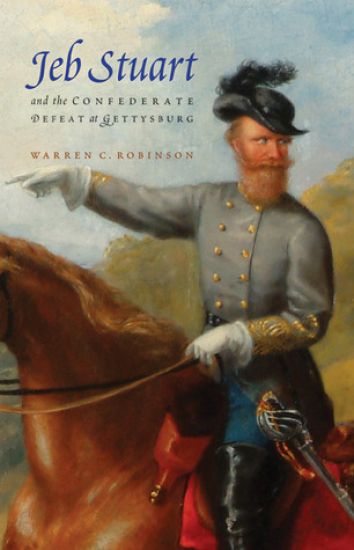
Jeb Stuart and the Confederate Defeat at Gettysburg
Warren C. Robinson
University of Nebraska Press
2013
pokkari
"The Army was much embarrassed by the absence of the cavalry," Robert E. Lee wrote of the Gettysburg campaign, stirring a controversy that continues even today. Lee's statement was an indirect indictment of Gen. James Ewell Brown ("Jeb") Stuart, who was the cavalry. This book reexamines the questions that have shadowed the legendary Confederate hero and offers a fresh, informed interpretation of his role at Gettysburg.Avoiding the partisan pros and cons characterizing previous accounts, Warren C. Robinson reassesses the historical record to come to a clearer view of Stuart's orders for the crucial battle (as well as what was expected of him), of his actual performance, and of the impact his late arrival had on the outcome of the campaign. Though Stuart may not have disobeyed Lee's orders, Robinson argues, he did abuse the general's discretion by raiding Washington rather than scouting for the army at Gettysburg—a move that profoundly affected Confederate fortunes and perhaps the war itself.
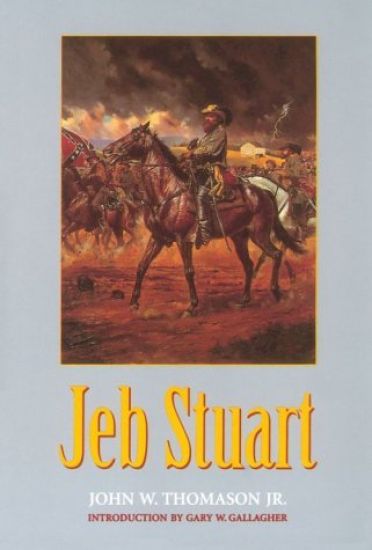
'Thomason's volume is a spirited and eloquent one...His account of the ride around McClellan is a fine piece of description as you are likely to meet, and his accounts of Seven Days, Antietam, Chambersburg, Fredericksburg, and Chancellorsville are both full and brilliant' - Henry Steele Commager. 'An intimate biography, warm, colorful, convincing. The picture of a happy warrior rejoicing in life, love, and the task he was supremely fitted to do' - "New York Evening Post". 'Captain Thomason neglects none of the little touches that so clearly reveal the human and lovable side of Jeb Stuart. At the same time he retells, in unforgettable language, the story of the Confederate cavalry's part in the fighting done by the Army of Northern Virginia' - "Christian Science Monitor". 'We cannot recall any biography of a Civil War leader with half the dash, color, and smartness of Jeb Stuart' - "Outlook".'Set forth with engaging phrase and infectious gusto which carry the reader' - "Saturday Review of Literature". Hardly any biography could contain the robust and romantic Jeb Stuart, but John W. Thomason Jr. goes as far as anyone ever has in pinning down the quality of the Confederate cavalry commander. Virginia-bred, James Ewell Brown Stuart graduated from West Point, where he was called "Beauty," and rode with the Mounted Rifles against the Apaches and Comanches on the western frontier. When Virginia seceded from the Union, Jeb Stuart joined the Confederate army. His lightning-like raids became legendary.From Bull Run to Brandy Station he served as Robert E. Lee's eyes and ears, becoming a major general at the age of twenty-eight. Less than three years later Stuart's meteoric career ended with his death in a cavalry charge. John W. Thomason Jr., a captain in the U. S. Marine Corps in World War I, interviewed members of the Stuart family for this book, first published in 1930. This Bison Book edition is introduced by Gary W. Gallagher, a professor of history at Pennsylvania State University and the author of "Fighting for the Confederacy: Personal Recollections of General Edward Porter Alexander" and "The First Day at Gettysburg: Essays on Confederate and Union Leadership".
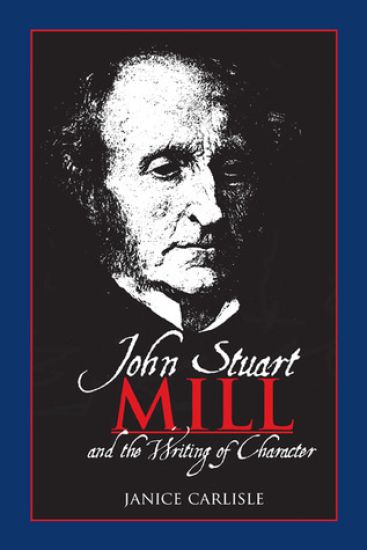
John Stuart Mill and the Writing of Character
Janice Carlisle
University of Georgia Press
2010
pokkari
In his essay On Liberty, John Stuart Mill writes that a person “whose desires and impulses are not his own, has no character, no more than a steamengine has a character.” Although Mill never devoted an essay or treatise solely to character, Janice Carlisle argues that the subject was central to his writings on politics, philosophy, science, literature, sociology, and psychology.This interdisciplinary study proposes a comprehensive reevaluation of the links between Mill’s experience and his writings, and it does so by examining such larger issues as the relation between gender and profession in Victorian culture and the nature of autobiographical writing. Moreover, the questions that interested Mill provide a historical perspective on current debates about the relative value of theory and practice or the construction of individuals by social and political forces beyond their control.Written with genuine sympathy for the conflicts between Mill’s ambitions and his circumstances, this study recognizes that his impulses toward self-defeat were confirmed and complicated by his culture. Far from the detached thinker that he strove to become in his writings, Mill emerges here as a man whose personal failures of vision on some issues are as revealing and compelling as his insights into others.