Kirjojen hintavertailu. Mukana 11 699 587 kirjaa ja 12 kauppaa.

Kirjahaku

Etsi kirjoja tekijän nimen, kirjan nimen tai ISBN:n perusteella.

1000 tulosta hakusanalla Thomas Sharp

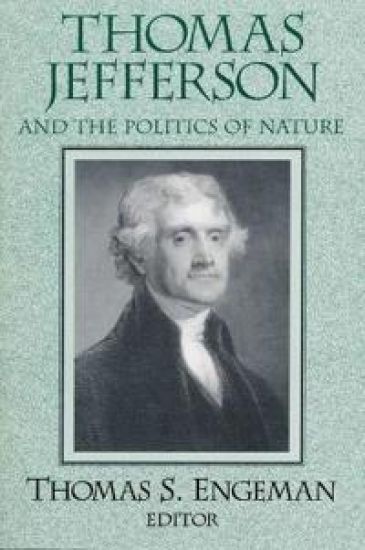
Thomas Jefferson and the Politics of Nature

Thomas Jefferson and the Politics of Nature

Thomas Engeman

University of Notre Dame Press
2000
nidottu
With the equality and liberty of the Declaration of Independence as his fighting words, Thomas Jefferson created American democracy. For the two hundred years since then, he has been studied and debated worldwide, but never more intensely than in recent years. His extensive and influential understanding of democracy's foundation in reason and nature continue to make him one of the most examined American founders. Thomas Jefferson and the Politics of Nature is a collection of the very best current scholarship devoted to Thomas Jefferson as politician, writer, philosopher, Christian, and economist. Lead essayist Michael Zuckert presents his comprehensive interpretation of Jefferson's political thought, which Zuckert considers the best theoretical approach to democracy. While Zuckert moderates Jefferson's natural rights philosophy with a Kantian perspective, Jean Yarbrough responds with the argument that Jefferson incorporates the authors of the Scottish Enlightenment and principles from the Republican tradition to achieve the same moderating effect. Garrett Ward Sheldon looks at the broader cultural influences shaping Jefferson's thought and traces his republicanism to his support of Christian ethics and Aristotle. R. Booth Fowler examines why Jefferson, the leading liberal theorist of the nineteenth century, became the hero of the very different liberalism of the twentieth. Robert Dawidoff considers Jefferson as writer and literary figure instead of political thinker and actor, while Joyce Appleby renews an appreciation of Jefferson's statecraft by a famous reexamination of his commercial agrarian policy. Finally, James Ceaser traces Jefferson's belief in racial inferiority to a speculative new natural science prominent among contemporary European thinkers and argues that Jefferson committed a significant error in reducing politics to such conjectural "facts." This compact text is ideal for professors wishing to offer a one-volume collection of current Jeffersonian scholarship to undergraduate students. Professors and students alike will find that the essays contain prompt, focused, substantive discussions on the key issues facing Jeffersonian scholars. This handy collection will be an invaluable classroom tool for those studying not only Jefferson but also history, political philosophy, and science, as well as the history of ideas.
Thomas Hobbes and the Natural Law

Thomas Hobbes and the Natural Law

Kody W. Cooper

University of Notre Dame Press
2018
sidottu
Has Hobbesian moral and political theory been fundamentally misinterpreted by most of his readers? Since the criticism of John Bramhall, Hobbes has generally been regarded as advancing a moral and political theory that is antithetical to classical natural law theory. Kody W. Cooper challenges this traditional interpretation of Hobbes in Thomas Hobbes and the Natural Law. Hobbes affirms two essential theses of classical natural law theory: the capacity of practical reason to grasp intelligible goods or reasons for action and the legally binding character of the practical requirements essential to the pursuit of human flourishing. Hobbes's novel contribution lies principally in his formulation of a thin theory of the good. This book seeks to prove that Hobbes has more in common with the Aristotelian-Thomistic tradition of natural law philosophy than has been recognized. According to Cooper, Hobbes affirms a realistic philosophy as well as biblical revelation as the ground of his philosophical-theological anthropology and his moral and civil science. In addition, Cooper contends that Hobbes's thought, although transformative in important ways, also has important structural continuities with the Aristotelian-Thomistic tradition of practical reason, theology, social ontology, and law. What emerges from this study is a nuanced assessment of Hobbes's place in the natural law tradition as a formulator of natural law liberalism. This book will appeal to political theorists and philosophers and be of particular interest to Hobbes scholars and natural law theorists.
Thomas Hobbes and the Natural Law

Thomas Hobbes and the Natural Law

Kody W. Cooper

UNIVERSITY OF NOTRE DAME PRESS
2022
nidottu
Has Hobbesian moral and political theory been fundamentally misinterpreted by most of his readers? Since the criticism of John Bramhall, Hobbes has generally been regarded as advancing a moral and political theory that is antithetical to classical natural law theory. Kody W. Cooper challenges this traditional interpretation of Hobbes in Thomas Hobbes and the Natural Law. Hobbes affirms two essential theses of classical natural law theory: the capacity of practical reason to grasp intelligible goods or reasons for action and the legally binding character of the practical requirements essential to the pursuit of human flourishing. Hobbes's novel contribution lies principally in his formulation of a thin theory of the good. This book seeks to prove that Hobbes has more in common with the Aristotelian-Thomistic tradition of natural law philosophy than has been recognized. According to Cooper, Hobbes affirms a realistic philosophy as well as biblical revelation as the ground of his philosophical-theological anthropology and his moral and civil science. In addition, Cooper contends that Hobbes's thought, although transformative in important ways, also has important structural continuities with the Aristotelian-Thomistic tradition of practical reason, theology, social ontology, and law. What emerges from this study is a nuanced assessment of Hobbes's place in the natural law tradition as a formulator of natural law liberalism. This book will appeal to political theorists and philosophers and be of particular interest to Hobbes scholars and natural law theorists.
Thomas Jefferson and the Politics of Nature

Thomas Jefferson and the Politics of Nature

Thomas Engeman

UNIVERSITY OF NOTRE DAME PRESS
2022
sidottu
With the equality and liberty of the Declaration of Independence as his fighting words, Thomas Jefferson created American democracy. For the two hundred years since then, he has been studied and debated worldwide, but never more intensely than in recent years. His extensive and influential understanding of democracy's foundation in reason and nature continue to make him one of the most examined American founders. Thomas Jefferson and the Politics of Nature is a collection of the very best current scholarship devoted to Thomas Jefferson as politician, writer, philosopher, Christian, and economist. Lead essayist Michael Zuckert presents his comprehensive interpretation of Jefferson's political thought, which Zuckert considers the best theoretical approach to democracy. While Zuckert moderates Jefferson's natural rights philosophy with a Kantian perspective, Jean Yarbrough responds with the argument that Jefferson incorporates the authors of the Scottish Enlightenment and principles from the Republican tradition to achieve the same moderating effect. Garrett Ward Sheldon looks at the broader cultural influences shaping Jefferson's thought and traces his republicanism to his support of Christian ethics and Aristotle. R. Booth Fowler examines why Jefferson, the leading liberal theorist of the nineteenth century, became the hero of the very different liberalism of the twentieth. Robert Dawidoff considers Jefferson as writer and literary figure instead of political thinker and actor, while Joyce Appleby renews an appreciation of Jefferson's statecraft by a famous reexamination of his commercial agrarian policy. Finally, James Ceaser traces Jefferson's belief in racial inferiority to a speculative new natural science prominent among contemporary European thinkers and argues that Jefferson committed a significant error in reducing politics to such conjectural "facts." This compact text is ideal for professors wishing to offer a one-volume collection of current Jeffersonian scholarship to undergraduate students. Professors and students alike will find that the essays contain prompt, focused, substantive discussions on the key issues facing Jeffersonian scholars. This handy collection will be an invaluable classroom tool for those studying not only Jefferson but also history, political philosophy, and science, as well as the history of ideas.
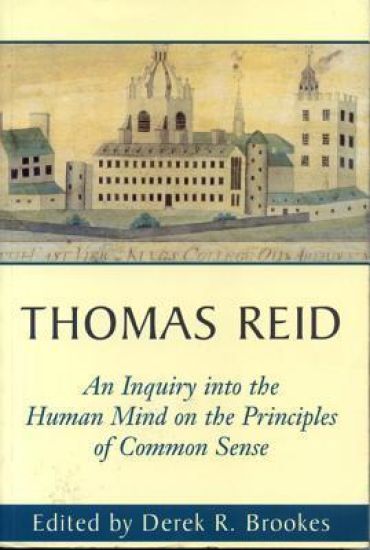
Thomas Reid's An Inquiry into the Human Mind on the Principles of Common Sense
Thomas Reid's Inquiry has long been recognized as a classic philosophical text. Since its first publication in 1764, there have followed no less than forty editions. The proliferation of secondary literature further indicates that Reid's work is flourishing as never before. Yet Reid scholars have been acutely aware of proceeding without the full textual evidence. There exist thousands of unpublished manuscript pages in Reid's hand, many of which relate directly to the composition of Inquiry. Furthermore, no account has been taken of the successive alterations made to the four editions published in Reid's lifetime. The present edition, therefore, aims to present a complete, critically edited text of the Inquiry, accompanied by a judicious selection of manuscript evidence relating to its composition.The volume contains an editor preface presenting the raison d'etre for the edition followed by an introduction giving the central argument of the Inquiry by means of an historical and philosophical account of its formation; an account which also indicates the significance of the MSS contained in the section containing related documents. The critical text is based on the fourth life-time edition (1785), while the textual notes include bibliographical details and allusions, translations, references to secondary literature, and selected passages from Reid's MSS.
Thomas Reid's An Inquiry into the Human Mind on the Principles of Common Sense
Thomas Reid's Inquiry has long been recognized as a classic philosophical text. Since its first publication in 1764, there have followed no less than forty editions. The proliferation of secondary literature further indicates that Reid's work is flourishing as never before. Yet Reid scholars have been acutely aware of proceeding without the full textual evidence. There exist thousands of unpublished manuscript pages in Reid's hand, many of which relate directly to the composition of Inquiry. Furthermore, no account has been taken of the successive alterations made to the four editions published in Reid's lifetime. The present edition, therefore, aims to present a complete, critically edited text of the Inquiry, accompanied by a judicious selection of manuscript evidence relating to its composition.The volume contains an editor preface presenting the raison d'etre for the edition followed by an introduction giving the central argument of the Inquiry by means of an historical and philosophical account of its formation; an account which also indicates the significance of the MSS contained in the section containing related documents. The critical text is based on the fourth life-time edition (1785), while the textual notes include bibliographical details and allusions, translations, references to secondary literature, and selected passages from Reid's MSS.
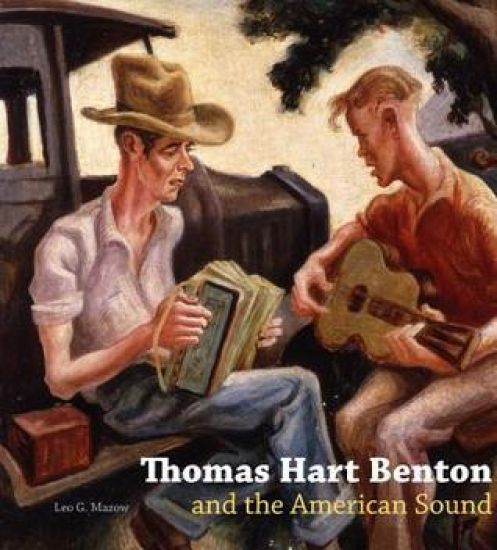
Thomas Hart Benton and the American Sound

Thomas Hart Benton and the American Sound

Leo G. Mazow

Pennsylvania State University Press
2012
sidottu
Alternately praised as “an American original” and lampooned as an arbiter of kitsch, the regionalist painter Thomas Hart Benton has been the subject of myriad monographs and journal articles, remaining almost as controversial today as he was in his own time. Missing from this literature, however, is an understanding of the profound ways in which sound figures in the artist’s enterprises. Prolonged attention to the sonic realm yields rich insights into long-established narratives, corroborating some but challenging and complicating at least as many. A self-taught and frequently performing musician who invented a harmonica tablature notation system, Benton was also a collector, cataloguer, transcriber, and distributor of popular music. In Thomas Hart Benton and the American Sound, Leo Mazow shows that the artist’s musical imagery was part of a larger belief in the capacity of sound to register and convey meaning. In Benton’s pictorial universe, it is through sound that stories are told, opinions are voiced, experiences are preserved, and history is recorded.
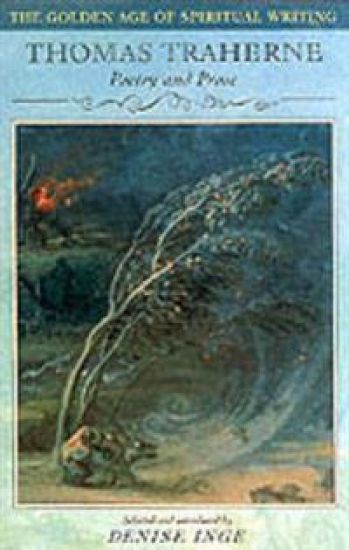
Thomas Traherne

Thomas Traherne

Spck

SPCK Publishing
2002
nidottu
Denise Inge introduces a selection from Thomas Traherne's writing in this, the third volume in this series on seventeenth century spiritual writers. This volume will contain some biographical detail and historical context, the story of the discovery of his work as well as a discussion of its literary and spiritual power. The main body of the anthology will cover both well known works such as a selection from the Centuries and also excerpts from newer discoveries, including a recent find from Lambeth Palace Library. Thomas Traherne 1636?-1674 was schooled at Brasenose College, Oxford, was ordainded and served in the village of Credenhill, Herefordshire.
A Year with Thomas Merton

A Year with Thomas Merton

Thomas Merton

SPCK Publishing
2005
nidottu
Daily reflections from the one of the most influential spiritual writers of the past century Thomas Merton is widely acclaimed as one of the most influential American spiritual writers of the past century. This volume of daily reflections draws from Merton's journals and papers to present, each day, a seasonally appropriate and thought-provoking insight or observation. Each month begins with one of Merton's delightful Zen-style pen-and-ink or black and white photographs.
Thomas: The Other Gospel

Thomas: The Other Gospel

Spck

SPCK Publishing
2007
nidottu
"Thomas, The Other Gospel" tells the story of the gospel from its discovery to its current reception among academics and in more popular circles. It provides a clear, comprehensive, non-technical guide through the scholarly maze of issues surrounding the Coptic text. Nick Perrin argues that the gospel derives not from the era of Jesus or even the apostles (as many have led us to believe), but from the late second century. He also argues that the gospel was originally written in Syriac and not 'in Greek as many other scholars believe. Thus the real value of the Gospel of Thomas lies not in what it does or does not say about the 'real Jesus' but in what it tells us about early Syriac Christianity. Perrin presents a sound and balanced, yet thoroughly persuasive, alternative explanation to revisionist accounts of Christian origins.
Thomas and the Gospels

Thomas and the Gospels

Mark Goodacre

SPCK Publishing
2012
nidottu
The Gospel of Thomas is the most controversial of the non-canonical gospels and the most important source outside the Gospels for our understanding of the historical Jesus and Christianity's origins. Mark Goodacre makes a detailed and compelling case that the author of The Gospel of Thomas is, after all, familiar with the Synoptic Gospels. He shows that the arguments for independence are inadequate and that the degree of agreement between Thomas and the Synoptics is far too great to be mediated by oral tradition. He suggests that Thomas features tell-tale signs of Matthew's and Luke's redactions and that the Gospel should be dated to the early to middle second century, when its author was looking for a means of lending the voice of his enigmatic Jesus an authoritative, Synopic-sounding legitimacy.
Thomas Aquinas

Thomas Aquinas

Brian Davies

SPCK Publishing
2017
pokkari
'The study of philosophy is that we may know not what men have thought, but what the truth of things is.' Thomas Aquinas (c. 1225-74) was one of the most influential philosophers of the Middle Ages, and his works continue to be widely read today. The leading classical proponent of natural theology and the founder of Thomism, he is regarded as one of the greatest Western thinkers of all time. Written by a world authority, this brief history begins with an engaging account of Aquinas's life and intellectual context. Thomas Aquinas goes on to explain the main contours of his thought for readers who may have no previous knowledge of him, or of academic philosophy and theology. It concludes with an informed assessment of the scale and significance of his legacy.
Thomas More

Thomas More

John Guy

SPCK Publishing
2019
pokkari
'If the English people were to be set a test to justify their history and civilization by the example of one man, then it is Sir Thomas More whom they would perhaps choose.' So commented The Times in 1978 on the 500th anniversary of More's birth. Twenty-two years later, Pope John Paul II proclaimed Thomas More the patron saint of politicians and people in public life, on the basis of his 'constant fidelity to legitimate authority and ... his intention to serve not power but the supreme ideal of justice'. In this fresh assessment of More's life and legacy, John Guy considers the factors that have given rise to such claims concerning More's significance. Who was the real Thomas More? Was he the saintly, self-possessed hero of conscience of Robert Bolt's A Man for All Seasons or was he the fanatical, heretic-hunting torturer of Hilary Mantel's Wolf Hall? Which of these images of More has the greater historical veracity? And why does this man continue to fascinate, inspire and provoke us today?
Thomas More

Thomas More

John Guy

SPCK Publishing
2017
sidottu
'If the English people were to be set a test to justify their history and civilization by the example of one man, then it is Sir Thomas More whom they would perhaps choose.' So commented The Times in 1978 on the 500th anniversary of More's birth. Twenty-two years later, Pope John Paul II proclaimed Thomas More the patron saint of politicians and people in public life, on the basis of his 'constant fidelity to legitimate authority and ... his intention to serve not power but the supreme ideal of justice'. In this fresh assessment of More's life and legacy, John Guy considers the factors that have given rise to such claims concerning More's significance. Who was the real Thomas More? Was he the saintly, self-possessed hero of conscience of Robert Bolt's A Man for All Seasons or was he the fanatical, heretic-hunting torturer of Hilary Mantel's Wolf Hall? Which of these images of More has the greater historical veracity? And why does this man continue to fascinate, inspire and provoke us today?
Thomas Cochrane and the Dragon Throne

Thomas Cochrane and the Dragon Throne

Andrew E. Adam

SPCK Publishing
2018
nidottu
In 1897 Tom Cochrane, a young, newly-qualified Scottish medical missionary, arrived with his wife in Chaoyang, Inner Mongolia. For three years he laboured single-handed in a mud-floored dispensary, quickly realising his work was a drop in a sea of suffering. He became seized by the vision of a Western medical college and teaching hospital in Peking. In 1900 the Boxer Rebellion began. Rebels roamed the countryside. Their cry was: `Kill the foreigners! Kill them before breakfast!’ Over 30,000 converts were butchered in months, with hundreds of missionaries. The Cochranes escaped with their three young sons, but by 1901 Tom was back. In Peking he practised from mule stables amongst beggars and lepers. A powerful nobleman befriended him, and in 1903 his intervention brought a major cholera epidemic under control. The Imperial Grand Eunuch, right-hand man of the feared Empress Dowager, helped Tom to petition the Dragon Throne and obtain a substantial grant for his college. In 1906 he established the Peking Union Medical College. Today it stands in Beijing, prestigious and respected. Its origins forgotten, it remains one of countless seeds Christians planted in China.