Kirjojen hintavertailu. Mukana 12 016 292 kirjaa ja 12 kauppaa.

Kirjahaku

Etsi kirjoja tekijän nimen, kirjan nimen tai ISBN:n perusteella.

1000 tulosta hakusanalla Vicki Fish

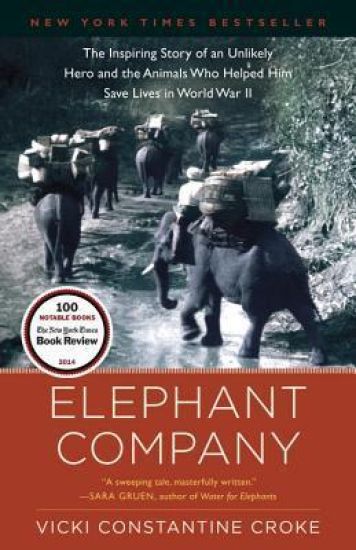
Elephant Company: The Inspiring Story of an Unlikely Hero and the Animals Who Helped Him Save Lives in World War II
NEW YORK TIMES BESTSELLER - A NEW YORK TIMES NOTABLE BOOK The remarkable story of James Howard "Billy" Williams, whose uncanny rapport with the world's largest land animals transformed him from a carefree young man into the charismatic war hero known as Elephant Bill In 1920, Billy Williams came to colonial Burma as a "forest man" for a British teak company. Mesmerized by the intelligence and character of the great animals who hauled logs through the jungle, he became a gifted "elephant wallah." In Elephant Company, Vicki Constantine Croke chronicles Williams's growing love for elephants as the animals provide him lessons in courage, trust, and gratitude. Elephant Company is also a tale of war and daring. When Japanese forces invaded Burma in 1942, Williams joined the elite British Force 136 and operated behind enemy lines. His war elephants carried supplies, helped build bridges, and transported the sick and elderly over treacherous mountain terrain. As the occupying authorities put a price on his head, Williams and his elephants faced their most perilous test. Elephant Company, cornered by the enemy, attempted a desperate escape: a risky trek over the mountainous border to India, with a bedraggled group of refugees in tow. Part biography, part war epic, Elephant Company is an inspirational narrative that illuminates a little-known chapter in the annals of wartime heroism. Praise for Elephant Company "This book is about far more than just the war, or even elephants. This is the story of friendship, loyalty and breathtaking bravery that transcends species. . . . Elephant Company is nothing less than a sweeping tale, masterfully written."--Sara Gruen, The New York Times Book Review "Splendid . . . Blending biography, history, and wildlife biology, Vicki Constantine] Croke's story is an often moving account of Billy] Williams, who earned the sobriquet 'Elephant Bill, ' and his unusual bond with the largest land mammals on earth."--The Boston Globe "Some of the biggest heroes of World War II were even bigger than you thought. . . . You may never call the lion the king of the jungle again."--New York Post "Vicki Constantine Croke delivers an exciting tale of this elephant whisperer-cum-war hero, while beautifully reminding us of the enduring bonds between animals and humans."--Mitchell Zuckoff, author of Lost in Shangri-La and Frozen in Time
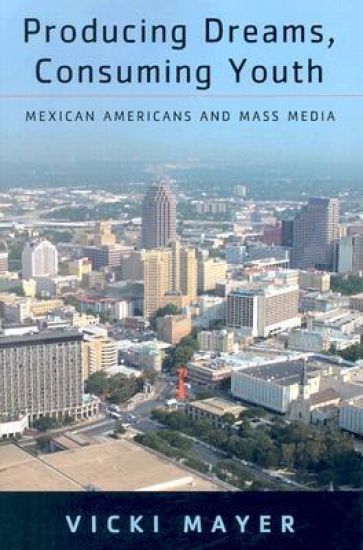
Producing Dreams, Consuming Youth

Producing Dreams, Consuming Youth

Vicki Mayer

Rutgers University Press
2003
nidottu
Latinos are the fastest-growing ethnic group in America and the ascendance of their popular culture has become a huge phenomenon. But beyond J. Lo and Shakira, there is a deeper story to tell about culture, class, and community identities.Producing Dreams, Consuming Youth takes us behind the scenes in San Antonio, Texas, a major market for Mexican American popular culture. Vicki Mayer brings readers the perspectives of those who produce and consume mass media—including music, television, and newspapers. Through the voices of people ranging from Spanish-language advertising agency executives to English-speaking working-class teenagers, we see how the media brings together communities of Mexican Americans as they pursue cultural dreams, identification, and empowerment. At the heart of the book is a debate about the future of Mexican American media, and thus of the youth market. How and why do media professionals imagine ethnic youths? How do young Mexican Americans accept, negotiate, and resist these images of themselves? Producing Dreams, Consuming Youth emphasizes the paradoxes of media industries that seek to include youths of color while profiting from their creative energies.
Developing Faculty in Liberal Arts Colleges

Developing Faculty in Liberal Arts Colleges

Vicki L. Baker; Laura Gail Lunsford; Meghan J. Pifer

Rutgers University Press
2017
nidottu
Developing Faculty Members in Liberal Arts Colleges analyzes the career stage challenges these faculty members must overcome, such as a lack of preparation for teaching, limited access to resources and mentors, and changing expectations for excellence in teaching, research, and service to become academic leaders in their discipline and at these distinctive institutions. Drawing on research conducted at the thirteen institutions of the Great Lakes Colleges Association, Vicki L. Baker, Laura Gail Lunsford, and Meghan J. Pifer propose a compelling Alignment Framework for Faculty Development in Liberal Arts Colleges to show how these colleges succeed—or sometimes fail—in providing their faculties with the right support to be successful.
Developing Faculty in Liberal Arts Colleges

Developing Faculty in Liberal Arts Colleges

Vicki L. Baker; Laura Gail Lunsford; Meghan J. Pifer

Rutgers University Press
2017
sidottu
Developing Faculty Members in Liberal Arts Colleges analyzes the career stage challenges these faculty members must overcome, such as a lack of preparation for teaching, limited access to resources and mentors, and changing expectations for excellence in teaching, research, and service to become academic leaders in their discipline and at these distinctive institutions. Drawing on research conducted at the thirteen institutions of the Great Lakes Colleges Association, Vicki L. Baker, Laura Gail Lunsford, and Meghan J. Pifer propose a compelling Alignment Framework for Faculty Development in Liberal Arts Colleges to show how these colleges succeed—or sometimes fail—in providing their faculties with the right support to be successful.
Zones of Anxiety

Zones of Anxiety

Vicki Callahan

Wayne State University Press
2005
nidottu
The crime serials by French filmmaker Louis Feuillade provide a unique point of departure for film studies, presenting modes rarely examined within early cinematic paradigms. Made during 1913 to 1920, the series of six films share not only a consistency of narrative structure and style but also a progressive revelation of the criminal threat - a dislocation of both cinematic and ideological subjectivity - as it shifts realms of social, cultural, and aesthetic disturbance. Feuillade's work raises significant questions of cinema authorship, film history, and film aesthetics, all of which are examined in Vicki Callahan's groundbreaking work Zones of Anxiety, the first study to address the crime serials of Louis Feuillade from a feminist perspective. Zones of Anxiety merges cultural history and feminist film theory, arguing for a different kind of film history, a ""poetic history"" that is shaped by the little-examined cinematic mode of ""uncertainty."" Often obscured by film technique and film historians, this quality of uncertainty endemic to the cinema comes in part from the formal structures of repetition and recursion found in Feuillade's serials. However, Callahan argues that uncertainty is also found in the ""poetic body"" of the actress Musidora, who is featured in two of the serials. It is the mobility of the Musidora figure - socially, culturally, sexually, and textually - that makes her a powerful image and also a place to view the historical blind spots of film studies and feminist studies with regard to questions of race, class, and sexuality. Callahan's substantial focus on archival research builds a foundation for a host of compelling arguments for a new feminist history of film. Other studies have touched on the issue of gender in early cinema, though until now neither Feuillade's work nor French silent film have been examined in light of feminist film theory and history. Zones of Anxiety opens up the possibility of alternate readings in film studies, illuminating our understanding of subjectivity and situating a spectatorship that acknowledges social and cultural differences.
Reclaiming the Archive

Reclaiming the Archive

Vicki Callahan

Wayne State University Press
2010
nidottu
This title illustrates the rich relationship between film history and feminist theory. ""Reclaiming the Archive: Feminism and Film History"" brings together a diverse group of international feminist scholars to examine the intersections of feminism, history, and feminist theory in film. Editor Vicki Callahan has assembled essays that reflect a range of methodological approaches - including archival work, visual culture, reception studies, biography, ethno-historical studies, historiography, and textual analysis - by a diverse group of film and media studies scholars to prove that feminist theory, film history, and social practice are inevitably and productively intertwined. Essays in ""Reclaiming the Archive"" investigate the different models available in feminist film history and how those feminist strategies might serve as paradigmatic for other sites of feminist intervention. Chapters have an international focus and range chronologically from early cinema to post-feminist texts, organized around the key areas of reception, stars, and authorship. There is a final section that examines the very definitions of feminism (post-feminism), cinema (transmedia), and archives (virtual and online) in place today. The essays in ""Reclaiming the Archives"" prove that a significant heritage of film studies lies in the study of feminism in film and feminist film theory. Scholars of film history and feminist studies will appreciate the breadth of work in this volume.
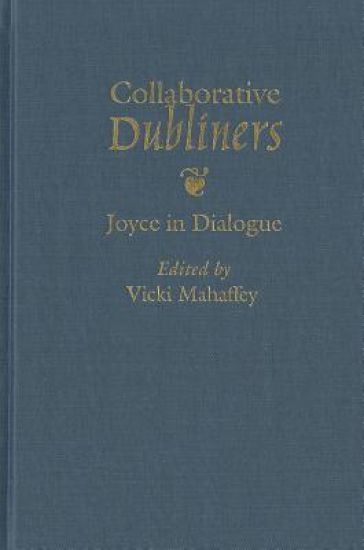
Collaborative Dubliners

Collaborative Dubliners

Vicki Mahaffey

Syracuse University Press
2012
sidottu
Enigmatic, vivid, and terse, James Joyce’s Dubliners continues both to puzzle and to compel its readers. This collection of essays by thirty contributors from seven countries presents a revolutionary view of Joyce’s technique and draws out its surprisingly contemporary implications by beginning with a single unusual premise: that meaning in Joyce’s fiction is a product of engaged interaction between two or more people. Meaning is not dispensed by the author; rather, it is actively negotiated between involved and curious readers through the medium of a shared text. Here, pairs of experts on Joyce’s work produce meaning beyond the text by arguing over it, challenging one another through it, and illuminating it with relevant facts about language, history, and culture. The result is not an authoritative interpretation of Joyce’s collection of stories but an animated set of dialogues about Dubliners designed to draw the reader into its lively discussions.
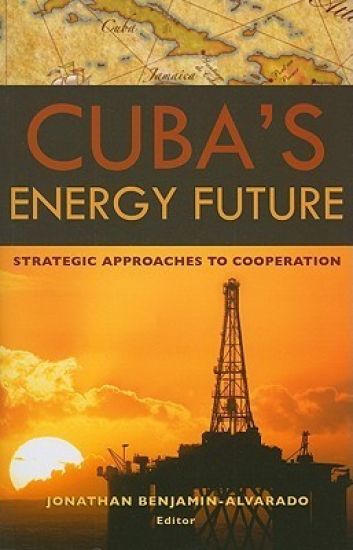
Cuba's Energy Future

Cuba's Energy Future

Vicki Huddleston

Brookings Institution
2010
nidottu
"Approaching an uncertain future without Fidel Castro, and still reeling from a downturn at the end of the cold war, Cuba must act decisively to improve its economy and living conditions. One of the major challenges facing the impoverished island nation is securing access to energy resources that are sufficient to meet the needs of its revitalization and development goals. What steps can Cuba take to achieve both short- and long-term energy sustainability and self-sufficiency? In this timely analysis, Jonathan Benjamin-Alvarado and his colleagues answer that question. Cuba's Energy Future sets the geostrategic context within which Cuba is operating. The book provides an overview of the evolving relations among Caribbean states and explains why Cuba and its longtime nemesis the United States should look for ways to cooperate on developing energy resources. The possible role of oil companies is explored, as is Cuba's energy relationship with Hugo Chavez's Venezuela.The second section of Cuba's Energy Future features economic and technical appraisals, economic projections, and trends affecting Cuba's energy needs, including oil and natural gas potential, the country's antiquated electric power sector, and the role of biofuels such as sugarcane ethanol. The concluding section focuses on the conditions necessary for, and the mutual benefits of, greater cooperative engagement with the United States.Contributors: Juan A. B. Belt (Chemonics International, formerly USAID), Jonathan Benjamin-Alvarado (University of Nebraska–Omaha and University of Georgia), Amy Myers Jaffe (Rice University), Jorge R. Piñón (Florida International University), Ronald Soligo (Rice University)."
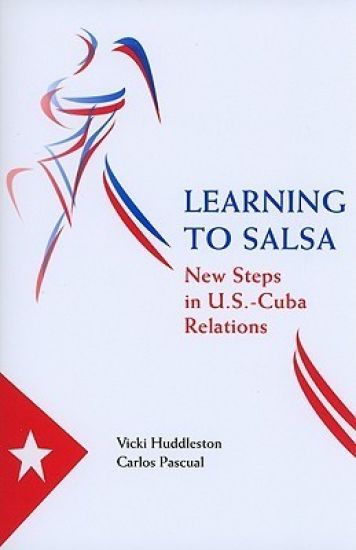
Learning to Salsa

Learning to Salsa

Vicki Huddleston; Carlos Pascual

Brookings Institution
2010
nidottu
" Today the United States has little leverage to promote change in Cuba. Indeed, Cuba enjoys normal relations with virtually every country in the world, and American attempts to isolate the Cuban government have served only to elevate its symbolic predicament as an ""underdog"" in the international arena. A new policy of engagement toward Cuba is long overdue. —From the IntroductionAs longtime U.S. diplomats Vicki Huddleston and Carlos Pascual make painfully clear in their introduction, the United States is long overdue in rethinking its policy toward Cuba. This is a propitious time for such an undertaking—the combination of change within Cuba and in the Cuban American community creates the most significant opening for a reassessment of U.S. policy since Fidel Castro took control in 1959. To that end, Huddleston and Pascual convened opinion leaders in the Cuban American community, leading scholars, and international diplomats from diverse backgrounds and political orientations to seek common ground on U.S. policy toward Cuba. This pithy yet authoritative analysis is the result.In the quest for ideas that would support the emergence of a peaceful, prosperous, and democratic Cuba—one in which the Cuban people shape their political and economic future—the authors conducted a series of simulations to identify the critical factors that the U.S. government should consider as it reformulates its Cuba policies. The advisers' wide-ranging expertise was applied to a series of hypothetical scenarios in which participants tested how different U.S. policy responses would affect a political transition in Cuba.By modeling and analyzing the decisionmaking processes of the various strategic actors and stakeholders, the simulations identified factors that might influence the success or failure of specific policy options. They then projected how key actors such as the Cuban hierarchy, civil society, and the international and Cuban American communities might act and react to internal and external events that would logically be expected to occur in the near future.The lessons drawn from these simulations led to the unanimous conclusion that the United States should adopt a proactive policy of critical and constructive engagement toward Cuba."
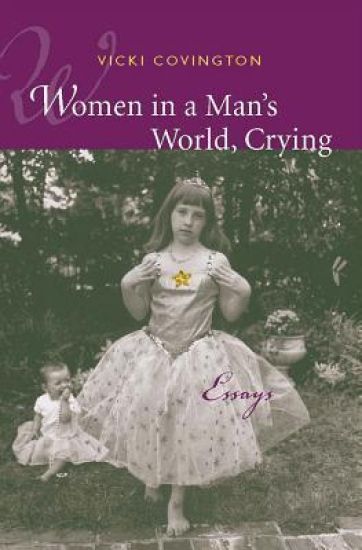
Women in a Man's World, Crying

Women in a Man's World, Crying

Vicki Covington

The University of Alabama Press
2002
sidottu
This thoughtful, engaging collection showcases the best nonfiction prose produced by one of the nation's most observant and incisive writers. This collection of warm, heartfelt essays from award-winning novelist Vicki Covington chronicles the multitude of ""in between"" moments in the writer's life. These are her stolen moments in between the writing of four novels-Gathering Home, Bird of Paradise, Night Ride Home, and The Last Hotel for Women; in between coauthoring the edgy memoir Cleaving: The Story of a Marriage with her husband Dennis Covington; in between raising two daughters; in between her husband's struggle with cancer and the author's own heart attack; in between a life full of trials and triumphs, disappointments and celebrations - moments that, as Covington demonstrates here, are always rich and revealing. In the title essay, the author questions why all seven middle-class women who live on her street confess at a neighborhood cookout that in the past 48 hours each of them has cried. In ""A Southern Thanksgiving,"" Covington reflects on the ""family dance"" that is Thanksgiving in the South: ""In the North they put their crazy family members in institutions, but in the South we put them in the living room for everyone to enjoy."" In ""My Mother's Brain,"" the author recounts the onset of Alzheimer's in her mother and how, with the spread of the disease, an untapped vein of love is revealed. Some of these essays were written as weekly newspaper columns for the Birmingham News. Others were written for specific literary occasions, such as the First Annual Eudora Welty Symposium. They are divided into six thematic sections: ""Girls and Women,"" ""Neighborhood,"" ""Death,"" ""The South,"" ""Spiritual Matters,"" and ""Writing."" Throughout, as Covington casts her candid, attentive eye on a situation, confusion yields to comprehension, fear flourishes into faith, and anger flows into understanding. In memorializing the small moments of her life, she finds that they are far from peripheral; indeed, they are central to a life full of value and meaning.
Welcome to the Church Year

Welcome to the Church Year

Vicki K. Black

Morehouse Publishing
2004
pokkari
From birthday cakes and anniversary dinners to summer vacations at the beach, each family has its own ways of marking the days and seasons of its life. For the Christian family—especially Episcopalians—it’s no different. With an array of colors and an assortment of rich traditions, Episcopalians move through the Church year, marking the days and seasons that tell the story of Christ in our lives—in history and today.This book—written for newcomers to the Episcopal Church as well as lifelong members—takes readers by the hand and leads them through the Church year, from the first Sunday of Advent through the last Sunday of Pentecost, answering questions like “Why do we use purple in Lent?” and “What does Maundy Thursday mean?” In an easy-to-read conversational style, Welcome to the Church Year introduces readers to the traditions of the Church seasons and explains why we do what we do. But it does more than offer interesting trivia about church vestments and pageantry. Its insights can help readers participate in the liturgies of the Church year in a deeper, more meaningful way.
Welcome to the Book of Common Prayer

Welcome to the Book of Common Prayer

Vicki K. Black

Morehouse Publishing
2005
pokkari
In this guide for newcomers as well as lifelong Episcopalians, author Vicki Black helps readers navigate the currents of Anglican liturgy and discover its richness and beauty. As we use the Book of Common Prayer, Black says, “we discover we are not alone, and this liturgical current of worship, prayer, and praise will indeed take us where we want to go–union with the God we seek to love.” Welcome to the Book of Common Prayer shows readers everything from where to find the Sunday collect to how to pray the Daily Office. But it’s more than a how-to. It offers history and background that help make the prayer book a more meaningful part of the worship life of individuals and congregations. With thoughtful reflection questions, this is a perfect volume for parish study groups.
Welcome to the Bible

Welcome to the Bible

Vicki K. Black; Peter Wenner

Morehouse Publishing
2007
pokkari
This book invites newcomers into a deeper engagement with Scripture. Many new Anglicans may be nervous about opening the Bible, which can seem foreign or irrelevant; others simply don't know how to begin. One of the often overlooked gifts of the Anglican church is that the texts and doctrines of the Bible are embedded in our prayers, liturgies, and creeds. Thus, Anglicans tend to know the Bible better than they realize - they just don't know chapter and verse. Making that knowledge explicit and placing it in context can help to overcome the 'disconnect' many Anglicans feel with the Bible, and can open the way for further and more in-depth study.
Hybrid Constitutions

Hybrid Constitutions

Vicki Hsueh

Duke University Press
2010
sidottu
In Hybrid Constitutions, Vicki Hsueh contests the idea that early-modern colonial constitutions were part of a uniform process of modernization, conquest, and assimilation. Through detailed analyses of the founding of several seventeenth-century English proprietary colonies in North America, she reveals how diverse constitutional thought and practice were at the time, and how colonial ambitions were advanced through cruelty toward indigenous peoples as well as accommodation of them. Proprietary colonies were governed by individuals (or small groups of individuals) granted colonial charters by the Crown. These proprietors had quasi-sovereign status over their colonies; they were able to draw on and transform English legal and political instruments as they developed constitutions. Hsueh demonstrates that the proprietors cobbled together constitutions based on the terms of their charters and the needs of their settlements. The “hybrid constitutions” they created were often altered based on interactions among the English settlers, other European settlers, and indigenous peoples.Hsueh traces the historical development and theoretical implications of proprietary constitutionalism by examining the founding of the colonies of Maryland, Carolina, and Pennsylvania. She provides close readings of colonial proclamations, executive orders, and assembly statutes, as well as the charter granting Cecilius Calvert the colony of Maryland in 1632; the Fundamental Constitutions of Carolina, adopted in 1669; and the treaties brokered by William Penn and various Lenni Lenape and Susquehannock tribes during the 1680s and 1690s. These founding documents were shaped by ambition, contingency, and limited resources; they reflected an ambiguous and unwieldy colonialism rather than a purposeful, uniform march to modernity. Hsueh concludes by reflecting on hybridity as a rubric for analyzing the historical origins of colonialism and reconsidering contemporary indigenous claims in former settler colonies such as Australia, New Zealand, and the United States.
Hybrid Constitutions

Hybrid Constitutions

Vicki Hsueh

Duke University Press
2010
pokkari
In Hybrid Constitutions, Vicki Hsueh contests the idea that early-modern colonial constitutions were part of a uniform process of modernization, conquest, and assimilation. Through detailed analyses of the founding of several seventeenth-century English proprietary colonies in North America, she reveals how diverse constitutional thought and practice were at the time, and how colonial ambitions were advanced through cruelty toward indigenous peoples as well as accommodation of them. Proprietary colonies were governed by individuals (or small groups of individuals) granted colonial charters by the Crown. These proprietors had quasi-sovereign status over their colonies; they were able to draw on and transform English legal and political instruments as they developed constitutions. Hsueh demonstrates that the proprietors cobbled together constitutions based on the terms of their charters and the needs of their settlements. The “hybrid constitutions” they created were often altered based on interactions among the English settlers, other European settlers, and indigenous peoples.Hsueh traces the historical development and theoretical implications of proprietary constitutionalism by examining the founding of the colonies of Maryland, Carolina, and Pennsylvania. She provides close readings of colonial proclamations, executive orders, and assembly statutes, as well as the charter granting Cecilius Calvert the colony of Maryland in 1632; the Fundamental Constitutions of Carolina, adopted in 1669; and the treaties brokered by William Penn and various Lenni Lenape and Susquehannock tribes during the 1680s and 1690s. These founding documents were shaped by ambition, contingency, and limited resources; they reflected an ambiguous and unwieldy colonialism rather than a purposeful, uniform march to modernity. Hsueh concludes by reflecting on hybridity as a rubric for analyzing the historical origins of colonialism and reconsidering contemporary indigenous claims in former settler colonies such as Australia, New Zealand, and the United States.
Below the Line

Below the Line

Vicki Mayer

Duke University Press
2011
sidottu
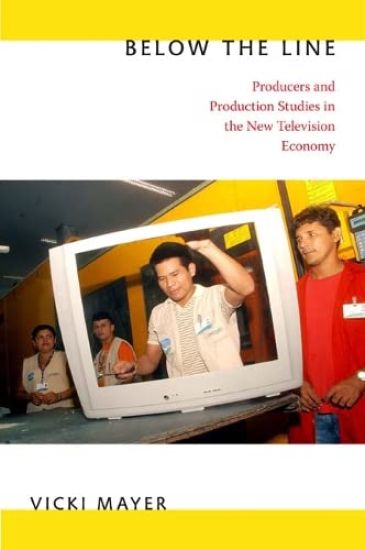
Below the Line illuminates the hidden labor of people who not only produce things that the television industry needs, such as a bit of content or a policy sound bite, but also produce themselves in the service of capital expansion. Vicki Mayer considers the work of television set assemblers, soft-core cameramen, reality-program casters, and public-access and cable commissioners in relation to the globalized economy of the television industry. She shows that these workers are increasingly engaged in professional and creative work, unsettling the industry’s mythological account of itself as a business driven by auteurs, manned by an executive class, and created by the talented few. As Mayer demonstrates, the new television economy casts a wide net to exploit those excluded from these hierarchies. Meanwhile, television set assemblers in Brazil devise creative solutions to the problems of material production. Soft-core videographers, who sell televised content, develop their own modes of professionalism. Everyday people become casters, who commodify suitable participants for reality programs, or volunteers, who administer local cable television policies. These sponsors and regulators boost media industries’ profits when they commodify and discipline their colleagues, their neighbors, and themselves. Mayer proposes that studies of production acknowledge the changing dynamics of labor to include production workers who identify themselves and their labor with the industry, even as their work remains undervalued or invisible.
Below the Line

Below the Line

Vicki Mayer

Duke University Press
2011
pokkari
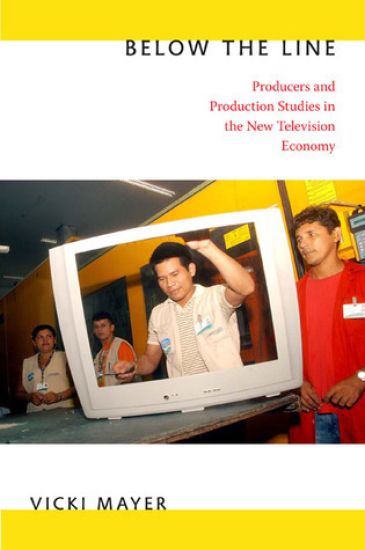
Below the Line illuminates the hidden labor of people who not only produce things that the television industry needs, such as a bit of content or a policy sound bite, but also produce themselves in the service of capital expansion. Vicki Mayer considers the work of television set assemblers, soft-core cameramen, reality-program casters, and public-access and cable commissioners in relation to the globalized economy of the television industry. She shows that these workers are increasingly engaged in professional and creative work, unsettling the industry’s mythological account of itself as a business driven by auteurs, manned by an executive class, and created by the talented few. As Mayer demonstrates, the new television economy casts a wide net to exploit those excluded from these hierarchies. Meanwhile, television set assemblers in Brazil devise creative solutions to the problems of material production. Soft-core videographers, who sell televised content, develop their own modes of professionalism. Everyday people become casters, who commodify suitable participants for reality programs, or volunteers, who administer local cable television policies. These sponsors and regulators boost media industries’ profits when they commodify and discipline their colleagues, their neighbors, and themselves. Mayer proposes that studies of production acknowledge the changing dynamics of labor to include production workers who identify themselves and their labor with the industry, even as their work remains undervalued or invisible.