Kirjojen hintavertailu. Mukana 12 016 292 kirjaa ja 12 kauppaa.

Kirjahaku

Etsi kirjoja tekijän nimen, kirjan nimen tai ISBN:n perusteella.

1000 tulosta hakusanalla ART WIEDERHOLD

Art History and Education

Art History and Education

Stephen Addiss; Mary Erickson

University of Illinois Press
1993
nidottu
Guided by Stephen Addiss's grounding in art history scholarship and Mary Erickson's expertise in art education theory and practice, this volume approaches the issue of teaching art history from theoretical and philosophical as well as practical and political standpoints. In the first section, Addiss raises issues about the discipline of art history. In the second, Erickson examines proposals about how art history can be incorporated into the general education of children and offers some curriculum guides and lesson plans for art educators.
Art Making and Education

Art Making and Education

Maurice Brown; Diana Korzenik

University of Illinois Press
1993
nidottu
What is involved in "making art"? In what ways have Americans introduced art making to students? In Art Making and Education, a practicing artist and a historian of art education discuss from their particular perspectives the production of studio and classroom art. Among those to whom this book will appeal are prospective teachers, school administrators, university-level art educators, and readers interested in the theory of discipline-based art education. "The sources are excellent. The bibliographical material is a must for any candidate wanting to teach the visual arts and certainly for any student hoping to become an artist." -- William Klenk, University of Rhode Island
Art Criticism and Education

Art Criticism and Education

Theodore F Wolff; George Geahigan

University of Illinois Press
1997
nidottu
Art Criticism and Education completes the Disciplines in Art Education series. In the first section, Theodore Wolff deals with the role of the art critic in education. He gives a practical overview of how the principles and practices of art criticism can be applied to the teaching of art (k-12). In the second, George Geahigan begins with an historical overview of art criticism in education literature and provides a conceptualized approach to critical inquiry, asserting that the most effective form of that inquiry is the pursuit of meaning in works of art. A rare combination of the practical and theoretical, Art Criticism and Education will be an invaluable aid to anyone involved in art education. A volume in the series Disciplines in Art Education: Contexts of Understanding, edited by Ralph Smith Supported by the Getty Foundation
Art, Music, and Literature, 1897-1902

Art, Music, and Literature, 1897-1902

Theodore Dreiser

University of Illinois Press
2007
nidottu
Dreiser's captivating portraits of turn-of-the-century America's famous figures In this volume, liberally seasoned with period illustrations, Yoshinobu Hakutani has collected and annotated a rich selection of Theodore Dreiser's pre-fame writings on the cultural milieu of his day. In these brief essays, Dreiser sallies into the vibrant world of creative work in turn-of-the-century America. He inspects the eccentric and revealing paraphernalia of artists' studios, probes the work habits of writers, and goes behind the scenes in the popular song-writing business, where this week's celebrity is next week's has-been. He profiles famous figures and introduces numerous women artists, novelists, and musicians, including the prolific and tireless Amelia Barr (mother of fourteen children and author of thirty-two novels), the illustrator Alice B. Stephens, and the opera singer Lillian Nordica. Hakutani's notes provide biographical detail on dozens of now-obscure individuals mentioned by Dreiser.
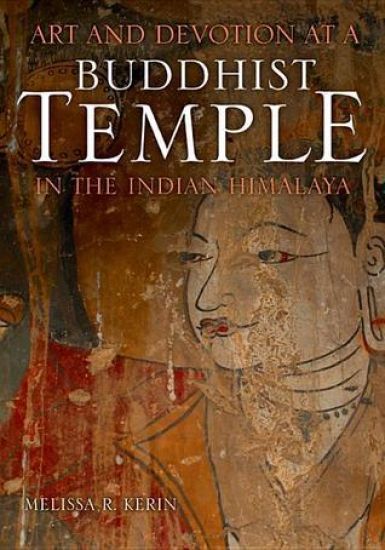
Art and Devotion at a Buddhist Temple in the Indian Himalaya

Art and Devotion at a Buddhist Temple in the Indian Himalaya

Melissa R. Kerin

Indiana University Press
2015
sidottu
Sixteenth-century wall paintings in a Buddhist temple in the Tibetan cultural zone of northwest India are the focus of this innovative and richly illustrated study. Initially shaped by one set of religious beliefs, the paintings have since been reinterpreted and retraced by a later Buddhist community, subsumed within its religious framework and communal memory. Melissa Kerin traces the devotional, political, and artistic histories that have influenced the paintings' production and reception over the centuries of their use. Her interdisciplinary approach combines art historical methods with inscriptional translation, ethnographic documentation, and theoretical inquiry to understand religious images in context.
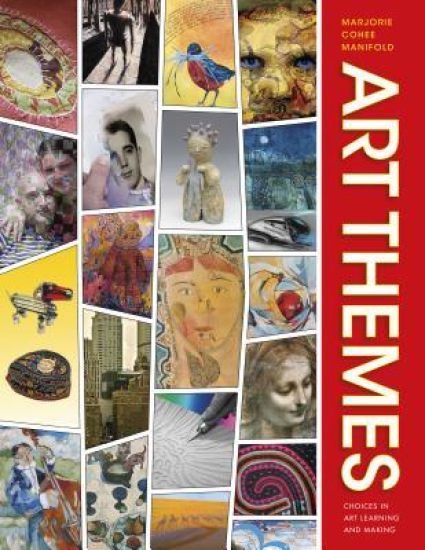
Art Themes

Art Themes

Marjorie Cohee Manifold

Indiana University Press
2017
pokkari
Flexible in approach and full of colorful examples, this textbook provides a basic introduction to what art is and can be in the lives of people who do not necessarily think of themselves as "artists." You will be taught about a variety of art themes, genres, materials, and processes that appeal to novice art makers. The lessons are organized by themes of general subject matter or media. Options are available for work in mixed media, crafts, photography and digital media, as well as in traditional drawing or painting media. After picking a theme of particular interest to you, look next at the four strands of lessons presented in that thematic unit. Moving from left to right, select one lesson from each consecutive strand and complete that lesson. Because each lesson builds upon previously presented knowledge and developed skill, as you progress through four lessons, one from each strand, you should grow in your understanding of art concepts, meanings, and processes, while also improving your art making skills. Completing this course will help you develop a new appreciation for the power and possibilities of art learning, by understanding better the art others create, as well as making it yourself.
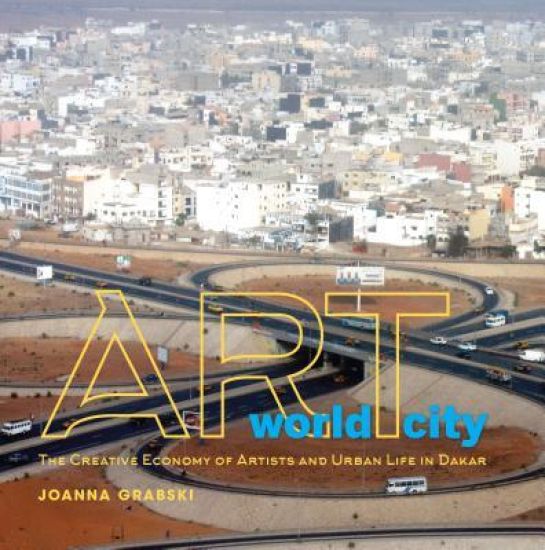
Art World City

Art World City

Joanna Grabski

Indiana University Press
2017
pokkari
Art World City focuses on contemporary art and artists in the city of Dakar, a famously thriving art metropolis in the West African nation of Senegal. Joanna Grabski illuminates how artists earn their livelihoods from the city's resources, possibilities, and connections. She examines how and why they produce and exhibit their work and how they make an art scene and transact with art world mediators such as curators, journalists, critics, art lovers, and collectors from near and far. Grabski shows that Dakar-based artists participate in a platform that has a global reach. They extend Dakar's creative economy and the city's urban vibe into an "art world city."
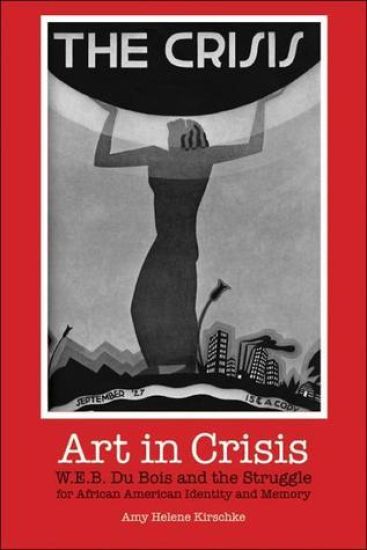
Art in Crisis

Art in Crisis

Amy Helene Kirschke

Indiana University Press
2007
pokkari
The Crisis was an integral element of the struggle to combat racism in America. As editor of the magazine (1910–1934), W. E. B. Du Bois addressed the important issues facing African Americans. He used the journal as a means of racial uplift, celebrating the joys and hopes of African American culture and life, and as a tool to address the injustices black Americans experienced—the sorrows of persistent discrimination and racial terror, and especially the crime of lynching. The written word was not sufficient. Visual imagery was central to bringing his message to the homes of readers and emphasizing the importance of the cause. Art was integral to his political program. Art in Crisis: W. E. B. Du Bois and the Struggle for African American Identity and Memory reveals how W. E. B. Du Bois created a "visual vocabulary" to define a new collective memory and historical identity for African Americans.
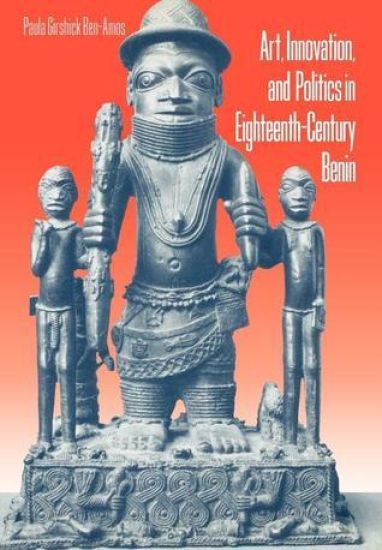
Art, Innovation, and Politics in Eighteenth-Century Benin

Art, Innovation, and Politics in Eighteenth-Century Benin

Paula G. Ben-Amos

Indiana University Press
1999
sidottu
"Benos-Amos opens for the reader richly detailed adn nuanced vistas into the intellectual and cultural history of one of the major kingdoms of precolonial West Africa." — African Studies Review "The wealth of historiographic resources, the command of relevant literature, the ethnographic research and prudent use of oral traditions give this work a high degree of . . . intellectual excitement. . . . a landmark in the field." —Warren d'Azevedo Making use of archival and oral resources in this extensively researched book, Paula Girshick Ben-Amos questions to what extent art operates as political strategy. How do objects acquire political meaning? How does the use of art enhance and embody power and authority?
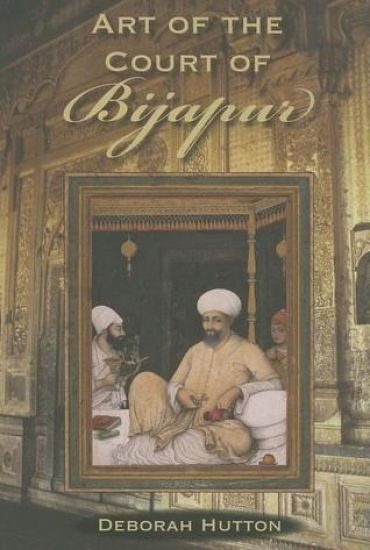
Art of the Court of Bijapur

Art of the Court of Bijapur

Deborah Hutton

Indiana University Press
2006
sidottu
"[A]n impressive and original work of synthetic scholarship that one hopes will be emulated by others." —Phillip B. Wagoner, Wesleyan University "[A]n excellent and important work . . . [with] a wonderful sophistication of method." —Padma Kaimal, Colgate University The patrons and artists of Bijapur, an Islamic kingdom that flourished in the Deccan region of India in the 16th and 17th centuries, produced lush paintings and elaborately carved architecture, evidence of a highly cosmopolitan Indo-Islamic culture. Bijapur's most celebrated monument, the Ibrahim Rauza tomb complex, is carved with elegant calligraphy and lotus flowers and was once dubbed "the Taj Mahal of the South." This stunningly illustrated study traces the development of Bijapuri art and courtly identity through detailed examination of selected paintings and architecture, many of which have never before been published. They deserve our attention for their aesthetic qualities as well as for the ways they expand our understanding of the rich synthesis of cultures and religions in South Asian and Islamic art.
Art and Tradition in a Time of Uprisings
Examining radical reinventions of traditional practices, ranging from a queer reclamation of the Jewish festival of Purim to an Indigenous remixing of musical traditions.Supposedly outmoded modes of doing and making-from music and religious rituals to crafting and cooking-are flourishing, both artistically and politically, in the digital age. In this book, Gabriel Levine examines collective projects that reclaim and reinvent tradition in contemporary North America, both within and beyond the frames of art. Levine argues that, in a time of political reaction and mass uprisings, the subversion of the traditional is galvanizing artists, activists, musicians, and people in everyday life. He shows that this takes place in strikingly different ways for Indigenous and non-Indigenous people in settler colonies. Paradoxically, experimenting with practices that have been abandoned or suppressed can offer powerful resources for creation and struggle in the present.Levine shows that, in projects that span "the discontinuum of tradition," strange encounters take place across the lines of class, Indigeneity, race, and generations. These encounters spark alliance and appropriation, desire and misunderstanding, creative (mis)translation and radical revisionism. He describes the yearly Purim Extravaganza, which gathers queer, leftist, and Yiddishist New Yorkers in a profane reappropriation of the springtime Jewish festival; the Ottawa-based Indigenous DJ collective A Tribe Called Red, who combine traditional powwow drumming and singing with electronic dance music; and the revival of home fermentation practices-considering it from microbiological, philosophical, aesthetic, and political angles.Projects that take back the vernacular in this way, Levine argues, not only develop innovative forms of practice for a time of uprisings; they can also work toward collectively reclaiming, remaking, and repairing a damaged world.
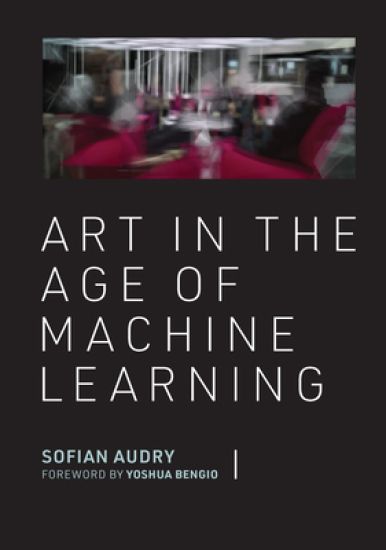
Art in the Age of Machine Learning

Art in the Age of Machine Learning

Sofian Audry; Yoshua Bengio

MIT Press
2021
sidottu
An examination of machine learning art and its practice in new media art and music. Over the past decade, an artistic movement has emerged that draws on machine learning as both inspiration and medium. In this book, transdisciplinary artist-researcher Sofian Audry examines artistic practices at the intersection of machine learning and new media art, providing conceptual tools and historical perspectives for new media artists, musicians, composers, writers, curators, and theorists. Audry looks at works from a broad range of practices, including new media installation, robotic art, visual art, electronic music and sound, and electronic literature, connecting machine learning art to such earlier artistic practices as cybernetics art, artificial life art, and evolutionary art. Machine learning underlies computational systems that are biologically inspired, statistically driven, agent-based networked entities that program themselves. Audry explains the fundamental design of machine learning algorithmic structures in terms accessible to the nonspecialist while framing these technologies within larger historical and conceptual spaces. Audry debunks myths about machine learning art, including the ideas that machine learning can create art without artists and that machine learning will soon bring about superhuman intelligence and creativity. Audry considers learning procedures, describing how artists hijack the training process by playing with evaluative functions; discusses trainable machines and models, explaining how different types of machine learning systems enable different kinds of artistic practices; and reviews the role of data in machine learning art, showing how artists use data as a raw material to steer learning systems and arguing that machine learning allows for novel forms of algorithmic remixes.
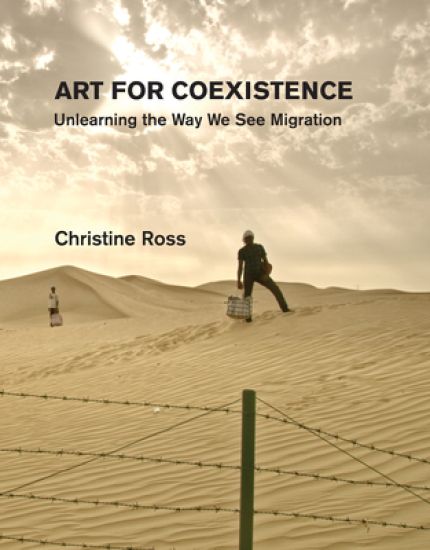
Art for Coexistence

Art for Coexistence

Christine Ross

MIT PRESS LTD
2022
sidottu
An exploration of how contemporary art reframes and humanizes migration, calling for coexistence--the recognition of the interdependence of beings. In Art for Coexistence, art historian Christine Ross examines contemporary art's response to migration, showing that art invites us to abandon our preconceptions about the current "crisis"--to unlearn them--and to see migration more critically, more disobediently. We (viewers in Europe and North America) must come to see migration in terms of coexistence: the interdependence of beings. The artworks explored by Ross reveal, contest, rethink, delink, and relink more reciprocally the interdependencies shaping migration today--connecting citizens-on-the-move from some of the poorest countries and acknowledged citizens of some of the wealthiest countries and democracies worldwide. These installations, videos, virtual reality works, webcasts, sculptures, graffiti, paintings, photographs, and a rescue boat, by artists including Banksy, Ai Weiwei, Alejandro Gonz lez I rritu, Laura Waddington, Tania Bruguera, and others, demonstrate art's power to mediate experiences of migration. Ross argues that art invents a set of interconnected calls for more mutual forms of coexistence: to historicize, to become responsible, to empathize, and to story-tell. Art history, Ross tells us, must discard the legacy of imperialist museology--which dissocializes, dehistoricizes, and depoliticizes art. It must reinvent itself, engaging with political philosophy, postcolonial, decolonial, Black, and Indigenous studies, and critical refugee and migrant studies.
Art as Demonstration

Art as Demonstration

Sven Spieker

MIT PRESS LTD
2024
sidottu
How artists wield demonstration to question the status quo both aesthetically and politically, marshaling art and education as powerful agents of change. Demonstration, in short, says: See here. It is the practice of pointing to something in order to explain or contest it. As such, Sven Spieker argues that demonstration has helped reshape art from the height of the Cold War to the late twentieth century, reformatting our understanding of how art and political engagement relate to each other. Focusing on Western Europe (especially Germany), Eastern Europe, and the United States, Art as Demonstration expands on contemporary discussions of art-as-protest, activism, and resistance. Spieker shows how a closer, more historical look at art's connection with demonstration reconnects us with earlier efforts, notably by the early twentieth-century avant-garde, to marshal art for the purpose of instruction and engagement. Art as Demonstration reconceives the history of postwar art in Eastern and Western Europe from the perspective of demonstration, understood formally (as a technique for showing and pointing) as well as politically (as protest, resistance, etc.). Close analyses of individual artworks reveal how the deployment of demonstration has changed over time. Spieker shows how "protest" and "resistance" organize art and artists not only politically but also and especially formally and aesthetically--a development of particular importance in the Cold War art and politics of Eastern Europe. The book illustrates how from the 1960s onward demonstration radically changed the way artists thought about art: no longer as an object but as a form of education.
Art School

Art School

MIT Press
2009
pokkari
Leading international artists and art educators consider the challenges of art education in today's dramatically changed art world.The last explosive change in art education came nearly a century ago, when the German Bauhaus was formed. Today, dramatic changes in the art world-its increasing professionalization, the pervasive power of the art market, and fundamental shifts in art-making itself in our post-Duchampian era-combined with a revolution in information technology, raise fundamental questions about the education of today's artists. Art School(Propositions for the 21st Century) brings together more than thirty leading international artists and art educators to reconsider the practices of art education in academic, practical, ethical, and philosophical terms. The essays in the book range over continents, histories, traditions, experiments, and fantasies of education. Accompanying the essays are conversations with such prominent artist/educators as John Baldessari, Michael Craig-Martin, Hans Haacke, and Marina Abramovic, as well as questionnaire responses from a dozen important artists-among them Mike Kelley, Ann Hamilton, Guillermo Kuitca, and Shirin Neshat-about their own experiences as students. A fascinating analysis of the architecture of major historical art schools throughout the world looks at the relationship of the principles of their designs to the principles of the pedagogy practiced within their halls. And throughout the volume, attention is paid to new initiatives and proposals about what an art school can and should be in the twenty-first century-and what it shouldn't be. No other book on the subject covers more of the questions concerning art education today or offers more insight into the pressures, challenges, risks, and opportunities for artists and art educators in the years ahead.ContributorsMarina Abramovic, Dennis Adams, John Baldessari, Ute Meta Bauer, Daniel Birnbaum, Saskia Bos, Tania Bruguera, Luis Camnitzer, Michael Craig-Martin, Thierry de Duve, Clementine Deliss, Charles Esche, Liam Gillick, Boris Groys, Hans Haacke, Ann Lauterbach, Ken Lum, Steven Henry Madoff, Brendan D. Moran, Ernesto Pujol, Raqs Media Collective, Charles Renfro, Jeffrey T. Schnapp, Michael Shanks, Robert Storr, Anton Vidokle
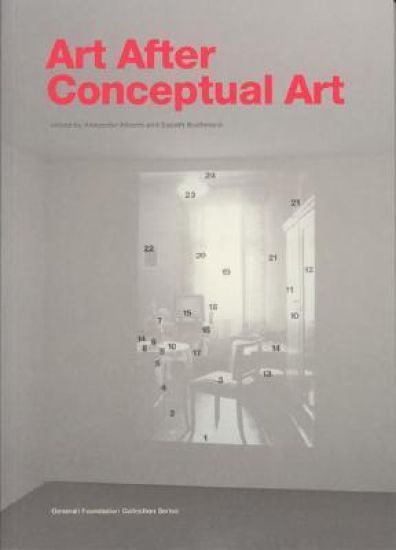
Art After Conceptual Art
Well-known art historians from Europe and the Americas discuss the influence of conceptualism on art since the 1970s.Art After Conceptual Art tracks the various legacies of conceptualist practice over the past three decades. This collection of essays by art historians from Europe and the Americas introduces and develops the idea that conceptual art generated several different, and even contradictory, forms of art practice. Some of these contested commonplace assumptions of what art is; others served to buttress those assumptions. The bulk of the volume features newly written and highly innovative essays challenging standard interpretations of the legacy of conceptualism and discussing the influence of conceptualism's varied practices on art since the 1970s. The essays explore topics as diverse as the interrelationships between conceptualism and institutional critique, neoexpressionist painting and conceptualist paradigms, conceptual art's often-ignored complicity with design and commodity culture, the specific forms of identity politics taken up by the reception of conceptual art, and conceptualism's North/South and East/West dynamics. A few texts that continue to be crucial for critical debates within the fields of conceptual and postconceptual art practice, history, and theory have been reprinted in order to convey the vibrant and ongoing discussion on the status of art after conceptual art. Taken together, the essays will inspire an exploration of the relationship between postconceptualist practices and the beginnings of contemporary art.Distributed for the Generali Foundation, Vienna.
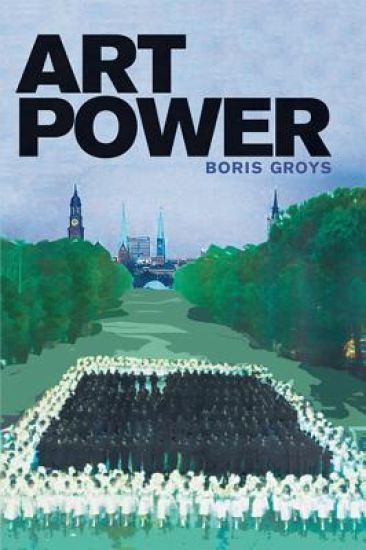
Art Power

Art Power

Boris Groys

MIT Press
2013
pokkari
A new book by Boris Groys acknowledges the problem and potential of art's complex relationship to power.Art has its own power in the world, and is as much a force in the power play of global politics today as it once was in the arena of cold war politics. Art, argues the distinguished theoretician Boris Groys, is hardly a powerless commodity subject to the art market's fiats of inclusion and exclusion. In Art Power, Groys examines modern and contemporary art according to its ideological function. Art, Groys writes, is produced and brought before the public in two ways-as a commodity and as a tool of political propaganda. In the contemporary art scene, very little attention is paid to the latter function.Arguing for the inclusion of politically motivated art in contemporary art discourse, Groys considers art produced under totalitarianism, Socialism, and post-Communism. He also considers today's mainstream Western art-which he finds behaving more and more according the norms of ideological propaganda: produced and exhibited for the masses at international exhibitions, biennials, and festivals. Contemporary art, Groys argues, demonstrates its power by appropriating the iconoclastic gestures directed against itself-by positioning itself simultaneously as an image and as a critique of the image. In Art Power, Groys examines this fundamental appropriation that produces the paradoxical object of the modern artwork.