

Kirjahaku
Etsi kirjoja tekijän nimen, kirjan nimen tai ISBN:n perusteella.
1000 tulosta hakusanalla Alain Goetzmann

The Complete Anchoring Handbook
Alain Poiraud; Achim Ginsberg-Klemmt; Erika Ginsberg-Klemmt
International Marine Publishing Co
2007
nidottu
A modern, authoritative anchoring guide for sailors and powerboatersA boat swinging safely at anchor can mark the relaxing conclusion to a great day of boating or the successful completion of an essential emergency measure, while failure to anchor properly can be frustrating, inconvenient, or downright dangerous. The Complete Anchoring Handbook is your path to mastering this indispensable seamanship skill.Based on original engineering analysis--and with contributions from such international anchoring experts as Alain Fraysse and Chuck Hawley--The Complete Anchoring Handbook emphasizes the proven best gear and methods for anchoring safely in any situation with any boat, sail or power. Here’s everything you need to know, from the basics to the most advanced techniques. Poiraud and company describe:The physical forces acting on a boat, its ground tackle, and the sea bottomWhy the new generation of roll-stable anchors (including the Spade, Rocna, Manson Supreme, and others) is proving superior to traditional favoritesHow to select and size anchors and ground-tackle componentsHow to connect those components without introducing weak points in your ground-tackle system
This English version of the path-breaking French book on this subject gives the definitive treatment of the revolutionary approach to measure theory, geometry, and mathematical physics developed by Alain Connes. Profusely illustrated and invitingly written, this book is ideal for anyone who wants to know what noncommutative geometry is, what it can do, or how it can be used in various areas of mathematics, quantization, and elementary particles and fields.

Fluorine: A Paradoxical Element, Volume Five, deals with the link between fluorine, humanity and the environment. It is divided into three main sections, including i) The history and developmental stages of fluorinated products, ii) Awareness of its importance in our environment, and iii) Recent contributions of fluoride products in medicine, pharmacy and our daily lives. Made engaging through interesting figures and accessible language, and written by a leading expert, Professor Tressaud, the book supports the work of scientists working in materials, toxicology and environmental science. It complements the author’s edited series, Progress in Fluorine Science, covering recent advances.
THE SUNDAY TIMES NUMBER ONE BESTSELLEROne of the most influential voices in modern philosophy - the author of The Course of Love, Religion for Atheists, The Art of Travel and The School of LifeAlain de Botton presents a one-stop shop for solving the problems of everyday life through the wisdom of history's great philosophers'Singlehandedly, de Botton has taken philosophy back to its simplest and most important purpose: helping us live our lives' Independent'Few discussions on the great philosophers can have been so entertaining... An ingenious, imaginative book' The Sunday Times'Witty, thoughtful, entertaining... It manages to make philosophy both enjoyable and relevant' Anthony Clare, Literary Review'No doubt about it, philosophy is the new rock and roll and Alain de Botton is its Colonel Tom Parker... A pleasure to read. And good writing, like good philosophy, is always a consolation' John Banville, Irish Times Alain de Botton has set six of the finest minds in the history of philosophy to work on the problems of everyday life. Find out what Socrates, Epicurus, Seneca, Montaigne, Schopenhauer and Nietzsche would say about the things that bother us all the most: lack of money, the pain of love, inadequacy, anxiety, the fear of failure and the pressure to conform.
The Penguin Dictionary of Symbols
Alain Gheerbrant; Jean Chevalier; John Buchanan-Brown
Penguin Books Ltd
1996
pokkari
This is a remarkable dictionary, exploring the vast and various symbols which abound in literature, religion, national identity and are found at the very heart of our dreams and sub-conscious. Compiled by an international team of experts, each entry is given its complete range of interpretations - sexual and spiritual, official and subversive, cultural and religious - to bring meaning and insight to the symbol.
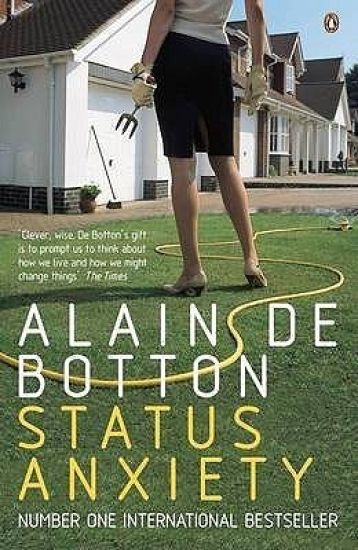
THE SUNDAY TIMES TOP TEN BESTSELLERFrom one of our greatest voices in modern philosophy, author of The Course of Love, The Consolations of Philosophy, Religion for Atheists and The School of Life - Alain de Botton sets out to understand our universal fear of failure - and how we might change it'De Botton's gift is to prompt us to think about how we live and how we might change things' The Times We all worry about what others think of us. We all long to succeed and fear failure. We all suffer - to a greater or lesser degree, usually privately and with embarrassment - from status anxiety. Alain de Botton gives a name to this universal condition and sets out to investigate both its origins and possible solutions. He looks at history, philosophy, economics, art and politics - and reveals the many ingenious ways that great minds have overcome their worries. The result is a book that is not only entertaining and thought-provoking - but genuinely wise and helpful as well.'He analyses modern society with great charm, learning and humour. His remedies come as a welcome relief when most books offering solutions to the stresses of life recommend the lotus position' Daily Mail
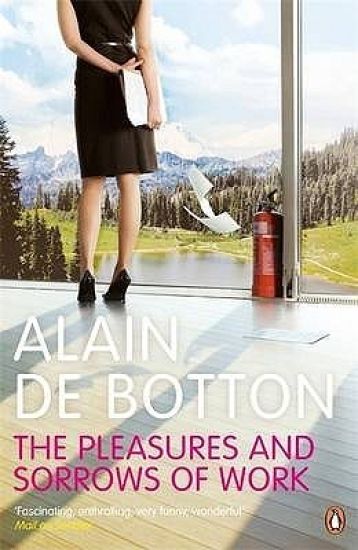
From one of our greatest voices in modern philosophy, author of The Course of Love, The Consolations of Philosophy, Religion for Atheists and The School of Life - a lucid exploration of the state in which most of us spend most of our lives'De Botton's wit and powers of ironic observation are on display throughout what is a stylish and original book. The workplace brings out the best in his writing' Sunday Times'Timely, wonderfully readable. De Botton has pretty much got to the bottom of the subject' Spectator'Terribly funny, touches us all' Daily Mail'Brilliant, enormously engaging' Guardian Why do so many of us love or hate our work? How has it come to dominate our lives? And what should we do about it?Work makes us. Without it we are at a loss; in work we hope to have a measure of control over our lives. Yet for many of us, work is a straitjacket from which we cannot free ourselves.Criss-crossing the world to visit workplaces and workers both ordinary and extraordinary, and drawing on the wit and wisdom of great artists, writers and thinkers, Alain de Botton here explores our love-hate relationship with our jobs. He poses and answers little and big questions: from what should I do with my life? to what will I have achieved when I retire?The Pleasure and Sorrows of Work explains why it is we do what we do all day, and applies sympathy, humour and insight to helping us make the most of it.
SUNDAY TIMES TOP TEN BESTSELLERNUMBER ONE INTERNATIONAL BESTSELLERFrom one of our greatest voices in modern philosophy, author of The Course of Love, The Consolations of Philosophy, The Art of Travel and The School of Life'A serious and optimistic set of practical ideas that could improve and alter the way we live' Jeanette Winterson, The Times'A beautiful, inspiring book... offering a glimpse of a more enlightened path' Sunday Telegraph'Smart, stimulating, sensitive. A timely and perceptive appreciation of how much wisdom is embodied in religious traditions and how we godless moderns might learn from it' Financial Times'There isn't a page in this book that doesn't contain a striking idea or a stimulating parallel' Mail on SundayAlain de Botton takes us one step further than Dawkins or Hitchens ventured - into a world of ideas beyond the God debate...All of us, whether religious, agnostic or atheist, are searching for meaning. And in this wise and life-affirming book, non-believer Alain de Botton both rejects the supernatural claims of the major religions and points out just how many good ideas they sometimes have about how we should live.And he suggests that non-believers can learn and steal from them.Picking and choosing from the thousands of years of advice assembled by the world's great religions, Alain de Botton presents a range of fascinating ideas and practical insights on art, community, love, friendship, work, life and death. He shows how they can be of use to us all, irrespective of whether we do or don't believe.
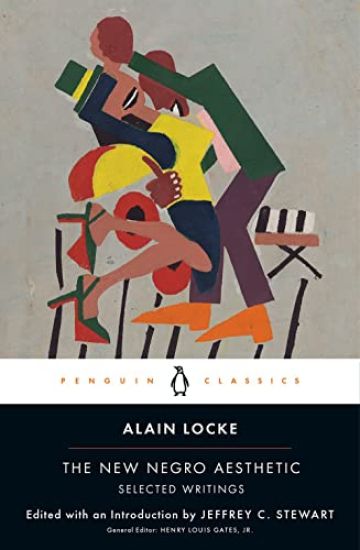
Pulitzer Prize-winning biographer edits a collection of Alain Locke's influential essays on the importance of the Black artist and the Black imagination A Penguin Classic For months, the philosopher Alain Locke wrestled with the idea of the Negro as America's most vexing problem. He asked how shall Negroes think of themselves as he considered the new crop of poets, novelists, and short story writers who, in 1924, wrote about their experiences as Black people in America. He did not want to frame Harlem and Black writing as yet another protest against racism, nor did he want to focus on the sociological perspective on the Negro problem and Harlem as a site of crime, poverty, and dysfunction. He wanted to find new language and a new way for Black people to think of themselves. The essays and articles collected in this volume, by Locke's Pulitzer Prize-winning biographer, are the result of that new attitude and the struggle to instill the New Negro aesthetics, as Stewart calls it here, into the mind of the twentieth century. To be a New Negro poet, novelist, actor, musician, dancer, or filmmaker was to commit oneself to an arc of self-discovery of what and who the Negro was--would be--without fear that one would disappoint the white or Black bystander. In committing to that path, Locke asserted, one would uncover a being-in-the-world that was rich and bountiful in its creative possibilities, if Black people could turn off the noise of racism and see themselves for who they really are: a world of creative people who have transformed, powerfully and perpetually, the culture of wherever history or social forces landed them.
Published in English for the first time, this book defends the idea that nationhood remains a central aspect of modernity. After the breakup of the Soviet Union and Yugoslavia in the 1990s, the following decade confirmed this hypothesis with the rise of independence movements in Europe (in Scotland and Flanders) and the persistence of claims to nationhood the world over (for example, in Kurdistan and Tibet). A dual perspective informs Dieckhoff's analysis: to understand the hidden social and cultural underpinnings of post-Cold War identity dynamics, from Kosovo to Catalonia and from Flanders to Corsica, and to examine how societies can meet the challenge of national pluralism. Finding liberalism, republicanism and multiculturalism unequal to this task, he argues that only by building 'multi-nation' democratic states can the issues be properly addressed and secessions prevented. Contemporary liberal discourse often treats nationalism as an archaic aberration - as a primitive form of tribalism astray in the modern world. Dieckhoff's sensitive and clear-headed analysis shows why nationalism is in fact a fundamental facet of modernity, which must be dealt with as such by states vulnerable to breakup.

Ever since its premiere just before the composer's death, Vaughan Williams's Ninth Symphony has divided critical opinion and remained something of an enigma. Yet the composer thought highly of the work, and went against his usual practice by preserving all the sketches. This study, the first of its kind on a work of Vaughan Williams, analyses the symphony and traces its genesis through hundreds of pages of sketches and drafts; it also offers a generalintroduction to the composer's working methods. The manuscripts show how the composer worked meticulously to create the complex expressive ambivalence of the finished work, transforming in the process simpler conceptions redolent of his earlier music. Most crucially, however, the sketches reveal an underlyingprogramme, centred on the theme of innocent sacrifice and drawing on Hardy's Tess of the D'Urbervilles, Stonehenge, and Salisbury Cathedral. Vaughan Williams's new musical path in the symphony, it emerges, was closely allied to the continuing evolution of his visionary agnosticism.

Mathematics is playing an increasing important role in society and the sciences, enhancing our ability to use models and handle data. While pure mathematics is mostly interested in abstract structures, applied mathematics sits at the interface between this abstract world and the world in which we live. This area of mathematics takes its nourishment from society and science and, in turn, provides a unified way to understand problems arising in diverse fields. This Very Short Introduction presents a compact yet comprehensive view of the field of applied mathematics, and explores its relationships with (pure) mathematics, science, and engineering. Explaining the nature of applied mathematics, Alain Goriely discusses its early achievements in physics and engineering, and its development as a separate field after World War II. Using historical examples, current applications, and challenges, Goriely illustrates the particular role that mathematics plays in the modern sciences today and its far-reaching potential. ABOUT THE SERIES: The Very Short Introductions series from Oxford University Press contains hundreds of titles in almost every subject area. These pocket-sized books are the perfect way to get ahead in a new subject quickly. Our expert authors combine facts, analysis, perspective, new ideas, and enthusiasm to make interesting and challenging topics highly readable.

The Notion of Heresy in Greek Literature in the Second and Third Centuries
Alain Le Boulluec
Oxford University Press
2022
sidottu
Inspired by analogies betwen the construction of heresy and the representation of madness described by Michael Foucault in in Histoire de la folie à l'âge classique (Madness and Civilization), The Notion of Heresy in Greek Literature in the Second and Third Centuries demonstrates how the concept of heresy emerges in the work of Justin Matyr. It shows that this invention created a concept capable of dominating every current suspected of endangering ecclesial harmony, and transformed the tradition of Greek historiography of philosophical schools by combining it with the apocalyptic theme of diabolical conspiracy. Le Boulluec examines how this model is refined by Irenaeus, then modified by Clement of Alexandria and Origen. First published in 1985 as d'hérésie dans la littérature grecque (IIe-IIIesiècles), this newly translated work includes a substantial new introduction surveying literature in the previous decades. In line wth Walter Bauer's pioneering book, which overturned the confessional model making heresy a later falsification of orthodoxy, it shows that the notion of heresy was invented in the second century and then refined in order to remove all legitimacy from diversity and pluralism in the fields of doctrine and practice. Le Boulluec studies rhetorical practices and polemical assimilations to highlight key debates on the relationship between philosophy, Christianity, and Judaism, and to examine the conflict of interpretations that drive the exegesis of the Bible in constructing an orthodoxy.
During sleep, the mammalian brain generates an orderly progression of low frequency oscillations as the brain moves from sleep onset into deep sleep. This book explores the underlying neural mechanisms involved in generating these oscillations through interacting neural assemblies in the thalamus and the cortex. Sleep spindles are involved in the consolidation of experiences in long-term memory during sleep. Written by two leading experts in the field, this book integrates the properties of ion channels, synaptic interactions, and intrinsic cellular mechanisms into biophysical models of neural oscillations in local circuits and distributed networks. In particular, the book focuses on sleep spindles and how they are highjacked by epileptic seizures Reissued in paperback after being unavailable for many years, this revised edition of Thalamocortical Assemblies includes updates to each chapter, highlighting developments since its first publication. The book will be valuable to neuroscientists, neurobiologists, physiologists and computational researchers interested in sleep and memory processes.

'We have to-morrow Bright before us Like a flame' The New Negro: An Interpretation is a multidisciplinary anthology of poetry, fiction, essays, criticism, art, and philosophy woven together into a seamless statement of Black agency in the arts and humanities that became, upon its publication in 1925, an instant publishing success. Edited by Alain Locke, a man known as the father of the Harlem Renaissance, the text is a powerful, provocative, and affecting anthology of writers who shaped the Harlem Renaissance movement and who help us to consider the evolution of the African American in society. With works by Black voices such as Zora Neale Hurston, Countee Cullen, and W. E. B. DuBois, Locke constructed a vivid look at the changing African American, finding their place in the ever shifting sociocultural landscape that was 1920s America. With an introduction from Jeffrey C. Stewart, leading biographer of Locke, this collection explores the literary strength as well as the historical context of a monumental and fascinating time in the history of America.

This work is the English edition of what has become widely known as "The Supiot Report" - a far-reaching look at the changing nature of work, employment and labour institutions, and systems of regulation and welfare.
This book is the English edition of what has become widely known as 'The Supiot Report' - a bold and far-reaching look at the changing nature of work initiated by the EC. It takes as its starting point the profound changes that have taken place in the underlying employment relationship and associated human resource practices over the past twenty years. These developments are placed in their economic, social, and institutional contexts, while also providing a valuable comparative study of labour law in the main European countries. Competitive pressures on firms, the search for greater efficiency and effectiveness in the delivery of public services, the changing role of women in society, and the desire for greater choice on the part of individuals are all important motives for change. The legal framework and the structures and organizations which represent the interests of workers and employers must respond to these changes. Drawing on illustrations from a number of European countries, the book suggests that the legal framework should encourage greater collaboration in the workplace, particularly over issues such as training. But it should also place work within its social context and facilitate genuine choices by individuals.

Taking the invention as its object of study, this book develops a radical new perspective on the making of modern patent law. It develops an extended historical and conceptual exploration of the invention in modern patent law. Focussing primarily on the figures that make inventions material, and on how to overcome the intangibility of ideas, this intellectual challenging book makes explicit a dimension of patent law that is not commonly found in traditional commentaries, treatises and cases. The story is told from the perspective of the material media in which the intangible form of the invention is made visible; namely, models, texts, drawings, and biological specimens. This approach brings to light for the first time some essential formative moments in the history of patent law. For example, Figures of Invention describes the central role that scale models played in the making of nineteenth-century patent jurisprudence, the largely mythical character of the nineteenth-century theory that patents texts should function as a means of disclosing inventions, and the profound conceptual changes that emerged from debates as to how to represent and disclose the first biological inventions. At the same time, this historical inquiry also reveals the basic conceptual architecture of modern patent law. The story of how inventions were represented is also the story of the formation of the modern concept of invention, or of the historical processes that shaped the terms in which patent lawyers still apprehend the intangible form of the invention. Although the analysis focuses on the history of patent law in the United States, it develops themes that illuminate the evolution of patent regimes in Europe. In combining close historical analysis with broad thematic reflection, Figures of Invention makes a distinctive contribution both to the field of patent law scholarship and to emerging interdisciplinary debates about the constitution of patent law and of intellectual property in general.