Secret wartime projects in code-breaking, radar and ballistics produced a wealth of ideas and technologies that kick-started the development of digital computers. This is the story of the people and projects that flourished in the post-war period. By 1955 computers had begun to appear in the market-place. The Information Age was dawning and Alan Turing and his contemporaries held centre stage. Their influence is still discernable deep down within today’s hardware and software.
John Burns' SCOTNOTE study guide examines the social and philosophical backgrounds of Spence's work, exploring the ties between the surface events and the deeper currents beneath. These notes are suitable for senior school pupils and students at all levels.
Interviewing nearly 30 of the Aldermaston potters, many of whom have written some fascinating submissions about this incredible workshop. The book features a wonderful, previously unpublished, account from Geoffrey Eastop's memoirs, about how he came to Aldermaston and helped to establish the pottery with Alan Caiger-Smith in the mid 1950s. The book tells the story of the 51 years of the Aldermaston Pottery, through the words and experiences of as many of the potters as possible, whilst also chronicling Alan's own achievements over the decades. The images also play an important part in telling the story. The book also follows the subsequent careers of the potters, and tell how they went on to make a difference, and to sustain the maiolica tradition, all over the world. As there has never been a book published that has traced the career of this important figure or the life of the pottery, or the 60 people who worked and trained there, and there are very few photographic records of this lost way of working, this book will fill that gap in the history of 20th century studio pottery.
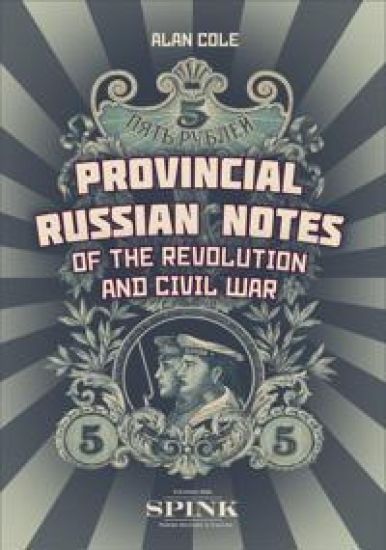
Of his many fascinations, research collecting of obsolete foreign paper currency for 50 years has led Alan Cole to specialise in the dynamics which are the substance of this book. A reader of histories, he is aware that the fortunes of nations fluctuate and that their progress can be interpreted in a variety of ways. His method in this work is to focus on locations across the grand Russian landmass, moving slowly from west to east in three different phases: Europe to the Urals, Siberia and Central Asia, then Baikalia and the Far East. For each of the cities or towns he identifies, he relates and illustrates paper currency emitted as the Bolshevik Revolution threatened or as a direct consequence of regional civil wars which followed. Russian numismatists and cataloguers may have covered much of this ground. However, the purpose of the present work is to introduce a geographical and historical approach to the infant Soviet Union for the benefit of an English-reading public, and especially those of a note-collecting mind. The five hundred colour images, most not hitherto seen or imagined in Britain, are from the author’s own collection. Their introduction and explanations (some challengeable perhaps) all arise from his own reading and enquiry. The author hopes this book will encourage collecting interests as well as a greater enthusiasm to discover Russia’s history and culture.
The Ching Room A pitch-black two-hander set in a toilet cubicle. Rory realises he is out of his depth once he becomes trapped by the terrifying and enigmatic drug-dealer, Darren. Cast size: 2M. “Has subtle depth as a meditation on drug culture… The character of Darren is a demon for our times.” The Scotsman “Exudes the same sort of self-assurance as Gregory Burke’s debut, Gagarin Way… You can see real talent at work here.” Metro “As tight as a short drama set in a toilet cubicle should be…A curiously compelling little play… A script riddled with priceless back-alley gems.” The Herald “It’s exciting, totally absorbing theatre.” City Life, Manchester Turbo Folk A sharp look at Scottish nationality at home and abroad. Set in the sort of bar you wouldn’t take tourists to, in an unspecified Balkan country, Turbo Folk earned Bissett a nomination for Best New Play at the 2010 Critics’ Awards for Theatre in Scotland (CATS). Cast size: 3M. “Tells its story with pace and economy and delivers a real and frightening dramatic punch… The games Bissett plays with language are dazzling.” The Scotsman
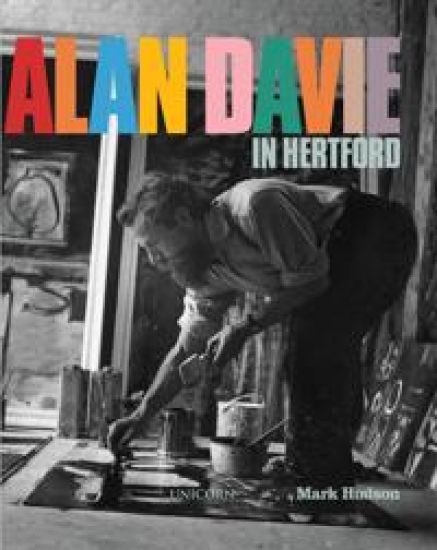
This ground-breaking publication provides a new view of the great Scottish artist Alan Davie (1920-2014), whose intensely physical gestural painting stood the staid post-war British art world on its head. In advance of a new Davie gallery in Hertford, the visually spectacular book argues that far from being an essentially historical figure, defined by the abstract expressionist era of the Fifties and early Sixties when he enjoyed his greatest fame, Davie was a prophetic artist whose preoccupations with universal creativity and self-realisation are more relevant today than they’ve ever been. Lavishly illustrated with rare archive photographs and little-seen paintings, Alan Davie in Hertford demonstrates that Davie’s visionary art was far more closely bound up with physical places than is generally supposed, not least the quiet market town of Hertford, where he lived for 60 years. A catalogue of 40 works intended as the new gallery’s core collection, provides a “rich and fabulous” survey of Davie’s work, from student works of the Thirties to some of his very last paintings.
Working in series that evolved slowly over decades, British-born, New York-based painter Alan Uglow (1941-2011) always remained faithful to his central vision; his practice was unaffected by the increasingly commercial demands of the art scene in the 1980s and 1990s, earning him the "artist's artist" tag. His paintings revolve around a subtle dialogue between notions of center and edge, and are executed gradually, with several layers of paint. They appear at once calm and dynamic, and simultaneously suggest emptiness and ground. Published to coincide with a 2013 exhibition organized by Bob Nickas at David Zwirner, New York, this indispensable catalogue includes all-new photography of paintings created from the early 1990s through 2011, archival interviews and images, and an exhibition chronology illustrated with images of museum and gallery invitation cards.
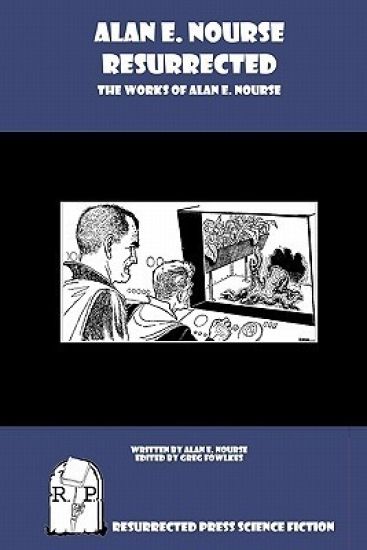
Alan E. Nourse was both a physician and a writer. He produced most of his work in that period known as the "Golden Age" of Science Fiction. Best known for his novel Star Surgeon, he was also a prolific author of short stories during the 50's. This collection includes some of his best from that era including "Derelict," "The Coffin Cure," "Bear Trap," "Contamination Crew", "Infinite Intruder", "Letter of the Law", "PRoblem", "Martyr", "The Native Soil", "An Ounce of Cure", "The Dark Door", "Meeting of the Board", "Circus", "My Friend Bobby", "The Link", "Image of the Gods", and "Second Sight".
Through a series of intimate, feature-length conversations with Alan Clements, Burma's Voices of Freedom brings together dozens of the country's most respected and well-known politicians, pro-democracy activists, artists and religious leaders to provide one of the most detailed accounts of Burma's decades long struggle for freedom ever compiled. Together, these voices describe the courage and conviction required to nonviolently confront injustice anywhere, whether on a stage, in a demonstration, or in solitary confinement.Combined with extensive archival material spanning 30 years, and drawing upon Clements' lifetime of connections within Burma, these four volumes provide an inside account of the ongoing struggle for democracy as it has evolved from the time of Aung San Suu Kyi's release from house arrest in 2010, through the National League for Democracy election victory in 2015, and on to the upcoming national elections in late 2020, detailing their implications on the very future of freedom itself.Volume 1: Key excerpts from decades of interviews, speeches and presentations by Aung San Suu Kyi, followed by expansive conversations with three of her longest and closest colleagues, U Tin Oo, U Win Tin and U Win Htein (542 pages).Volume 2: Interviews with key National League for Democracy party members, prominent Buddhist, Muslim and Catholic leaders, and veteran activists such as Min Ko Naing and Ko Ko Gyi, both of whom served nearly two decades in prison (416 pages).Volume 3: Includes interviews with a broader range of spoken-word activist comedians, musicians, award-winning artists, journalists, and renowned politicians (466 pages).Volume 4: Finishes the series with a set of scholarly appendices, including historical speeches and articles and a lengthy detailed chronology and analysis of key political events over the last 30 years (570 pages).ALAN CLEMENTS, author of The Voice of Hope: Conversations with Aung San Suu Kyi (1996) and one of the first Americans to ordain and live as a Buddhist monk in Burma, is the founder of World Dharma and the Burma Project USA and a veteran activist, author, artist, and speaker whose previous books have been met with critical acclaim.FERGUS HARLOW has been Alan Clements' assistant and co-author since late 2012, and an unaffiliated student of the Dhamma since 2004. World Dharma Publicationswww.WorldDharma.com/Books
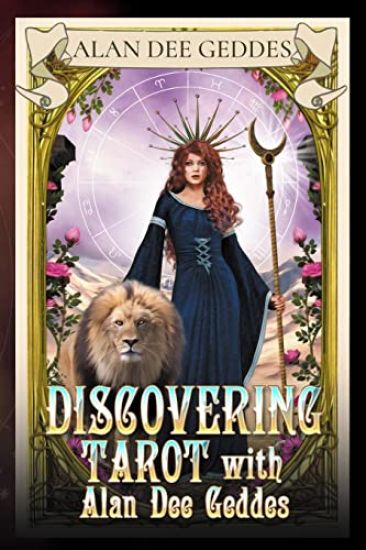
Discovering Tarot with Alan Dee Geddes takes you on a mystical journey, where you will discover...The meaning of all seventy-eight Tarot cardsHow to cast the classic Celtic Cross SpreadHow to use Tarot as a healing tool by incorporating Etheric Cord CuttingHow to read playing cards like Tarot cardsThe identities of the four Archangels of TarotAlso includedThe Fool's Journey MeditationVision SpreadsThe Witches' Star SpreadTwelve Step TarotThe Moon and TarotThe Horses of TarotNumerology and Tarot
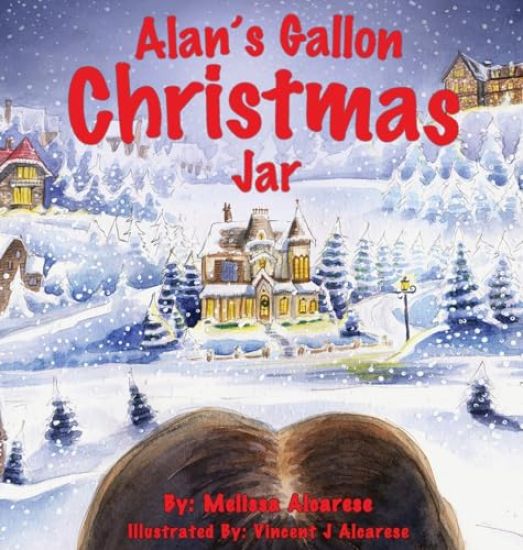
A Heartwarming Holiday Tale About the Importance of Kindness and FriendshipJoin Alan on his quest to make friends with the bullies at his school in a most unique way. And discover how an empty jar becomes the key in forging unlikely but meaningful friendships. Set in a 1920's Norman Rockwell style town, these charming illustrations will transport you to a magical place and time. Settle in for that cozy holiday feeling and a heartfelt message that everyone will enjoy. Celebrate kindness and compassion in the most joyous tale of the season with Alan's Gallon Christmas Jar.
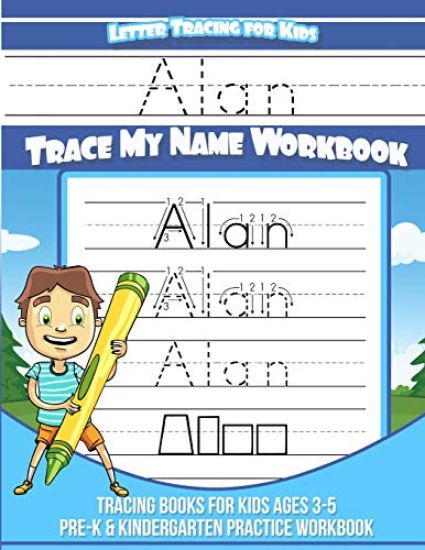
ALAN Name Tracing Workbook - Preschoolers Kindergarten Practice Workbook - Toddlers Writing Notebook - Learn How to Write ALAN - Preschoolers Activities Teaching your child the basics of writing is a difficult task especially if he or she is full of energy and finds it more difficult to focus. In order to give him a push in the first years of school or kindergartner, we are presenting a revolutionary way of teaching your baby the basics of the alphabet: the name tracing workbook for children. Why our workbook? The name tracing workbook has been designed specifically to teach children the basic of spelling and writing. By learning to write his own name, your child will develop the abilities and skills needed in the first years of schools while having fun. The 100 pages activity book is the perfect choice if you are searching to invest in your child's education from the beginning so don't hesitate and get him the only workbook he needs LEARNING THE FIRST LETTERS teaching your toddler the first letters and how to spell his or her name is difficult, which is why we have designed a special workbook that will make the learning process easier and a lot more fun, adding to the baby's educational fund. PERSONALIZED WORKING: the name is the first word any child should learn how to spell, but it is almost impossible to find special help for that task. ALAN Name Tracing Workbook is divided in 12 themed chapters that will teach your toddler how to spell his or her name in a fun and interactive way. WHAT IT CONTAINS: ALAN Name Tracing Workbook counts no less than 100 pages divided in 12 themed sheets that propose recognition activities, letter tracing practice and letter games, that are sure to teach your child the basics of writing and spelling. FOR TODDLERS: ALAN Name Tracing Workbook is made especially for children aged 3 to 6 so your son or daughter will be well prepared for both kindergarten and first grade Learning the alphabet will be a piece of cake if your kid will already have the foundation letter tracing so why not give him a head start in school. THE PERFECT GIFT: offering a present to a toddler that is both fun and parents-approved is an almost impossible task, but the name tracing workbook has it all: it is educational, personalized and made especially for youngsters ages 3 to 6 so, if you're trying to bring a smile on a kid's face, this is it