

Kirjahaku
Etsi kirjoja tekijän nimen, kirjan nimen tai ISBN:n perusteella.
1000 tulosta hakusanalla Allan Cunningham
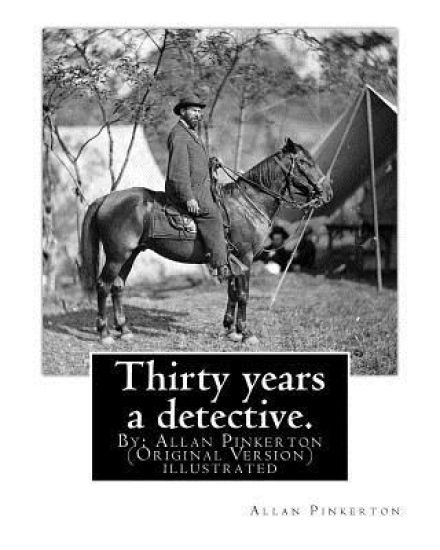
Thirty years a detective. By: Allan Pinkerton (Original Version) illustrated: Thirty years a detective: a thorough and comprehensive exposé of crimi
Allan Pinkerton
Createspace Independent Publishing Platform
2016
nidottu
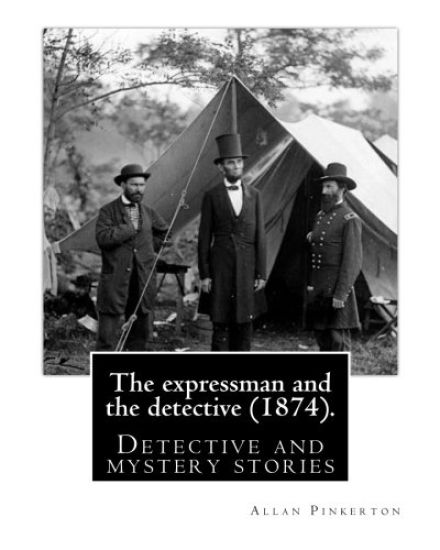
The expressman and the detective (1874). By: Allan Pinkerton (Original Version): Detective and mystery stories
Allan Pinkerton
Createspace Independent Publishing Platform
2016
nidottu
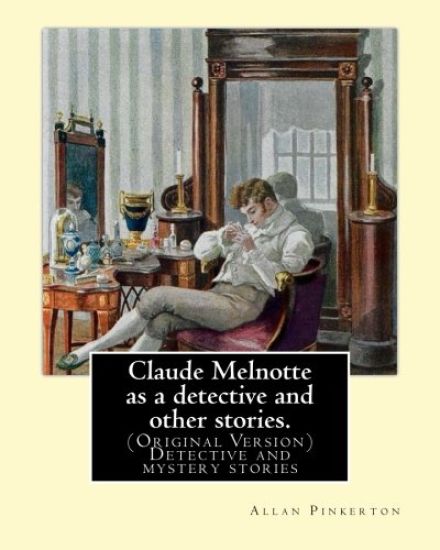
Claude Melnotte as a Detective and Other Stories. by: Allan Pinkerton: (Original Version) Detective and Mystery Stories
Allan Pinkerton
Createspace Independent Publishing Platform
2016
nidottu

The detective and the somnambulist. The murderer and the fortune teller.: By: Allan Pinkerton (Detectives books) illustrated
Allan Pinkerton
Createspace Independent Publishing Platform
2016
nidottu

The spiritualists and the detectives. By: Allan Pinkerton: (Original Version)
Allan Pinkerton
Createspace Independent Publishing Platform
2016
nidottu

Strikers, communists, tramps and detectives.By: Allan Pinkerton(Original Version): Railroad Strike, 1877, Tramps
Allan Pinkerton
Createspace Independent Publishing Platform
2016
nidottu

Mississippi outlaws and the detectives. By: Allan Pinkerton: Don Pedro and the detectives. Poisoner and the detectives
Allan Pinkerton
Createspace Independent Publishing Platform
2016
nidottu
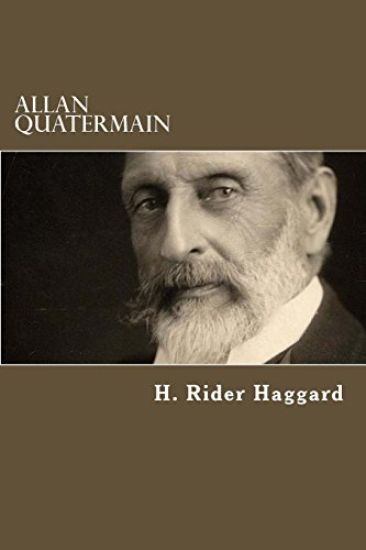
Allan and the Holy Flower. NOVEL (1915) by: H. Rider Haggard
H. Rider Haggard
Createspace Independent Publishing Platform
2016
nidottu


A Gift of Laughter: The Autobiography of Allan Sherman
Allan Sherman
Createspace Independent Publishing Platform
2017
nidottu
Want to know how to become an overnight success? ...in only 38 years "A Gift of Laughter", the autobiography of comedian Allan Sherman, tells in his own words how he became an overnight success in only 38 years. First he struggled as a free-lance writer. Later he produced television shows like the long-running hit "I've Got a Secret" (which he co-created). Then, on one fateful night, after picking up his unemployment check, he recorded an album of parodies called "My Son, the Folk Singer", which sold over one million copies, and became the fastest-selling album of all time. His next two albums also became smash hits, making him the only artist ever to have three consecutive Billboard #1 albums. His third album, "My Son, the Nut" contained the hit single "Hello, Muddah Hello, Fadduh - A Letter from Camp Granada" -- a summer camp anthem which is still being sung 50+ years later. Sherman sang at Carnegie Hall - twice And the Hollywood Bowl - twice He guest-hosted The Tonight Show, performed with and conducted The Boston Pops (notable because he can't read music), entertained Presidents and Supreme Court Justices and millions of regular folk.
Mardi: and a voyage thither (1849). By: Herman Melville, dedicated By: Allan Melville (Volume 1): In two volumes (Volume 1).M
Allan Melville; Herman Melville
Createspace Independent Publishing Platform
2017
nidottu
Mardi, and a Voyage Thither is the third book by American writer Herman Melville, first published in London in 1849. Beginning as a travelogue in the vein of the author's two previous efforts, the adventure story gives way to a romance story, which in its turn gives way to a philosophical quest.Mardi is Melville's first pure fiction work (while featuring fictional narrators; his previous novels were heavily autobiographical). It details (much like Typee and Omoo) the travelings of an American sailor who abandons his whaling vessel to explore the South Pacific. Unlike the first two, however, Mardi is highly philosophical and said to be the first work to show Melville's true potential. The tale begins as a simple narrative, but quickly focuses upon discourse between the main characters and their interactions with the different symbolic countries they encounter. While not as cohesive or lengthy as Moby-Dick, it shares a similar writing style as well as many of the same themes. As a preface to Mardi, Melville wrote somewhat ironically that his first two books were nonfiction but disbelieved; by the same pattern he hoped the fiction book would be accepted as fact. The voyage from island to island echoes Rabelais's Gargantua and Pantagruel, especially the last two books. According to scholar Newton Arvin, "The praise of eating and drinking is highly Rabelaisian in intention, and so in general is all the satire on bigotry, dogmatism, and pedantry. Taji and his friends wandering about on the island of Maramma, which stands for ecclesiastical tyranny and dogmatism, are bound to recall Pantagruel and his companions wandering among the superstitious inhabitants of Papimany; and the pedantic, pseudo-philosophi of Melville's Doxodox is surely, for a reader of Rabelais, an echo of the style of Master Janotus de Bragmardo holding forth polysyllabically to Gargantua in Book I." 1] Arvin also recognizes the influence of Gulliver's Travels by Jonathan Swift, "there is something very Swiftian in Melville's Hooloomooloo, the Isle of Cripples, the inhabitants of which are all twisted and deformed, and whose shapeless king is horrified at the straight, strong figures of his visitors from over sea.". Herman Melville (August 1, 1819 - September 28, 1891) was an American novelist, short story writer, and poet of the American Renaissance period. His best known works include Typee (1846), a romantic account of his experiences in Polynesian life, and his whaling novel Moby-Dick (1851). His work was almost forgotten during his last thirty years. His writing draws on his experience at sea as a common sailor, exploration of literature and philosophy, and engagement in the contradictions of American society in a period of rapid change. He developed a complex, baroque style: the vocabulary is rich and original, a strong sense of rhythm infuses the elaborate sentences, the imagery is often mystical or ironic, and the abundance of allusion extends to Scripture, myth, philosophy, literature, and the visual arts. Born in New York City as the third child of a merchant in French dry goods, Melville's formal education ended abruptly after his father died in 1832, leaving the family in financial straits. Melville briefly became a schoolteacher before he took to sea in 1839 as a common sailor on a merchant ship. In 1840 he signed aboard the whaler Acushnet for his first whaling voyage, but jumped ship in the Marquesas Islands. After further adventures, he returned to Boston in 1844. His first book, Typee (1845), a highly romanticized account of his life among Polynesians, became such a best-seller that he worked up a sequel, Omoo (1847). These successes encouraged him to marry Elizabeth Shaw, of a prominent Boston family, but were hard to sustain. His first novel not based on his own experiences, Mardi (1849), is a sea narrative that develops into a philosophical allegory, but was not well received.
Mardi: and a voyage thither (1849). By: Herman Melville, dedicated By: Allan Melville (Volume 2): In two volumes (Volume 2).M
Allan Melville; Herman Melville
Createspace Independent Publishing Platform
2017
nidottu
Mardi, and a Voyage Thither is the third book by American writer Herman Melville, first published in London in 1849. Beginning as a travelogue in the vein of the author's two previous efforts, the adventure story gives way to a romance story, which in its turn gives way to a philosophical quest.Mardi is Melville's first pure fiction work (while featuring fictional narrators; his previous novels were heavily autobiographical). It details (much like Typee and Omoo) the travelings of an American sailor who abandons his whaling vessel to explore the South Pacific. Unlike the first two, however, Mardi is highly philosophical and said to be the first work to show Melville's true potential. The tale begins as a simple narrative, but quickly focuses upon discourse between the main characters and their interactions with the different symbolic countries they encounter. While not as cohesive or lengthy as Moby-Dick, it shares a similar writing style as well as many of the same themes. As a preface to Mardi, Melville wrote somewhat ironically that his first two books were nonfiction but disbelieved; by the same pattern he hoped the fiction book would be accepted as fact. The voyage from island to island echoes Rabelais's Gargantua and Pantagruel, especially the last two books. According to scholar Newton Arvin, "The praise of eating and drinking is highly Rabelaisian in intention, and so in general is all the satire on bigotry, dogmatism, and pedantry. Taji and his friends wandering about on the island of Maramma, which stands for ecclesiastical tyranny and dogmatism, are bound to recall Pantagruel and his companions wandering among the superstitious inhabitants of Papimany; and the pedantic, pseudo-philosophi of Melville's Doxodox is surely, for a reader of Rabelais, an echo of the style of Master Janotus de Bragmardo holding forth polysyllabically to Gargantua in Book I." 1] Arvin also recognizes the influence of Gulliver's Travels by Jonathan Swift, "there is something very Swiftian in Melville's Hooloomooloo, the Isle of Cripples, the inhabitants of which are all twisted and deformed, and whose shapeless king is horrified at the straight, strong figures of his visitors from over sea."... Herman Melville (August 1, 1819 - September 28, 1891) was an American novelist, short story writer, and poet of the American Renaissance period. His best known works include Typee (1846), a romantic account of his experiences in Polynesian life, and his whaling novel Moby-Dick (1851). His work was almost forgotten during his last thirty years. His writing draws on his experience at sea as a common sailor, exploration of literature and philosophy, and engagement in the contradictions of American society in a period of rapid change. He developed a complex, baroque style: the vocabulary is rich and original, a strong sense of rhythm infuses the elaborate sentences, the imagery is often mystical or ironic, and the abundance of allusion extends to Scripture, myth, philosophy, literature, and the visual arts. Born in New York City as the third child of a merchant in French dry goods, Melville's formal education ended abruptly after his father died in 1832, leaving the family in financial straits. Melville briefly became a schoolteacher before he took to sea in 1839 as a common sailor on a merchant ship. In 1840 he signed aboard the whaler Acushnet for his first whaling voyage, but jumped ship in the Marquesas Islands. After further adventures, he returned to Boston in 1844. His first book, Typee (1845), a highly romanticized account of his life among Polynesians, became such a best-seller that he worked up a sequel, Omoo (1847). These successes encouraged him to marry Elizabeth Shaw, of a prominent Boston family, but were hard to sustain. His first novel not based on his own experiences, Mardi (1849), is a sea narrative that develops into a philosophical allegory, but was not well received.
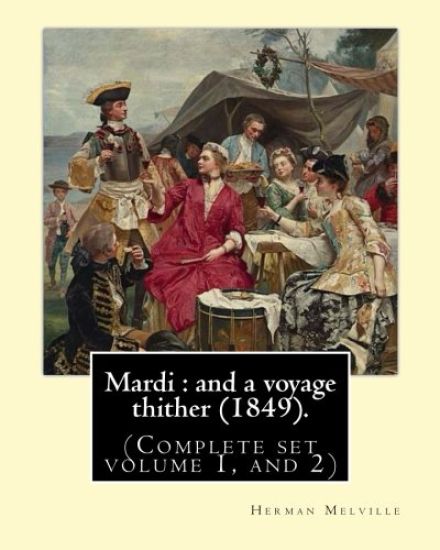
Mardi: and a voyage thither (1849). By: Herman Melville, dedicated By: Allan Melville (Complete set volume 1, and 2): Mardi,
Allan Melville; Herman Melville
Createspace Independent Publishing Platform
2017
nidottu
Mardi, and a Voyage Thither is the third book by American writer Herman Melville, first published in London in 1849. Beginning as a travelogue in the vein of the author's two previous efforts, the adventure story gives way to a romance story, which in its turn gives way to a philosophical quest.Mardi is Melville's first pure fiction work (while featuring fictional narrators; his previous novels were heavily autobiographical). It details (much like Typee and Omoo) the travelings of an American sailor who abandons his whaling vessel to explore the South Pacific. Unlike the first two, however, Mardi is highly philosophical and said to be the first work to show Melville's true potential. The tale begins as a simple narrative, but quickly focuses upon discourse between the main characters and their interactions with the different symbolic countries they encounter. While not as cohesive or lengthy as Moby-Dick, it shares a similar writing style as well as many of the same themes. As a preface to Mardi, Melville wrote somewhat ironically that his first two books were nonfiction but disbelieved; by the same pattern he hoped the fiction book would be accepted as fact. The voyage from island to island echoes Rabelais's Gargantua and Pantagruel, especially the last two books. According to scholar Newton Arvin, "The praise of eating and drinking is highly Rabelaisian in intention, and so in general is all the satire on bigotry, dogmatism, and pedantry. Taji and his friends wandering about on the island of Maramma, which stands for ecclesiastical tyranny and dogmatism, are bound to recall Pantagruel and his companions wandering among the superstitious inhabitants of Papimany; and the pedantic, pseudo-philosophi of Melville's Doxodox is surely, for a reader of Rabelais, an echo of the style of Master Janotus de Bragmardo holding forth polysyllabically to Gargantua in Book I." 1] Arvin also recognizes the influence of Gulliver's Travels by Jonathan Swift, "there is something very Swiftian in Melville's Hooloomooloo, the Isle of Cripples, the inhabitants of which are all twisted and deformed, and whose shapeless king is horrified at the straight, strong figures of his visitors from over sea.".. Herman Melville (August 1, 1819 - September 28, 1891) was an American novelist, short story writer, and poet of the American Renaissance period. His best known works include Typee (1846), a romantic account of his experiences in Polynesian life, and his whaling novel Moby-Dick (1851). His work was almost forgotten during his last thirty years. His writing draws on his experience at sea as a common sailor, exploration of literature and philosophy, and engagement in the contradictions of American society in a period of rapid change. He developed a complex, baroque style: the vocabulary is rich and original, a strong sense of rhythm infuses the elaborate sentences, the imagery is often mystical or ironic, and the abundance of allusion extends to Scripture, myth, philosophy, literature, and the visual arts. Born in New York City as the third child of a merchant in French dry goods, Melville's formal education ended abruptly after his father died in 1832, leaving the family in financial straits. Melville briefly became a schoolteacher before he took to sea in 1839 as a common sailor on a merchant ship. In 1840 he signed aboard the whaler Acushnet for his first whaling voyage, but jumped ship in the Marquesas Islands. After further adventures, he returned to Boston in 1844. His first book, Typee (1845), a highly romanticized account of his life among Polynesians, became such a best-seller that he worked up a sequel, Omoo (1847). These successes encouraged him to marry Elizabeth Shaw, of a prominent Boston family, but were hard to sustain. His first novel not based on his own experiences, Mardi (1849), is a sea narrative that develops into a philosophical allegory, but was not well received....

Allan and the Holy Flower (1915) by H. Rider Haggard
H. Rider Haggard
Createspace Independent Publishing Platform
2017
nidottu
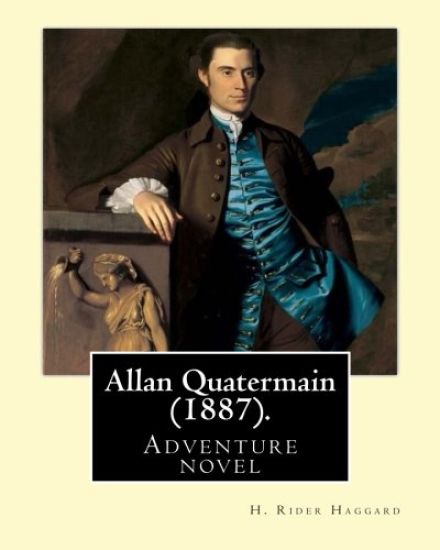
Allan Quatermain (1887). By: H. Rider Haggard: Adventure novel
H. Rider Haggard
Createspace Independent Publishing Platform
2017
nidottu
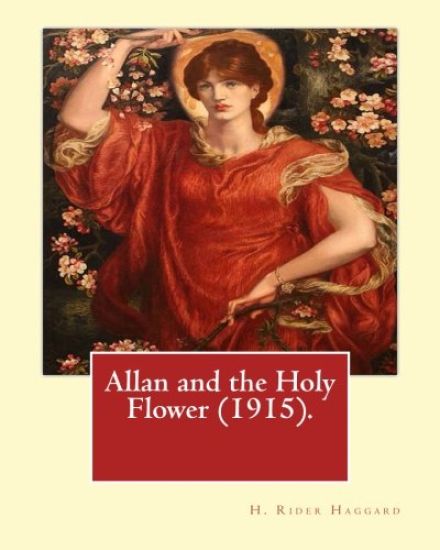
Allan and the Holy Flower (1915). By: H. Rider Haggard: Allan and the Holy Flower is a 1915 novel by H. Rider Haggard featuring Allan Quatermain.
H. Rider Haggard
Createspace Independent Publishing Platform
2017
nidottu

Thirty years a detective: a thorough and comprehensive exposé of criminal practices of all grades and classes. By: Allan Pinkerton
Allan Pinkerton
Createspace Independent Publishing Platform
2017
nidottu