Kirjojen hintavertailu. Mukana 11 699 587 kirjaa ja 12 kauppaa.

Kirjahaku

Etsi kirjoja tekijän nimen, kirjan nimen tai ISBN:n perusteella.

1000 tulosta hakusanalla Austin Current

American Austin-Bantam

American Austin-Bantam

Don Narus

Lulu.com
2019
nidottu
The Bantam American story from Austin to Bantam, From Sir Herbert Austin to Roy S. Evans. Two polar opposites who were the principals in creating and selling Americas first small car and the car company who created the Jeep. A quick reference guide and perfect primer.
Dear Austin: Letters from the Underground Railroad

Dear Austin: Letters from the Underground Railroad

Elvira Woodruff

Random House USA Inc
2000
pokkari
Now in paperback! In this companion novel to Dear Levi, told in letters,11-year-old Levi helps a young African American in a harrowing flight for freedom along the Underground Railroad. "Set in 1853, this sequel to Dear Levi consists of letters written by 11-year-old Levi Ives to his older brother Austin. . . . [He] describes his escapades in the Pennsylvania countryside with his friend, Jupiter, the son of a former slave. When Jupiter's sister is captured by slave traders, the two boys undertake a dangerous journey south to try and free her. While hiding in the woods, they meet Harriet Tubman, and Levi realizes that some of his neighbors are part of the Underground Railroad. Rich in adventure, mystery, and suspense, the succinctly written narrative depicts Levi's struggle to understand the prejudicial attitudes of others. This carefully researched and vividly imagined novel presents the emotional and gripping tale of one boy's confrontation with the issue of slavery and its significance in American history." --School Library Journal"Woodruff combines swift pacing, historical detail, humor, suffering, depth, and precise characterizations, for a wholly satisfying page turner." --Kirkus Reviews
The Austin Protocol Compiler

The Austin Protocol Compiler

Tommy M. McGuire; Mohamed G. Gouda

Springer-Verlag New York Inc.
2004
sidottu
There are two groups of researchers who are interested in designing network protocols and who cannot (yet) effectively communicate with one another c- cerning these protocols. The first is the group of protocol verifiers, and the second is the group of protocol implementors. The main reason for the lack of effective communication between these two groups is that these groups use languages with quite different semantics to specify network protocols. On one hand, the protocol verifiers use specification languages whose semantics are abstract, coarse-grained, and with large atom- ity. Clearly, protocol specifications that are developed based on such semantics are easier to prove correct. On the other hand, the protocol implementors use specification languages whose semantics are concrete, fine-grained, and with small atomicity. Protocol specifications that are developed based on such - mantics are easier to implement using system programming languages such as C, C++, and Java. To help in closing this communication gap between the group of protocol verifiers and the group of protocol implementors, we present in this monograph a protocol specification language called the Timed Abstract Protocol (or TAP, for short) notation. This notation is greatly influenced by the Abstract Protocol Notation in the textbook Elements of Network Protocol Design, written by the second author, Mohamed G. Gouda. The TAP notation has two types of sem- tics: an abstract semantics that appeals to the protocol verifiers and a concrete semantics thatappeals to the protocol implementors group.
Mary Austin and the American West

Mary Austin and the American West

Susan Goodman; Carl Dawson

University of California Press
2009
sidottu
Mary Austin (1868-1934) - eccentric, independent, and unstoppable - was twenty years old when her mother moved the family west. Austin's first look at her new home, glimpsed from California's Tejon Pass, reset the course of her life, 'changed her horizons and marked the beginning of her understanding, not only about who she was, but where she needed to be.' At a time when Frederick Jackson Turner had announced the closing of the frontier, Mary Austin became the voice of the American West. In 1903, she published her first book, "The Land of Little Rain", a wholly original look at the West's desert and its ethnically diverse people. Defined in a sense by the places she lived, Austin also defined the places themselves, whether Bishop, in the Sierra Nevada, Carmel, with its itinerant community of western writers, or Santa Fe, where she lived the last ten years of her life. By the time of her death in 1934, Austin had published over thirty books and counted as friends the leading literary and artistic lights of her day. In this rich new biography, Susan Goodman and Carl Dawson explore Austin's life and achievement with unprecedented resonance, depth, and understanding. By focusing on one extraordinary woman's life, "Mary Austin and the American West" tells the larger story of the emerging importance of California and the Southwest to the American consciousness.
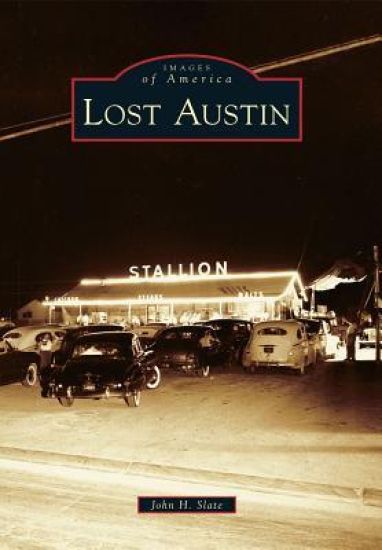
Lost Austin

Lost Austin

John Slate

Arcadia Publishing (SC)
2012
nidottu
Known to some as Capitol City, River City, and Groover's Paradise, Austin is a diverse mix of university professors, students, politicians, musicians, state employees, artists, and both blue-collar and white-collar workers. The city is also home to the main campus of the University of Texas and several other universities. As Austin has grown to become more cosmopolitan, remnants of its small-town heritage have faded away. Austin's uniqueness--both past and present --is reflected in its food, architecture, historic places, music, and businesses. Many of these beloved institutions have moved on into history. While some are far removed in the mists of time, others are more recent and generate fond memories of good times and vivid experiences. Images of America: Lost Austin explores, through the collections of the Austin History Center and others, where Austinites once shopped, ate, drank, and played.
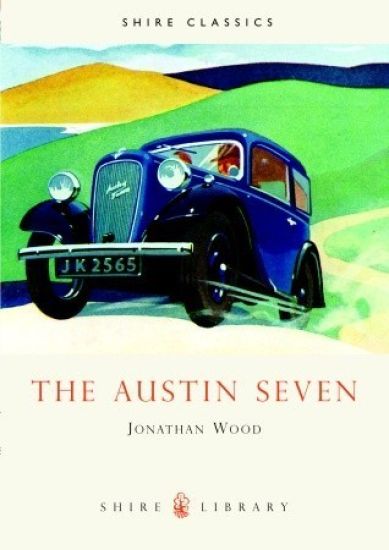
The Austin Seven

The Austin Seven

Jonathan Wood

Shire Publications
2008
nidottu
One of the most famous of British cars, the diminutive but robust 750 cc Austin Seven, introduced in 1922, changed the course of automobile design and proved the viability of the small-capacity four-cylinder car. The salvation of the Austin company, it was aimed at families who might otherwise have travelled by motorcycle and sidecar, and it remained in production until 1939. The Seven performed as well on the race track as it did on the road and inspired a team of magnificent twin overhead camshaft single-seaters. It survives in respectable numbers to provide new generations of enthusiasts with a practical, economical car to run, race and restore.
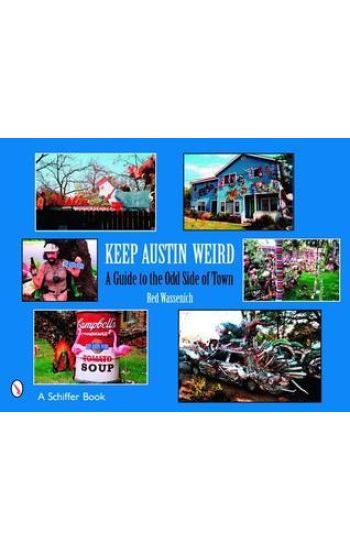
Keep Austin Weird

Keep Austin Weird

Red Wassenich

Schiffer Publishing Ltd
2007
nidottu
Explore the weird, the wonderful, and the colorful in Austin, Texas with this one-of-a-kind guide. Red Wassenich, who coined of the phrase “Keep Austin Weird,” is tour guide to the weirder side of Austin, Texas, through this endlessly entertaining text and over 180 color photos of colorful places, people, and doings in the state’s capital city. Tour the Cathedral of Junk, a three-story, sixty-ton behemoth made with hubcaps, TVs, and over 700 bicycles. Meet Leslie, the cross-dressing, semi-homeless perennial mayoral candidate. Party at the Spamarama, Austin's premier weird cook-off, known for its Spam-filled dishes from "gourmet" and "insane" recipes. Keep your eyes peeled for cruising art cars or take a Segway tour of downtown. Shop in South 1st Street's weird businesses, including Roadhouse Relics and Unemployed Democrats. Sports fans must see Austin's Roller Derby, starring the Texas Rollergirls, and bowl at the Dart Bowl, where bowling kitsch is king. For the adventurous, there is no better guide to Austin!
Haunted Austin, Texas

Haunted Austin, Texas

Scott A. Johnson

Schiffer Publishing Ltd
2009
nidottu
Visit the Austin, Texas, where the dead speak and have many tales to tell. Take a macabre guided tour that includes the most haunted hotel in Texas, the stately Driskill; the Speakeasy, where ordering "spirits" has a different meaning; and the Paggi Blacksmith Shop, where at least one tenant is still laughing, years after he died. Discover the possible connection between Austin's first serial killer and Whitechapel's most notorious madman. Find out what happens when the sun goes down and the bats take fight in one of Texas' most unusual and fascinating cities. It seems, in Austin, no one can escape the dead.
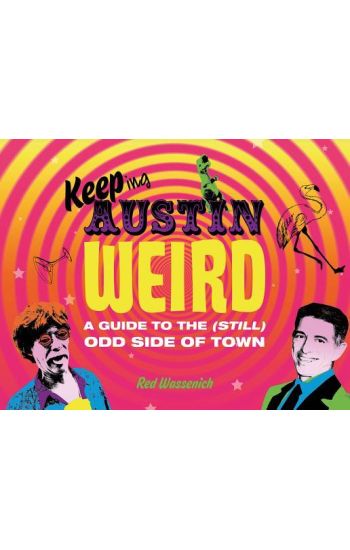
Keeping Austin Weird

Keeping Austin Weird

Red Wassenich

Schiffer Publishing Ltd
2016
sidottu
Take a whimsical photographic tour of the people, places, and events in Austin that collectively make it one of the weirdest cities in America. City native Red Wassenich is tour guide to the odder side of town, which has grown enormously in size and reputation in recent years. Marvel at the Cathedral of Junk, a three-story, 60-ton behemoth made of flotsam and jetsam. Join the fun at Eeyore’s Birthday Bash, a day-long bacchanalia celebrating the beloved fictional character. Meet Dr. Dumpster, who lived in a tricked-out trash bin for over a year. Visit the Museum of the Weird in the city’s “Dirty Sixth” neighborhood. While locals fret endlessly over the forces of normalcy and consumerism that threaten its quirky existence, the town’s still-unconventional underbelly is revealed in this book. So whether you’re into art, food, politics, music, or sports with a flair for the strange, Austin has just the place for you.
Gilbert Austin's "Chironomia" Revisited

Gilbert Austin's "Chironomia" Revisited

Sara Newman; Sigrid Streit

Southern Illinois University Press
2020
nidottu
This first book-length study of Irish educator, clergyman, and author Gilbert Austin as an elocutionary rhetor investigates how his work informs contemporary scholarship on delivery, rhetorical history and theory, and embodied communication. Authors Sara Newman and Sigrid Streit study Austin’s theoretical system, outlined in his 1806 book Chironomia; or A Treatise on Rhetorical Delivery—an innovative study of gestures as a viable, independent language—and consider how Austin’s efforts to incorporate movement and integrate texts and images intersect with present-day interdisciplinary studies of embodiment. Austin did not simply categorize gesture mechanically, separating delivery from rhetoric and the discipline’s overall goals, but instead he provided a theoretical framework of written descriptions and illustrations that positions delivery as central to effective rhetoric and civic interactions. Balancing the variable physical elements of human interactions as well as the demands of communication, Austin’s system fortuitously anticipated contemporary inquiries into embodied and nonverbal communication. Enlightenment rhetoricians, scientists, and physicians relied on sympathy and its attendant vivacious and lively ideas to convey feelings and facts to their varied audiences. During the seventeenth and eighteenth-centuries, as these disciplines formed increasingly distinct, specialized boundaries, they repurposed existing, shared communication conventions to new ends. While the emerging standards necessarily diverged, each was grounded in the subjective, embodied bedrock of the sympathetic, magical tradition.
Mary Austin's Regionalism

Mary Austin's Regionalism

Heike Schaefer

University of Virginia Press
2004
sidottu
Best known for The Land of Little Rain, a collection of natural-history essays about the California deserts, the Western writer Mary Austin (1868-1934) was a prolific literary figure in the first few decades of the twentieth century. In addition to her essays and short stories, Austin produced novels, poems, and cultural criticism, and was well known as a feminist, political writer, and mystic. Over the past decade a number of Austin's books have been reissued and her work has been the subject of increasing critical attention. Heike Schaefer's study complements that renewed interest with a fresh, broad appreciation of the complexity of Austin's work. Considering unpublished materials and the full range of Austin's literary and theoretical writing, Mary Austin's Regionalism presents Austin as a significant early twentieth-century author who reworked the traditions of nature writing and women's regionalism to envision a sustainable and democratic American culture. Austin brought an environmental awareness to the exploration of the race, gender, and class dynamics informing the European American colonization of the West.
Mary Austin

Mary Austin

University of Arizona Press
1997
nidottu
"This book seamlessly combines biography and criticism. [Lanigan] adeptly analyzes Austin's life...and also offers insightful analyses of Austin's writing. Like other females of her period, she received too little recognition for her original prose style and social critiques. Thanks to Song of a Maverick, we hear Mary Austin's voice more clearly and appreciatively." Carol J. Singley in American Literature "[Lanigan] provides illuminating sociological background and lucidly marshals the existing biolgraphical data." Choice "Mary Hunter Austin was a well-known and respected author and activitst in her lifetime but is little known in ours. In this excellent biography...[Lanigan] chose to focus on a few central relationships in Austin's life, to explore in some depth a few central texts, and to understand the interior life of her subject. She has done a splendid job." Ann J. Lane in the Journal of American History
Doing Austin Justice

Doing Austin Justice

Wilfrid Rumble

Continuum International Publishing Group Ltd.
2004
sidottu
John Austin was a towering presence in nineteenth-century English jurisprudence. He lived at the centre of the utilitarian movement in London during the 1820s and 1830s, and became its leading philosopher of law after Bentham's death (1832). Wilfrid E. Rumble's book analyzes Austin's work in its historical context, and shows how much of it remains viable today -- including his conception of analytical jurisprudence, his sharp distinction between law and morality, and his utilitarian theory of resistance to government. The end result is a richer, more nuanced portrait of Austin's legal philosophy than his twentieth-century critics have painted. Doing Austin Justice thus fills a large gap in the literature about this important figure. It will be of substantial interest to jurists, historians of political philosophy, and of the nineteenth century more generally.
Mary Austin's Southwest

Mary Austin's Southwest

University of Utah Press,U.S.
2005
nidottu
"If Nationality means anything—and in [the American] case it couldn’t mean race—it must mean the unconscious response of a people to their natural environment."—Mary Austin Celebrated and controversial author Mary Austin (1866-1934) lived in and wrote about her beloved Southwest, a place that has shaped and been shaped by three distinctive groups: Indian, Spanish, and Anglo. Austin discovered in the Southwest that these cultures blended languages, races, and religions, creating what she believed were unique versions of Catholicism, nature worship, ceremonies, and visions. Those beliefs worked their way through her literary criticism, leading her to ground-breaking ideas of place-based influences, narrative techniques, and dramatic development.In Mary Austin’s Southwest, editors Blackbird and Nelson shine light on Austin’s work, revealing her to be a significant trailblazer for literary diversity. With thoughtful introductions to selected writings on Austin’s prose, drama, and poetry as well as an annotated checklist of her published Southwestern literary criticism, this collection is a celebration of a rich mixed heritage as expressed through the written word.
Literary Austin

Literary Austin

Texas Christian University Press,U.S.
2007
sidottu
Don Graham brings together the history, color, and character of Texas' capital city since 1839 when it was selected, on the advice of Mirabeau B. Lamar, as the site for a new capital of the then - Republic of Texas. Essays, fiction, and poetry reveal the variety of literary responses to Austin through the decades and are organized in a roughly chronological fashion to reveal the themes, places, and personalities that have defined the life of the city. Austin was always about three things: natural beauty, government, and education; thus, many of the pieces in this volume dwell upon one and sometimes all of these themes. Besides O. Henry, the other most important literary figures in the city's history were J. Frank Dobie, Roy Bedichek, and Walter P. Webb: folklorist, naturalist, historian. During their heyday, from the 1930s through the early 1960s, they were the face of literary culture in the city. They remain a source of interest, pride, and sometimes controversy. Austin is a well-known haven of liberal political activism, represented by such well-known figures as Lyndon B. Johnson, Ralph Yarborough, Ann and David Richards, Liz Carpenter, Willie Morris, John Henry Faulk, and Molly Ivins. The city is also a haven for literary writers, many of whom appear in these pages: Carolyn Osborn, Rolando Hinojosa-Smith, Dagoberto Gilb, Stephen Harrigan, and Lawrence Wright, to name a few. Among the poets, Thomas Whitbread, Dave Oliphant, David Wevill, and Christopher Middleton have long been on the scene. Certain sites recur - the University Tower, Barton Springs, various watering holes of another kind - so that anybody who has ever spent time in Austin will experience twinges of nostalgia for vanished icons, closed-down venues, and long-gone sites of pleasure brought to life once again, in these pages.