Kirjojen hintavertailu. Mukana 11 717 486 kirjaa ja 12 kauppaa.

Kirjahaku

Etsi kirjoja tekijän nimen, kirjan nimen tai ISBN:n perusteella.

1000 tulosta hakusanalla Basil Lawrence

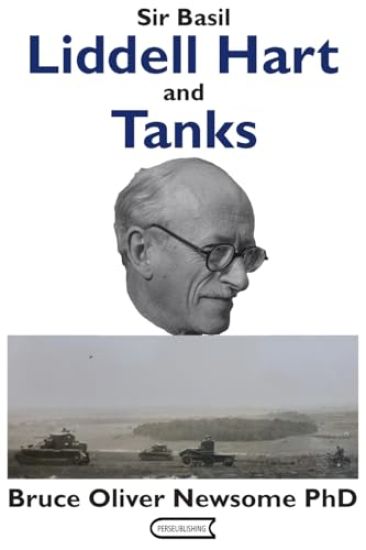
Sir Basil Liddell Hart and Tanks

Sir Basil Liddell Hart and Tanks

Bruce Oliver Newsome

Perseublishing
2024
pokkari
Sir Basil Liddell Hart (1895-1970) is the strongest influence on Anglophone military thought. From the 1920s, he influenced doctrine, force structure, and acquisitions. By the 1950s, he was the official historian of Britain's tank arm, and the self-declared inventor of Blitzkrieg. He died in 1970, a knight of the realm, feted as the greatest expert on tanks in the world.Liddell Hart's thinking about tanks is more interesting and varied than he or his disciples portrayed. During the Great War, he advocated for pedestrian infantry as the decisive arm. In the 1920s, he embraced JFC Fuller's call for fully-mechanized combined arms. He even advocated for a small, all-tracked army, on the promise that it could end wars in days. Yet he soon embraced one-man tankettes and fancied that all arms could be amalgamated around them. He campaigned for a ban on tanks weighing more than 5 tons. During the 1930s, he prioritized fast, light tanks, each accommodating only one machine-gun and two men. He promised that they could race around the enemy's front, infiltrate the enemy's rear, raid industry and infrastructure, and return days later, without a battle. During the Second World War, he realized some of his mistakes, but still complained about heavier tanks, bigger guns, and thicker armor, and reimagined a light tank force for hit-and-run raids. The first three chapters of this book review Liddell Hart's early preference for pedestrians over tanks, his switch to tanks over pedestrians after contacting JFC Fuller (then the tank arm's most senior officer), and his confused and selective engagement with tank technologies. Chapters 4 to 10 explain his interwar views on, respectively, current heavy tanks, tankettes and carriers, light tanks, medium tanks, infantry tanks, cruiser tanks, and finally (of all things) motorcycles.Chapter 11 reviews his post-war thoughts on the future of tanks, and reveals previously overlooked restatements of his interwar views. Chapter 12 reveals his slow, contentious rebound as official historian of the tank arm. Publicly, he leveraged the work to cement his reinvention as the neglected prophet of the sorts of technologies and doctrines normalized during the Second World War. Privately, as I reveal here for the first time, he was inattentive to the work, and played the principals against each other, except where convenient to his reinvention. Thus, his lessons are hit and miss.Liddell Hart always prioritized speed and stealthiness, which still deserve our attention. Yet we also need to beware of reductionism to speed and stealthiness, at the expense of other aspects of mobility, survivability, and lethality. Liddell Hart offers insights into the speed of Blitzkrieg, and the stealthiness of raids. However, his opus continues to encourage Western regression to fast charging, light footprint, portability, ready deployability, cost savings, and raiding. These ideals are worthy, but need to be balanced. Against inferior adversaries, in easy terrain, they can be spectacular. Against peer competitors or in difficult conditions, they become costly and indecisive. This book helps us to implement his ideals realistically.
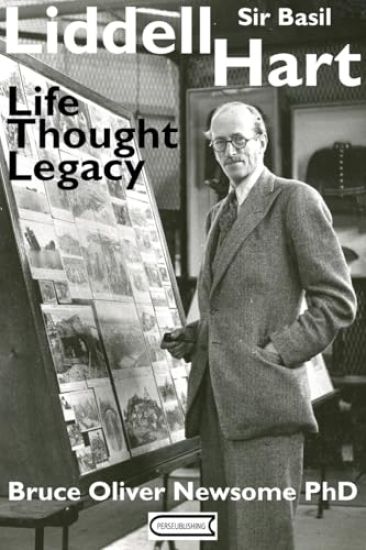
Sir Basil Liddell Hart

Sir Basil Liddell Hart

Bruce Oliver Newsome

Perseublishing
2024
pokkari
The first unofficial biography of Sir Basil Liddell Hart (1895-1970). Nobody had more influence on Anglophone military thought over the last 100 years. He was born in the reign of Victoria, came of age in the year before the Great War, and wrote doctrine from the year after. In 1925 (when he was still 29 years of age), the rising Chief of the Imperial General Staff (CIGS), desperate for good press, encouraged The Daily Telegraph to hire him as military correspondent. From that year, he published journalistic reports every few days, magazine articles every few months, and about one book per year, for a total of at least 35 books. He claimed to have been published in 42 countries and 31 languages. He was yet more prolific as a letter-writer. His own archive contains almost 1,000 correspondents. He garnered inside information, which raised the value of his journalism and thence the books based on his journalism. By the 1930s, he directly advised ministers and flag officers. Most of his policies, prescriptions, and predictions seemed discredited by the Second World War. However, during the 1950s, he popularized himself as prodigy, family man, intellectual, war hero, exposer of hard truths about the Great War, rigorous historian, author of British doctrine, strategist, fearless journalist, Army insider and outside critic, political sage, opponent of appeasement, secret guru to Britain's government during the Second World War, misunderstood proponent of negotiated peace, maligned proponent of a low-cost war, inventor of Blitzkrieg, America's adopted hero, Israel's inspiration, academic, writer, and mentor to a new generation of historians. In 1965, his memoirs cemented the narrative. In 1966, he was knighted by the Queen and photographed for the National Portrait Gallery.Previous memorialists and biographers relied on what Liddell Hart said or wrote late in life - about what he had said or written early in life. Since then, new archives of correspondence have been opened. My biography is the first to cite those archives. It gives a fresh and objective insight into Liddell Hart's life, thought, and legacy.
Saint Basil The Letters (Volume I)
This book has been considered by academicians and scholars of great significance and value to literature. This forms a part of the knowledge base for future generations. So that the book is never forgotten we have represented this book in a print format as the same form as it was originally first published. Hence any marks or annotations seen are left intentionally to preserve its true nature.
Saint Basil The Letters (Volume I)
This book has been considered by academicians and scholars of great significance and value to literature. This forms a part of the knowledge base for future generations. So that the book is never forgotten we have represented this book in a print format as the same form as it was originally first published. Hence any marks or annotations seen are left intentionally to preserve its true nature.
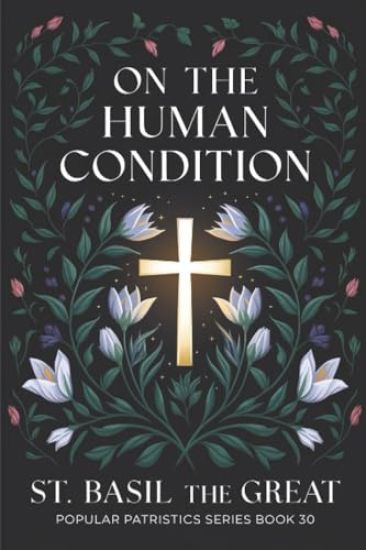
On The Human Condition: St Basil the Great (Popular Patristics Series Book 30)
"On The Human Condition" by St. Basil the Great, part of the Popular Patristics Series (Book 30), explores the nature of humanity from a theological perspective. In this work, St. Basil addresses fundamental aspects of human existence, including the nature of the soul, the role of free will, and the relationship between humanity and God. His reflections offer insights into Christian anthropology and ethics, providing a profound understanding of the human condition within the framework of Christian doctrine. This text is essential for those interested in early Christian thought and the theological understanding of human nature.
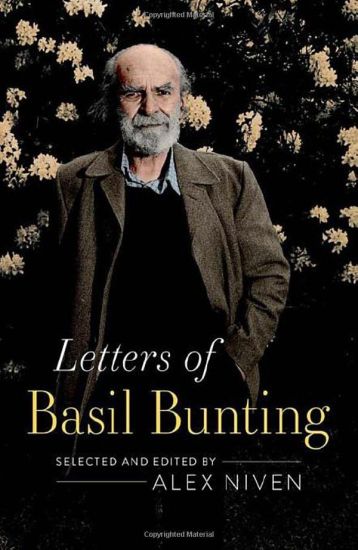
Letters of Basil Bunting

Letters of Basil Bunting

Oxford University Press
2022
sidottu
An edition of the letters of the poet Basil Bunting (1900-1985). This is a long-awaited first selected edition of the letters of Basil Bunting, one of the major modernist poets of the twentieth century. It includes a large portion of Bunting's correspondence (around 200 letters) to recipients including Ezra Pound, T. S. Eliot, Harriet Monroe, William Carlos Williams, Louis Zukofsky, Ted Hughes, George Oppen, Allen Ginsberg, Donald Davie, and Tom Pickard. Following Bunting from his first encounters with major literary figures in London and Paris in the 1920s to his death in Northumberland in 1985, this selection showcases a narrative that is crucial to the history of modernism and modern poetry in English. Highlights include a long and detailed dialogue with Ezra Pound in the 1930s on political, economic, and literary subjects, a rich, ruminative exchange with the American poet Louis Zukoksfy lasting over four decades, and various accounts of the excitements and controversies of the Anglo-American poetry scene of the 60s and 70s. Whether Bunting is writing from New York at the height of the Depression, Iran in the aftermath of World War II, or the north of England during preparation of his masterpiece Briggflatts (1966), his prose is unfailingly sharp, eloquent, entertaining, and caustic. This edition contains detailed annotations of Bunting's letters, a critical introduction, glossary of names, and an editorial commentary.
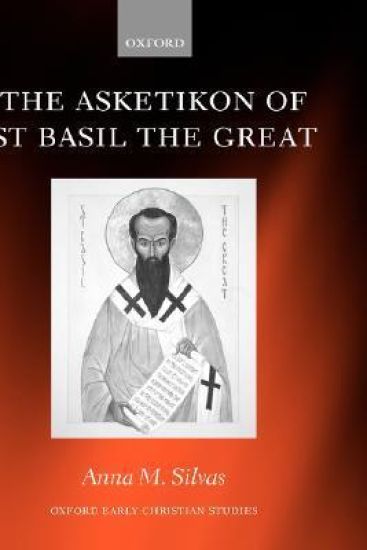
The Asketikon of St Basil the Great

The Asketikon of St Basil the Great

Anna M. Silvas

Oxford University Press
2005
sidottu
The Asketikon of St Basil the Great comprises a new English translation and studies which re-examine the emergence of monasticism in Asia Minor. The Regula Basilii, translated by Rufinus from Basil's Small Asketikon, is closely compared with the Greek text of the longer edition, as a means to tracing the development of ideas. Silvas concludes that the antecedents of the monastic community of the Great Asketikon are best sought not in some kind of sub-orthodox modus vivendi of male and female ascetics living together and increasingly curbed by an emerging neo-Nicene orthodoxy less favourable to women ('homoiousian asceticism'), but in the local domestic ascetic movement in Anatolia as typified in the developments at Annisa under the leadership of Makrina.
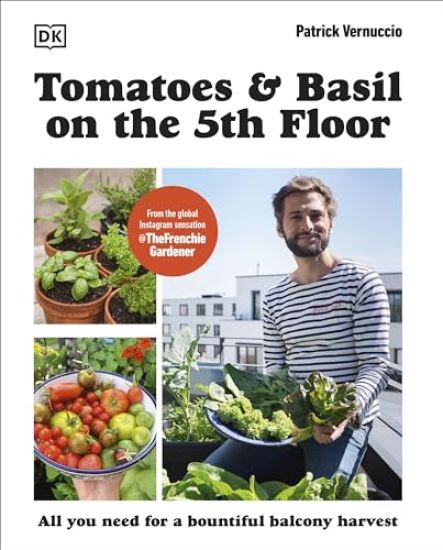
Tomatoes and Basil on the 5th Floor (The Frenchie Gardener)

Tomatoes and Basil on the 5th Floor (The Frenchie Gardener)

Patrick Vernuccio

DORLING KINDERSLEY LTD
2024
nidottu
Get the most out of every bit of balcony space to easily grow your own sustainable, organic, and tasty food.Do you love having a balcony but aren't sure how you can use it as a space to grow? Do you feel that being a few stories up in a building stops you from growing delicious crops? If the answer is "yes," then it's time you read this book.Instagram sensation Patrick Vernuccio AKA @TheFrenchieGardener is a small-space grower with a big message. Building on his inspirational content, Tomatoes and Basil on the 5th Floor showcases easy and informative ways to grow fresh produce in containers and on a balcony, proving that anyone can enjoy tasty, organic food all year round.From dividing store-bought basil plants, to harvesting vegetables at the best time of year, to letting plants set seed for the benefit of wildlife, Patrick takes his readers through myriad ways to get crops and produce out of very limited space. Working with the seasons and with good-quality seed and compost, he explains all you need to know to ensure every inch of your balcony can give you tasty and beautiful crops to harvest.
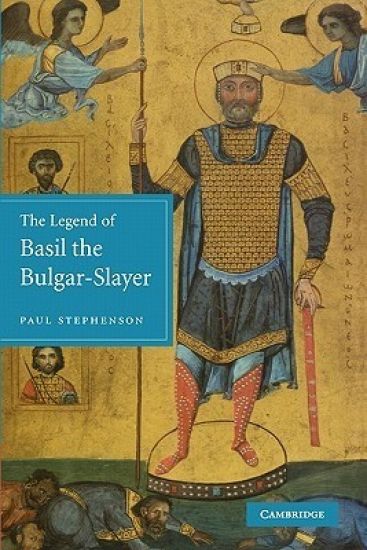
The Legend of Basil the Bulgar-Slayer

The Legend of Basil the Bulgar-Slayer

Paul Stephenson

Cambridge University Press
2010
pokkari
The reign of Basil II (976–1025), the longest of any Byzantine emperor, has long been considered as a 'golden age', in which his greatest achievement was the annexation of Bulgaria. This, we have been told, was achieved through a long and bloody war of attrition which won Basil the grisly epithet Voulgartoktonos, 'the Bulgar-slayer'. In this 2003 study Paul Stephenson argues that neither of these beliefs is true. Instead, Basil fought far more sporadically in the Balkans and his reputation as 'Bulgar-slayer' was created only a century and a half later. Thereafter the 'Bulgar-slayer' was periodically to play a galvanizing role for the Byzantines, returning to centre-stage as Greeks struggled to establish a modern nation state. As Byzantium was embraced as the Greek past by scholars and politicians, the 'Bulgar-slayer' became an icon in the struggle for Macedonia (1904–1908) and the Balkan Wars (1912–1913).
The Menologion of Basil II

The Menologion of Basil II

HARVARD UNIVERSITY PRESS
2025
sidottu
The Menologion of Basil II, one of the most famous manuscripts surviving from Byzantium, contains short narratives to be read during the morning office to commemorate the saint or feast of the day. Dedicated to the emperor Basil II (r. 976–1025), it is best known for its decorative program: each of the 430 entries features a large, dazzling illumination of a corresponding scene. Yet the texts have received much less attention than their illustrations, despite the wealth of information that they provide about the commemoration of the saints in Byzantine society. This unillustrated volume highlights the Menologion as a work that maps the many paths toward Christian sanctity and celebrates the people who walked them, from martyr to monk, from patriarch to prostitute, and everyone in between.The Menologion of Basil II includes both a new Greek edition, prepared from a fresh reading of the manuscript that replaces the previous eighteenth-century edition, and the first full translation into English—the first into any modern language.
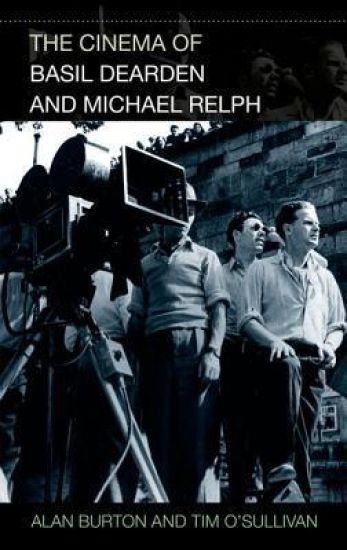
The Cinema of Basil Dearden and Michael Relph

The Cinema of Basil Dearden and Michael Relph

Alan Burton; Tim O'Sullivan

Edinburgh University Press
2009
sidottu
This book offers the first full systematic assessment and evaluation of the cinema of this important filmmaking partnership. Dearden and Relph came together at the famous Ealing Studios in the wartime period and became the most prolific production team at the studio, contributing such popular and critically acclaimed films as The Captive Heart (1946), The Blue Lamp (1950) and Pool of London (1951). Later in the 1950s, Dearden and Relph branched out into independent production and became particularly associated with a cycle of controversial social problem films that included Sapphire (1959) and Victim (1961). This new study takes an extensive view of the cinema of Basil Dearden and Michael Relph. It considers in detail their contribution to the celebrated achievements of wartime cinema at Ealing, brings a new focus to their post-war films that addressed masculine adjustment in a period of rapid change, takes a fresh look at the prominent group of social problem films within their work, and offers an original study of their later period of filmmaking for the international market in the 1960s. Attention is also given to the significant place of comedy in their cinema and Michael Relph's considerable achievements as an art director. The book will be of interest to all students of film history and a general readership that takes a keen interest in British cinema.
Grow Your Own Basil

Grow Your Own Basil

Lisa J. Amstutz

Pebble Books
2025
sidottu
Inspire young readers to grow their own fruits and veggies. Growing basil is fun and easy. It starts with a seed, but what else will readers need? This book takes them through the steps of growing a project they can be proud of.
Grow Your Own Basil

Grow Your Own Basil

Lisa J. Amstutz

Pebble Books
2025
nidottu
Inspire young readers to grow their own fruits and veggies. Growing basil is fun and easy. It starts with a seed, but what else will readers need? This book takes them through the steps of growing a project they can be proud of.
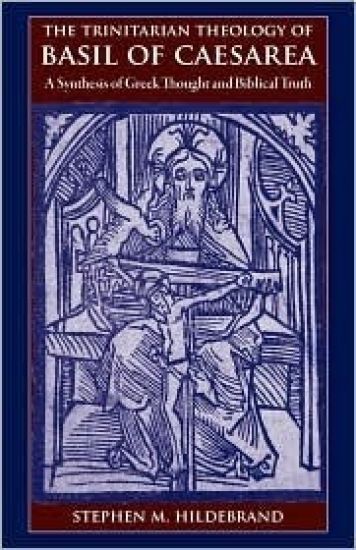
The Trinitarian Theology of Basil of Caesarea

The Trinitarian Theology of Basil of Caesarea

Stephen M. Hildebrand

The Catholic University of America Press
2009
nidottu
Basil of Caesarea, the Great, has drawn the admiration of many for centuries. He was a father of eastern coenobitic monasticism; an author of orthodox Trinitarian theology and eloquent defender of the Spirit; a model of social virtue and concern for the poor; and an erudite preacher and able bishop. This book explores Basil's Trinitarian thought as the meeting place of the worlds within which he lived, that of ancient Greek culture and learning, and that of Christian faith lived in the liturgy and expressed in the Scripture. His work as a bishop, theologian, and preacher was in large part an effort to make these two worlds one. Basil showed that Christianity had the strength and power to take to itself whatever was good among the Greeks, ennobling their culture with the name of Christ and yet remaining true to itself. He did this not standing outside of Greek culture, but within it. In spite of his enduring insistence upon the transcendence and simplicity of God, Basil developed a precise Trinitarian vocabulary, which he thought effectively refuted two basic errors in thinking about God: the denial of the divinity of the Son and the Spirit; and the denial of their true and real distinction from the Father. He maintained that the right thinking about God is more than just the right use of words; it is also the right interpretation of the Word, the Scriptures. This book also, then, seeks to explain the scriptural foundations of Basil's Trinitarian theology, which themselves testify to his artful synthesis of Greek culture and Christian truth.
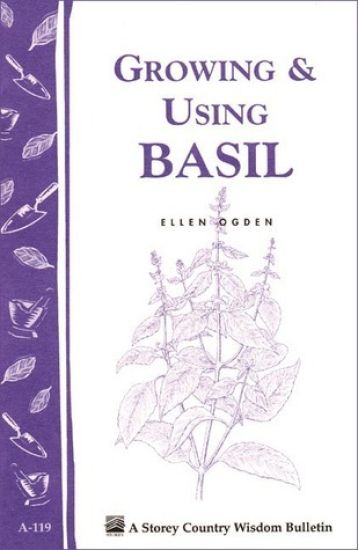
Growing & Using Basil

Growing & Using Basil

Ellen Ecker Ogden

Storey Books
1990
pokkari
EVERYTHING YOU EVER WANTED TO KNOW ABOUT BASIL – AND MORE! Basil is one of the most popular and widely grown herbs in the world. With its delicate aroma and sweet-spicy flavor, it’s no wonder that basil, a staple in kitchens around the world, is the favorite culinary herb of today’s chefs!In Growing & Using Basil, Ellen Ogden offers all the information you'll need to grow, harvest, and cook with basil in all its varieties of flavor. Whatever the basil you want to grow--sweet, purple, opal, lemon, cinnamon, anise, napoleatano, camphor, holy, or something more exotic--the information you need is right at your fingertips. Better still, you'll find dozens of recipes for using your basil in everything from pestos and basil vinegars to grilled bluefish wrapped in mammoth basil leaves and cinnamon basil custard.
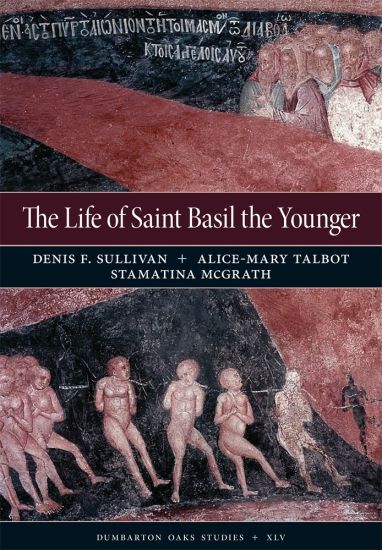
The Life of Saint Basil the Younger

The Life of Saint Basil the Younger

Dumbarton Oaks Research Library Collection
2014
sidottu
The Life of St. Basil the Younger," one of the longest and most important middle Byzantine saints' lives, presents the life of a holy man who lived in Constantinople in the first part of the tenth century. Usually described as a fictional saint, he had the distinction of residing in private homes rather than in a monastery, performing numerous miracles and using the gift of clairvoyance. The vita," purportedly written by one of Basil's disciples, a pious layman named Gregory, includes many details on daily life in Constantinople, with particular attention to slaves, servants, and eunuchs. Two lengthy descriptions of visions provide the most comprehensive source of information for Byzantine views on the afterlife. In one, the soul of an elderly servant Theodora journeys past a series of tollbooths, where demons demand an accounting of her sins in life and collect fines for her transgressions; in the other Gregory describes his vision of the celestial Jerusalem, the enthronement of the Lord at his Second Coming, and the Last Judgment. This volume provides a lengthy introduction and a critical edition of the Greek text facing the annotated English translation, the first in any language.
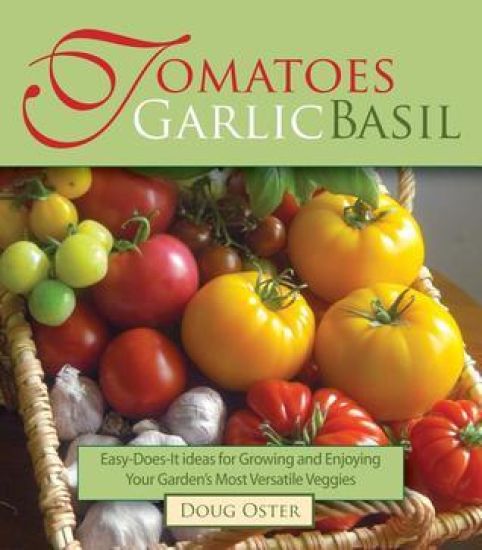
Tomatoes Garlic Basil

Tomatoes Garlic Basil

Doug Oster

St. Lynn's Press
2010
pokkari
In today's economy, one sector is trending sharply up: backyard vegetable gardening. Americans are staying closer to home – literally tending to their gardens, by the millions. And they’re reaching out for help and advice. Doug Oster, popular radio talk show gardening expert and newspaper garden & food columnist, gets more questions about tomatoes than any other vegetable. #2 is garlic, with basil close behind. It’s time for a book about these favorites of the American kitchen. With color photos throughout, this book is a balance of easy-to-use organic gardening tips, a little horticultural history, serious and funny cautionary gardening tales…and 30 simply delicious recipes (the gastronomic payoff). No matter if a garden is a loft balcony or a backyard in the ‘burbs, Doug leads his readers step by step with his trademark “how I do it” humor and Julia Child honesty…with a bonus prize of all those recipes as a reward for their labors. For beginners and old-timers alike.