Kirjahaku
Etsi kirjoja tekijän nimen, kirjan nimen tai ISBN:n perusteella.
1000 tulosta hakusanalla Brian H Appleton



Bryan and Darrow at Dayton: The Record and Documents of the Bible Evolution Trial
Leslie H. Allen
Literary Licensing, LLC
2013
nidottu
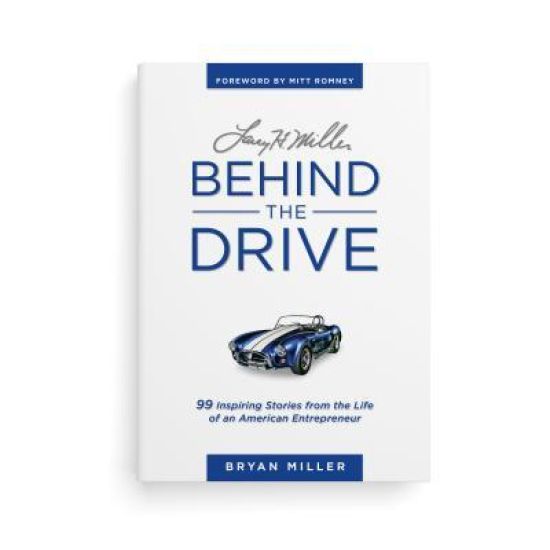
Larry H. Miller--Behind the Drive: 99 Inspiring Stories from the Life of an American Entrepreneur
Bryan Miller
Shadow Mountain
2015
sidottu
In Driven: An Autobiography, business mogul Larry H. Miller shared his painful and joyful lessons about the many facets of his life and legacy and candidly spoke about the people and circumstances that influenced him. In Larry H. Miller--Behind the Drive, the tables are turned as we hear firsthand from both famous and obscure people whose lives were influenced, inspired, and even transformed by the compassion, generosity, and leadership of Larry. Nearly 100 individuals share personal stories about the man who they came to know and love as a philanthropist, a Good Samaritan, an angel in disguise. Quite frankly, Larry H. Miller simply loved helping people. It didn't matter who they were. It didn't matter what he was doing at the time. When Larry heard the call for help, he unassumingly went about to make things better. The marvel of Miller isn't what he did to shape a community or touch a life, it's how he did it--one person at a time. Readers might ask how did Larry H. Miller have the time to personally impact so many lives? The answer--Larry chose to use his time a little bit differently than most. Larry H. Miller--Behind the Drive pulls back the curtain and shows us the difference one person can make when he's driven to serve.
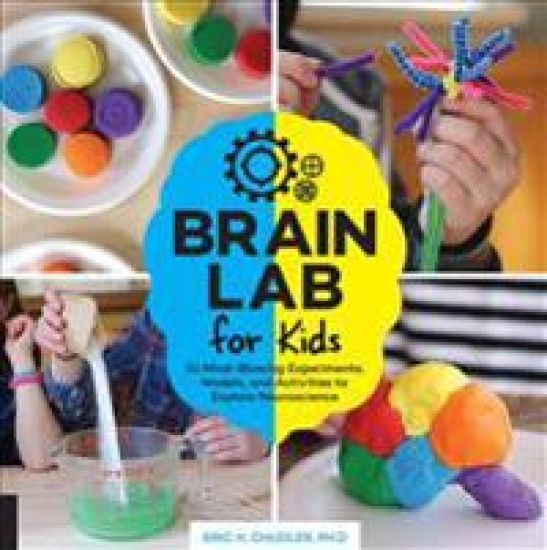
Brain Lab for Kids offers 52 family-friendly activities, science experiments, and models to help you understand how the brain accomplishes all that it does. Riding a bicycle, learning a new language, catching a ball, reading a book: these activities and everything else we see, hear, feel, and do are made possible by the soft, whitish-pink substance inside our heads called the brain. These hands-on projects will give you a new appreciation for your brain and the many amazing things it does for you. Have fun learning:how cerebrospinal fluid works by dropping eggs held in containers, with and without water.about touch receptors by making a touch maze with glue and cardboard.how people filter out unneeded sound by conducting a listening experiment.how vision interacts with taste and smell by tasting colored drinks. The labs are organized by unit themes: The Neuron, The Brain, Reflexes, Taste, Smell, Vision, Touch, Hearing, Sleep and Body Rhythms, and Memory. The "What's Going On" section for each lab explains the science behind the fun. “Brain Facts” are interesting, and perhaps surprising, bits of trivia related to each lab. Finally, “Thinking Deeper” has suggestions for taking the lab further. The expanding field of brain science, also called neuroscience, offers the opportunity for all of us to learn about ourselves and others, and how we can better communicate, motivate, inspire, and just plain collaborate together. The popular Lab for Kids series features a growing list of books that share hands-on activities and projects on a wide host of topics, including art, astronomy, clay, geology, math, and even how to create your own circus—all authored by established experts in their fields. Each lab contains a complete materials list, clear step-by-step photographs of the process, as well as finished samples. The labs can be used as singular projects or as part of a yearlong curriculum of experiential learning. The activities are open-ended, designed to be explored over and over, often with different results. Geared toward being taught or guided by adults, they are enriching for a range of ages and skill levels. Gain firsthand knowledge on your favorite topic with Lab for Kids.
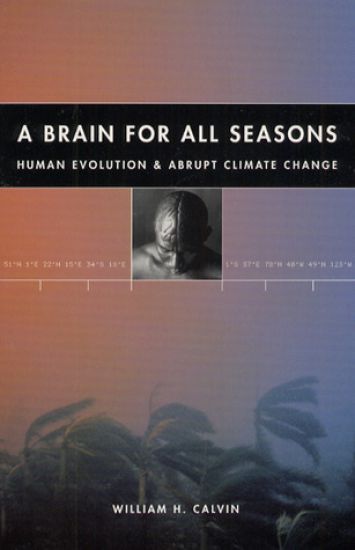
One of the most shocking realizations of all time has slowly been dawning on us: the Earth's climate does great flip-flops every few thousand years, and with breathtaking speed. In just a few years, the climate suddenly cools worldwide. With only half the rainfall, severe dust storms whirl across vast areas. Lightning strikes ignite giant forest fires. For most mammals, including our ancestors, populations crash. Our ancestors lived through hundreds of such abrupt episodes since the more gradual Ice Age began two and a half million years ago - but abrupt cooling produced a population bottleneck each time, one that eliminated most of their relatives. We are the improbable descendants of those who survived - and later thrived. William H. Calvin's marvellous "A Brain for All Seasons" argues that such cycles of cool, crash and burn powered the pump for the enormous increase in brain size and complexity in human beings. Driven by the imperative to adapt within a generation to "whiplash" climate changes where only grass did well for a while, our ancestors learned to cooperate and innovate in hunting large grazing animals. Calvin's book is structured as a travelogue that takes us around the globe and back in time. Beginning at Darwin's home in England, Calvin sits under an oak tree and muses on what controls the speed of evolutionary "progress". The Kalahari desert and the Sterkfontein caves in South Africa serve as the backdrop for a discussion of our ancestors' changing diets. A drought-shrunken lake in Kenya shows how grassy mudflats become great magnets for grazing animals. And in Copenhagen, we learn what ice cores have told us about abrupt jumps in past climates. Perhaps the most dramatic discovery of all, though, awaits us as we fly with Calvin over the Gulf Stream and Greenland: global warming caused by human-made pollution could paradoxically trigger another sudden episode of global "cooling". Because of the accumulation of greenhouse gases in the atmosphere, the oceanic "conveyor belt" that sends warmer water into the North Atlantic could abruptly shut down. If that happens again, much of the Earth could be plunged into a deep chill within a few years. Europe would become as cold and dry as Siberia. Agriculture could not adapt quickly enough to avoid worldwide famine and wars over the dwindling food supplies - a crash from which it would take us many centuries to recover. With this warming, Calvin connects us directly to evolution and the surprises it holds. Highly illustrated, conversational and learned, "A Brain for All Seasons" is a fascinating view of where we came from and where we're going.
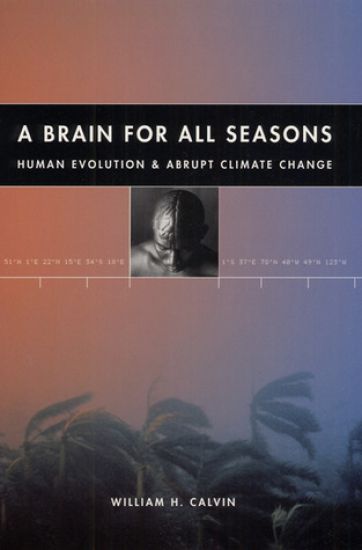
Winner of the 2002 Phi Beta Kappa Award in ScienceMankind has recently come to the shocking realization that our ancestors survived hundreds of abrupt and severe changes to Earth's climate. In this unique travelogue, William H. Calvin takes us around the globe and back in time, showing us how such cycles of cool, crash, and burn provided the impetus for enormous increases in the intelligence and complexity of human beings—and warning us of human activities that could trigger similarly massive shifts in the planet's climate.
The brain is the most complex and highly of semi-permeable excitable membranes which specialised of all mammalian organs. Under can be caused, rapidly and transiently, to under standing the complexity of its function remains go changes in permeability to small chemical man's greatest challenge. The functional unit is molecules and to cations. The highly specialised the neurone, or excitable nerve cell, making ana nature of the constituent cells, with their unique tomical and chemical connections with other function and specificity, is c10sely related to units in the system. Many of the essential bio the structure of the whole tissue. The underlying chemical connections of the nerve cell are de chemical processes cannot be discussed or seen pendent upon special morphological features: in perspective without constant awareness of synaptic contact is mediated by chemical mol related aspects of physiology and morphology. ecules, 'neuro-transmitters' which ensure the The hrain is structurally extraordinarily com continued propagation of electrical impulses plex in its distinct anatomical regions, each of through sequential units of the system. Also which is heterogeneous in the types and struc c10sely related to the morphology of the ner tures of the constituent cells. vous system is the chemical energy expended in One aspect of the biochemical function of maintaining distribution gradients of cations the brain can be seen in its efficient production across cellular membranes. Chemical neuro of the energy required to support the unique pro transmission results in an alteration in cation cesses referred to above.


Stevens (Bryan) V. Watson (Philip) U.S. Supreme Court Transcript of Record with Supporting Pleadings
Malcolm H Mackey; John D Maharg
Gale, U.S. Supreme Court Records
2011
pokkari
Brain And Mind Or, Mental Science Considered In Accordance With The Principles Of Phrenology
H. S. Drayton
KESSINGER PUBLISHING, LLC
2007
nidottu
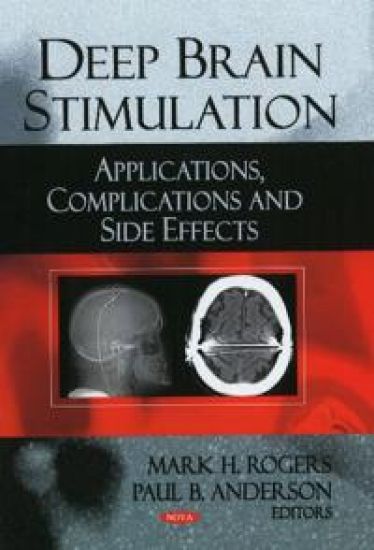
In neurotechnology, deep brain stimulation (DBS) refers to a surgical treatment involving the implantation of a medical device called a brain pacemaker, which sends electrical impulses to specific parts of the brain. DBS in select brain regions has provided remarkable therapeutic benefits for otherwise treatment-resistant movement and affective disorders such as chronic pain, Parkinson's disease, tremor and dystonia. Despite the long history of DBS, its underlying principles and mechanisms are still not clear. While DBS has proven helpful for some patients, there is potential for serious complications and side effects. This book presents current research on this cutting edge treatment. Success of functional stereotactic procedures is shown to depend on a variety of factors, including patient selection, methodology of choice and localisation of the target, and the experience of the neurosurgery team. Complications on the use of the procedure in the treatment of Parkinson's Disease are also presented. The use of Vagus nerve stimulation on treatment-resistant patients with major depression is discussed as well.
Who's happy? Truly, down-deep-in-the-soul happy? Maureen Cronin weaves the tale of her journey to real happiness - but not before sitting in the "in the fifth ring of my inner hell" - with honesty, humor, and thought-provoking context.First she had to get past the anger and disappointment about not being able to be a mother - she had anger at God, the world, herself - and it was not a smooth or easy journey. It took practice. Frustrated with failed attempts to meditate, as she could not sit still for 40 minutes or chant as practiced meditators can, she coined her own one-minute meditation and found that it was actually re-training her brain. That's when everything started to change for the better. She sought out many forms of healthy happiness, like helping others through Reiki and guided meditations, increasing her meditation times, random acts of kindness, and finally scientific research that proved the positive effects on the brain - and the heart - through regular meditation and practicing happiness.This book is meant to inspire and bring hope for anyone struggling with challenges in their personal lives.