Kirjahaku
Etsi kirjoja tekijän nimen, kirjan nimen tai ISBN:n perusteella.
1000 tulosta hakusanalla Brigitte Finkiewicz

American Travel Literature, Gendered Aesthetics and the Italian Tour, 1824-62
Brigitte Bailey
Edinburgh University Press
2018
sidottu
Examines tourists' aesthetic responses in the context of US nation formation'American Travel Literature' analyses US tourist writings about Italy from 1824 to 1862 to explain what roles transatlantic travel, aesthetic response, and the genre of tourist writing played in the formation of the United States. Its interdisciplinary methodology draws on antebellum visual culture, tourist practices, and shifting class and gender identities to describe tourism and tourist writing as shapers of an elite (and then normative) national subjectivity.Bringing perspectives from art history and aesthetics, the book historicises aesthetic practices by tracing nineteenth-century US representations of Italy. It draws connections between tourist writing and visual culture as means of understanding the depth of Americans' turn towards visual iconography in articulating social and national identities.Key FeaturesThe interdisciplinary approach pushes analysis of growing area of travel writing furtherThe trope of Italy as a woman reveals how gendered patterns of thought and response processed concepts of national identity thus recognising gender as a crucial mode of perceptionHistoricizes aesthetic practices by looking closely at a particular genre (tourist writing) and its social functions in the antebellum period

American Travel Literature, Gendered Aesthetics and the Italian Tour, 1824 62
Brigitte Bailey
Edinburgh University Press
2019
nidottu
Examines tourists' aesthetic responses in the context of US nation formationAmerican Travel Literature analyses tourist writings about Italy from 1824 to 1862 to explain what roles transatlantic travel, aesthetic response and the genre of tourist writing played in the formation of the United States. The Italian tour and its textual and visual expressions were forms through which predominantly white, northeastern elites dreamed their way into national identity and cultural authority. Its interdisciplinary methodology draws on antebellum visual culture, tourist practices and shifting class and gender identities to describe tourism and tourist writing as shapers of an elite (and then normative) national subjectivity. Bringing perspectives from art history and aesthetics, it historicises aesthetic practices, illuminating the depth of Americans' turn towards visual iconography in articulating social and national identities. The book investigates tourists' triangulations of the categories of 'England', 'Italy' and 'America', discusses authors understood as national representatives Irving, Cooper, Sedgwick, Kirkland, Fuller, Hawthorne and Stowe in the context of other US and European writers and artists and looks at transatlantic tourist writing as a significant genre of the period that shaped the nation. Key FeaturesThe interdisciplinary approach pushes analysis of growing area of travel writing furtherThe trope of Italy as a woman reveals how gendered patterns of thought and response processed concepts of national identity thus recognising gender as a crucial mode of perceptionHistoricizes aesthetic practices by looking closely at a particular genre (tourist writing) and its social functions in the antebellum period

TNT: Teenage Transformation: Explosive Ideas That Will Blow Your Mind And Change Your Life Forever!
Brigitte Bell
Createspace Independent Publishing Platform
2012
nidottu
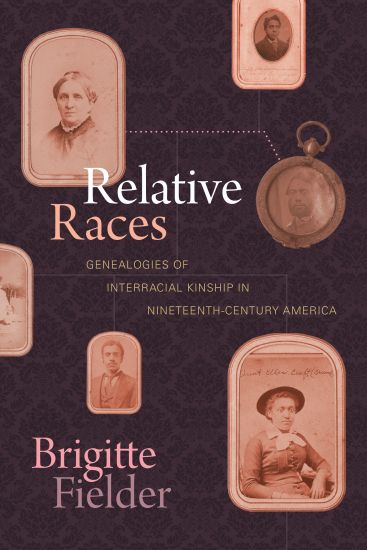
In Relative Races, Brigitte Fielder presents an alternative theory of how race is ascribed. Contrary to notions of genealogies by which race is transmitted from parents to children, the examples Fielder discusses from nineteenth-century literature, history, and popular culture show how race can follow other directions: Desdemona becomes less than fully white when she is smudged with Othello's blackface, a white woman becomes Native American when she is adopted by a Seneca family, and a mixed-race baby casts doubt on the whiteness of his mother. Fielder shows that the genealogies of race are especially visible in the racialization of white women, whose whiteness often depends on their ability to reproduce white family and white supremacy. Using black feminist and queer theories, Fielder presents readings of personal narratives, novels, plays, stories, poems, and images to illustrate how interracial kinship follows non-heteronormative, non-biological, and non-patrilineal models of inheritance in nineteenth-century literary culture.
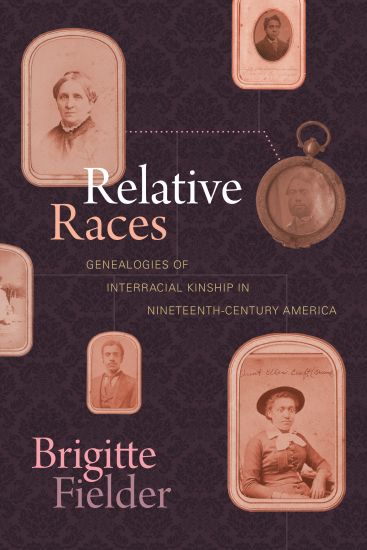
In Relative Races, Brigitte Fielder presents an alternative theory of how race is ascribed. Contrary to notions of genealogies by which race is transmitted from parents to children, the examples Fielder discusses from nineteenth-century literature, history, and popular culture show how race can follow other directions: Desdemona becomes less than fully white when she is smudged with Othello's blackface, a white woman becomes Native American when she is adopted by a Seneca family, and a mixed-race baby casts doubt on the whiteness of his mother. Fielder shows that the genealogies of race are especially visible in the racialization of white women, whose whiteness often depends on their ability to reproduce white family and white supremacy. Using black feminist and queer theories, Fielder presents readings of personal narratives, novels, plays, stories, poems, and images to illustrate how interracial kinship follows non-heteronormative, non-biological, and non-patrilineal models of inheritance in nineteenth-century literary culture.






Among Eastern Europe’s postwar socialist states, Yugoslavia was unique in allowing its citizens to seek work abroad in Western Europe’s liberal democracies. This book charts the evolution of the relationship between Yugoslavia and its labour migrants who left to work in Western Europe in the 1960s and 1970s. It examines how migrants were perceived by policy-makers and social scientists and how they were portrayed in popular culture, including radio, newspapers, and cinema. Created to nurture ties with migrants and their children, state cultural, educational, and informational programs were a way of continuing to govern across international borders. These programs relied heavily on the promotion of the idea of homeland. Le Normand examines the many ways in which migrants responded to these efforts and how they perceived their own relationship to the homeland, based on their migration experiences. Citizens without Borders shows how, in their efforts to win over migrant workers, the different levels of government – federal, republic, and local – promoted sometimes widely divergent notions of belonging, grounded in different concepts of "home."

Among Eastern Europe’s postwar socialist states, Yugoslavia was unique in allowing its citizens to seek work abroad in Western Europe’s liberal democracies. This book charts the evolution of the relationship between Yugoslavia and its labour migrants who left to work in Western Europe in the 1960s and 1970s. It examines how migrants were perceived by policy-makers and social scientists and how they were portrayed in popular culture, including radio, newspapers, and cinema. Created to nurture ties with migrants and their children, state cultural, educational, and informational programs were a way of continuing to govern across international borders. These programs relied heavily on the promotion of the idea of homeland. Le Normand examines the many ways in which migrants responded to these efforts and how they perceived their own relationship to the homeland, based on their migration experiences. Citizens without Borders shows how, in their efforts to win over migrant workers, the different levels of government – federal, republic, and local – promoted sometimes widely divergent notions of belonging, grounded in different concepts of "home."


Delectable Daisies
Brigitte Stolwijk; Kieran York; Lynn Ames
Createspace Independent Publishing Platform
2014
nidottu

Behind The Eye Shadow: A Mother's Personal Journey With Autism
Brigitte Kobenan
Createspace Independent Publishing Platform
2014
nidottu

Combinatorial Inference in Geometric Data Analysis
Brigitte Le Roux; Solène Bienaise; Jean-Luc Durand
Productivity Press
2019
sidottu
Geometric Data Analysis designates the approach of Multivariate Statistics that conceptualizes the set of observations as a Euclidean cloud of points. Combinatorial Inference in Geometric Data Analysis gives an overview of multidimensional statistical inference methods applicable to clouds of points that make no assumption on the process of generating data or distributions, and that are not based on random modelling but on permutation procedures recasting in a combinatorial framework. It focuses particularly on the comparison of a group of observations to a reference population (combinatorial test) or to a reference value of a location parameter (geometric test), and on problems of homogeneity, that is the comparison of several groups for two basic designs. These methods involve the use of combinatorial procedures to build a reference set in which we place the data. The chosen test statistics lead to original extensions, such as the geometric interpretation of the observed level, and the construction of a compatibility region.Features: Defines precisely the object under study in the context of multidimensional procedures, that is clouds of points Presents combinatorial tests and related computations with R and Coheris SPAD software Includes four original case studies to illustrate application of the tests Includes necessary mathematical background to ensure it is self–containedThis book is suitable for researchers and students of multivariate statistics, as well as applied researchers of various scientific disciplines. It could be used for a specialized course taught at either master or PhD level.

Trashbag: A Poetry Chapbook
Brigitte Ann Thomas
Createspace Independent Publishing Platform
2014
nidottu

The Cam Girls Club: Fortunes Rise, Part 1
Brigitte Bleibtreu
Createspace Independent Publishing Platform
2014
nidottu