Kirjojen hintavertailu. Mukana 11 244 527 kirjaa ja 12 kauppaa.

Kirjahaku

Etsi kirjoja tekijän nimen, kirjan nimen tai ISBN:n perusteella.

1000 tulosta hakusanalla C-Rene Dominique

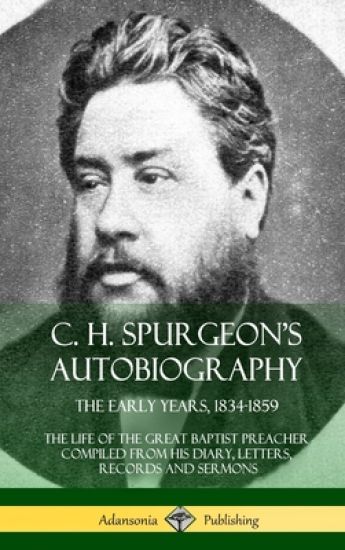
C. H. Spurgeon's Autobiography

C. H. Spurgeon's Autobiography

Charles Haddon Spurgeon

Lulu.com
2018
sidottu
As one of the most revered Baptist preachers of his time, Charles Haddon Spurgeon's eventful and prolific life and career offer outstanding inspiration for all Christians to this day. In the first volume of Spurgeon's autobiography, we witness his rise from modest obscurity, embarking on a long road toward fame and admiration as a representative of God on Earth. A lengthy, lively and detailed biography is helped by the fact that Spurgeon was an effusive and prolific talker and author of many documents: he would recount incidents of his life on paper and in speeches regularly. We find in this volume the famous instance in which the young Spurgeon encountered his call from God. When Spurgeon was aged fifteen, a violent snowstorm forced him from his route into a Methodist church where he felt the Lord beckon him to service. After this, he undertook parochial study with great fervor, and quickly became a respected teacher in his local Sunday School, gaining the nickname 'the boy-preacher of the Fens'.
C Words

C Words

Sommer Matriangello

Lulu.com
2019
nidottu
C Words is a book that introduces adult learners to words that begin with the letter "C" using large font and images. C Words book has three word sentences that use alliteration to teach the sound of the letter "C". It also has longer sentences that use sight words. Finally, it progresses to the learner reading long reading passages.Each sentence and reading passage is accompanied by an image which will help the learner know what the sentence is about and will help them decode the words better.
C# Game Programming Cookbook for Unity 3D
This second edition of C# Game Programming Cookbook for Unity 3D expounds upon the first with more details and techniques. With a fresh array of chapters, updated C# code and examples, Jeff W. Murray’s book will help the reader understand structured game development in Unity unlike ever before.New to this edition is a step-by-step tutorial for building a 2D infinite runner game from the framework and scripts included in the book. The book contains a flexible and reusable framework in C# suitable for all game types. From game state handling to audio mixers to asynchronous scene loading, the focus of this book is building a reusable structure to take care of many of the most used systems.Improve your game's sound in a dedicated audio chapter covering topics such as audio mixers, fading, and audio ducking effects, or dissect a fully featured racing game with car physics, lap counting, artificial intelligence steering behaviors, and game management. Use this book to guide your way through all the required code and framework to build a multi-level arena blaster game.Features Focuses on programming, structure, and an industry-level, C#-based framework Extensive breakdowns of all the important classes Example projects illustrate and break down common and important Unity C# programming concepts, such as coroutines, singletons, static variables, inheritance, and scriptable objects. Three fully playable example games with source code: a 2D infinite runner, an arena blaster, and an isometric racing game The script library includes a base Game Manager, timed and proximity spawning, save profile manager, weapons control, artificial intelligence controllers (path following, target chasing and line-of-sight patrolling behaviors), user interface Canvas management and fading, car physics controllers, and more.Code and screenshots have been updated with the latest versions of Unity. These updates will help illustrate how to create 2D games and 3D games based on the most up-to-date methods and techniques. Experienced C# programmers will discover ways to structure Unity projects for reusability and scalability. The concepts offered within the book are instrumental to mastering C# and Unity.In his game career spanning more than 20 years, Jeff W. Murray has worked with some of the world's largest brands as a Game Designer, Programmer, and Director. A Unity user for over 14 years, he now works as a consultant and freelancer between developing his own VR games and experiments with Unity.
C# Game Programming Cookbook for Unity 3D
This second edition of C# Game Programming Cookbook for Unity 3D expounds upon the first with more details and techniques. With a fresh array of chapters, updated C# code and examples, Jeff W. Murray’s book will help the reader understand structured game development in Unity unlike ever before.New to this edition is a step-by-step tutorial for building a 2D infinite runner game from the framework and scripts included in the book. The book contains a flexible and reusable framework in C# suitable for all game types. From game state handling to audio mixers to asynchronous scene loading, the focus of this book is building a reusable structure to take care of many of the most used systems.Improve your game's sound in a dedicated audio chapter covering topics such as audio mixers, fading, and audio ducking effects, or dissect a fully featured racing game with car physics, lap counting, artificial intelligence steering behaviors, and game management. Use this book to guide your way through all the required code and framework to build a multi-level arena blaster game.Features Focuses on programming, structure, and an industry-level, C#-based framework Extensive breakdowns of all the important classes Example projects illustrate and break down common and important Unity C# programming concepts, such as coroutines, singletons, static variables, inheritance, and scriptable objects. Three fully playable example games with source code: a 2D infinite runner, an arena blaster, and an isometric racing game The script library includes a base Game Manager, timed and proximity spawning, save profile manager, weapons control, artificial intelligence controllers (path following, target chasing and line-of-sight patrolling behaviors), user interface Canvas management and fading, car physics controllers, and more.Code and screenshots have been updated with the latest versions of Unity. These updates will help illustrate how to create 2D games and 3D games based on the most up-to-date methods and techniques. Experienced C# programmers will discover ways to structure Unity projects for reusability and scalability. The concepts offered within the book are instrumental to mastering C# and Unity.In his game career spanning more than 20 years, Jeff W. Murray has worked with some of the world's largest brands as a Game Designer, Programmer, and Director. A Unity user for over 14 years, he now works as a consultant and freelancer between developing his own VR games and experiments with Unity.
C. G. Jung and the Alchemical Imagination
Winner of the 2021 American Board & Academy of Psychoanalysis Annual Book Prize for Best Theoretical Book in Psychoanalysis!Stanton Marlan brings together writings which span the course of his career, examining Jungian psychology and the alchemical imagination as an opening to the mysteries of psyche and soul. Several chapters describe a telos that aims at the mysterious goal of the Philosophers’ Stone, a move replete with classical and postmodern ideas catalysed by prompts from the unconscious: dreams, images, fantasies, and paradoxical conundrums. Psyche and matter are seen with regards to soul, light and darkness in terms of illumination, and order and chaos as linked in the image of chaosmos. Marlan explores the richness of the alchemical ideas of Carl Jung, James Hillman, and others and their value for a revisioning of psychology. In doing so, this volume challenges any tendency to literalism and essentialism, and contributes to an integration between Jung’s classical vision of a psychology of alchemy and Hillman’s Alchemical Psychology.C.G. Jung and the Alchemical Imagination will be a valuable resource for academics, scholars, and students of Jungian and post-Jungian studies, Jungian analysis, and psychotherapy. It will also be of great interest to Jungian psychologists and Jungian analysts in practice and in training.
C. G. Jung and the Alchemical Imagination
Winner of the 2021 American Board & Academy of Psychoanalysis Annual Book Prize for Best Theoretical Book in Psychoanalysis!Stanton Marlan brings together writings which span the course of his career, examining Jungian psychology and the alchemical imagination as an opening to the mysteries of psyche and soul. Several chapters describe a telos that aims at the mysterious goal of the Philosophers’ Stone, a move replete with classical and postmodern ideas catalysed by prompts from the unconscious: dreams, images, fantasies, and paradoxical conundrums. Psyche and matter are seen with regards to soul, light and darkness in terms of illumination, and order and chaos as linked in the image of chaosmos. Marlan explores the richness of the alchemical ideas of Carl Jung, James Hillman, and others and their value for a revisioning of psychology. In doing so, this volume challenges any tendency to literalism and essentialism, and contributes to an integration between Jung’s classical vision of a psychology of alchemy and Hillman’s Alchemical Psychology.C.G. Jung and the Alchemical Imagination will be a valuable resource for academics, scholars, and students of Jungian and post-Jungian studies, Jungian analysis, and psychotherapy. It will also be of great interest to Jungian psychologists and Jungian analysts in practice and in training.
C. G. Jung in the Humanities

C. G. Jung in the Humanities

Susan Rowland

Routledge
2019
sidottu
This book demonstrates for the first time the significance of Jung’s work to the humanities, and to those areas where the humanities and sciences share borders. More radically, it shows that Jung was a writer of myth, alchemy, narrative, and poetics, as well as on them.Jung’s core concepts are introduced, their ongoing relevance is championed. The book also addresses Jung’s sometimes questionable judgment on politics and gender, and previews contemporary extensions of Jungian theory. By privileging the creative psyche and exploring the connections between individual, natural environment, and social/psychological collective, Jung anticipates the new holism, offering the promise of reconciling the sciences with the arts, humanity with nature.
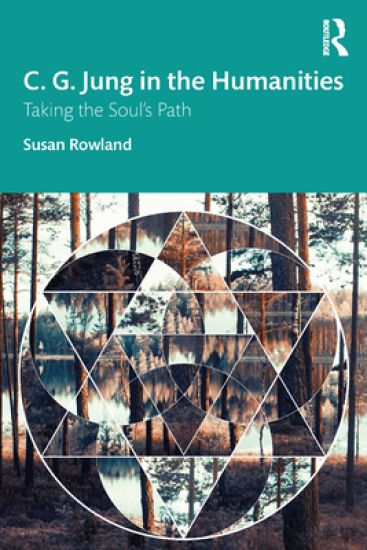
C. G. Jung in the Humanities

C. G. Jung in the Humanities

Susan Rowland

Routledge
2019
nidottu
This book demonstrates for the first time the significance of Jung’s work to the humanities, and to those areas where the humanities and sciences share borders. More radically, it shows that Jung was a writer of myth, alchemy, narrative, and poetics, as well as on them.Jung’s core concepts are introduced, their ongoing relevance is championed. The book also addresses Jung’s sometimes questionable judgment on politics and gender, and previews contemporary extensions of Jungian theory. By privileging the creative psyche and exploring the connections between individual, natural environment, and social/psychological collective, Jung anticipates the new holism, offering the promise of reconciling the sciences with the arts, humanity with nature.
C-Glycoside Synthesis

C-Glycoside Synthesis

Maarten Postema

CRC Press
2019
nidottu
This book examines methods particularly well suited for either a- or b-C-glycoside formation. It helps field workers quickly select the best method for synthesizing a particular type of C-glycoside. The use of C-glycosides as synthons in natural product synthesis is also addressed.
C. D. Broad’s Philosophy of Time

C. D. Broad’s Philosophy of Time

L. Nathan Oaklander

TAYLOR FRANCIS LTD
2022
nidottu
In this study, Oaklander's primary aim is to examine critically C.D. Broad’s changing views of time and in so doing clarify the central disputes in the philosophy of time, explicate the various positions Broad took regarding them, and develop his own responses both to Broad and the issues debated.
C. G. Jung’s Archetype Concept

C. G. Jung’s Archetype Concept

Christian Roesler

Routledge
2021
nidottu
The concept of archetypes is at the core of C. G. Jung’s analytical psychology. In this interesting and accessible volume, Roesler summarises the classical theory of archetypes and the archetypal stages of the individuation process as it was developed by Jung and his students. Various applications of archetypes, in cultural studies as well as in clinical practice, are demonstrated with detailed case studies, dream series, myths, fairy tales, and so on.The book also explores how the concept has further developed as a result of research and, for the first time, integrates findings from anthropology, human genetics, and the neurosciences. Based on these contemporary insights, Roesler also makes a compelling argument for why some of Jung’s views on the concept should be comprehensively revised.Offering new insights on foundational Jungian topics like the collective unconscious, persona, and shadow, C. G. Jung’s Archetype Concept is of great interest to Jungian students, analysts, psychotherapists, and scholars.
C. G. Jung’s Archetype Concept

C. G. Jung’s Archetype Concept

Christian Roesler

Routledge
2021
sidottu
The concept of archetypes is at the core of C. G. Jung’s analytical psychology. In this interesting and accessible volume, Roesler summarises the classical theory of archetypes and the archetypal stages of the individuation process as it was developed by Jung and his students. Various applications of archetypes, in cultural studies as well as in clinical practice, are demonstrated with detailed case studies, dream series, myths, fairy tales, and so on.The book also explores how the concept has further developed as a result of research and, for the first time, integrates findings from anthropology, human genetics, and the neurosciences. Based on these contemporary insights, Roesler also makes a compelling argument for why some of Jung’s views on the concept should be comprehensively revised.Offering new insights on foundational Jungian topics like the collective unconscious, persona, and shadow, C. G. Jung’s Archetype Concept is of great interest to Jungian students, analysts, psychotherapists, and scholars.
C. D. Broad: Key Unpublished Writings

C. D. Broad: Key Unpublished Writings

C. D. Broad

TAYLOR FRANCIS LTD
2022
sidottu
C. D. Broad (1887–1971) was a British philosopher who taught for many years at Trinity College, Cambridge. Possessing extremely wide-ranging interests, Broad made significant contributions to the mind-body problem, perception, memory, introspection, the unconscious, the nature of space, time, and causation. He also wrote extensively on the philosophy of science, ethics, the history of philosophy, and the philosophy of religion and had an abiding interest in ‘psychical research’—a subject he approached with the disinterested curiosity and scrupulous care that is characteristic of his philosophical work. Whilst overshadowed in his own time by figures such as Russell, Moore, and Wittgenstein, he is acknowledged to have anticipated important developments in several fields, such as emergence in philosophy of science, sense perception, and the 'growing block' theory of time in metaphysics. Although Broad published many books in his lifetime, this volume is unique in presenting some of his most interesting unpublished writings. Divided into five clear sections, the following figures and topics are covered: AutobiographyHegel and the nature of philosophyFrancis BaconHume's philosophy of the self and beliefF. H. BradleyThe historical development of scientific thought from Pythagoras to Newton CausationChange and continuityQuantitative methodsPoltergeistsParanormal phenomena.Each section is introduced and placed in context by the editor, Joel Walmsley. The volume also includes an engaging and informative foreword by Simon Blackburn. It will be of great value to those studying and researching the history of twentieth-century philosophy, metaphysics, and the recent history and philosophy of science, as well as anyone interested in Broad's philosophical thought and his place in the history of philosophy.
C. D. Broad: Key Unpublished Writings

C. D. Broad: Key Unpublished Writings

C. D. Broad

TAYLOR FRANCIS LTD
2022
nidottu
C. D. Broad (1887–1971) was a British philosopher who taught for many years at Trinity College, Cambridge. Possessing extremely wide-ranging interests, Broad made significant contributions to the mind-body problem, perception, memory, introspection, the unconscious, the nature of space, time, and causation. He also wrote extensively on the philosophy of science, ethics, the history of philosophy, and the philosophy of religion and had an abiding interest in ‘psychical research’—a subject he approached with the disinterested curiosity and scrupulous care that is characteristic of his philosophical work. Whilst overshadowed in his own time by figures such as Russell, Moore, and Wittgenstein, he is acknowledged to have anticipated important developments in several fields, such as emergence in philosophy of science, sense perception, and the 'growing block' theory of time in metaphysics. Although Broad published many books in his lifetime, this volume is unique in presenting some of his most interesting unpublished writings. Divided into five clear sections, the following figures and topics are covered: AutobiographyHegel and the nature of philosophyFrancis BaconHume's philosophy of the self and beliefF. H. BradleyThe historical development of scientific thought from Pythagoras to Newton CausationChange and continuityQuantitative methodsPoltergeistsParanormal phenomena.Each section is introduced and placed in context by the editor, Joel Walmsley. The volume also includes an engaging and informative foreword by Simon Blackburn. It will be of great value to those studying and researching the history of twentieth-century philosophy, metaphysics, and the recent history and philosophy of science, as well as anyone interested in Broad's philosophical thought and his place in the history of philosophy.
C++ Template Metaprogramming in Practice
Using the implementation of a deep learning framework as an example, C++ Template Metaprogramming in Practice: A Deep Learning Framework explains the application of metaprogramming in a relatively large project and emphasizes ways to optimize systems performance. The book is suitable for developers with a basic knowledge of C++. Developers familiar with mainstream deep learning frameworks can also refer to this book to compare the differences between the deep learning framework implemented with metaprogramming and compile-time computing with deep learning frameworks using object-oriented methods.Consisting of eight chapters, the book starts with two chapters discussing basic techniques of metaprogramming and compile-time computing. The rest of the book’s chapters focus on the practical application of metaprogramming in a deep learning framework. It examines rich types and systems, expression templates, and writing complex meta-functions, as well as such topics as: Heterogeneous dictionaries and policy templates An introduction to deep learning Type system and basic data types Operations and expression templates Basic layers Composite and recurrent layers Evaluation and its optimizationMetaprogramming can construct flexible and efficient code. For C++ developers who are familiar with object-oriented programming, the main difficulty in learning and mastering C++ metaprogramming is establishing the thinking mode of functional programming. The meta-programming approach involved at compile time is functional, which means that the intermediate results of the construction cannot be changed, and the impact may be greater than expected. This book enables C++ programmers to develop a functional mindset and metaprogramming skills. The book also discusses the development cost and use cost of metaprogramming and provides workarounds for minimizing these costs.
C.I. Lewis

C.I. Lewis

TAYLOR FRANCIS LTD
2023
nidottu
This edited collection explores the philosophy of Clarence Irving Lewis through two major concepts that are integral to his conceptual pragmatism: the a priori and the given. The relation between these two elements of knowledge forms the core of Lewis’s masterpiece Mind and the World Order . While Lewis’s conceptual pragmatism is directed against any conception of the a priori as constraining the mind and experience, it also emphasizes the inalterability and the unavoidability of the given that remains the same through any interpretation of it by the mind. The chapters in this book probe Lewis’s new account of the relation between the a priori and the given in dialogue with other notable figures in twentieth-century philosophy, including Goodman, Putnam, Quine, Russell, Sellars, and Sheffer. C.I. Lewis: The A Priori and the Given represents a focused treatment of a longneglected figure in twentieth-century American philosophy.
Complete Poems of C. P. Cavafy: Including the First English Translation of the Unfinished Poems
An extraordinary literary event: Daniel Mendelsohn's acclaimed two-volume translation of the complete poems of C. P. Cavafy--including the first English translation of the poet's final Unfinished Poems--now published in one handsome edition and featuring the fullest literary commentaries available in English, by the renowned critic, scholar, and international best-selling author of The Lost. No modern poet so vividly brought to life the history and culture of Mediterranean antiquity; no writer dared break, with such taut energy, the early-twentieth-century taboos surrounding homoerotic desire; no poet before or since has so gracefully melded elegy and irony as the Alexandrian Greek poet Constantine Cavafy (1863-1933). Whether advising Odysseus on his return to Ithaca or confronting the poet with the ghosts of his youth, these verses brilliantly make the historical personal--and vice versa. To his profound exploration of longing and loneliness, fate and loss, memory and identity, Cavafy brings the historian's assessing eye along with the poet's compassionate heart. After more than a decade of work and study, Mendelsohn--a classicist who alone among Cavafy's translators shares the poet's deep intimacy with the ancient world--gives readers full access to the genius of Cavafy's verse: the sensuous rhymes, rich assonances, and strong rhythms of the original Greek that have eluded previous translators. Complete with the Unfinished Poems that Cavafy left in drafts when he died--a remarkable, hitherto unknown discovery that remained in the Cavafy Archive in Athens for decades--and with an in-depth introduction and a helpful commentary that situates each work in a rich historical, literary, and biographical context, this revelatory translation is a cause for celebration: the definitive presentation of Cavafy in English.
C A Software Engineering Approach

C A Software Engineering Approach

Peter A. Darnell; Philip E. Margolis

Springer-Verlag New York Inc.
1996
nidottu
to Software Engineering For 'tis the sport to have the engineer Hoist with his own petar. Shakespeare, Hamlet In the previous chapter, we introduced same basic information about pro­ gramming and programming languages, particularly C. If this were a book about building bridges, this first chapter might have been an introduction to the tools you would neeci-hammer, saw, drill, etc. Obviously there is a lot more to building a good bridge than simply knowing how to use the tools. Similarly, creating software products requires considerably more skill than simply wielding the programming tools. There is an entire discipline called software engineering that deals with designing, creating, testing, and maintaining large software products. In this chapter we introduce some key software engineering themes, many of which we will revisit through­ out the course of the book. 10 2: Introduction to Software Engineering 2.1 Introduction Though the cost of computer hardware-the silicon chips containing the millions of transistors that form the instruction set and memories-has shown a consistent trend downward over the years, the cost of software has not followed suit. The high cost of software is due largely (and para­ doxically) to the ease and flexibility with which it can be shaped.