Kirjojen hintavertailu. Mukana 12 016 292 kirjaa ja 12 kauppaa.

Kirjahaku

Etsi kirjoja tekijän nimen, kirjan nimen tai ISBN:n perusteella.

1000 tulosta hakusanalla Clarence L. Partee

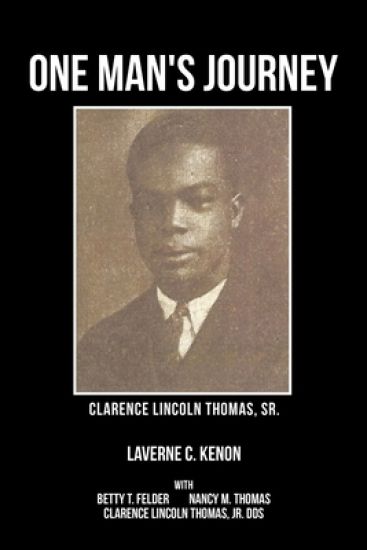
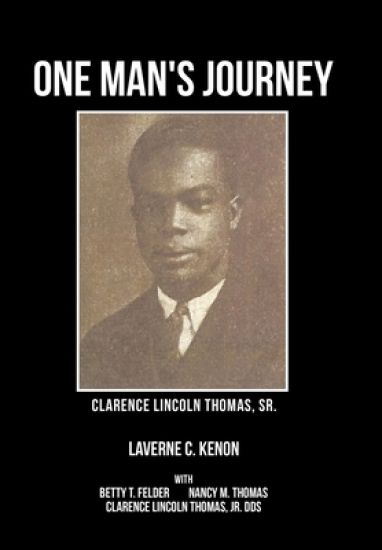
One Man's Journey Clarence Lincoln Thomas Sr.
People were on the move---more than six million over a period of 50 or 60 years. Four children, the oldest just 12 years old, were on a train heading north. They had what looked like a shoe box with them that probably held their food, and several small, rather old and worn looking suitcases. They were quiet, looking out the window, and occasionally glancing at each other as if to say, "what are we doing here?" What was the reason for this journey? Where were they going? Where were their parents? How would this journey affect their lives---particularly the life of the older boy?
One Man's Journey Clarence Lincoln Thomas Sr.
People were on the move---more than six million over a period of 50 or 60 years. Four children, the oldest just 12 years old, were on a train heading north. They had what looked like a shoe box with them that probably held their food, and several small, rather old and worn looking suitcases. They were quiet, looking out the window, and occasionally glancing at each other as if to say, "what are we doing here?" What was the reason for this journey? Where were they going? Where were their parents? How would this journey affect their lives---particularly the life of the older boy?
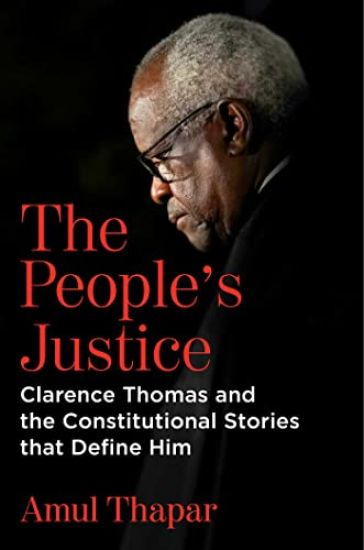
The People's Justice: Clarence Thomas and the Constitutional Stories That Define Him
"Amul Thapar sets the record straight with this can't-put-down series of stories that reveal the courage, decency, and humanity of the man behind what many are calling the Thomas Court." --Megyn Kelly, journalist "Amul Thapar has done what even gifted law professors and professional 'Court watchers' often fail to do: Thapar has focused on the men and women whose lives are before the nine and on how one justice, Clarence Thomas, has carefully, consistently, and compassionately applied his understanding of the Constitution to those lives." -- Hugh Hewitt, host of The Hugh Hewitt Show and professor of law For thirty years, Clarence Thomas has been denounced as the "cruelest justice," a betrayer of his race, an ideologue, and the enemy of the little guy. In this compelling study of the man and the jurist, Amul Thapar demolishes that caricature. Every day, Americans go to court. Invoking the Constitution, they fight for their homes, for a better education for their children, and to save their cities from violence. Recounting the stories of a handful of these ordinary Americans whose struggles for justice reached the Supreme Court, Thapar shines new light on the heart and mind of Clarence Thomas. A woman in debilitating pain whose only effective medication has been taken away by the government, the motherless children of a slain police officer, victims of sexual assault-- read their eye-opening stories, stripped of legalese, and decide for yourself whether Thomas's originalist jurisprudence delivers equal justice under law. "Finding the right answer," Justice Thomas has observed, "is often the least difficult problem." What is needed is "the courage to assert that answer and stand firm in the face of the constant winds of protest and criticism." That courage--along with wisdom and compassion--shines out from every page of The People's Justice. At the heart of this book is the question: Would you want to live in Justice Thomas's America? After reading these stories, even his critics might be surprised by their answer.
Stumbling Into Sasquatch: The Clarence P. Smythe Story

Stumbling Into Sasquatch: The Clarence P. Smythe Story

Paul Johnston

Independently Published
2018
nidottu
A small, weak, and sickly young man who excels at academics leaves the family farm when the love of his life falls in love and marries his often overbearing brother. His talent for art and foreign languages propels him from teacher to headmaster of a private academy. Later in life, the chance at an even better life presents itself when a timber baron recruits him as a private tutor for his children. In route to this new opportunity he stumbles across a Sasquatch and his life takes a turn in a whole new direction. This short fantasy novelette will draw you into this man's life and reinforce your Christian faith. This is a compelling story for the believer and non-believer alike.
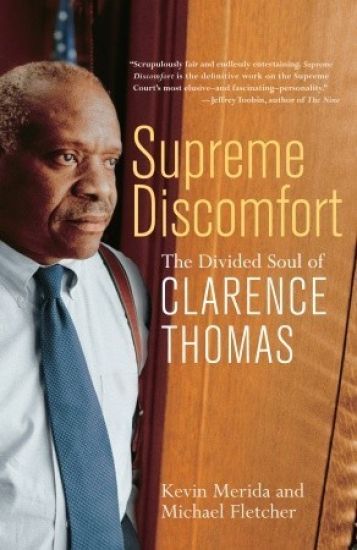
Supreme Discomfort: The Divided Soul of Clarence Thomas

Supreme Discomfort: The Divided Soul of Clarence Thomas

Kevin Merida; Michael Fletcher

Crown Publishing Group (NY)
2008
nidottu
" An] impeccably researched and probing biography . . . invaluable for any understanding of the court's most controversial figure."--The New York Times Book Review A sweeping, compelling portrait of Supreme Court justice Clarence Thomas and "an unflinching look at success and race in America" (Kirkus Reviews, starred review), from two Washington Post journalists There is no more powerful, detested, misunderstood African American in our public life than Clarence Thomas. Supreme Discomfort is a haunting account of an isolated and complex man, savagely reviled by much of the Black community, not yet entirely comfortable in white society, internally wounded by his passage from a broken family and rural poverty in Georgia to elite educational institutions and finally to the pinnacle of judicial power. His staunchly conservative positions on crime, abortion, and, especially, affirmative action have exposed him to charges of heartlessness and hypocrisy. Supreme Discomfort is a superbly researched and reported work that features testimony from friends and foes alike who have never spoken in public about Thomas before--including a candid conversation with his fellow justice and ideological ally, Antonin Scalia. It offers a long-overdue window into a man who straddles two different worlds and is uneasy in both--and whose divided personality and conservative political philosophy will deeply influence American life for years to come.
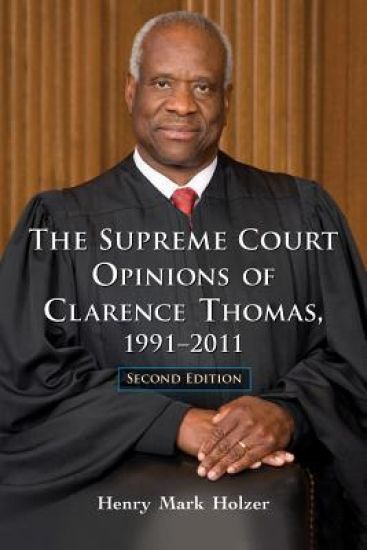
The Supreme Court Opinions of Clarence Thomas, 1991-2011, 2d ed.
In his twenty terms as an associate justice of the Supreme Court of the United States, Clarence Thomas has written nearly 450 opinions. Although they are readily available to the American people, much of the public continues to base its view of Thomas merely on the reporting by the media. This analysis of Thomas's most important majority, concurring, and dissenting opinions offers laypersons and legal professionals alike the opportunity to understand in his own words Thomas's approach to constitutional decision-making and his understanding of the most important provisions of the Constitution. Thomas's opinions, this work shows, reveal his consistent adherence to the core principles of federalism, separation of powers, and restrained judicial review, and to the regard for individual rights and limited government embodied by the Founders in the Constitution.
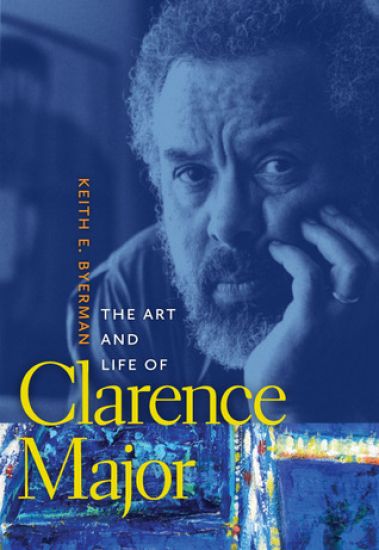
The Art and Life of Clarence Major

The Art and Life of Clarence Major

Keith E. Byerman

University of Georgia Press
2012
sidottu
Clarence Major is an award-winning painter, fiction writer, and poet—as well as an essayist, editor, anthologist, lexicographer, and memoirist. He has been part of twenty-eight group exhibitions, has had fifteen one-man shows, and has published fourteen collections of poetry and nine works of fiction. The Art and Life of Clarence Major is the first critical biography of this innovative African American writer and visual artist. Given the full cooperation of his subject, Keith E. Byerman traces Major’s life and career from his complex family history in Georgia through his encounters with important literary and artistic figures in Chicago and New York to his present status as a respected writer, artist, teacher, and scholar living in California.In his introduction, Byerman asks, “How does a black man who does not take race as his principal identity, an artist who deliberately defies mainstream rules, a social and cultural critic who wants to be admired by the world he attacks, and a creator who refuses to commit to one expressive form make his way in the world?” Tasking himself with opening up the multiple layers of problems and solutions in both the work and the life to consider the successes and the failures, Byerman reveals Major as one who has devoted himself to a life of experimental art that has challenged both literary and painterly practice and the conventional understanding of the nature of African American art. Major’s refusal to follow the rules has challenged readers and critics, but through it all, he has continued to produce quality work as a painter, poet, and novelist. His is the life of someone totally devoted to his creative work, one who has put his artistic vision ahead of fame, wealth, and sometimes even family.A Sarah Mills Hodge Fund Publication.
The Art and Life of Clarence Major

The Art and Life of Clarence Major

Keith E. Byerman

University of Georgia Press
2016
pokkari
Clarence Major is an award-winning painter, fiction writer, and poet—as well as an essayist, editor, anthologist, lexicographer, and memoirist. He has been part of twenty-eight group exhibitions, has had fifteen one-man shows, and has published fourteen collections of poetry and nine works of fiction. The Art and Life of Clarence Major is the first critical biography of this innovative African American writer and visual artist. Given the full cooperation of his subject, Keith E. Byerman traces Major’s life and career from his complex family history in Georgia through his encounters with important literary and artistic figures in Chicago and New York to his present status as a respected writer, artist, teacher, and scholar living in California.In his introduction, Byerman asks, “How does a black man who does not take race as his principal identity, an artist who deliberately defies mainstream rules, a social and cultural critic who wants to be admired by the world he attacks, and a creator who refuses to commit to one expressive form make his way in the world?” Tasking himself with opening up the multiple layers of problems and solutions in both the work and the life to consider the successes and the failures, Byerman reveals Major as one who has devoted himself to a life of experimental art that has challenged both literary and painterly practice and the conventional understanding of the nature of African American art. Major’s refusal to follow the rules has challenged readers and critics, but through it all, he has continued to produce quality work as a painter, poet, and novelist. His is the life of someone totally devoted to his creative work, one who has put his artistic vision ahead of fame, wealth, and sometimes even family.A Sarah Mills Hodge Fund Publication.
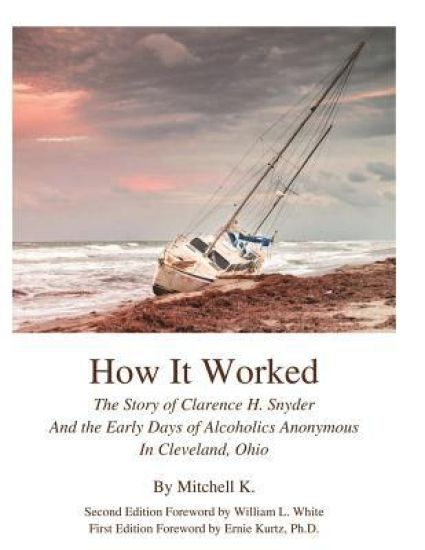
How it worked The story of Clarence H Snyder and the early days of Alcoholics A

How it worked The story of Clarence H Snyder and the early days of Alcoholics A

Shakey Mike G; Still Bill H; Mitchell K

Big Book Study Group
2018
nidottu
This is the story of Clarence H. Snyder and How A.A. came to Cleveland Ohio. Clarence started the 3rd A.A. group in the world. His sponsor Dr.Bob S.. a Co-Founder of Alcoholics Anonymous along with Bill W. Clarence started and initiated many practices that are used today.(he wrote a pamphlet on Sponsorship and initiated beginners classes. His Cleveland Central Bulletin predates The A.A. Grapevine ) Clarence asked his sponcee Mitchell K. to write the factual history of A.A. in Cleveland so that the ordinary man could read and understand it.
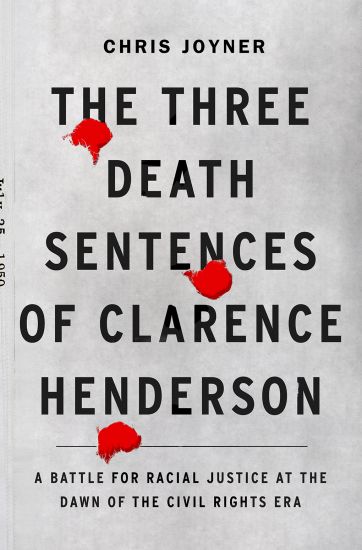
The Three Death Sentences of Clarence Henderson: A Battle for Racial Justice During the Dawn of the Civil Rights Era
The story of Clarence Henderson, a Black sharecropper convicted and sentenced to death three times for a murder he didn’t commitThe Three Death Sentences of Clarence Henderson is the story of Clarence Henderson, a wrongfully accused Black sharecropper who was sentenced to die three different times for a murder he didn’t commit, and the prosecution desperate to pin the crime on him despite scant evidence. His first trial lasted only a day and featured a lackluster public defense. The book also tells the story of Homer Chase, a former World War II paratrooper and New England radical who was sent to the South by the Communist Party to recruit African Americans to the cause while offering them a chance at increased freedom. And it’s the story of Thurgood Marshall’s NAACP and their battle against not only entrenched racism but a Communist Party—despite facing nearly as much prejudice as those they were trying to help—intent on winning the hearts and minds of Black voters. The bitter battle between the two groups played out as the sides sparred over who would take the lead on Henderson’s defense, a period in which he spent years in prison away from a daughter he had never seen. Through it all, The Three Death Sentences of Clarence Henderson is a portrait of a community, and a country, at a crossroads, trying to choose between the path it knows is right and the path of least resistance. The case pitted powerful forces—often those steering legal and journalistic institutions—attempting to use racism and Red-Scare tactics against a populace that by and large believed the case against Henderson was suspect at best. But ultimately, it’s a hopeful story about how even when things look dark, some small measure of justice can be achieved against all the odds, and actual progress is possible. It’s the rare book that is a timely read, yet still manages to shed an informative light on America’s past and future, as well as its present.
The Three Death Sentences of Clarence Henderson
A shocking history of racial injustice and the valiant efforts to secure a Black man's freedom—now in paperbackThe Three Death Sentences of Clarence Henderson is the story of Clarence Henderson, a wrongfully accused Black sharecropper who was sentenced to die three different times for a murder he didn’t commit, and the prosecution desperate to pin the crime on him despite scant evidence. His first trial lasted only a day and featured a lackluster public defense. The book also tells the story of Homer Chase, a former World War II paratrooper and New England radical who was sent to the South by the Communist Party to recruit African Americans to the cause while offering them a chance at increased freedom. And it’s the story of Thurgood Marshall’s NAACP and their battle against not only entrenched racism but a Communist Party—despite facing nearly as much prejudice as those they were trying to help—intent on winning the hearts and minds of Black voters. The bitter battle between the two groups played out as the sides sparred over who would take the lead on Henderson’s defense, a period in which he spent years in prison away from a daughter he had never seen. Through it all, The Three Death Sentences of Clarence Henderson is a portrait of a community, and a country, at a crossroads, trying to choose between the path it knows is right and the path of least resistance. The case pitted powerful forces—often those steering legal and journalistic institutions—attempting to use racism and Red-Scare tactics against a populace that by and large believed the case against Henderson was suspect at best. But ultimately, it’s a hopeful story about how even when things look dark, some small measure of justice can be achieved against all the odds, and actual progress is possible. It’s the rare book that is a timely read, yet still manages to shed an informative light on America’s past and future as well as it's present.