The foundation of any software system is its architecture. Using this book, you can evaluate every aspect of architecture in advance, at remarkably low cost -- identifying improvements that can dramatically improve any system's performance, security, reliability, and maintainability. As the practice of software architecture has matured, it has become possible to identify causal connections between architectural design decisions and the qualities and properties that result downstream in the systems that follow from them. This book shows how, offering step-by-step guidance, as well as detailed practical examples -- complete with sample artifacts reflective of those that evaluators will encounter. The techniques presented here are applicable not only to software architectures, but also to system architectures encompassing computing hardware, networking equipment, and other elements. For all software architects, software engineers, developers, IT managers, and others responsible for creating, evaluating, or implementing software architectures.

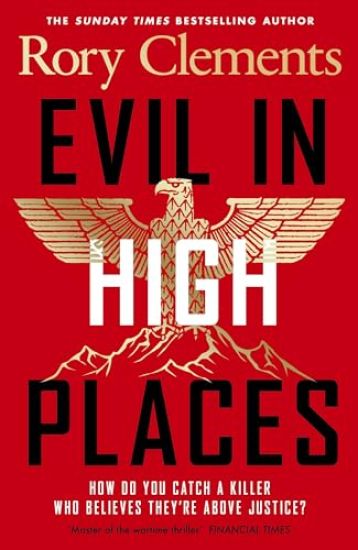
THE CLOSER YOU GET, THE FURTHER YOU HAVE TO FALL.Munich, 1936. All eyes are on the Bavarian capital for the upcoming Olympic games. As athletes fight for gold and the Nazis fight for power, Detective Sebastian Wolff faces a battle of his own.A famous actress has disappeared and Wolff has been ordered to find her, fast. But Elena Lang is no ordinary film-star: she is the mistress of Joseph Goebbels - Hitler's right-hand-man in the party that Wolff despises.But corruption runs deep in Munich and Elena is just the first to go missing. In a search that will take him from high society to the city's darkest corners, Wolff is about to learn just how easily the hunter becomes the hunted: this is a city on the brink of war, and some enemies are better left alone.Walking the tightrope between justice and jeopardy, Evil in High Places is the gripping new historical thriller from the million-copy-bestseller, Rory Clements.
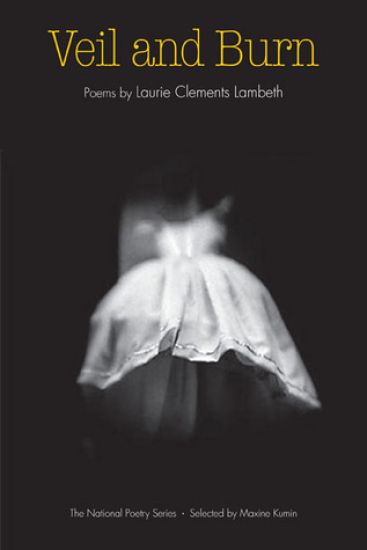
Concerned with physical experience, pain, and disability, Veil and Burn illuminates an intense desire to feel through the Other, embrace it, become it, and in the transformation, to understand the suffering body. In poems about animals, artifacts, and monsters, Lambeth displays a fascination for all bodies while exploring their pain, common fate, alienation, and abilities. Hovering between poem and prose fragment, between the self and fellow creatures, Laurie Clements Lambeth celebrates physical sensation, imbuing it with lyric shape, however broken, however imprisoned the shape may be.
In Rawlsian Political Analysis: Rethinking the Microfoundations of Social Science, Paul Clements develops a new, morally grounded model of political and social analysis as a critique of and improvement on both neoclassical economics and rational choice theory. What if practical reason is based not only on interests and ideas of the good, as these theories have it, but also on principles and sentiments of right? The answer, Clements argues, requires a radical reorientation of social science from the idea of interests to the idea of social justice. According to Clements, systematic weaknesses in neoclassical economics and rational choice theory are due to their limited model of choice. According to such theories in the utilitarian tradition, all our practical decisions aim to maximize the satisfaction of our interests. These neo-utilitarian approaches focus on how we promote our interests, but Clements argues, our ideas of right, cognitively represented in principles, contribute independently and no less fundamentally to our practical decisions. The most significant challenge to utilitarianism in the last half century is found in John Rawls's Theory of Justice and Political Liberalism, in which Rawls builds on Kant's concept of practical reason. Clements extends Rawls's moral theory and his critique of utilitarianism by arguing for social analysis based on the Kantian and Rawlsian model of choice. To illustrate the explanatory power of his model, he presents three detailed case studies: a program analysis of the Grameen Bank of Bangladesh, a political economy analysis of the causes of poverty in the Indian state of Bihar, and a problem-based analysis of the ethics and politics of climate change. He concludes by exploring the broad implications of social analysis grounded in a concept of social justice.
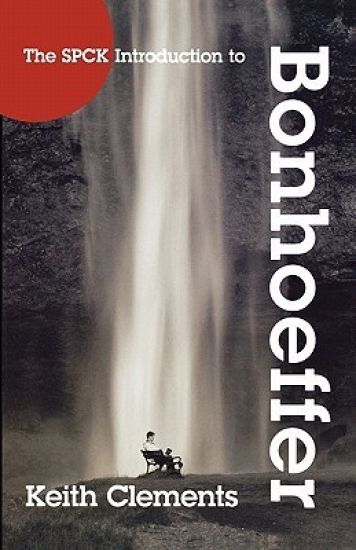
Dietrich Bonhoeffer remains one of the twentieth century's most influential theologians and this is a short, accessible and engaging introduction to the man. Written by an internationally acclaimed Bonhoeffer scholar, the book considers the role Bonhoeffer played in resisting the Nazis and his attitude to the Jews and the Holocaust.
Founded before the Civil War, the King and Kenedy Ranches have become legendary for their size, their wealth, and their endless herds of cattle. A major factor in the longevity of these ranches has always been the loyal workforce of vaqueros (Mexican and Mexican American cowboys) and their families. Some of the vaquero families have worked on the ranches through five or six generations.In this book, Jane Clements Monday and Betty Bailey Colley bring together the voices of these men and women who make ranching possible in the Wild Horse Desert. From 1989 to 1995, the authors interviewed more than sixty members of vaquero families, ranging in age from 20 to 93. Their words provide a panoramic view of ranch work and life that spans most of the twentieth century.The vaqueros and their families describe all aspects of life on the ranches, from working cattle and doing many kinds of ranch maintenance to the home chores of raising children, cooking, and cleaning. The elders recall a life of endless manual labor that nonetheless afforded the satisfaction of jobs done with skill and pride. The younger people describe how modernization has affected the ranches and changed the lifeways of the people who work there.
This publication is the fourth volume of an important catalogue raisonné of the work of Francis Picabia This publication, the fourth volume of an important catalogue raisonné of the work of Francis Picabia (1879–1953), includes paintings and selected drawings dating from 1940 into 1952. During the war years, while still residing in the south of France, Picabia was primarily occupied by figural subjects?—multi-figure allegories, female nudes, and glamorous female "portraits"?—painted in bold illusionistic relief. Notorious even in his lifetime, most of these works are now known to have adapted photographic illustrations in older "girly" magazines and other popular media. Upon his return to Paris in the post-war period, Picabia renewed his earlier interests in abstract and sometimes non-objective art, still often drawing upon published sources ranging from prehistoric art to Nietzsche, and pursued frequent exhibition of his distinctive, constantly mutating responses to critical currents of the day. These included a series of severely reductive, subtly effective "point" or dot paintings beginning in 1949—three years before ill-health effectively ended Picabia’s half-century of artistic provocation.Distributed for Mercatorfonds
In the minds of today's audiences, George Burns was a solo act. But in the history of show business, he will long be remembered for his work with Gracie Allen. Few performers have enjoyed so much popular and critical acclaim. Together they enjoyed phenomenal success in vaudeville, radio, television, and film. Although they were celebrities, the two performers enjoyed a life remarkably free of scandal. After the death of Allen in 1964, Burns made commercials, a music video, and an exercise video. He wrote books and won numerous awards, and his nightclub and convention appearances did not stop until shortly before his death.Through a thoughtful biography and detailed entries, this book serves as a comprehensive reference to the careers of Burns and Allen together and individually. The biography summarizes their rise as vaudeville performers, their work in a range of media, and Burns' continued achievements after Allen's death. Sections of the book cover their work on the stage, on radio, on television, and in films. Each section provides detailed entries for their performances, including cast and credit information, plot synoposes, and review excerpts. Appendices list their awards, personal appearances, and archives; and an extensive annotated bibliography cites and discusses sources of additional information.
“This new edition is brighter, shinier, more complete, more pragmatic, more focused than the previous one, and I wouldn't have thought it possible to improve on the original. As the field of software architecture has grown over these past decades, there is much more to be said, much more that we know, and much more that we can reflect upon of what's worked and what hasn't—and the authors here do all that, and more.” —From the Foreword by Grady Booch, IBM Fellow Software architecture—the conceptual glue that holds every phase of a project together for its many stakeholders—is widely recognized as a critical element in modern software development. Practitioners have increasingly discovered that close attention to a software system's architecture pays valuable dividends. Without an architecture that is appropriate for the problem being solved, a project will stumble along or, most likely, fail. Even with a superb architecture, if that architecture is not well understood or well communicated the project is unlikely to succeed. Documenting Software Architectures, Second Edition, provides the most complete and current guidance, independent of language or notation, on how to capture an architecture in a commonly understandable form. Drawing on their extensive experience, the authors first help you decide what information to document, and then, with guidelines and examples (in various notations, including UML), show you how to express an architecture so that others can successfully build, use, and maintain a system from it. The book features rules for sound documentation, the goals and strategies of documentation, architectural views and styles, documentation for software interfaces and software behavior, and templates for capturing and organizing information to generate a coherent package. New and improved in this second edition: Coverage of architectural styles such as service-oriented architectures, multi-tier architectures, and data modelsGuidance for documentation in an Agile development environmentDeeper treatment of documentation of rationale, reflecting best industrial practicesImproved templates, reflecting years of use and feedback, and more documentation layout optionsA new, comprehensive example (available online), featuring documentation of a Web-based service-oriented systemReference guides for three important architecture documentation languages: UML, AADL, and SySML
Ensure your students have access to the authoritative and in-depth content of this popular and trusted A Level History series. For over twenty years Access to History has been providing students with reliable, engaging and accessible content on a wide range of topics. Each title in the series provides comprehensive coverage of different history topics on current AS and A2 level history specifications, alongside exam-style practice questions and tips to help students achieve their best. The series:- Ensures students gain a good understanding of the AS and A2 level history topics through an engaging, in-depth and up-to-date narrative, presented in an accessible way. - Aids revision of the key A level history topics and themes through frequent summary diagrams- Gives support with assessment, both through the books providing exam-style questions and tips for AQA, Edexcel and OCR A level history specifications and through FREE model answers with supporting commentary at Access to History online (www.accesstohistory.co.uk)Prosperity, Depression and the New Deal: The USA 1890-1954This title provides accessible and complete coverage of this period, from the presidential situation in 1890 and the reasons for entering the First World War, to the policies of the New Deal and the impacts of the Second World War. It charts the changing optimism of the time, from the apparent economic stability of the 1920s, the devastation of the Depression, to the optimism under Roosevelt's presidency.
This spot-on pairing of words and images is a warm, reassuring, and humorous tribute to dads everywhere.A day spent with a young child at the beach is filled with many minor dramas—a lost shoe, a ball that floats too far out into the water, a drippy ice-cream cone.These can be frustrating events for both child and parent, but the daddy in this book finds a way to fix each problem, lovingly and patiently. Why? Because he loves his little girl, of course!The classic Because Your Daddy Loves You makes the perfect gift—whether you're celebrating Father's Day, a new dad, or just the special bond between a father and child . . . any day of the year.
Humanitarians operate on the frontlines of today’s armed conflicts, where they regularly negotiate to provide assistance and to protect vulnerable civilians. This book explores this unique and under-researched field of humanitarian negotiation. It details the challenges faced by humanitarians negotiating with armed groups in Yemen, Myanmar, and elsewhere, arguing that humanitarians typically negotiate from a position of weakness. It also explores some of the tactics and strategies they use to overcome this power asymmetry to reach more favorable agreements.The author applies these findings to broader negotiation scholarship and investigates the implications of this research for the field and practice of humanitarianism. This book also demonstrates how non-state actors – both humanitarians and armed groups – have become increasingly potent diplomatic actors. It challenges traditional state-centric approaches to diplomacy and argues that non-state actors constitute an increasingly crucial vector through which international relations are replicated and reconstituted during contemporary armed conflict. Only by accepting these changes to the nature of diplomacy itself can the causes, symptoms, and solutions to armed conflict be better managed.This book will be of interest to scholars concerned with conflict resolution, negotiation, and mediation, as well as to humanitarian practitioners themselves.
This cross-disciplinary book, situated on the periphery of culture, employs humour to better comprehend the arts, the outsider and exclusion, illuminating the ever-changing social landscape, the vagaries of taste and limits of political correctness. Each chapter deals with specific themes and approaches – from the construct of outsider and complexity of humour, to Outsider Art and spaces – using various theoretical and analytical methods. Paul Clements draws on humour, especially from visual arts and culture (and to a lesser extent literature, film, music and performance), as a tool of ridicule, amongst other discourses, employed by the powerful but also as a weapon to satirize them. These ambiguous representations vary depending on context, often assimilated then reinterpreted in a game of authenticity that is poignant in a world of facsimile and 'fake news'. The humour styles of a range of artists are highlighted to reveal the fluidity and diversity of meaning which challenges expectations and at its best offers resistance and, crucially, a voice for the marginal. This book will be of particular interest to scholars in art history, cultural studies, fine art, humour studies and visual culture.
This book provides a long-term perspective on the opinions of the British public on foreign and defence policy in the post-war era. Thematically wide-ranging, it looks at the broader role of foreign and defence policy in British politics and elections, public opinion towards Britain’s key international relationships and alliances (the United States, NATO, the EU and the Commonwealth), and public opinion towards the projection of ‘soft power’ (overseas aid) and ‘hard power’ (defence spending, nuclear weapons and military intervention). Assessing the main areas of change and continuity in the public’s views, it also pays close attention to the dividing lines in wider society over foreign and defence policy. Analysing an extensive range of surveys and opinion polls, the book situates the analysis in the wider context of Britain’s changing foreign policy role and priorities in the post-war era, as well as linking public opinion with the politics of British external policy – the post-war consensus on Britain’s overseas role, historical and contemporary areas of inter-party debate, and enduring intra-party divides. This text will be of key interest to scholars and students of British politics, European politics, foreign policy analysis, public opinion, defence and security studies and more broadly to comparative politics and international relations.
On the Write Track puts teachers’ autonomy and their knowledge of what is right for their pupils at the heart of teaching writing. It explores a set of research-based principles, before illustrating these with case studies and examples of classroom practice. Writing is about communication. Learning to write gives children a voice that others will listen to – a voice they can use to share their ideas, articulate their feelings, amuse and delight their readers and argue for what they believe in. While every child, every teacher and every classroom are different, approaches to teaching writing can sometimes feel prescriptive, whether they are based on a particular curriculum model, commercial scheme, assessment system or underlying philosophy. This book provides freedom and choice by introducing a series of ‘tracks’ for writing teaching, including practical approaches to: Building a community of writers in the classroom Employing a process-led sequence for teaching writing Encouraging children to write for pleasure and share their own interests Exploring the use of rich and diverse texts as fuel for writing Drawing on spoken language and oracy to develop written communication Teaching grammar and punctuation to support writing Utilising feedback to help children develop their writing voice Using drama and play as starting points for writing Through considering these different tracks and thinking about how to weave them together into a coherent whole, teachers can help every child to make the journey to being a confident, skilled, keen writer.
Paul Clements champions the creative underground and expressions of difference through visionary avant-garde and resistant ideas. This is represented by an admixture of utopian literature, manifestos and lifestyles which challenge normality and attempt to reinvent society, as practiced for example, by radicals in bohemian enclaves or youth subcultures. He showcases a range of 'art' and participatory cultural practices that are examined sociopolitically and historically, employing key theoretical ideas which highlight their contribution to aesthetic thinking, political ideology, and public discourse. A reevaluation of the arts and progressive modernism can reinvigorate culture through active leisure and post-work possibilities beyond materialism and its constraints, thereby presenting alternatives to established understandings and everyday cultural processes. The book teases out the difficult relationship between the individual, culture and society especially in relation to autonomy and marginality, while arguing that the creative underground is crucial for a better world, as it offers enchantment, vitality and hope.
The beloved New York Times bestselling author of the modern classic Frindle celebrates books and the joy of reading with a new school story to love Sixth grader Alec can't put a good book down. So when Principal Vance lays down the law--pay attention in class, or else--Alec takes action. He can't lose all his reading time, so he starts a club. A club he intends to be the only member of. After all, reading isn't a team sport, and no one would want to join something called the Losers Club, right? But as more and more kids find their way to Alec's club--including his ex-friend turned bully and the girl Alec is maybe starting to like--Alec notices something. Real life might be messier than his favorite books, but it's just as interesting. With The Losers Club, Andrew Clements brings us a new school story that's a love letter to books and to reading and that reminds us that sometimes the best stories are the ones that happen off the page--our own Praise for The Losers Club * "Clements's latest is engaging and funny. A laugh-out-loud first purchase for all middle grade collections, and a solid read-aloud choice for classrooms."--School Library Journal, Starred Review "Clements is out to celebrate reading in all its obsessiveness, and...tosses in shout-outs to a passel of other writers. The Losers Club] gives fried bookworms everywhere the satisfaction of knowing that friends may desert them (if only temporarily) but books never will. "--The New York Times Praise for Andrew Clements "Clements is a genius." --The New York Times "We have never read an Andrew Clements book that we haven't loved." --The Washington Post