Kirjojen hintavertailu. Mukana 12 539 410 kirjaa ja 12 kauppaa.

Kirjahaku

Etsi kirjoja tekijän nimen, kirjan nimen tai ISBN:n perusteella.

1000 tulosta hakusanalla Conway Cates

Sphere Packings, Lattices and Groups

Sphere Packings, Lattices and Groups

John Conway; Neil J. A. Sloane

Springer-Verlag New York Inc.
1998
sidottu
We now apply the algorithm above to find the 121 orbits of norm -2 vectors from the (known) nann 0 vectors, and then apply it again to find the 665 orbits of nann -4 vectors from the vectors of nann 0 and -2. The neighbors of a strictly 24 dimensional odd unimodular lattice can be found as follows. If a norm -4 vector v E II . corresponds to the sum 25 1 of a strictly 24 dimensional odd unimodular lattice A and a !-dimensional lattice, then there are exactly two nonn-0 vectors of ll25,1 having inner product -2 with v, and these nann 0 vectors correspond to the two even neighbors of A. The enumeration of the odd 24-dimensional lattices. Figure 17.1 shows the neighborhood graph for the Niemeier lattices, which has a node for each Niemeier lattice. If A and B are neighboring Niemeier lattices, there are three integral lattices containing A n B, namely A, B, and an odd unimodular lattice C (cf. [Kne4]). An edge is drawn between nodes A and B in Fig. 17.1 for each strictly 24-dimensional unimodular lattice arising in this way. Thus there is a one-to-one correspondence between the strictly 24-dimensional odd unimodular lattices and the edges of our neighborhood graph. The 156 lattices are shown in Table 17 .I. Figure I 7. I also shows the corresponding graphs for dimensions 8 and 16.
Catholic Politics in Europe, 1918-1945
The history of Catholic political movements has long been a missing dimension of the history of Europe during the twentieth century. Martin Conway explores the fascinating history of Catholic political movements in Europe between 1918 and 1945, demonstrating the crucial role which Catholics played in the rise of fascism in Italy and Germany, the events of the Spanish Civil War and of the Second World War. Drawing on the findings of recent research, Conway shows how Catholic political movements formed a vital element of the political life of Europe during the inter-war years. In countries as diverse as France, Germany, Italy, Spain and Austria, as well as further east in Poland, Slovakia, Croatia, and Lithuania, Catholic political parties flourished. Inspired by the values of Catholicism, these movements fought for their own political ideals; hostile to both liberal democracy and totalitarian fascism, Catholics were a 'third force' in European politics. During the Second World War, Catholic political movements continued to pursue their own goals; some chose to fight alongside the German armies, other groups joined Resistance movements to fight against German oppression and for a new social and political order based on Catholic principles.Catholic Politics in Europe will provide an original key point of reference for twentieth century history, for comparison with fascist and communist movements of the period, and will give insight into the present-day character of Catholicism.
Nietzsche and the Political

Nietzsche and the Political

Daniel Conway

Routledge
1996
sidottu
In this study Daniel Conway shows how Nietzsche's political thinking bears a closer resemblance to the conservative republicanism of his predecessors than to the progressive liberalism of his contemporaries. The key contemporary figures such as Habermas, Foucault, McIntyre, Rorty and Rawls are also examined in the light of Nietzsche's political legacy. Nietzsche and the Political also draws out important implications for contemporary liberalism and feminist thought, above all showing Nietzsche's continuing relevance to the shape of political thinking today.
Nietzsche and the Political

Nietzsche and the Political

Daniel Conway

Routledge
1996
nidottu
In this study Daniel Conway shows how Nietzsche's political thinking bears a closer resemblance to the conservative republicanism of his predecessors than to the progressive liberalism of his contemporaries. The key contemporary figures such as Habermas, Foucault, McIntyre, Rorty and Rawls are also examined in the light of Nietzsche's political legacy. Nietzsche and the Political also draws out important implications for contemporary liberalism and feminist thought, above all showing Nietzsche's continuing relevance to the shape of political thinking today.
Understanding Architecture

Understanding Architecture

Hazel Conway; Rowan Roenisch

Routledge
2004
sidottu
A comprehensive introduction to architecture and architectural history and exceptional in its approach, this book explores architecture as a current practice in relation to history and in relation to the wider context of cultures, conservation and the environment. This new edition brings in the new emphasis on sustainability, urbanism, urban regeneration and cultural identity, in order to take a holistic approach to the subject of architecture. Highly illustrated, this book enables the reader to make sense of the experience of architecture and the built environment by understanding more about the form, construction, meaning and history of the subject.
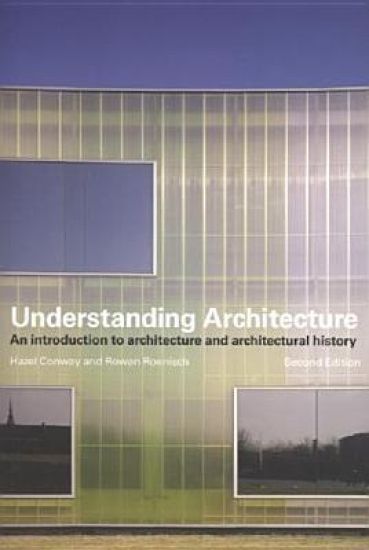
Understanding Architecture

Understanding Architecture

Hazel Conway; Rowan Roenisch

Routledge
2004
nidottu
A comprehensive introduction to architecture and architectural history and exceptional in its approach, this book explores architecture as a current practice in relation to history and in relation to the wider context of cultures, conservation and the environment. This new edition brings in the new emphasis on sustainability, urbanism, urban regeneration and cultural identity, in order to take a holistic approach to the subject of architecture. Highly illustrated, this book enables the reader to make sense of the experience of architecture and the built environment by understanding more about the form, construction, meaning and history of the subject.
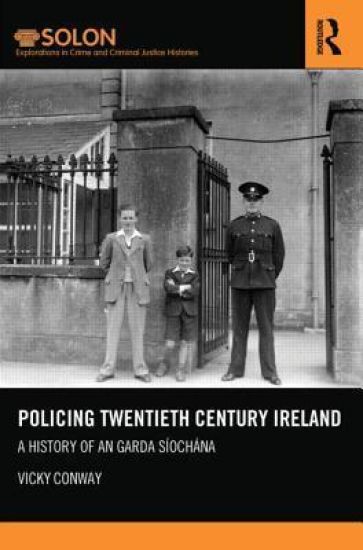
Policing Twentieth Century Ireland
The twentieth century was a time of rapid social change in Ireland: from colonial rule to independence, civil war and later the Troubles; from poverty to globalisation and the Celtic Tiger; and from the rise to the fall of the Catholic Church. Policing in Ireland has been shaped by all of these changes. This book critically evaluates the creation of the new police force, an Garda Síochána, in the 1920s and analyses how this institution was influenced by and responded to these substantial changes. Beginning with an overview of policing in pre-independence Ireland, this book chronologically charts the history of policing in Ireland. It presents data from oral history interviews with retired gardaí who served between the 1950s and 1990s, giving unique insight into the experience of policing Ireland, the first study of its kind in Ireland. Particular attention is paid to the difficulties of transition, the early encounters with the IRA, the policing of the Blueshirts, the world wars, gangs in Dublin and the growth of drugs and crime. Particularly noteworthy is the analysis of policing the Troubles and the immense difficulties that generated. This book is essential reading for those interested in policing or Irish history, but is equally important for those concerned with the legacy of colonialism and transition.
The Law and the Dead

The Law and the Dead

Heather Conway

Routledge
2016
sidottu
The fate of the dead is a compelling and emotive subject, which also raises increasingly complex legal questions. This book focuses on the substantive laws around disposal of the recently deceased and associated issues around their post-mortem fate. It looks primarily at the laws in England and Wales but also offers a comparative approach, drawing heavily on material from other common law jurisdictions including Australia, New Zealand, Canada and the United States.The book provides an in-depth, contextual and comparative analysis of the substantive laws and policy issues around corpse disposal, exhumation and the posthumous treatment of the dead, including commemoration. Topics covered include: the legal frameworks around burial, cremation and other disposal methods; the hierarchy of persons who have a legal duty to dispose of the dead and who are entitled to possession of the deceased’s remains; offences against the dead; family burial disputes, and the legal status of burial instructions; the posthumous use of donated bodily material; and the rules around disinterment, and creating an appropriate memorial. A key theme of the book will be to look at the manner in which conflicts involving the dead are becoming increasingly common in secular, multi-cultural societies where the traditional nuclear family model is no longer the norm, and how such legal contests are resolved by courts.As the first comprehensive survey of the laws in this area for decades, this book will be of use to academics, lawyers and judges adjudicating on issues around the fate of the dead, as well as the death industry and funeral service providers.
Baronial Opposition to Edward II

Baronial Opposition to Edward II

James Conway Davies

Routledge
2014
nidottu
First Published in 1967. This volume looks at the baronial opposition to Edward II which was more than an opportunist outburst of oligarchical tendencies, though the circumstances of the time were suitable for an opposition of such a nature. It was more than a reaction from the policy of Edward I. It was against the royal system of administration that the barons stood in the reign of Edward II. A consideration of the features of that system of administration is therefore of the utmost importance in determining the character and policy of the baronial opposition. A study of the administration as controlled by the household is important for two chief reasons. It gives the objective of the baronial attack. It explains the strength of the king's position and therefore supplies the reason for the failure of the barons. The second part of the thesis is concerned with the various attacks of the barons upon the royal position.
EU Law

EU Law

Gerard Conway

Routledge
2015
nidottu
EU Law provides a comprehensive examination of the law of the European Union in two distinct parts, covering the institutions, structure and processes of the EU as well as the substantive law, as enacted by the Lisbon Treaty. Beginning by examining its origins, Conway locates EU Law within both an international and a domestic legal context. He then explores the evolution of EU Law before providing a clear and accessible account of the structure and internal and international workings of the EU and the special role of the European Court of Justice. The second half of the book explores the Four Freedoms (of Goods, Workers, Capital and Movement) and provides a detailed account of Competition Law and the Economic and Social contexts.The Routledge Spotlights series brings a modern, contemporary approach to the core curriculum for the LLB and GDL which will help students Move beyond an understanding of the law Refine and develop the key skills of problem-solving, evaluation and critical reasoning which are essential to exam success Discover sources and suggestions for taking your study furtherBy focusing on recent case law and real-world examples, Routledge Spotlights will help you shed light on the law, understand how it operates in practice and gain a unique appreciation of the contemporary context of the subject. Companion WebsiteThis book is supported by a range of online resources developed to support your learning, keep you up-to-date and to help you prepare for assessments, including: Key Case Flashcards to aid with recall Quizzes and practice questions
EU Law

EU Law

Gerard Conway

Routledge
2015
sidottu
EU Law provides a comprehensive examination of the law of the European Union in two distinct parts, covering the institutions, structure and processes of the EU as well as the substantive law, as enacted by the Lisbon Treaty. Beginning by examining its origins, Conway locates EU Law within both an international and a domestic legal context. He then explores the evolution of EU Law before providing a clear and accessible account of the structure and internal and international workings of the EU and the special role of the European Court of Justice. The second half of the book explores the Four Freedoms (of Goods, Workers, Capital and Movement) and provides a detailed account of Competition Law and the Economic and Social contexts.The Routledge Spotlights series brings a modern, contemporary approach to the core curriculum for the LLB and GDL which will help students Move beyond an understanding of the law Refine and develop the key skills of problem-solving, evaluation and critical reasoning which are essential to exam success Discover sources and suggestions for taking your study furtherBy focusing on recent case law and real-world examples, Routledge Spotlights will help you shed light on the law, understand how it operates in practice and gain a unique appreciation of the contemporary context of the subject. Companion WebsiteThis book is supported by a range of online resources developed to support your learning, keep you up-to-date and to help you prepare for assessments, including: Key Case Flashcards to aid with recall Quizzes and practice questions
Family Law

Family Law

Helen Conway

Routledge
2013
nidottu
Key Facts and Key Cases: Family Law will ensure you grasp the main concepts of your Family Law module with ease. This book explains in concise and straightforward terms: • The law relating to marriage and its breakdown• Recent developments in money cases• All recent cases relating to private and public child law Helen L. Conway is a former practising barrister, now District Judge. She is an experienced law author and has taught law in both the academic and commercial sectors. Key Facts and Key Cases is the essential series for anyone studying law at LLB, postgraduate and conversion courses and professional courses such as ILEX. The series provides the simplest and most effective way to absorb and retain all of the material essential for passing your exams. Each chapter includes:• diagrams at the start of chapters to summarise key points• structured headings and numbered points to allow for clear recall of the essential points• charts and tables to break down more complex informationChapters also contain a Key Cases section which provides the simplest and most effective way to absorb essential cases needed for exam success, using a simple and memorable visual checklist:• Essential and leading cases are explained• The style, layout and explanations are user friendly • Cases are broken down into key components by use of a clear system of symbols for quick and easy visual recognitionSeries editors: Jacqueline Martin LLM, has ten years’ experience as a practicing barrister and has taught law at all levels and Chris Turner LLM, who is a Senior Lecturer in law at Wolverhampton University.
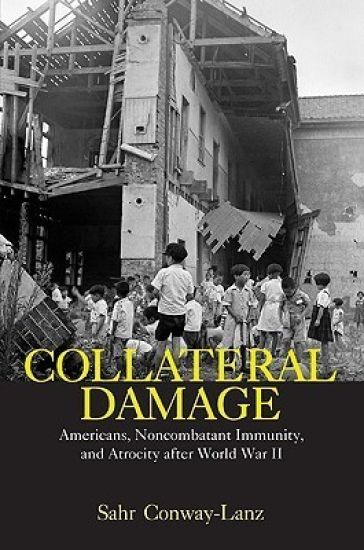
Collateral Damage

Collateral Damage

Sahr Conway-Lanz

Routledge
2006
sidottu
"Collateral damage" is a military term for the inadvertent casualties and destruction inflicted on civilians in the course of military operations. In Collateral Damage: Americans, Noncombatant Immunity, and Atrocity after World War II, Sahr Conway-Lanz chronicles the history of America's attempt to reconcile the ideal of sparing civilians with the reality that modern warfare results in the killing of innocent people. Drawing on policymakers' response to the issues raised by the atrocities of World War II and the use of the atomic bomb, as well as the ongoing debate by the American public and the media as the Korean War developed, Conway-Lanz provides a comprehensive examination of modern American discourse on the topic of civilian casualties and provides a fascinating look at the development of what is now commonly known as collateral damage.
Collateral Damage

Collateral Damage

Sahr Conway-Lanz

Routledge
2006
nidottu
"Collateral damage" is a military term for the inadvertent casualties and destruction inflicted on civilians in the course of military operations. In Collateral Damage: Americans, Noncombatant Immunity, and Atrocity after World War II, Sahr Conway-Lanz chronicles the history of America's attempt to reconcile the ideal of sparing civilians with the reality that modern warfare results in the killing of innocent people. Drawing on policymakers' response to the issues raised by the atrocities of World War II and the use of the atomic bomb, as well as the ongoing debate by the American public and the media as the Korean War developed, Conway-Lanz provides a comprehensive examination of modern American discourse on the topic of civilian casualties and provides a fascinating look at the development of what is now commonly known as collateral damage.
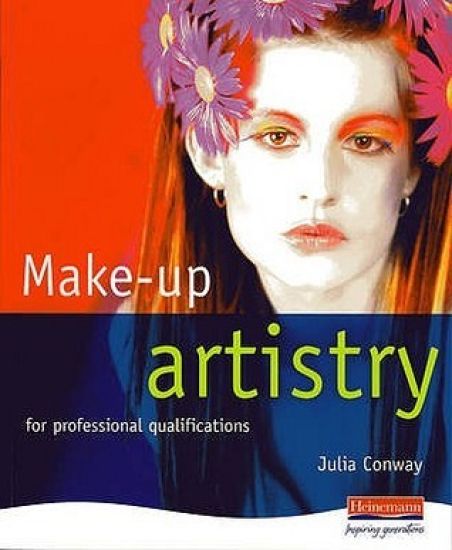
Make-Up Artistry

Make-Up Artistry

Julia Conway

pearson education limited
2004
nidottu
Covers everything students need for the S/NVQ core and options units so it is the only book needed for the Make-up pathway of S/NVQ Level 3 Beauty Therapy. Full-colour step-by-step procedures and ‘work in progress’ drawings clearly show the processes candidates need to go through to create a range of different looks. Contains mapping showing how the book relates to VTCT, ITEC and BTEC Make-up qualifications. Written by Julia Conway, an experienced college lecturer and freelance practitioner with an excellent reputation in make-up artistry.
A Hard Act To Follow

A Hard Act To Follow

Troy Conway

Grand Central Publishing
2008
pokkari
Will Rod Damon's formula for success as a counterspy work? Swinging with the sexy hippies isn't exactly his bag, but he has to groove along to stop the enemy from dropping LSD into the Potomac and blowing the government sky-high. Damon uses his unique ability-an insatiable virility-to trap his deadly prey. It's a desperate race against the clock as the Coxeman hunts for the hidden cache of LSD. But our boy doesn't lose his cool. His unique talents as a lover gets him into the tightest places-but will he live to tell the tale?
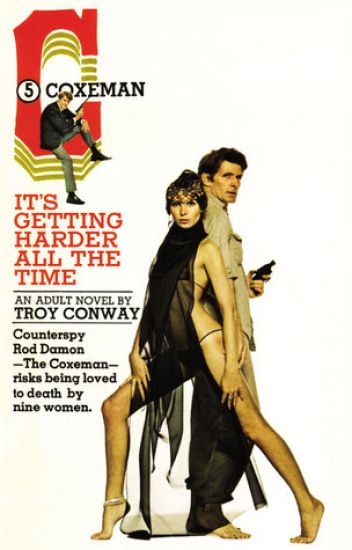
Coxeman #05

Coxeman #05

Troy Conway

Grand Central Publishing
2008
pokkari
To ferret out the location of a hidden atomic installation, The Coxeman volunteers to make love to a harem ruled by a sexually abnormal, power-mad African dictator. The 'harem' consists of nine gorgeous scientists, each more insatiable and erotically inventive than the other. When they are not working on Rod they are working on perfecting the hydrogen bomb that the dictator will detonate if the great powers do not succumb to his wishes. Night after night, the great Rod tries to discover the secret place only these love-starved women know. But how long can he go from orgy to orgy before he and the whole free world go down in flames!
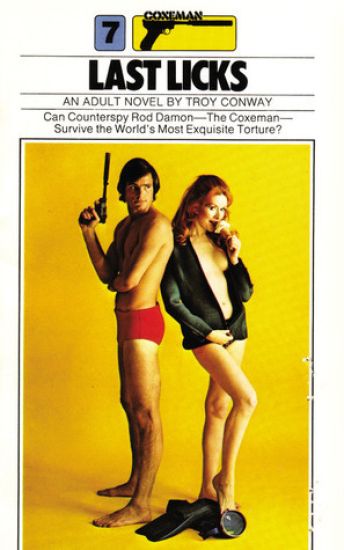
Coxeman #07

Coxeman #07

Troy Conway

Grand Central Publishing
2008
pokkari
Stripped and lashed to the mast of a pleasure yacht. Rod is erotically harassed and teased by the bizarre techniques of the world's most depraved women. Will he die writhing in ecstasy? Will he go berserk? Can he escape his beautiful tormentors in time to halt a conspiracy to destroy the Western powers by an invasion of murdering "Mermen"-enemy agents scientifically equipped to live underwater? The erotic torment to his body continues ... Never has Rod taken such a licking ... Sex-which has been his whole life-threatens to be his death!
The Best Laid Plans

The Best Laid Plans

Troy Conway

Grand Central Publishing
2008
pokkari
Rod Damon - The Coxeman - learns of an enemy plot to murder world leaders by planting a remote-controlled 'bug' in the brain of a number of agents. The 'bugs' are programmed to have the agents kill on deamand. Rod's job is to try to join the enemy force, HECATE, in order to destroy it. But first he must pass a series of tests, one of which is test of virility. Rod is finally accepted and "bugged" for murder. But Hecate has outsmarted Rod. He finds that he cannot neutralize the assassination orders. More important, he finds that he has lost his power to make love - except on HECATE'S orders! He is now an enemy-controlled sex machine who threatens to screw up the whole Free World!
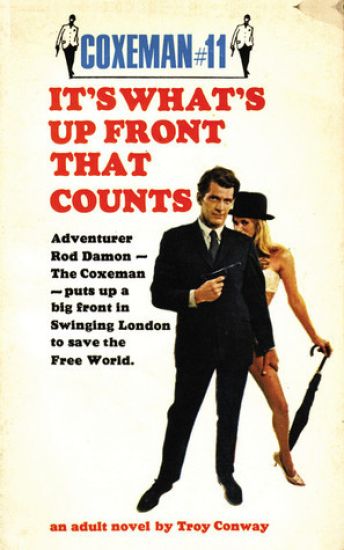
It'S What'S Up Front That Counts

It'S What'S Up Front That Counts

Troy Conway

Grand Central Publishing
2008
pokkari
The Coxeman knows how Lord Brice-Benington would answer that one. He was a big prig lusting for love but too up-tight to have a go at it.So Rod arranges a friendly little love-in to get a rise out of the old boy. Why was Rod so good to him? For the very best reasons: Lord Brice-Benington was the key to stop a potential menace to the Free World's security - a scandal like the Profumo affair that could unseat the British Government and give our enemies the secret plans to a weapon more deadly than the H-Bomb. Mod London, blackmail, drugs and some of the farthest-out sex ever - that's the background for The Coxeman's latest nonstop adventure.