
Kirjahaku
Etsi kirjoja tekijän nimen, kirjan nimen tai ISBN:n perusteella.
1000 tulosta hakusanalla Cornelia Absmanner
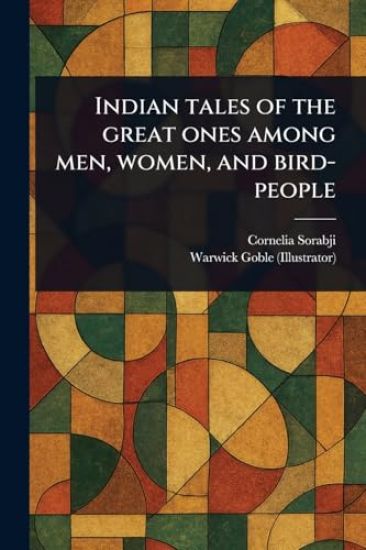
Indian Tales of the Great Ones Among Men, Women, and Bird-people
Cornelia Sorabji; Warwick Goble
Anson Street Press
2025
pokkari

Helga and the White Peacock, a Play in Three Acts for Young People
Cornelia Meigs
Hutson Street Press
2025
sidottu
Helga and the White Peacock, a Play in Three Acts for Young People
Cornelia Meigs
Hutson Street Press
2025
pokkari

"What Is A Symphony?" offers an accessible introduction to the world of symphonic music, designed for newcomers and enthusiasts alike. Cornelia R. Hopkins guides readers through the history, structure, and appreciation of this complex musical form. Exploring the roles of different instruments within an orchestra and providing insights into the evolution of symphonic composition, this book enhances the listener's experience and understanding. Discover the intricacies of movements, themes, and variations, and deepen your appreciation for the enduring power of the symphony. This work has been selected by scholars as being culturally important, and is part of the knowledge base of civilization as we know it. This work was reproduced from the original artifact, and remains as true to the original work as possible. Therefore, you will see the original copyright references, library stamps (as most of these works have been housed in our most important libraries around the world), and other notations in the work. This work is in the public domain in the United States of America, and possibly other nations. Within the United States, you may freely copy and distribute this work, as no entity (individual or corporate) has a copyright on the body of the work. As a reproduction of a historical artifact, this work may contain missing or blurred pages, poor pictures, errant marks, etc. Scholars believe, and we concur, that this work is important enough to be preserved, reproduced, and made generally available to the public. We appreciate your support of the preservation process, and thank you for being an important part of keeping this knowledge alive and relevant.
"What Is A Symphony?" offers an accessible introduction to the world of symphonic music, designed for newcomers and enthusiasts alike. Cornelia R. Hopkins guides readers through the history, structure, and appreciation of this complex musical form. Exploring the roles of different instruments within an orchestra and providing insights into the evolution of symphonic composition, this book enhances the listener's experience and understanding. Discover the intricacies of movements, themes, and variations, and deepen your appreciation for the enduring power of the symphony. This work has been selected by scholars as being culturally important, and is part of the knowledge base of civilization as we know it. This work was reproduced from the original artifact, and remains as true to the original work as possible. Therefore, you will see the original copyright references, library stamps (as most of these works have been housed in our most important libraries around the world), and other notations in the work. This work is in the public domain in the United States of America, and possibly other nations. Within the United States, you may freely copy and distribute this work, as no entity (individual or corporate) has a copyright on the body of the work. As a reproduction of a historical artifact, this work may contain missing or blurred pages, poor pictures, errant marks, etc. Scholars believe, and we concur, that this work is important enough to be preserved, reproduced, and made generally available to the public. We appreciate your support of the preservation process, and thank you for being an important part of keeping this knowledge alive and relevant.
This book analyses collective punishment in the context of human rights law. Collective punishment is a concept deriving from the law of armed conflict. It describes the punishment of a group for an act allegedly committed by one of its members and is prohibited in times of armed conflict. Although the imposition of collective punishment has been witnessed in situations outside armed conflict as well, human rights instruments do not explicitly address collective punishment. Consequently, there is a genuine gap in the protection of affected groups in situations outside of or short of armed conflict. Supported by two case studies on collective punishment in the Occupied Palestinian Territories and in Chechnya, the book examines potential options to close this gap in human rights law in a way contributing to the empowerment of affected groups. This analysis centres on the European Convention on Human Rights due to its relevance to the situation in Chechnya. By questioning whether human rights instruments can encompass a prohibition of collective punishment, the book contributes to the broader academic debate on rights held by collectivities in general and on collective human rights in particular. The book will be of interest to students, academics and policy makers in the areas of International Human Rights Law, International Humanitarian Law and International Criminal Law.
The increasing globalization of trade, travel and transport since the mid-19th century had unwelcome consequences – one of them was the spread of contagious animal diseases over greater distances in a shorter time than ever before. Borders and national control strategies proved to be insufficient to stop the pathogens. Not surprisingly, the issue of epizootics (epidemics of animals) was among the first topics to be addressed by international meetings from the 1860s onwards. Pathogens Crossing Borders explores the history of international efforts to contain and prevent the spread of animal diseases from the early 1860s to the years after the Second World War. As an innovative contribution to global history and the history of internationalism, the book investigates how disease experts, politicians and state authorities developed concepts, practices and institutional structures at the international level to tackle the spread of animal diseases across borders. By following their activities in dealing with a problem area which was – and is today – of enormous political, social, public health and economic relevance, the book reveals the historical challenges of finding common international responses to complex and pressing global issues for which there are no easy solutions.
Guidebook to Academic Writing
Cornelia C. Paraskevas; Deborah F. Rossen-Knill
TAYLOR FRANCIS LTD
2024
nidottu
This innovative guidebook is an accessible and concise introduction to discipline-specific academic language. Using authentic texts written by both novice and expert writers and ‘translating’ current, corpus-based research of academic language into a practical guide, the book gives students the tools to navigate the linguistic features of various disciplines, emphasizing the humanities and sciences, but also discussing example texts from the social sciences.Organised as 11 self-contained questions that are critical to any discussion of academic language, this guide:provides specific information and detail regarding the language ‘demands’ of each disciplineexplains the principles underlying punctuation, the range of choices writers have and the effects of these choices on readersincludes detailed linguistic guidance on how to construct effective paragraphsdiscusses the multiple ways attitude is expressed in academic textsincludes information on citation practicesWith exercises and additional online resources, this guidebook provides students with a range of tools they can choose from in order to create effective texts that meet discipline and reader expectations. Accessibly written, it is an essential guide for all students in humanities and sciences writing academic texts in English.

Guidebook to Academic Writing
Cornelia C. Paraskevas; Deborah F. Rossen-Knill
TAYLOR FRANCIS LTD
2024
sidottu
This innovative guidebook is an accessible and concise introduction to discipline-specific academic language. Using authentic texts written by both novice and expert writers and ‘translating’ current, corpus-based research of academic language into a practical guide, the book gives students the tools to navigate the linguistic features of various disciplines, emphasizing the humanities and sciences, but also discussing example texts from the social sciences.Organised as 11 self-contained questions that are critical to any discussion of academic language, this guide:provides specific information and detail regarding the language ‘demands’ of each disciplineexplains the principles underlying punctuation, the range of choices writers have and the effects of these choices on readersincludes detailed linguistic guidance on how to construct effective paragraphsdiscusses the multiple ways attitude is expressed in academic textsincludes information on citation practicesWith exercises and additional online resources, this guidebook provides students with a range of tools they can choose from in order to create effective texts that meet discipline and reader expectations. Accessibly written, it is an essential guide for all students in humanities and sciences writing academic texts in English.
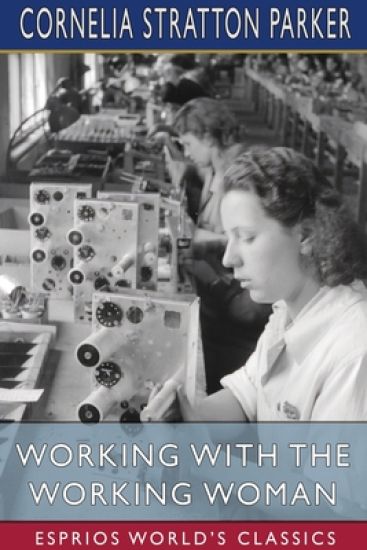
WISE heads tell us we act first-or decide to act first-and reason afterward. Therefore, what could be put down in black and white as to why we took up factory work is of minor value or concern. Yet everyone persists in asking why? So then, being merely as honest as the Lord allows, we answer first and foremost because we wanted to. Isn't that enough? It is the why and wherefore of almost everything anyone does any place at any time.