Kirjahaku
Etsi kirjoja tekijän nimen, kirjan nimen tai ISBN:n perusteella.
1000 tulosta hakusanalla David J. Fitzpatrick
We live in a world of measurements. Measurements, be they of length, speed, weight, temperature, intelligence, income, endurance, greed, gross domestic product, quality of life, unemployment or skill at a job, are all numerical manifestations of the extent of some underlying attribute. They reflect the reality around us – length and weight provide examples of systems that represent clear physical attributes. At the same time, measurements also define the reality around us – psychometric tests and price inflation constitute both the definitions and the procedures for measuring these concepts. Altogether, measurements are central to our modern world and our view of it. This book explores the nature of measurement, investigating its different kinds, how these kinds should be interpreted, and the legitimacy of their statistical manipulation. The procedures through which numbers are assigned to objects are described, and measurement in psychology, medicine, the physical sciences, and the social sciences are examined in detail. The ideas of measurement are so ubiquitous that we often fail to notice them; they are concealed behind a veil of familiarity. This book lifts the corner of that veil and, in doing so, shows that there are aspects of the familiar world that are occasionally puzzling, sometimes downright extraordinary, and often more intriguing than is generally believed.
The chapters in this book describe various aspects of the application of statistical methods in finance. It will interest and attract statisticians to this area, illustrate some of the many ways that statistical tools are used in financial applications, and give some indication of problems which are still outstanding. The statisticians will be stimulated to learn more about the kinds of models and techniques outlined in the book - both the domain of finance and the science of statistics will benefit from increased awareness by statisticians of the problems, models, and techniques applied in financial applications. For this reason, extensive references are given. The level of technical detail varies between the chapters. Some present broad non-technical overviews of an area, while others describe the mathematical niceties. This illustrates both the range of possibilities available in the area for statisticians, while simultaneously giving a flavour of the different kinds of mathematical and statistical skills required. Whether you favour data analysis or mathematical manipulation, if you are a statistician there are problems in finance which are appropriate to your skills.
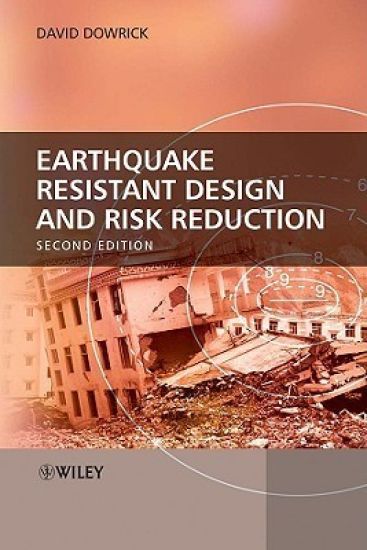
Earthquake Resistant Design and Risk Reduction, 2nd edition is based upon global research and development work over the last 50 years or more, and follows the author’s series of three books Earthquake Resistant Design, 1st and 2nd editions (1977 and 1987), and Earthquake Risk Reduction (2003). Many advances have been made since the 2003 edition of Earthquake Risk Reduction, and there is every sign that this rate of progress will continue apace in the years to come. Compiled from the author’s wide design and research experience in earthquake engineering and engineering seismology, this key text provides an excellent treatment of the complex multidisciplinary process of earthquake resistant design and risk reduction. New topics include the creation of low-damage structures and the spatial distribution of ground shaking near large fault ruptures. Sections on guidance for developing countries, response of buildings to differential settlement in liquefaction, performance-based and displacement-based design and the architectural aspects of earthquake resistant design are heavily revised. This book: Outlines individual national weaknesses that contribute to earthquake risk to people and propertyCalculates the seismic response of soils and structures, using the structural continuum “Subsoil – Substructure – Superstructure – Non–structure”Evaluates the effectiveness of given design and construction procedures for reducing casualties and financial lossesProvides guidance on the key issue of choice of structural formPresents earthquake resistant design methods for the main four structural materials – steel, concrete, reinforced masonry and timber – as well as for services equipment, plant and non-structural architectural componentsContains a chapter devoted to problems involved in improving (retrofitting) the existing built environment This book is an invaluable reference and guiding tool to practising civil and structural engineers and architects, researchers and postgraduate students in earthquake engineering and engineering seismology, local governments and risk management officials.
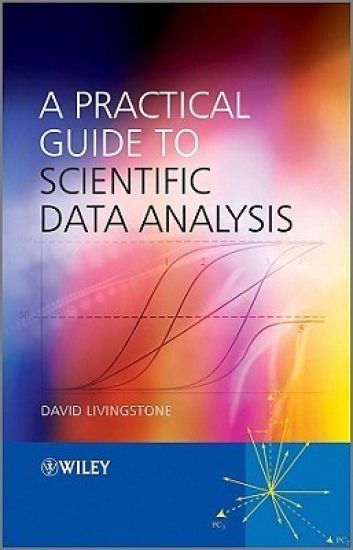
Inspired by the author's need for practical guidance in the processes of data analysis, A Practical Guide to Scientific Data Analysis has been written as a statistical companion for the working scientist. This handbook of data analysis with worked examples focuses on the application of mathematical and statistical techniques and the interpretation of their results. Covering the most common statistical methods for examining and exploring relationships in data, the text includes extensive examples from a variety of scientific disciplines. The chapters are organised logically, from planning an experiment, through examining and displaying the data, to constructing quantitative models. Each chapter is intended to stand alone so that casual users can refer to the section that is most appropriate to their problem. Written by a highly qualified and internationally respected author this text: Presents statistics for the non-statisticianExplains a variety of methods to extract information from dataDescribes the application of statistical methods to the design of “performance chemicals”Emphasises the application of statistical techniques and the interpretation of their results Of practical use to chemists, biochemists, pharmacists, biologists and researchers from many other scientific disciplines in both industry and academia.
Symmetry and group theory provide us with a formal method for the description of the geometry of objects by describing the patterns in their structure. In chemistry it is a powerful method that underlies many apparently disparate phenomena. Symmetry allows us to accurately describe the types of bonding that can occur between atoms or groups of atoms in molecules. It also governs the transitions that may occur between energy levels in molecular systems, which in turn allows us to predict the absorption properties of molecules and hence their spectra. Molecular Symmetry lays out the formal language used in the area using illustrative examples of particular molecules throughout. It then applies the ideas of symmetry to describe molecular structure, bonding in molecules and consider the implications in spectroscopy. Topics covered include: Symmetry elementsSymmetry operations and products of operationsPoint groups used with moleculesPoint group representations, matrices and basis setsReducible and irreducible representationsApplications in vibrational spectroscopySymmetry in chemical bonding Molecular Symmetry is designed to introduce the subject by combining symmetry with spectroscopy in a clear and accessible manner. Each chapter ends with a summary of learning points, a selection of self-test questions, and suggestions for further reading. A set of appendices includes templates for paper models which will help students understand symmetry groups. Molecular Symmetry is a must-have introduction to this fundamental topic for students of chemistry, and will also find a place on the bookshelves of postgraduates and researchers looking for a broad and modern introduction to the subject.
Assessing Weight-of-Evidence for DNA Profiles is an excellent introductory text to the use of statistical analysis for assessing DNA evidence. It offers practical guidance to forensic scientists with little dependence on mathematical ability as the book includes background information on statistics – including likelihood ratios – population genetics, and courtroom issues. The author, who is highly experienced in this field, has illustrated the book throughout with his own experiences as well as providing a theoretical underpinning to the subject. It is an ideal choice for forensic scientists and lawyers, as well as statisticians and population geneticists with an interest in forensic science and DNA.
“This book is a comprehensive and insightful overview of international real estate focusing on three of the BRICs: China, India and Brazil. I was pleasantly surprised to find useful market data and industry profiles for each of the countries that were very consistent with my first hand experience. The book has a wealth of information for the real estate investment analyst and practitioner and will be very useful to those seeking guidance on what to expect in emerging markets.” —Joseph F. Azrack, Managing Partner, Real Estate, Apollo Global Management “David Lynn has set the bar with respect to real estate investment in the most compelling emerging markets. Lynn provides a framework for thinking about highly dynamic markets characterized by youthful populations, extraordinary demand, capital inefficiency and, most importantly, aspiration. This book will enlighten institutional investors and entrepreneurs alike. I look forward to another work by David Lynn addressing the frontier markets.” —Gary R. Garrabrant, CEO & Co-Founder, Equity International An informed look at investing in emerging market real estate Focusing primarily on private equity real estate investment in China, India, and Brazil this reliable resource develops a general approach to commercial real estate investment in emerging markets, and illustrates some common strategies and analytical methods that can be implemented within this arena. Filled with in-depth insights and expert advice, Emerging Market Real Estate Investment focuses on broad investment themes and strategies as well as economic and legal/institutional factors, rather than the minute details of local market analyses. Opening with two informative chapters that provide an overview of the fundamentals of commercial and international real estate investment, this practical guide then moves on to the country-specific chapters of China, India, and Brazil. Outlines various real estate investment options and strategies for emerging markets such as China, India, and BrazilDiscusses the main features of each real estate market, including real estate foreign direct investment (FDI)Analyzes several primary real estate sectors in each country: office, retail, residential, industrial, and hotel where applicable Written with both institutional and private investors in mind, Emerging Market Real Estate Investment will put you in a better position to excel in emerging real estate markets. Praise for Emerging Market Real Estate Investment: “Emerging Market Real Estate Investment is written with a top down strategic orientation. It presents an excellent overview for US institutional investors planning to invest in offshore real estate in general and emerging markets and China, India and Brazil specifically. It covers all the key points my firm had to address before investing in China. I wish it had been available then.” —Robert H. Zerbst, Former Chairman & CEO, CB Richard Ellis Investors “This book does for international real estate what Samuelson’s primary Economics text did for economics students—it finally provides a new discipline with its first Bible. As cross-border real estate capital flows are on the rise, and investors increasingly seek compelling risk-adjusted returns in emerging markets, this book couldn’t have come at a better time in the market cycle. It is rich in content and filled with practical insights” —Kenneth A. Munkacy, Senior Managing Director, GID International Group/GID Investment Advisers, LLC “With American real estate in the doldrums, more investors will be looking abroad. David and Tim's analysis of international real estate investment, focused on three of the world’s most dynamic economies, provides exceptionally detailed knowledge concerning what real estate markets are really like in China, India, and Brazil. It is essential reading for investors considering those markets.” —Anthony Downs, Senior Fellow, the Brookings Institution “David Lynn and Tim Wang have written the 'must read' book for all real estate investors in emerging Brazil, China and India. They comprehensively cover the landscape of issues—economic, policy, legal, markets, sectors, entry, exit and strategies. Of noted value is their sanguine assessment of the risks and opportunities of alternative strategies in each country. The first outlay for all should be their book.” —Dr. Raymond G Torto, CRE, Global Chief Economist, CB Richard Ellis "Emerging Market Real Estate Investment is a powerful tool for those engaged in foreign investment generally, as well as in China, India and Brazil in particular. It combines a broad general view of competitive strategy with local detail on costs and legal aspects. The book is an intelligent and practical guide to foreign real estate investment." —Bowen H. McCoy, CRE, Formerly Partner and Managing Director, Morgan Stanley
Ever heard of an internal entrepreneur? You might know the type. They’re kind of employee who pushes mercilessly towards the trends of the future. Often looked at as a little bit outside the mainstream, more often than not the decisions this internal entrepreneur makes on behalf of an organization pay off in spades. So what makes an internal entrepreneur? How can you, as a nonprofit, create a culture that rewards futuring, internal entrepreneurs and innovation and doesn’t shut it down? The book “The Future of Nonprofits: Thrive and Innovate in the Digital Age” helps organizations do those very things. Better predicting future trends helps to reshape culture, creating the kind of environment ripe for positive growth in this fast changing world we work in today. Designed for nonprofit employees on all levels, the book will become a go to handbook for those interested in adapting in the modern world, not looking to be left behind. The Future of Nonprofits helps organizations capitalize on internal innovation. Innovative nonprofits are able to better predict future trends to remake and reshape their culture, structure, and staff to be a more nimble and lean. By applying the strategies laid out in this book, nonprofit professionals of all levels can prepare their organizations to take advantage of future trends and develop innovative “internal entrepreneurs” that will grow revenue and drive their mission. Provides nonprofits with a comprehensive playbook on how to create a new, more flexible, innovative organizationProvides nonprofits a look at the future of fundraising and communications trends into 2016Case studies highlight successes and failuresHighlights the power and strength of Social MediaHightlights how to hire, train, manage and inspire “internal entrepreneurial” employeesFeatures actionable advice on creating an organization that is primed to grow and thrive in the immediate and long-term future This game-changing book reveals how every nonprofit can put technology, innovation and future trends to work to reach their mission and grow revenue.
Latent Variable Models and Factor Analysis
David J. Bartholomew; Martin Knott; Irini Moustaki
John Wiley Sons Inc
2011
sidottu
Latent Variable Models and Factor Analysis provides a comprehensive and unified approach to factor analysis and latent variable modeling from a statistical perspective. This book presents a general framework to enable the derivation of the commonly used models, along with updated numerical examples. Nature and interpretation of a latent variable is also introduced along with related techniques for investigating dependency. This book: Provides a unified approach showing how such apparently diverse methods as Latent Class Analysis and Factor Analysis are actually members of the same family.Presents new material on ordered manifest variables, MCMC methods, non-linear models as well as a new chapter on related techniques for investigating dependency.Includes new sections on structural equation models (SEM) and Markov Chain Monte Carlo methods for parameter estimation, along with new illustrative examples.Looks at recent developments on goodness-of-fit test statistics and on non-linear models and models with mixed latent variables, both categorical and continuous. No prior acquaintance with latent variable modelling is pre-supposed but a broad understanding of statistical theory will make it easier to see the approach in its proper perspective. Applied statisticians, psychometricians, medical statisticians, biostatisticians, economists and social science researchers will benefit from this book.
International M&A, Joint Ventures and Beyond
David J. BenDaniel; Arthur H. Rosenbloom; James J. Hanks
John Wiley Sons Inc
2002
sidottu
Praise for International M & A, Joint Ventures & Beyond "The Second Edition of International M&A, Joint Ventures, and Beyond is superb. David BenDaniel, Arthur Rosenbloom, and James Hanks Jr. have assembled informative, comprehensive, and reliable source materials for cross-border merger and acquisition transactions. These materials will benefit those of us who are engaged daily in the international arena as well as those who are introduced to such ventures for the first time." Arthur M. Siskind, Esq., Senior Executive Vice President and Group General Counsel, The News Corporation Limited "In their second edition of International M&A, Joint Ventures, and Beyond, BenDaniel, Rosenbloom, and Hanks update readers in business, law, and academia alike on what it takes to get sound cross-border deals accomplished. This book is a must for practitioners and in courses covering cross-border business transactions." Alan Patricof, Chairman, Apax Partners, Inc. "A thoughtful compilation of topics, authors, and points of view that is as useful to the novice as it is to the experienced practitioner. Rosenbloom and BenDaniel, now joined by Hanks, are there when you need them." Arthur Kowaloff, Managing Director BNY Capital Markets, Inc. "This is an excellent set of materials on cross-border business combinationsthe best that one can find anywhere. The authors are leading practitioners and academics, and their unparalleled expertise shows in this fine work. The topic is, of course, of ever-growing importance as integration in the world economy continues at a rapid pace." John J. Barcelo III, William Nelson Cromwell Professor of International and Comparative Law, and Director, Berger International Legal Studies Program, Cornell University
International M&A, Joint Ventures, and Beyond: Doing the Deal, Workbook
David J. BenDaniel; Arthur H. Rosenbloom; James J. Hanks
John Wiley Sons Inc
2002
nidottu
*Questions on the Text*Sample Agreements and Forms*Real-World Merger and Acquisition Documents*Supplementary ReferencesInternational M&A, Joint Ventures, and Beyond provides a graduate- and professional-level course on all aspects and types of international business deals. This accompanying workbook allows you to practice the specialized techniques and strategies associated with becoming a cross-border M&A expert without leaving the comfort of your desk or losing millions of dollars over misunderstood international M&A issues. This workbook–a perfect companion to the actual text–helps familiarize you with the ins and outs of international M&A in today’s business environment. The International M&A, Joint Ventures, and Beyond Workbook offers practical discussion points that will help further your understanding of cross-border deal making. This indispensable, hands-on companion to International M&A, Joint Ventures, and Beyond: Doing the Deal, Second Edition strengthens your grasp of the most critical aspects of international M&A, with such tools as:*Study questions and answers *Sample agreements and forms *Real-world M&A documents *Case studies *Supplementary referencesPut your knowledge of international M&A to the test first, then enter the markets with confidence and make things happen.
A Practical Guide to Graphite Furnace Atomic Absorption Spectrometry
David J. Butcher; Joseph Sneddon
John Wiley Sons Inc
1998
sidottu
A complete nuts-and-bolts guide to GFAAS principles, methodology, instrumentation, and applications Graphite Furnace Atomic Absorption Spectrometry is now generally accepted as one of the most reliable methods of measuring quantities of trace elements in biological, clinical, environmental, food, geological, and other samples. Yet, surprisingly, there continues to be a dearth of practical guides and references on the subject. A Practical Guide to Graphite Furnace Atomic Absorption Spectrometry helps to fill that gap by providing chemists with: * Detailed coverage of GFAAS theory and analytical methodology * Descriptions of instrumentation, calibration, and analysis * Step-by-step instructions on how to prepare and introduce samples * Strategies for developing original GFAAS methods for your lab * Practical, in-depth reviews of all commercial instrumentation * A complete guide to the relevant world literature on GFAAS Long considered too unwieldy for most practical purposes, Graphite Furnace Atomic Absorption Spectrometry (GFAAS) is now considered an indispensable tool of analytical chemistry. Thanks to a series of relatively recent instrumental and methodological improvements that make the technique more easy to control, GFAAS is now routinely used for measuring concentrations of many trace elements (all metals and some nonmetals) in biological, clinical, environmental, food, geological, and other samples--especially in cases in which the samples are either too small or in which the analyte concentrations are too low to be measured by flame atomic absorption techniques. A Practical Guide to Graphite Furnace Atomic Absorption Spectrometry is an up-to-date and thorough guide to performing GFAAS. Following a concise introduction to GFAAS theory, nomenclature, and analytical methodology, the authors present a detailed discussion of all practical aspects of GFAAS. In separate chapters they provide in-depth coverage of calibration, instrumentation, interference-free analysis, and sample preparation and introduction. Chapters also examine the types, costs, and training of commercial GFAAS instrumentation, and strategies for developing GFAAS methods tailored to the unique demands of your research pursuits. The book concludes with a series of helpful appendices featuring a fascinating historical account of GFAAS, a guide to relevant literature in the field, and a valuable compilation of conditions for performing GFAAS. A Practical Guide to Graphite Furnace Atomic Absorption Spectrometry belongs in the working libraries of all analytical chemists. Jacket Design/Illustration: Keithley & Associates Inc.
Random Graphs for Statistical Pattern Recognition
David J. Marchette
John Wiley Sons Inc
2004
sidottu
A timely convergence of two widely used disciplines Random Graphs for Statistical Pattern Recognition is the first book to address the topic of random graphs as it applies to statistical pattern recognition. Both topics are of vital interest to researchers in various mathematical and statistical fields and have never before been treated together in one book. The use of data random graphs in pattern recognition in clustering and classification is discussed, and the applications for both disciplines are enhanced with new tools for the statistical pattern recognition community. New and interesting applications for random graph users are also introduced. This important addition to statistical literature features: *Information that previously has been available only through scattered journal articles *Practical tools and techniques for a wide range of real-world applications *New perspectives on the relationship between pattern recognition and computational geometry *Numerous experimental problems to encourage practical applications With its comprehensive coverage of two timely fields, enhanced with many references and real-world examples, Random Graphs for Statistical Pattern Recognition is a valuable resource for industry professionals and students alike.
Bringing Geographical Information Systems into Business
David J. Grimshaw
John Wiley Sons Inc
1999
sidottu
The complete guide to choosing and using GIS in business Over the last few years, Geographical Information Systems (GIS) have become less expensive and easier to use, and the tremendous potential of GIS to boost business productivity is finally being realized. Incorporating the latest developments in GIS technology and applications, this book explores what GIS has to offer companies in many different areas of industry today and how it can be successfully integrated into existing business operations. Building on the success of its predecessor, this Second Edition covers every key aspect of using GIS in business. It explains what GIS is and helps readers gain a clear understanding of the costs and benefits of moving to a GIS. New case studies from both the manufacturing and service sectors illustrate how GIS can support tactical and strategic business decision-making, and the books unbiased coverage of commercially available GIS software is invaluable for anyone involved in selecting a GIS system and getting it up and running. With a practical, realworld approach, the book also addresses the main issues involved in GIS implementation, paying particular attention to the integration of GIS within an organizations existing management information system. An increasingly vital tool for operations and delivery of goods and services, GIS makes terrific business sense for many companiesbut only when properly selected and applied. This book gives GIS consultants, practitioners, and others considering the move to GIS the foundation they need to put this powerful technology to work effectively in business.
An intriguing look at how technology is changing financial markets, from an innovator on the frontlines of this revolution Nerds on Wall Street tells the tale of the ongoing technological transformation of the world's financial markets. The impact of technology on investing is profound, and author David Leinweber provides readers with an overview of where we were just a few short years ago, and where we are going. Being a successful investor today and tomorrow--individual or institutional--involves more than stock picking, asset allocation, or market timing: it involves technology. And Leinweber helps readers go beyond the numbers to see exactly how this technology has become more responsible for managing modern markets. In essence, the financial game has changed and will continue to change due entirely to technology. The new "players," human or otherwise, offer investors opportunities and dangers. With this intriguing and entertaining book, Leinweber shows where technology on Wall Street has been, what it has meant, and how it will impact the markets of tomorrow.
Bayesian Approaches to Clinical Trials and Health-Care Evaluation
David J. Spiegelhalter; Keith R. Abrams; Jonathan P. Myles
John Wiley Sons Inc
2003
sidottu
The Bayesian approach involves synthesising data and judgement in order to reach conclusions about unknown quantities and make predictions. Bayesian methods have become increasingly popular in recent years, notably in medical research, and although there are a number of books on Bayesian analysis, few cover clinical trials and biostatistical applications in any detail. Bayesian Approaches to Clinical Trials and Health-Care Evaluation provides a valuable overview of this rapidly evolving field, including basic Bayesian ideas, prior distributions, clinical trials, observational studies, evidence synthesis and cost-effectiveness analysis. Covers a broad array of essential topics, building from the basics to more advanced techniques. *Illustrated throughout by detailed case studies and worked examples. *Includes exercises in all chapters. *Accessible to anyone with a basic knowledge of statistics. *Authors are at the forefront of research into Bayesian methods in medical research. *Accompanied by a Web site featuring data sets and worked examples using Excel and WinBUGS - the most widely used Bayesian modelling package. Bayesian Approaches to Clinical Trials and Health-Care Evaluation is suitable for students and researchers in medical statistics, statisticians in the pharmaceutical industry, and anyone involved in conducting clinical trials and assessment of health-care technology.
The author has written an accessible book presenting the central issues and placing particular emphasis on comparison, performance assessment and how to match method to application. He reviews the different approaches and guides researchers (and the huge class of users and potential users) to suitable classes of techniques. He points the way to more detailed study in "further reading" sections in each chapter.
Award-winning author David J. Park argues that the battle against global warming is also a fight for media reform. With his new book Media Reform and the Climate Emergency: Rethinking Communication in the Struggle for a Sustainable Future, he critically examines how advertising, the digital infrastructure, and journalism advance the climate emergency and lays out a path of reform to help create a more sustainable world. The production and consumption of goods and services within consumer societies lead to unsustainable greenhouse gas emissions, and Park finds that much of mass communication is either dependent upon or closely tied to the success of this social organization. As a result, he suggests successful environmental movements creatively dismantle or reform institutional infrastructures that extend the planetary global warming crisis and the unsustainable consumption of nature. Communication policies and industries are part of these infrastructures. Advertising evolved to propel a new consumer society that would encourage the over-consumption of goods and services with harmful and unsustainable production processes. Our digital infrastructure is largely premised upon the surveillance of online consumer habits and preferences, with the goal to create individualized messages to more effectively persuade people to increase their consumption habits. Much of commercial journalism resists the drastic and immediate regulatory changes necessary to address the worst aspects of this crisis. This is because so many of the needed changes challenge the media’s source of income, their libertarian philosophy, and the general status quo, which is preferred by elites. Bound to foster conversations among scholars, activists, politicians, and those who work in the communication industries, this book rethinks mass communication and highlights how immediate reform is needed in the struggle for a sustainable planet.