Kirjojen hintavertailu. Mukana 12 016 292 kirjaa ja 12 kauppaa.

Kirjahaku

Etsi kirjoja tekijän nimen, kirjan nimen tai ISBN:n perusteella.

1000 tulosta hakusanalla David R Addleman

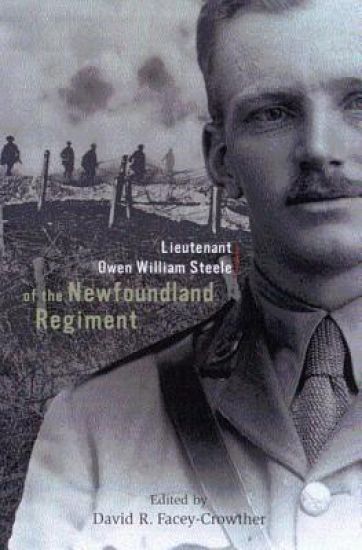
Lieutenant Owen William Steele of the Newfoundland Regiment

Lieutenant Owen William Steele of the Newfoundland Regiment

David R. Facey-Crowther

McGill-Queen's University Press
2002
sidottu
Steele and his comrades expected war to be a glorious adventure, their personal intersection with events of historic importance. His diary entries convey the excitement that accompanied the passage of the "First 500" recruits across the Atlantic to England and the boredom that followed as the regiment moved from training camps to garrison towns during the first year of the war. Steele's account of the regiment's role in the ill-fated Gallipoli expedition shows how the reality of war transforms individuals, shattering illusions about glory and heroic effort and replacing them with fears of death and wounding far from home. Steele's record of the shift to the western front and the events that led up to the virtual annihilation of his regiment on the fields of Beaumont Hamel on 1 July 1916 is filled with the pathos and irony of war. His diary captures the essence of how the individual deals with war's uncertainties, the terrible possibilities of self destruction on the battle-ground, and the need to control and overcome those fears. The Great War is of special interest to Newfoundland as it was the last significant effort by what was then a small Dominion to assert its place within the larger British Empire. Newfoundland's participation in the war resulted not only in the loss of lives and limbs but to the strains and tensions that led to its demise as an independent country.

Wallace Stevens among Others

Wallace Stevens among Others

David R. Jarraway

McGill-Queen's University Press
2015
sidottu
In Wallace Stevens among Others, David Jarraway explores the extraordinary achievement of Wallace Stevens, but in contexts that are not usually thought about in connection with Stevens's work - gay literature, contemporary fiction, Hollywood film, and avant-garde architecture, among others. By viewing the poet among these "other" contexts, Jarraway considers the nature of self-reflection and pays special attention to the discrediting of self-presence as the principle of identity in American writing - a theme that reflects American authors' abiding concern for subjectivities that engage the world from spaces of distance and difference. By returning to the work of Stevens, Jarraway seeks to refurbish this preoccupation by linking it to the literary theory of French philosopher Gilles Deleuze, whose work applies to American writers from Melville and Whitman to Fitzgerald and Cummings. Jarraway forges the link between Deleuze and Stevens by drawing out the female subjectivity found in each writer's work to rethink the more static masculinist premises of being. Informed by a deep knowledge of and fluency with the work of Stevens and Deleuze, Jarraway uses these writers as a means of entry into American literature and culture, Wallace Stevens among Others is a sophisticated analysis that will open new directions for future scholarship.
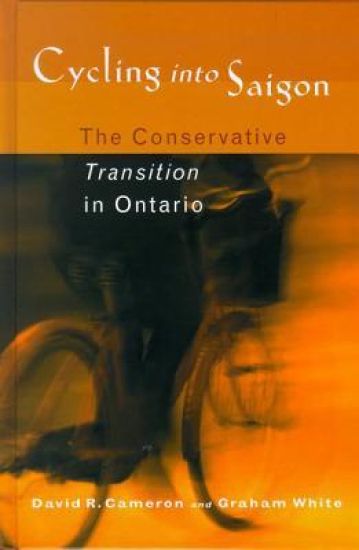
Cycling Into Saigon

Cycling Into Saigon

David R. Cameron; Graham White

University of British Columbia Press
2000
sidottu
The essence of democracy is the peaceful and legitimate transfer of government. In 1995 in Ontario, the omens for a successful transition weren't promising. Almost no one had expected Mike Harris's Common Sense Revolution to catapult his Progressive Conservatives from third-party obscurity to victory in the June election. The Harris manifesto declared its intention to dismantle almost every policy of the defeated NDP administration of Bob Rae. Weeks of confrontation and confusion seemed inevitable. Yet, as Cameron and White compellingly describe, the transition was a surprising success, involving necessary co-operation between political mortal enemies. Cycling into Saigon has important lessons for everyone involved or interested in this key stage of the electoral process, wherever it takes place.
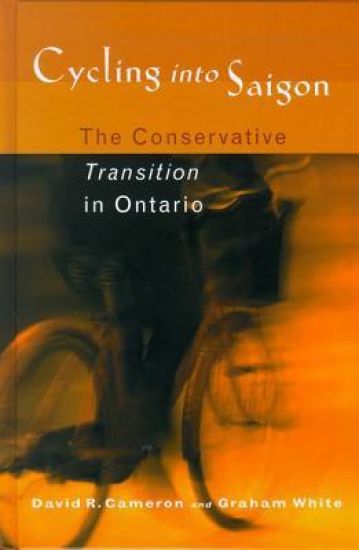
Cycling Into Saigon

Cycling Into Saigon

David R. Cameron; Graham White

University of British Columbia Press
2001
pokkari
The essence of democracy is the peaceful and legitimate transfer of government. In 1995 in Ontario, the omens for a successful transition weren't promising. Almost no one had expected Mike Harris's Common Sense Revolution to catapult his Progressive Conservatives from third-party obscurity to victory in the June election. The Harris manifesto declared its intention to dismantle almost every policy of the defeated NDP administration of Bob Rae. Weeks of confrontation and confusion seemed inevitable. Yet, as Cameron and White compellingly describe, the transition was a surprising success, involving necessary co-operation between political mortal enemies. Cycling into Saigon has important lessons for everyone involved or interested in this key stage of the electoral process, wherever it takes place.
Unnatural Law

Unnatural Law

David R. Boyd

University of British Columbia Press
2003
sidottu
While governments assert that Canada is a world leader in sustainability, Unnatural Law provides extensive evidence to refute this claim. A comprehensive assessment of the strengths and weaknesses of Canadian environmental law, the book provides a balanced, critical examination of Canada's record, focusing on laws and policies intended to protect water, air, land, and biodiversity.Three decades of environmental laws have produced progress in a number of important areas, such as ozone depletion, protected areas, and some kinds of air and water pollution. However, Canada's overall record remains poor. In this vital and timely study, David Boyd explores the reasons why some laws and policies foster progress while others fail. He ultimately concludes that the root cause of environmental degradation in industrialized nations is excessive consumption of resources. Unnatural Law outlines the innovative changes in laws and policies that Canada must implement in order to respond to the ecological imperative of living within the Earth's limits.The struggle for a sustainable future is one of the most daunting challenges facing humanity in the 21st century. Everyone – academics, lawyers, students, policy-makers, and concerned citizens – interested in the health of the Canadian and global environments will find Unnatural Law an invaluable source of information and insight. For more information on Unnatural Law visit David Boyd's site, www.unnaturallaw.com.
Unnatural Law

Unnatural Law

David R. Boyd

University of British Columbia Press
2003
pokkari
While governments assert that Canada is a world leader in sustainability, Unnatural Law provides extensive evidence to refute this claim. A comprehensive assessment of the strengths and weaknesses of Canadian environmental law, the book provides a balanced, critical examination of Canada's record, focusing on laws and policies intended to protect water, air, land, and biodiversity.Three decades of environmental laws have produced progress in a number of important areas, such as ozone depletion, protected areas, and some kinds of air and water pollution. However, Canada's overall record remains poor. In this vital and timely study, David Boyd explores the reasons why some laws and policies foster progress while others fail. He ultimately concludes that the root cause of environmental degradation in industrialized nations is excessive consumption of resources. Unnatural Law outlines the innovative changes in laws and policies that Canada must implement in order to respond to the ecological imperative of living within the Earth's limits.The struggle for a sustainable future is one of the most daunting challenges facing humanity in the 21st century. Everyone – academics, lawyers, students, policy-makers, and concerned citizens – interested in the health of the Canadian and global environments will find Unnatural Law an invaluable source of information and insight. For more information on Unnatural Law visit David Boyd's site, www.unnaturallaw.com.
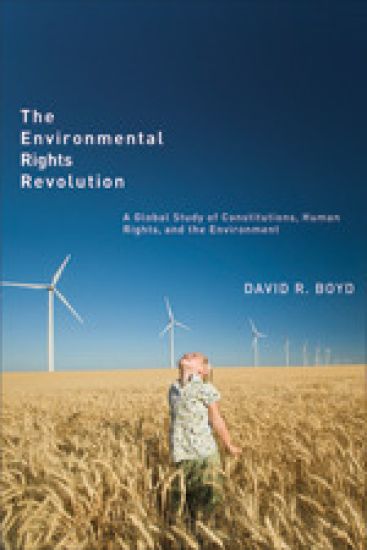
The Environmental Rights Revolution

The Environmental Rights Revolution

David R. Boyd

University of British Columbia Press
2011
pokkari
The right to a healthy environment is the subject of extensive philosophical debates that revolve around a key question: Should rights to clean air, water, and soil be entrenched in law?This pioneering book answers this by moving beyond theoretical debate to measure the practical effects of enshrining the right in constitutions. David Boyd analyzes 193 constitutions and the laws and court decisions of more than 100 nations in Europe, Latin America, Asia, and Africa. He reveals that nations with constitutional protections have stronger environmental laws, enhanced enforcement, greater government accountability, and better access to justice, information, and public participation in decision making than nations without such provisions. As a result, they demonstrate superior environmental performance and have smaller ecological footprints.Boyd not only demonstrates that constitutionalizing environmental protection has the power to make sustainability a priority, he tells inspiring stories about the difference the right to a healthy environment is making in people's lives.
The Right to a Healthy Environment

The Right to a Healthy Environment

David R. Boyd

University of British Columbia Press
2012
sidottu
Canada has abundant natural wealth -- beautiful landscapes, vast forests, and thousands of rivers and lakes. The land defines Canadians as a people, yet the country has one of the worst environmental records in the industrialized world.Building on his previous book, The Environmental Rights Revolution (2012), David R. Boyd, one of Canada's leading environmental lawyers, describes how recognizing the constitutional right to a healthy environment could have a transformative impact by empowering citizens, holding governments and industry accountable, and improving Canada's green record. The overwhelming majority of the world's nations now recognize environmental rights through laws, constitutions, treaties, or court decisions. Boyd explores Canada's history of failed efforts to do the same within this international context and offers three pathways to constitutional recognition of the right to a healthy environment.This important and provocative book provides a blueprint for renewed leadership in protecting human health, the well-being of the planet, and the interests of future generations.
The Right to a Healthy Environment

The Right to a Healthy Environment

David R. Boyd

University of British Columbia Press
2012
pokkari
Canada has abundant natural wealth -- beautiful landscapes, vast forests, and thousands of rivers and lakes. The land defines Canadians as a people, yet the country has one of the worst environmental records in the industrialized world.Building on his previous book, The Environmental Rights Revolution (2012), David R. Boyd, one of Canada's leading environmental lawyers, describes how recognizing the constitutional right to a healthy environment could have a transformative impact by empowering citizens, holding governments and industry accountable, and improving Canada's green record. The overwhelming majority of the world's nations now recognize environmental rights through laws, constitutions, treaties, or court decisions. Boyd explores Canada's history of failed efforts to do the same within this international context and offers three pathways to constitutional recognition of the right to a healthy environment.This important and provocative book provides a blueprint for renewed leadership in protecting human health, the well-being of the planet, and the interests of future generations.
Cleaner, Greener, Healthier

Cleaner, Greener, Healthier

David R. Boyd

University of British Columbia Press
2015
sidottu
Despite Canada's enduring image as a natural paradise, every year thousands of Canadians become ill or die prematurely as a result of exposure to environmental hazards. Canadians understand that their health is inextricably linked to the health of the environment and are deeply concerned about the impacts of toxic substances on themselves and their children.In Cleaner, Greener, Healthier, David R. Boyd sets out to remedy Canada's environmental health problems. He begins by assessing the environmental burden of disease, identifies its unequal distribution along racial and socio-economic lines, and estimates the associated economic costs. He then compares Canadian environmental laws and policies with those in the United States, Australia, and the European Union, delivering a provocative diagnosis of the root causes of Canada's second-rate standards. Finally, drawing on strategies that protect citizens in other countries, Boyd prescribes legal remedies that will enable Canada to catch up with the world's environmental leaders while delivering substantial health and economic benefits.
Cleaner, Greener, Healthier

Cleaner, Greener, Healthier

David R. Boyd

University of British Columbia Press
2015
pokkari
Despite Canada's enduring image as a natural paradise, every year thousands of Canadians become ill or die prematurely as a result of exposure to environmental hazards. Canadians understand that their health is inextricably linked to the health of the environment and are deeply concerned about the impacts of toxic substances on themselves and their children.In Cleaner, Greener, Healthier, David R. Boyd sets out to remedy Canada's environmental health problems. He begins by assessing the environmental burden of disease, identifies its unequal distribution along racial and socio-economic lines, and estimates the associated economic costs. He then compares Canadian environmental laws and policies with those in the United States, Australia, and the European Union, delivering a provocative diagnosis of the root causes of Canada's second-rate standards. Finally, drawing on strategies that protect citizens in other countries, Boyd prescribes legal remedies that will enable Canada to catch up with the world's environmental leaders while delivering substantial health and economic benefits.
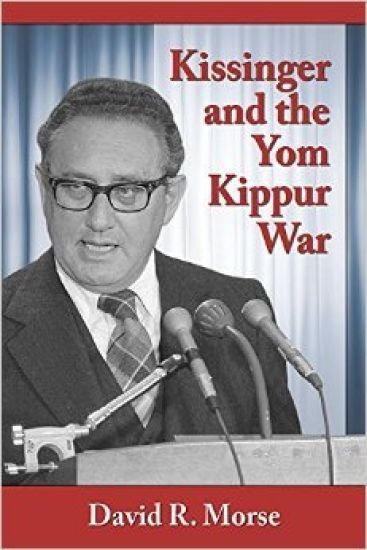
Kissinger and the Yom Kippur War

Kissinger and the Yom Kippur War

David R. Morse

McFarland Co Inc
2015
pokkari
The 1973 Yom Kippur War marked a turning point in the "special relationship" between the United States and Israel. While previous U.S. administrations had taken a relatively even hand in the Middle East, the action saw American support of Israel become virtually unconditional. A massive airlift of military hardware to Israel brought the U.S. and the Soviet Union closer to conflict. As the war--just two weeks in duration--played out along the Suez Canal, U.S. Vice President Spiro Agnew was forced to resign amidst bribery allegations. Watergate escalated, resulting in President Nixon's near-breakdown. Despite Secretary of State Henry Kissinger's efforts to supply arms to Israel, he was stymied by resistance in the Department of Defense, which some saw as overly provocative toward the Arabs. Ostensibly a U.S. foreign policy success, the war led directly to the 1974 oil crisis and a permanent rift in U.S.-Arab relations. Drawing on Kissinger's telephone conversations and recently declassified documents, this book tells the story of how the secretary became the chief architect of America's Middle East policy, and how his Cold War strategy played a critical role in the decision to pursue active military involvement.
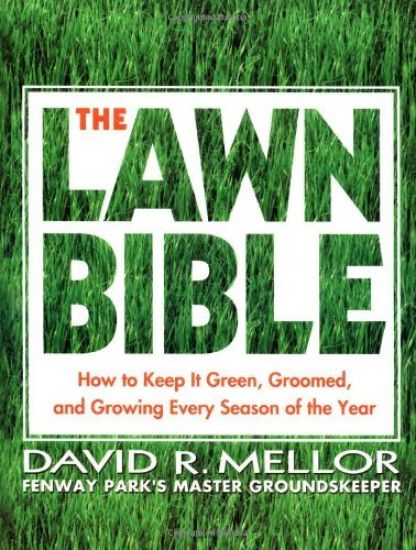
The Lawn Bible: How to Keep It Green, Groomed, and Growing Every Season of the Year
Cultivate the lawn of your dreams with this guide from a master groundskeeper, including everything you need to know from planting to dealing with pests. In The Lawn Bible, Mellor offers you everything you need to know about lawn care for your part of the country. No matter where in the world your yard is, David Mellor will help you with mowing, feeding, and troubleshooting unexpected issues. Using the 'Gospel of Grass', you'll learn how to: Think like a lawn Make your lawn child-friendly Win the war on weeds, pests, and disease Find the combination of soil, seed, and sun that your lawn will love Mow like a pro
The Emotionally Intelligent Manager

The Emotionally Intelligent Manager

David R. Caruso; Peter Salovey

Jossey-Bass Inc.,U.S.
2004
sidottu
We have long been taught that emotions should be felt and expressed in carefully controlled ways, and then only in certain environments and at certain times. This is especially true when at work, particularly when managing others. It is considered terribly unprofessional to express emotion while on the job, and many of us believe that our biggest mistakes and regrets are due to our reactions at those times when our emotions get the better of us. David R. Caruso and Peter Salovey believe that this view of emotion is not correct. The emotion centers of the brain, they argue, are not relegated to a secondary place in our thinking and reasoning, but instead are an integral part of what it means to think, reason, and to be intelligent. In The Emotionally Intelligent Manager , they show that emotion is not just important, but absolutely necessary for us to make good decisions, take action to solve problems, cope with change, and succeed. The authors detail a practical four-part hierarchy of emotional skills: identifying emotions, using emotions to facilitate thinking, understanding emotions, and managing emotions—and show how we can measure, learn, and develop each skill and employ them in an integrated way to solve our most difficult work-related problems.
Returning Home

Returning Home

David R Mattson

CSS Publishing Company
2001
pokkari
God's never-ending pursuit of all prodigals, whether they're far from home or nearby, is the theme of this complete package of preaching and worship resources. The timeless story of the Prodigal Son is examined through first-person portrayals of its characters: the prodigal, the elder son, the father, the mother, and a servant. The five monologues are perfect for use in midweek services -- and with companion sermons for Ash Wednesday and Good Friday plus seven orders of worship, Returning Home provides everything busy pastors need for a total Lenten program. The material is also excellent for a sermon series, small group discussion, or personal devotional reading. A graduate of Wartburg College and Luther Seminary, David R. Mattson is the pastor of Gloria Dei Lutheran Church (ELCA) in Dana Point, California. He has previously served congregations in Arizona, California, and Iowa.
Eyes of Faith

Eyes of Faith

David R Cartwright

CSS Publishing Company
2011
pokkari
One of the enduring legacies of the Revised Common Lectionary is its ability to draw different parts of scripture together to form a coherent narrative, drawing congregations from around the world into the life-changing message of faith in Jesus Christ. Each element of the lectionary brings its own point of view into this message, giving us insights into its origins, the impact on its original hearers, as well as its relevance for our lives today. In the gospel message, we see the drama of Jesus' life and ministry and are challenged to join in it. Eyes of Faith journeys through the gospel texts for the first third of the Pentecost season. Cartwright guides us through these seemingly familiar passages of scripture, illuminating them for today's generation. Looking at the words and events of Jesus' life through new eyes, Cartwright explains how we can apply that new vision to our daily Christian walk. This collection of sermons is a valuable resource for: - Sermon starters and illuminating illustrations - Gaining a new homiletical perspective to the lectionary - Offering a newer, deeper understanding and appreciation of scripture - Using as a starter for adult Bible study groups or personal devotions This sermon collection includes: The Teacher Who Wanted to Learn Promising Too Much Satisfied in Christ ... and many more David R. Cartwright is the Minister Emeritus at Hazelwood Christian Church (Disciples of Christ) in Muncie, Indiana. He holds degrees from Washington University (St. Louis, Missouri), Yale Divinity School, and Christian Theological Seminary (Indianapolis, Indiana) He has served in various pastoral roles in Christian churches in Indiana since 1965, and he also serves as a regional elder. Cartwright is the author of Guided by the Spirit, part of Sermons on the Gospel Readings, Series II, Cycle C (CSS). His hobbies include reading, swimming, cooking, and travel.
Exploring the Spiritual

Exploring the Spiritual

David R. Matteson

Routledge Member of the Taylor and Francis Group
2008
sidottu
Gain solid empirical findings to understand your own spiritual development To significantly impact clients’ spirituality and use the spiritual strengths the client possesses to facilitate their move toward health, a counselor must be willing to explore his or her own spiritual development. Exploring the Spiritual: Paths for Counselors and Psychotherapists provides cognitive information grounded in the empirical findings of social science, as well as experiential material which encourages the counselors’ own spiritual quest. This invaluable source clarifies the interface between the counselor’s spirituality and the client’s, and allows the spiritual dimension to emerge appropriately in the counseling process. Exploring the Spiritual: Paths for Counselors and Psychotherapists provides challenging questions and exercises that lead the counselor or psychotherapist through a personal exploration to attain the maturity of development needed to facilitate the client’s spiritual growth. The text, written in an accessible narrative style, features helpful case studies and personal anecdotes to illustrate the concepts and processes described. Each chapter includes an overview of an issue, develops an argument or position, and presents a focused exploration of some relevant empirical research that is presented in a context that helps the reader see its personal implications. The final section leads the reader through exercises and experiments, helping them to focus on the counselor’s own inner experience or encouraging the counselor to experiment with new behaviors. This insightful resource encourages the counselor to work directly with the client’s spiritual experiences and conceptualizations without imposing on the client the beliefs of the counselor. Topics discussed in Exploring the Spiritual: Paths for Counselors and Psychotherapists include: models of spiritual development steps toward spiritual maturation the contribution of crises in belief and in values the physical-emotional self, and the contribution of passion and sexuality overcoming the divisiveness of age, race, gender, sexual orientation, and culture coping with suffering discovering one’s own paths to the spiritual Exploring the Spiritual: Paths for Counselors and Psychotherapists is a valuable resource for counselors, psychotherapists, counselor educators, and graduate students in psychology, counseling, psychotherapy, social work, and psychiatry.
Exploring the Spiritual

Exploring the Spiritual

David R. Matteson

Routledge Member of the Taylor and Francis Group
2008
nidottu
Gain solid empirical findings to understand your own spiritual development To significantly impact clients’ spirituality and use the spiritual strengths the client possesses to facilitate their move toward health, a counselor must be willing to explore his or her own spiritual development. Exploring the Spiritual: Paths for Counselors and Psychotherapists provides cognitive information grounded in the empirical findings of social science, as well as experiential material which encourages the counselors’ own spiritual quest. This invaluable source clarifies the interface between the counselor’s spirituality and the client’s, and allows the spiritual dimension to emerge appropriately in the counseling process. Exploring the Spiritual: Paths for Counselors and Psychotherapists provides challenging questions and exercises that lead the counselor or psychotherapist through a personal exploration to attain the maturity of development needed to facilitate the client’s spiritual growth. The text, written in an accessible narrative style, features helpful case studies and personal anecdotes to illustrate the concepts and processes described. Each chapter includes an overview of an issue, develops an argument or position, and presents a focused exploration of some relevant empirical research that is presented in a context that helps the reader see its personal implications. The final section leads the reader through exercises and experiments, helping them to focus on the counselor’s own inner experience or encouraging the counselor to experiment with new behaviors. This insightful resource encourages the counselor to work directly with the client’s spiritual experiences and conceptualizations without imposing on the client the beliefs of the counselor. Topics discussed in Exploring the Spiritual: Paths for Counselors and Psychotherapists include: models of spiritual development steps toward spiritual maturation the contribution of crises in belief and in values the physical-emotional self, and the contribution of passion and sexuality overcoming the divisiveness of age, race, gender, sexual orientation, and culture coping with suffering discovering one’s own paths to the spiritual Exploring the Spiritual: Paths for Counselors and Psychotherapists is a valuable resource for counselors, psychotherapists, counselor educators, and graduate students in psychology, counseling, psychotherapy, social work, and psychiatry.
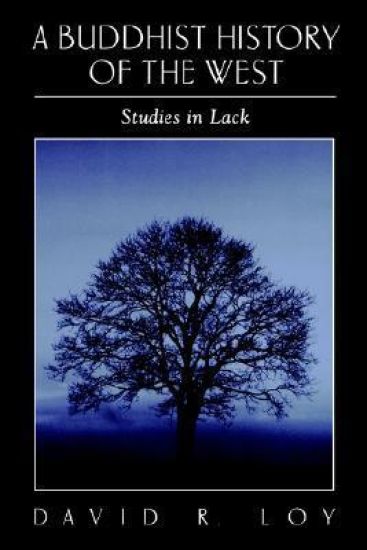
A Buddhist History of the West

A Buddhist History of the West

David R. Loy

State University of New York Press
2002
pokkari
A Buddhist interpretation of Western history that shows civilization shaped by the self's desire for groundedness.Buddhism teaches that to become happy, greed, ill-will, and delusion must be transformed into their positive counterparts: generosity, compassion, and wisdom. The history of the West, like all histories, has been plagued by the consequences of greed, ill-will, and delusion. A Buddhist History of the West investigates how individuals have tried to ground themselves to make themselves feel more real. To be self-conscious is to experience ungroundedness as a sense of lack, but what is lacking has been understood differently in different historical periods. Author David R. Loy examines how the understanding of lack changes at historical junctures and shows how those junctures were so crucial in the development of the West.