Edith Wharton born Edith Newbold Jones; January 24, 1862 - August 11, 1937) was a Pulitzer Prize-winning American novelist, short story writer, and designer. She was nominated for the Nobel Prize in Literature in 1927, 1928 and 1930. Wharton combined her insider's view of America's privileged classes with a brilliant, natural wit to write humorous, incisive novels and short stories of social and psychological insight. She was well acquainted with many of her era's other literary and public figures, including Theodore Roosevelt.Edith Wharton was born Edith Newbold Jones to George Frederic Jones and Lucretia Stevens Rhinelander at their brownstone at 14 West Twenty-third Street in New York City. She had two much older brothers, Frederic Rhinelander, who was sixteen, and Henry Edward, who was eleven. She was baptized April 20, 1862, Easter Sunday, at Grace Church.To her friends and family she was known as "Pussy Jones". The saying "keeping up with the Joneses" is said to refer to her father's family. She was also related to the Rensselaer family, the most prestigious of the old patroon families. She had a lifelong lovely friendship with her Rhinelander niece, landscape architect Beatrix Farrand of Reef Point in Bar Harbor, Maine.
The Railway Children is a children's book by Edith Nesbit, originally serialised in The London Magazine during 1905 and first published in book form in 1906. It has been adapted for the screen several times, of which the 1970 film version is the best known. The Oxford Dictionary of National Biography credits Oswald Barron, who had a deep affection for Nesbit, with having provided the plot.he story concerns a family who move from London to "The Three Chimneys", a house near the railway in Yorkshire, after the father, who works at the Foreign Office, is imprisoned after being falsely accused of spying. The children befriend an Old Gentleman who regularly takes the 9:15 train near their home; he is eventually able to help prove their father's innocence, and the family is reunited. The family take care of a Russian exile, Mr Szczepansky, who came to England looking for his family (later located) and Jim, the grandson of the Old Gentleman, who suffers a broken leg in a tunnel. The theme of an innocent man being falsely imprisoned for espionage and finally vindicated might have been influenced by the Dreyfus Affair, which was a prominent worldwide news item a few years before the book was written. The Russian exile, persecuted by the Tsars for writing "a beautiful book about poor people and how to help them" and subsequently helped by the children, was most likely an amalgam of the real-life dissidents Sergius Stepniak and Peter Kropotkin who were both friends of the author.
Edith Wharton born Edith Newbold Jones; January 24, 1862 - August 11, 1937) was a Pulitzer Prize-winning American novelist, short story writer, and designer. She was nominated for the Nobel Prize in Literature in 1927, 1928 and 1930. Wharton combined her insider's view of America's privileged classes with a brilliant, natural wit to write humorous, incisive novels and short stories of social and psychological insight. She was well acquainted with many of her era's other literary and public figures, including Theodore Roosevelt.Edith Wharton was born Edith Newbold Jones to George Frederic Jones and Lucretia Stevens Rhinelander at their brownstone at 14 West Twenty-third Street in New York City. She had two much older brothers, Frederic Rhinelander, who was sixteen, and Henry Edward, who was eleven. She was baptized April 20, 1862, Easter Sunday, at Grace Church. To her friends and family she was known as "Pussy Jones". The saying "keeping up with the Joneses" is said to refer to her father's family. 4] She was also related to the Rensselaer family, the most prestigious of the old patroon families. She had a lifelong lovely friendship with her Rhinelander niece, landscape architect Beatrix Farrand of Reef Point in Bar Harbor, Maine. Edith was born during the Civil War; she was three years old when the South surrendered. After the war, the family traveled extensively in Europe. From 1866 to 1872, the Jones family visited France, Italy, Germany, and Spain. During her travels, the young Edith became fluent in French, German, and Italian. At the age of ten, she suffered from typhoid fever while the family was at a spa in the Black Forest. After the family returned to the United States in 1872, they spent their winters in New York and their summers in Newport, Rhode Island.While in Europe, she was educated by tutors and governesses. She rejected the standards of fashion and etiquette that were expected of young girls at the time, intended to enable women to marry well and to be displayed at balls and parties. She thought these requirements were superficial and oppressive. Edith wanted more education than she received, so she read from her father's library and from the libraries of her father's friends. Her mother forbade her to read novels until she was married, and Edith complied with this command.
Edith Wharton born Edith Newbold Jones; January 24, 1862 - August 11, 1937) was a Pulitzer Prize-winning American novelist, short story writer, and designer. She was nominated for the Nobel Prize in Literature in 1927, 1928 and 1930. Wharton combined her insider's view of America's privileged classes with a brilliant, natural wit to write humorous, incisive novels and short stories of social and psychological insight. She was well acquainted with many of her era's other literary and public figures, including Theodore Roosevelt.Edith Wharton was born Edith Newbold Jones to George Frederic Jones and Lucretia Stevens Rhinelander at their brownstone at 14 West Twenty-third Street in New York City. She had two much older brothers, Frederic Rhinelander, who was sixteen, and Henry Edward, who was eleven. She was baptized April 20, 1862, Easter Sunday, at Grace Church. To her friends and family she was known as "Pussy Jones". The saying "keeping up with the Joneses" is said to refer to her father's family. 4] She was also related to the Rensselaer family, the most prestigious of the old patroon families. She had a lifelong lovely friendship with her Rhinelander niece, landscape architect Beatrix Farrand of Reef Point in Bar Harbor, Maine. Edith was born during the Civil War; she was three years old when the South surrendered. After the war, the family traveled extensively in Europe. From 1866 to 1872, the Jones family visited France, Italy, Germany, and Spain. During her travels, the young Edith became fluent in French, German, and Italian. At the age of ten, she suffered from typhoid fever while the family was at a spa in the Black Forest. After the family returned to the United States in 1872, they spent their winters in New York and their summers in Newport, Rhode Island.While in Europe, she was educated by tutors and governesses. She rejected the standards of fashion and etiquette that were expected of young girls at the time, intended to enable women to marry well and to be displayed at balls and parties. She thought these requirements were superficial and oppressive. Edith wanted more education than she received, so she read from her father's library and from the libraries of her father's friends. Her mother forbade her to read novels until she was married, and Edith complied with this command.
Edith Wharton born Edith Newbold Jones; January 24, 1862 - August 11, 1937) was a Pulitzer Prize-winning American novelist, short story writer, and designer. She was nominated for the Nobel Prize in Literature in 1927, 1928 and 1930. Wharton combined her insider's view of America's privileged classes with a brilliant, natural wit to write humorous, incisive novels and short stories of social and psychological insight. She was well acquainted with many of her era's other literary and public figures, including Theodore Roosevelt.Edith Wharton was born Edith Newbold Jones to George Frederic Jones and Lucretia Stevens Rhinelander at their brownstone at 14 West Twenty-third Street in New York City. She had two much older brothers, Frederic Rhinelander, who was sixteen, and Henry Edward, who was eleven. She was baptized April 20, 1862, Easter Sunday, at Grace Church. To her friends and family she was known as "Pussy Jones". The saying "keeping up with the Joneses" is said to refer to her father's family. 4] She was also related to the Rensselaer family, the most prestigious of the old patroon families. She had a lifelong lovely friendship with her Rhinelander niece, landscape architect Beatrix Farrand of Reef Point in Bar Harbor, Maine. Edith was born during the Civil War; she was three years old when the South surrendered. After the war, the family traveled extensively in Europe. From 1866 to 1872, the Jones family visited France, Italy, Germany, and Spain. During her travels, the young Edith became fluent in French, German, and Italian. At the age of ten, she suffered from typhoid fever while the family was at a spa in the Black Forest. After the family returned to the United States in 1872, they spent their winters in New York and their summers in Newport, Rhode Island.While in Europe, she was educated by tutors and governesses. She rejected the standards of fashion and etiquette that were expected of young girls at the time, intended to enable women to marry well and to be displayed at balls and parties. She thought these requirements were superficial and oppressive. Edith wanted more education than she received, so she read from her father's library and from the libraries of her father's friends. Her mother forbade her to read novels until she was married, and Edith complied with this command.
Edith Wharton born Edith Newbold Jones; January 24, 1862 - August 11, 1937) was a Pulitzer Prize-winning American novelist, short story writer, and designer. She was nominated for the Nobel Prize in Literature in 1927, 1928 and 1930. Wharton combined her insider's view of America's privileged classes with a brilliant, natural wit to write humorous, incisive novels and short stories of social and psychological insight. She was well acquainted with many of her era's other literary and public figures, including Theodore Roosevelt.Edith Wharton was born Edith Newbold Jones to George Frederic Jones and Lucretia Stevens Rhinelander at their brownstone at 14 West Twenty-third Street in New York City. She had two much older brothers, Frederic Rhinelander, who was sixteen, and Henry Edward, who was eleven. She was baptized April 20, 1862, Easter Sunday, at Grace Church. To her friends and family she was known as "Pussy Jones". The saying "keeping up with the Joneses" is said to refer to her father's family. 4] She was also related to the Rensselaer family, the most prestigious of the old patroon families. She had a lifelong lovely friendship with her Rhinelander niece, landscape architect Beatrix Farrand of Reef Point in Bar Harbor, Maine. Edith was born during the Civil War; she was three years old when the South surrendered. After the war, the family traveled extensively in Europe. From 1866 to 1872, the Jones family visited France, Italy, Germany, and Spain. During her travels, the young Edith became fluent in French, German, and Italian. At the age of ten, she suffered from typhoid fever while the family was at a spa in the Black Forest. After the family returned to the United States in 1872, they spent their winters in New York and their summers in Newport, Rhode Island.While in Europe, she was educated by tutors and governesses. She rejected the standards of fashion and etiquette that were expected of young girls at the time, intended to enable women to marry well and to be displayed at balls and parties. She thought these requirements were superficial and oppressive. Edith wanted more education than she received, so she read from her father's library and from the libraries of her father's friends. Her mother forbade her to read novels until she was married, and Edith complied with this command.
The Glimpses of the Moon is a lost 1923 American silent drama film directed by Allan Dwan and starring Bebe Daniels. It was produced by Famous Players-Lasky and distributed by Paramount Pictures. The film is based upon the 1922 Edith Wharton novel The Glimpses of the Moon. Edith Wharton born Edith Newbold Jones; January 24, 1862 - August 11, 1937) was a Pulitzer Prize-winning American novelist, short story writer, and designer. She was nominated for the Nobel Prize in Literature in 1927, 1928 and 1930. Wharton combined her insider's view of America's privileged classes with a brilliant, natural wit to write humorous, incisive novels and short stories of social and psychological insight. She was well acquainted with many of her era's other literary and public figures, including Theodore Roosevelt.Edith Wharton was born Edith Newbold Jones to George Frederic Jones and Lucretia Stevens Rhinelander at their brownstone at 14 West Twenty-third Street in New York City. She had two much older brothers, Frederic Rhinelander, who was sixteen, and Henry Edward, who was eleven. She was baptized April 20, 1862, Easter Sunday, at Grace Church. To her friends and family she was known as "Pussy Jones". The saying "keeping up with the Joneses" is said to refer to her father's family. She was also related to the Rensselaer family, the most prestigious of the old patroon families. She had a lifelong lovely friendship with her Rhinelander niece, landscape architect
Ethan Frome is a novel published in 1911 by the Pulitzer Prize-winning American author Edith Wharton. It is set in the fictitious town of Starkfield, Massachusetts. The novel was adapted into a film, Ethan Frome, in 1993. Ethan Frome is set in the fictional New England town of Starkfield, where a visiting engineer tells the story of his encounter with Ethan Frome, a man with a history of thwarted dreams and desires. The accumulated longing of Frome ends in an ironic turn of events. His initial impressions are based on his observations of Frome going about his mundane tasks in Starkfield, and something about him catches the eye and curiosity of the visitor, but no one in the town seems interested in revealing many details about the man or his history - or perhaps they are not able to. The narrator ultimately finds himself in the position of staying overnight at Frome's house in order to escape a winter storm, and from there he observes Frome and his private circumstances, which he shares and which triggers other people in town to be more forthcoming with their own knowledge and impressions. 2] The novel is framed by the literary device of an extended flashback. The prologue, which is neither named as such nor numbered, opens with an unnamed male narrator spending a winter in Starkfield while in the area on business. He spots a limping, quiet man around the village, who is somehow compelling in his demeanor and carriage. This is Ethan Frome, who is a local fixture of the community, having been a lifelong resident. Frome is described as "the most striking figure in Starkfield", "the ruin of a man" with a "careless powerful look...in spite of a lameness checking each step like the jerk of a chain". Curious, the narrator sets out to learn about him. He learns that Frome's limp arose from having been injured in a "smash-up" twenty-four years before, but further details are not forthcoming, and the narrator fails to learn much more from Frome's fellow townspeople other than that Ethan's attempt at higher education decades before was thwarted by the sudden illness of his father following an injury, forcing his return to the farm to assist his parents, never to leave again. Because people seem not to wish to speak other than in vague and general terms about Frome's past, the narrator's curiosity grows, but he learns little more.... Edith Wharton ( born Edith Newbold Jones; January 24, 1862 - August 11, 1937) was a Pulitzer Prize-winning American novelist, short story writer, and designer. She was nominated for the Nobel Prize in Literature in 1927, 1928 and 1930. 1] Wharton combined her insider's view of America's privileged classes with a brilliant, natural wit to write humorous, incisive novels and short stories of social and psychological insight. She was well acquainted with many of her era's other literary and public figures, including Theodore Roosevelt.
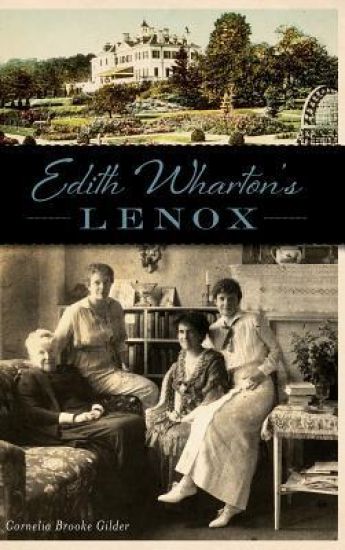
In 1900, Edith Wharton burst into the settled summer colony of Lenox. An aspiring novelist in her thirties, she was already a ferocious aesthete and intellect. She and her husband, Teddy, planned a defiantly classical villa, and she became a bestselling author with The House of Mirth in 1905. As a hostess, designer, gardener and writer, Wharton set high standards that delighted many, including Ambassador Joseph Choate and sculptor Daniel Chester French. But her perceptive and sometimes indiscreet pen also alienated potent figures like Emily Vanderbilt Sloane and Georgiana Welles Sargent. Author Cornelia Brooke Gilder gives an insider's glimpse of the community's reaction to this disruptive star during her tumultuous Lenox decade.
Eight madcap tales of unpredictable dragons - including one made of ice, another that takes refuge in the General Post Office, and a fire-breathing monster that flies out of an enchanted book and eats an entire soccer team
The Age of Innocence centers on one society couple's impending marriage and the introduction of a scandalous woman whose presence threatens their happiness. Though the novel questions the assumptions and mores of turn of the century New York society, it never devolves into an outright condemnation of the institution. In fact, Wharton considered this novel an "apology" for the earlier, more brutal and critical, "The House of Mirth". Not to be overlooked is the author's attention to detailing the charms and customs of this caste. The novel is lauded for its accurate portrayal of how the nineteenth-century East Coast American upper class lived and this combined with the social tragedy earned Wharton a Pulitzer - the first Pulitzer awarded to a woman.
Edith Wharton ( born Edith Newbold Jones; January 24, 1862 - August 11, 1937) was a Pulitzer Prize-winning American novelist, short story writer, and designer. She was nominated for the Nobel Prize in Literature in 1927, 1928 and 1930. Wharton combined her insider's view of America's privileged classes with a brilliant, natural wit to write humorous, incisive novels and short stories of social and psychological insight. She was well acquainted with many of her era's other literary and public figures, including Theodore Roosevelt. Edith Wharton was born Edith Newbold Jones to George Frederic Jones and Lucretia Stevens Rhinelander at their brownstone at 14 West Twenty-third Street in New York City. She had two much older brothers, Frederic Rhinelander, who was sixteen, and Henry Edward, who was eleven. She was baptized April 20, 1862, Easter Sunday, at Grace Church.To her friends and family she was known as "Pussy Jones".The saying "keeping up with the Joneses" is said to refer to her father's family.She was also related to the Rensselaer family, the most prestigious of the old patroon families. She had a lifelong lovely friendship with her Rhinelander niece, landscape architect Beatrix Farrand of Reef Point in Bar Harbor, Maine. Edith was born during the Civil War; she was three years old when the South surrendered. After the war, the family traveled extensively in Europe.From 1866 to 1872, the Jones family visited France, Italy, Germany, and Spain.During her travels, the young Edith became fluent in French, German, and Italian. At the age of ten, she suffered from typhoid fever while the family was at a spa in the Black Forest. After the family returned to the United States in 1872, they spent their winters in New York and their summers in Newport, Rhode Island.While in Europe, she was educated by tutors and governesses. She rejected the standards of fashion and etiquette that were expected of young girls at the time, intended to enable women to marry well and to be displayed at balls and parties. She thought these requirements were superficial and oppressive. Edith wanted more education than she received, so she read from her father's library and from the libraries of her father's friends. Her mother forbade her to read novels until she was married, and Edith complied with this command. Edith began writing poetry and fiction as a young girl. She attempted to write a novel at age eleven. Her first publication was a translation of the German poem, "Was die Steine Erz hlen" ("What the Stones Tell") by Heinrich Karl Brugsch, which earned her $50. She was 15 at the time. Her family did not wish her name to appear in print because the names of upper class women of the time only appeared in print to announce birth, marriage, and death. Consequently, the poem was published under the name of a friend's father, E. A. Washburn. He was a cousin of Ralph Waldo Emerson and supported women's education. He played a pivotal role in Edith's efforts to educate herself, and he encouraged her ambition to write professionally.In 1877, at the age of 15, she secretly wrote a 30,000 word novella "Fast and Loose". In 1878 her father arranged for a collection of two dozen original poems and five translations, Verses, to be privately published. In 1880 she had five poems published anonymously in the Atlantic Monthly, then a revered literary magazine. Despite these early successes, she was not encouraged by her family nor her social circle, and though she continued to write, she did not publish anything again until her poem, "The Last Giustiniani", was published in Scribner's Magazine in October 1889. Edith was engaged to Henry Stevens in 1882 after a two-year courtship. The month the two were to marry, the engagement abruptly ended. In 1885, at age 23, she married Edward (Teddy) Robbins Wharton, who was 12 years her senior...
Edith Wharton ( born Edith Newbold Jones; January 24, 1862 - August 11, 1937) was a Pulitzer Prize-winning American novelist, short story writer, and designer. She was nominated for the Nobel Prize in Literature in 1927, 1928 and 1930. Wharton combined her insider's view of America's privileged classes with a brilliant, natural wit to write humorous, incisive novels and short stories of social and psychological insight. She was well acquainted with many of her era's other literary and public figures, including Theodore Roosevelt. Edith Wharton was born Edith Newbold Jones to George Frederic Jones and Lucretia Stevens Rhinelander at their brownstone at 14 West Twenty-third Street in New York City. She had two much older brothers, Frederic Rhinelander, who was sixteen, and Henry Edward, who was eleven. She was baptized April 20, 1862, Easter Sunday, at Grace Church.To her friends and family she was known as "Pussy Jones."The saying "keeping up with the Joneses" is said to refer to her father's family.She was also related to the Rensselaer family, the most prestigious of the old patroon families. She had a lifelong lovely friendship with her Rhinelander niece, landscape architect Beatrix Farrand of Reef Point in Bar Harbor, Maine. Edith was born during the Civil War; she was three years old when the South surrendered. After the war, the family traveled extensively in Europe.From 1866 to 1872, the Jones family visited France, Italy, Germany, and Spain.During her travels, the young Edith became fluent in French, German, and Italian. At the age of ten, she suffered from typhoid fever while the family was at a spa in the Black Forest. After the family returned to the United States in 1872, they spent their winters in New York and their summers in Newport, Rhode Island.While in Europe, she was educated by tutors and governesses. She rejected the standards of fashion and etiquette that were expected of young girls at the time, intended to enable women to marry well and to be displayed at balls and parties. She thought these requirements were superficial and oppressive. Edith wanted more education than she received, so she read from her father's library and from the libraries of her father's friends. Her mother forbade her to read novels until she was married, and Edith complied with this command. Edith began writing poetry and fiction as a young girl. She attempted to write a novel at age eleven. Her first publication was a translation of the German poem, "Was die Steine Erz hlen" ("What the Stones Tell") by Heinrich Karl Brugsch, which earned her $50. She was 15 at the time. Her family did not wish her name to appear in print because the names of upper class women of the time only appeared in print to announce birth, marriage, and death. Consequently, the poem was published under the name of a friend's father, E. A. Washburn. He was a cousin of Ralph Waldo Emerson and supported women's education. He played a pivotal role in Edith's efforts to educate herself, and he encouraged her ambition to write professionally.In 1877, at the age of 15, she secretly wrote a 30,000 word novella "Fast and Loose." In 1878 her father arranged for a collection of two dozen original poems and five translations, Verses, to be privately published. In 1880 she had five poems published anonymously in the Atlantic Monthly, then a revered literary magazine. Despite these early successes, she was not encouraged by her family nor her social circle, and though she continued to write, she did not publish anything again until her poem, "The Last Giustiniani," was published in Scribner's Magazine in October 1889. Edith was engaged to Henry Stevens in 1882 after a two-year courtship. The month the two were to marry, the engagement abruptly ended. In 1885, at age 23, she married Edward (Teddy) Robbins Wharton, who was 12 years her senior....